
action
US /ˈækʃən/
UK /'ækʃn/
- Noun (Countable/Uncountable)
- Something that a person or thing does
- A lawsuit.
- Intransitive Verb
- To act to do something
A2Moreairplane
US /ˈɛrˌplen/
UK /ˈeəpleɪn/
- Countable Noun
- A machine that flies through the air
B1Moreawake
US /əˈwek/
UK /əˈweɪk/
- Verb (Transitive/Intransitive)
- To make aware of (a certain feeling or memory)
- To wake from sleep; wake someone from sleep
- Adjective
- Not asleep; up; alert
A2Morebasically
US /ˈbesɪkəli,-kli/
UK /ˈbeɪsɪkli/
- Adverb
- Used before you explain something simply, clearly
- In essence; when you consider the most important aspects of something.
A2Morebravo
US /ˌbrɑ:ˈvoʊ/
UK /ˌbrɑ:ˈvəʊ/
- Interjection
- Shouted to express approval, e.g. of a performance
C1Morechannel
US /ˈtʃænəl/
UK /'tʃænl/
- Noun (Countable/Uncountable)
- Long hole dug in the ground, e.g. to move water
- TV or radio station or its programs
- Transitive Verb
- To dig a long hole for carrying water
- To send (e.g. money) to a certain place or person
B1Morecomment
US /ˈkɑmɛnt/
UK /'kɒment/
- Noun (Countable/Uncountable)
- Something you say, giving an opinion; remark
- An explanatory note in a computer program.
- Verb (Transitive/Intransitive)
- To say something that gives your opinion
- To add explanatory notes to a computer program.
A2Moreconfuse
US /kənˈfjuz/
UK /kənˈfju:z/
- Transitive Verb
- To make something unclear or hard to understand
- To mistake one person or thing for another.
A2Morecontinuous
US /kənˈtɪnjuəs/
UK /kənˈtɪnjuəs/
- Adjective
- Happening, existing, or performed without stops
- Extending or prolonged without interruption or cessation.
A2Moredonate
US /ˈdoˌnet, doˈnet/
UK /dəʊ'neɪt/
- Transitive Verb
- To give money, etc. to charity, party, etc.
B1TOEICMorefor example
US
UK
- Phrase
- As an illustration or instance.
grammar
US /ˈɡræmɚ/
UK /ˈgræmə(r)/
- Uncountable Noun
- Book describing the syntactic rules of a language
- Rules explaining how words are used in a language
B1Morehabit
US /ˈhæbɪt/
UK /'hæbɪt/
- Noun
- Loose clothing like a cloak, worn by monks, nuns
- Usual way of behaving; something often repeated
A2TOEICMorehallelujah
US /ˌhæləˈlujə/
UK /ˌhælɪˈlu:jə/
- Noun
- Shout or song of praise to God
C1Morehang
US /hæŋ/
UK /hæŋ/
- Transitive Verb
- To attach a picture, photograph etc. onto a wall
- To kill by putting a rope around neck and dropping
- Intransitive Verb
- To float, move softly, or remain in the air
- To remain undecided, unsolved or unclear
A2Morehang out
US /hæŋ aʊt/
UK /hæŋ aut/
- Phrasal Verb
- To spend time with your friends
- To spend times with friends or relax doing nothing
A2Morehome in
US /ˈhoʊm ɪn/
UK /ˈhəum ɪn/
- other
- Move or direct toward a specific target or goal.
B2Morehungry
US /ˈhʌŋɡri/
UK /ˈhʌŋgri/
- Adjective
- Feeling a need or want to eat food
- Feeling a need or want to eat food
B2Morein the future
US /ɪn ði ˈfjutʃɚ/
UK /in ðə ˈfju:tʃə/
- Phrase
- At a later time; in times to come.
A1Morein the world
US /ɪn ði wɜrld/
UK /in ðə wɜː(r)ld/
- Phrase
- Used to emphasize a question expressing surprise, confusion, disbelief
- Used to indicate the extent or degree of something, often in a superlative sense
A1Moreinterrogation
US /ɪnˌterə'ɡeɪʃn/
UK /ɪnˌterə'ɡeɪʃn/
- Noun
- Forceful inquiry by asking a lot of questions
B2Morelook at
US /lʊk æt/
UK /luk æt/
- Phrasal Verb
- To use your eyes to focus on something
- To focus your eyes on something carefully
A1Moremarker
US /ˈmɑ:rkə(r)/
UK /ˈmɑ:kə(r)/
- Noun (Countable/Uncountable)
- Something that is easy to recognize or identify
- Thick pen used for writing, e.g. on boards
B1Moremodal
US /ˈmodl:/
UK /'məʊdl/
- Adjective
- Verb like 'may' or 'can', showing a verb's mood
B2Morenegative
US /ˈnɛɡətɪv/
UK /'neɡətɪv/
- Noun
- The opposite to a positive electrical charge
- In grammar, containing words such as 'no' or 'not'
- Adjective
- Being harmful, unwanted or unhelpful
- In mathematics, being less than zero
A2Moreno fear
US /no fɪɚ/
UK /nəʊ fɪə/
- other
- Showing confidence or bravery; not afraid.
B1Moreon the beach
US
UK
- Phrase
- Located on the sandy or pebbly area bordering a body of water.
A1Moreon the internet
US
UK
- Phrase
- Located or available on the internet.
- Using the internet as a medium or platform.
A1Morepage out
US /peɪʤ aʊt/
UK /peɪʤ aut/
- other
- Send a message via pager to someone.
C1Morepositive
US /ˈpɑzɪtɪv/
UK /ˈpɒzətɪv/
- Adjective
- Showing agreement or support for something
- Being sure about something; knowing the truth
- Noun
- A photograph in which light areas are light and dark areas are dark
A2Moreprogressive
US /prəˈɡrɛsɪv/
UK /prəˈgresɪv/
- Adjective
- Believing in modern ideas about social change
- Increasing in extent or severity; occurring in gradual stages.
- Noun (Countable/Uncountable)
- People believing in bringing about social change
- A person advocating or implementing social reform or new, liberal ideas.
A2Morereality
US /riˈælɪti/
UK /rɪ'ælətɪ/
- Noun (Countable/Uncountable)
- What is true, as opposed to what is imagined
- The state of things as they actually exist, rather than as they may appear or might be imagined.
A2Morerequest
US /rɪˈkwɛst/
UK /rɪ'kwest/
- Transitive Verb
- To ask for, usually politely and formally
- Noun
- Thing that has been asked for
- A signal to a computer system or program to perform a task.
A2TOEICMoreroutine
US /ruˈtin/
UK /ru:ˈti:n/
- Adjective
- Happening or done regularly or habitually
- Always the same; boring through lack of variety
- Noun (Countable/Uncountable)
- Regular or habitual way of behaving or doing
- Series of actions that make up a performance
A2TOEICMorestructure
US /ˈstrʌk.tʃɚ/
UK /ˈstrʌk.tʃə/
- Noun (Countable/Uncountable)
- The way in which the parts of a system or object are arranged or organized, or a system arranged in this way
- A building or other man-made object.
- Transitive Verb
- To plan, organize, or arrange the parts of something
A2TOEICMoresubscribe
US /səbˈskraɪb/
UK /səb'skraɪb/
- Verb (Transitive/Intransitive)
- To regularly pay to receive a service
B1TOEICMorethink about
US /θɪŋk əˈbaʊt/
UK /θiŋk əˈbaut/
- Phrasal Verb
- To consider something carefully.
- To remember or call to mind.
A1More
Vocabulary
- in the future: At a later time; in times to come.
- on the beach: Located on the sandy or pebbly area bordering a body of water.
- hang out: To spend time with your friends
- on the internet: Located or available on the internet.
- no fear: Showing confidence or bravery; not afraid.
- for example: As an illustration or instance.
- home in: Move or direct toward a specific target or goal.
- look at: To use your eyes to focus on something
- think about: To consider something carefully.
- in the world: Used to emphasize a question expressing surprise, confusion, disbelief
- page out: Send a message via pager to someone.
- subscribe: To regularly pay to receive a service
- routine: Happening or done regularly or habitually
- basically: Used before you explain something simply, clearly
- positive: Showing agreement or support for something
- structure: The way in which the parts of a system or object are arranged or organized, or a system arranged in this way
- negative: The opposite to a positive electrical charge
- fear: Unpleasant feeling caused by being aware of danger
- sentence: (Of a judge) to decide the punishment of
- comment: Something you say, giving an opinion; remark
- reality: What is true, as opposed to what is imagined
- address: Exact street location of a place
- grammar: Book describing the syntactic rules of a language
- form: Sports team or person's current winning record
- subject: The person, thing, or idea that is being discussed, described, or studied.
- guess: To give an answer without knowing if it is correct
- throw: To use your arm to make something fly in the air
- progressive: Believing in modern ideas about social change
- hang: To attach a picture, photograph etc. onto a wall
- leave: To go away from; depart
- request: To ask for, usually politely and formally
- channel: Long hole dug in the ground, e.g. to move water
- habit: Loose clothing like a cloak, worn by monks, nuns
- promise: To say you will certainly do something
- learn: To get knowledge or skills by study or experience
- simple: Not hard to understand or do; not complex
- information: Collection of facts and details about something
- awake: To make aware of (a certain feeling or memory)
- chance: The way something happens without planning
- natural: Being as one would expect; being usual or normal
- wrong: Action that is harmful, unjust or illegal
- donate: To give money, etc. to charity, party, etc.
- action: Something that a person or thing does
- continuous: Happening, existing, or performed without stops
- confuse: To make something unclear or hard to understand
- modal: Verb like 'may' or 'can', showing a verb's mood
- interrogation: Forceful inquiry by asking a lot of questions
- hungry: Feeling a need or want to eat food
- marker: Something that is easy to recognize or identify
- airplane: A machine that flies through the air
- bravo: Shouted to express approval, e.g. of a performance
- hallelujah: Shout or song of praise to God
Get the full experience in the app
Learn anywhere with detailed sentence and usage analysis
01:03
She took a brave step forward, leaving behind her comfort zone to chase her dreams.
Vocabulary
- brave
adj. Having courage
- comfort zone
phr. A familiar situation where one feels safe
Explanation
a brave step is a noun phrase, where brave is an adjective modifying the noun step, meaning "a courageous step".
forward is an adverb modifying step, meaning "ahead".
The whole phrase serves as the object, answering the "what" of took (verb) — she took a brave step forward.
Get the full experience in the app
Look up words anytime with pronunciation, part of speech, and usage
brave
US/brev/
UK/breɪv/
adj.Brave
v.t.To bravely face
A2 Elementary
Get the full experience in the app
Practice speaking anytime and get instant pronunciation feedback
Try this speaking exercise.
Try practicing with this sentence.
80
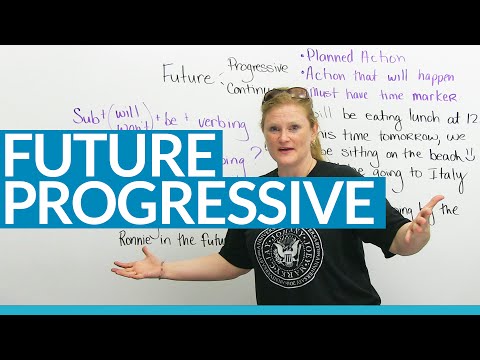
Learn the FUTURE PROGRESSIVE TENSE in English
0
曾郁婷 posted on 2025/08/09Ever wonder how to talk about what you'll be doing at a specific time in the future? Ronnie from engVid breaks down the Future Progressive Tense with super clear grammar tips and practical examples, perfect for boosting your daily conversations!
Learn this video on the APP!
The VoiceTube App has more in-depth practice for videos!