
accurate
US /ˈækjərɪt/
UK /ˈækjərət/
- Adjective
- With no mistake or error; Correct
A2Moreat first glance
US /æt fɚst ɡlæns/
UK /æt fə:st ɡlɑ:ns/
- Phrase
- Upon initial observation or assessment.
A1Moreattraction
US /əˈtrækʃən/
UK /ə'trækʃn/
- Noun (Countable/Uncountable)
- Theme park or fairground; place worth visiting
- The act of making someone become interested in
A2Morechaos
US /ˈkeˌɑs/
UK /'keɪɒs/
- Noun (plural)
- State of utter confusion or disorder
- Uncountable Noun
- Complete disorder and confusion.
- Behavior so unpredictable as to appear random, owing to great sensitivity to small changes in conditions.
B1Moreclarity
US /ˈklærɪti/
UK /'klærətɪ/
- Uncountable Noun
- Being easy to be seen through, heard or understood
- The quality of an image being sharp and clear
B1Morecome before
US /kʌm bɪˈfɔr/
UK /kʌm biˈfɔ:/
- Phrasal Verb
- To happen or exist earlier in time than something else.
- To be considered more important than something else.
A1Morecommunication
US /kəˌmjunɪˈkeʃən/
UK /kəˌmju:nɪ'keɪʃn/
- Noun (Countable/Uncountable)
- Talking to people; giving information to people
- The process of conveying information, ideas, or feelings through language or other means.
A2Moreconfidence
US /ˈkɑnfɪdəns/
UK /'kɒnfɪdəns/
- Uncountable Noun
- Feeling that you can do well at something
- Feeling you can trust someone
A2Moreconfident
US /ˈkɑnfɪdənt/
UK /ˈkɒnfɪdənt/
- Adjective
- Feeling that you can do well at something
- Having a strong belief in the truth or certainty of something.
- Noun
- A person who is self-assured and believes in their abilities.
A2Moreconfusion
US /kənˈfjuʒən/
UK /kən'fju:ʒən/
- Uncountable Noun
- Not knowing what to do; state of disorder
B1Morecontrast
US /ˈkɑ:ntræst/
UK /'kɒntrɑ:st/
- Verb (Transitive/Intransitive)
- To compare; to show clear, obvious differences
- Noun (Countable/Uncountable)
- Comparison that shows obvious differences
- Difference in light and dark in photos, etc.
A2Morecorrect
US /kəˈrɛkt/
UK /kə'rekt/
- Adjective
- Being suitable and appropriate for an occasion
- True or accurate
- Transitive Verb
- To fix a problem
- To write marks on a piece of work to show mistakes
A2Moredepending on
US
UK
- Phrasal Verb
- To rely on for support (financial or emotional)
- Influenced or determined by.
- Preposition
- Subject to; contingent on
- Relying on someone or something for support or assistance.
A2Moredirection
US /dɪˈrɛkʃən, daɪ-/
UK /də'rekʃn/
- Noun (Countable/Uncountable)
- When someone tells people what to do
- Describes the way you are going, e.g. North
A2TOEICMoredistinct
US /dɪˈstɪŋkt/
UK /dɪˈstɪŋkt/
- Adjective
- Clearly different in nature from something else
- Clearly noticeable; easily perceived.
A2Moredrink to
US /drɪŋk tə/
UK /drɪŋk tə/
- other
- To raise a glass to honor or celebrate someone or something.
B1Moreemphasize
US /ˈɛmfəˌsaɪz/
UK /'emfəsaɪz/
- Transitive Verb
- To stress the items that are important
B2TOEICMorefitness
US /ˈfɪtnɪs/
UK /ˈfɪtnəs/
- Uncountable Noun
- Good physical condition; being in shape
B1Moreflow
US /flo/
UK /fləʊ/
- Intransitive Verb
- To move steadily and easily in a certain direction
- Uncountable Noun
- Amount of something that moves through an area
A2Morefluency
US /ˈfluːənsi/
UK /ˈflu:ənsi/
- Uncountable Noun
- Ability to do something well and with ease
- Ability to speak or write a language easily
B1TOEICMorefor example
US
UK
- Phrase
- As an illustration or instance.
for one thing
US /fɔr wʌn θɪŋ/
UK /fɔ: wʌn θiŋ/
- Phrase
- Used to introduce a reason for something.
A1Moreformality
US /fɔrˈmælɪti/
UK /fɔ:'mælətɪ/
- Uncountable Noun
- Rules, behavior (often having little meaning)
B1Morefull picture
US
UK
- Noun
- A complete and comprehensive understanding of a situation or issue.
- A detailed and comprehensive view or representation of something.
gerund
US /ˈdʒɛrənd/
UK /ˈdʒerənd/
- Gerund
- Noun formed from a verb (such as the '-ing' form)
C2Morego back to
US /ɡo bæk tu/
UK /ɡəu bæk tu:/
- Phrasal Verb
- To return to a starting point
A1Morego out
US /ɡo aʊt/
UK /ɡəu aut/
- Phrase
- To leave a building (e.g. a house)
- Phrasal Verb
- (Of a fire) to burn out; be extinguished
- Go out of fashion to stop being fashionable
A1Moregrammar
US /ˈɡræmɚ/
UK /ˈgræmə(r)/
- Uncountable Noun
- Book describing the syntactic rules of a language
- Rules explaining how words are used in a language
B1Moregrammatical
US /ɡrəˈmætɪkəl/
UK /grəˈmætɪkl/
- Adjective
- Conforming to the rules of syntax
B1Morehave to
US /hæv tu/
UK /ˈhæv tə/
- Auxiliary Verb
- Must do
A1Morein mind
US /ɪn maɪnd/
UK /in maind/
- Phrase
- Being aware of or considering something.
- To remember or consider something.
A2Morein other words
US
UK
- Phrase
- Stating something in a different way, often to make it clearer or more understandable.
in parallel
US /ɪn ˈpærəˌlɛl/
UK /in ˈpærəlel/
- Adverb
- Done at the same time; simultaneously.
- Adjective
- Relating to a system where multiple operations are carried out simultaneously, especially in computing.
C2Morein place of
US /ɪn ples ʌv/
UK /in pleis ɔv/
- Phrase
- Instead of; as a substitute for.
in terms of
US
UK
- Phrase
- With regard to; concerning a particular aspect.
A1Morein the end
US /ɪn ði ɛnd/
UK /in ðə end/
- Phrase
- Finally; after a period of time or series of events.
- Ultimately; as the final result or consequence.
A1Morein writing
US
UK
- Phrase
- Expressed or presented in written form, rather than spoken.
- Officially recorded in a written document, especially for legal purposes.
A1Moreincorrect
US /ˌɪnkəˈrɛkt/
UK /ˌɪnkəˈrekt/
- Adjective
- Being wrong or inaccurate
B1TOEICMoreinfinitive
US /ɪnˈfɪnɪtɪv/
UK /ɪnˈfɪnətɪv/
- Noun
- A verb in its base form, e.g. 'to run'
B2Moreinformal
US /ɪnˈfɔrməl/
UK /inˈfɔ:məl/
- Adjective
- Casual; relaxed
- Not official; not done by the rules
B1TOEICMoreinstead of
US /ɪnˈstɛd ʌv/
UK /inˈsted ɔv/
- Preposition
- When one thing is replaced by another
- Adverb
- As a substitute or alternative.
A1Morelook at
US /lʊk æt/
UK /luk æt/
- Phrasal Verb
- To use your eyes to focus on something
- To focus your eyes on something carefully
A1Moremaintain
US /menˈten/
UK /meɪn'teɪn/
- Transitive Verb
- To keep saying something a certain way
- To keep (machine) working by checking, repairing
A2TOEICMoremove on
US /muv ɑn/
UK /mu:v ɔn/
- Phrasal Verb
- To decide to change or go to a different place
- To start talking about something different.
A1Moreof course
US /ʌv kɔː(r)s/
UK /ɔv kɔː(r)s/
- Adverb
- Sure ; Certainly
- Phrase
- For sure; certainly
A2Moreon the beach
US
UK
- Phrase
- Located on the sandy or pebbly area bordering a body of water.
A1Moreon to
US /ɑn tu/
UK /ɔn tu:/
- Preposition
- Toward something; forward
- Aware of someone's activities.
- Adjective
- Aware of someone's deception or illegal activities.
A1Moreor simply
US
UK
- Phrase
- Alternatively; in a more straightforward way.
A1Moreparallel
US /ˈpærəˌlɛl/
UK /'pærəlel/
- Verb (Transitive/Intransitive)
- To be equal to, or like, something else
- To compare
- Noun (Countable/Uncountable)
- A line on a map a set distance from the equator
- A similarity; a comparison.
B1Moreparallelism
US /ˈpærəlɛlˌɪzəm/
UK /ˈpærəlelɪzəm/
- Uncountable Noun
- Similarity; being equal or corresponding
B1Morepattern
US /ˈpætən/
UK /'pætn/
- Noun (Countable/Uncountable)
- Model to follow in making or doing something
- Colors or shapes which are repeated on objects
- Transitive Verb
- To copy the way something else is made
- To decorate with a pattern.
A2TOEICMorepreference
US /ˈprɛfərəns, ˈprɛfrəns/
UK /ˈprefrəns/
- Noun (Countable/Uncountable)
- Something that is liked/wanted more than another
- Special consideration or advantage given to someone or something.
A2TOEICMorequick question
US
UK
- Noun (Countable/Uncountable)
- A brief and simple inquiry.
- Phrase
- An introductory phrase indicating a question requiring a prompt answer.
A1Morerace
US /res/
UK /reɪs/
- Noun (Countable/Uncountable)
- Speed contest between people, animals or vehicles
- People who share physical features or culture
- Intransitive Verb
- To take part in a running or swimming competition
- To move or go at a very fast pace
A2Morerather than
US
UK
- Adverb
- More exactly; more correctly
- Preferably; instead
- Preposition
- Instead of
A1Morerun to
US /rʌn tu/
UK /rʌn tu:/
- Phrasal Verb
- To have enough money; be able to pay; afford
- To go to some place
A1Moresee in
US /si ɪn/
UK /si: in/
- Phrasal Verb
- To accompany someone to the entrance of a building or room.
A1Moresilent
US /ˈsaɪlənt/
UK /'saɪlənt/
- Adjective
- Without making any noise; soundless
- Usually speaking very little
B1Morestay in
US /ste ɪn/
UK /stei in/
- Phrasal Verb
- To remain inside one's home.
- Intransitive Verb
- To remain as an inpatient in a hospital.
step back
US /stɛp bæk/
UK /step bæk/
- Phrasal Verb
- To move backwards; to move away from something.
- To take a break from something; to gain perspective.
A1Morestructure
US /ˈstrʌk.tʃɚ/
UK /ˈstrʌk.tʃə/
- Noun (Countable/Uncountable)
- The way in which the parts of a system or object are arranged or organized, or a system arranged in this way
- A building or other man-made object.
- Transitive Verb
- To plan, organize, or arrange the parts of something
A2TOEICMoresubstitution
US /ˌsʌbstɪˈtuʃən, -ˈtju-/
UK /ˌsʌbstɪ'tju:ʃn/
- Noun
- Act of replacing one person or thing to do a job
B2Moresuch as
US /sʌtʃ æz/
UK /sʌtʃ æz/
- Preposition
- For example; like
A1Moretalking about
US
UK
- Phrasal Verb
- To discuss a particular topic.
- To be constantly mentioning or bringing up a subject.
A1Morethumbs up
US
UK
- Noun
- A gesture of approval or agreement, indicated by holding a fist with the thumb extended upwards.
- A positive rating or vote on social media or online platforms.
- Noun (plural)
- Multiple gestures of approval or agreement made by extending the thumbs upward.
A1Moretv show
US /ˈtiˈvi ʃo/
UK /ˈti:ˈvi: ʃəu/
- Noun
- A television program.
unsure
US /ʌnˈʃʊr, -ˈʃə:r/
UK /ˌʌnˈʃʊə(r)/
- Adjective
- Lacking confidence or certainty
- Lacking confidence in your own words or actions
B1Moreusage
US /ˈjusɪdʒ, -zɪdʒ/
UK /ˈju:sɪdʒ/
- Noun (Countable/Uncountable)
- Amount something is used
- Way something is actually used
B2Moreused to
US /juzd tu/
UK /ˈju:st tə/
- Adjective
- Did regularly before, but don't do now
- Auxiliary Verb
- Have done before, but do not do now
A1Morework in
US /wɚk ɪn/
UK /wə:k in/
- Phrasal Verb
- To make an opening for something in your schedule
- To fit person/thing into a schedule or sequence
A1Moreyes and no
US
UK
- Phrase
- An ambivalent or uncertain answer; a response that is neither a clear affirmation nor a clear denial.
- A situation with both positive and negative aspects; a qualified affirmation.
A1More
Vocabulary
- rather than: More exactly; more correctly
- instead of: When one thing is replaced by another
- used to: Did regularly before, but don't do now
- go out: To leave a building (e.g. a house)
- for example: As an illustration or instance.
- look at: To use your eyes to focus on something
- in mind: Being aware of or considering something.
- on the beach: Located on the sandy or pebbly area bordering a body of water.
- in other words: Stating something in a different way, often to make it clearer or more understandable.
- in writing: Expressed or presented in written form, rather than spoken.
- talking about: To discuss a particular topic.
- quick question: A brief and simple inquiry.
- yes and no: An ambivalent or uncertain answer; a response that is neither a clear affirmation nor a clear denial.
- such as: For example; like
- or simply: Alternatively; in a more straightforward way.
- work in: To make an opening for something in your schedule
- step back: To move backwards; to move away from something.
- in the end: Finally; after a period of time or series of events.
- at first glance: Upon initial observation or assessment.
- in place of: Instead of; as a substitute for.
- tv show: A television program.
- stay in: To remain inside one's home.
- for one thing: Used to introduce a reason for something.
- in terms of
- of course: Sure ; Certainly
- come before: To happen or exist earlier in time than something else.
- in parallel: Done at the same time; simultaneously.
- see in: To accompany someone to the entrance of a building or room.
- run to: To have enough money; be able to pay; afford
- drink to: To raise a glass to honor or celebrate someone or something.
- have to: Must do
- on to: Toward something; forward
- move on: To decide to change or go to a different place
- go back to: To return to a starting point
- full picture: A complete and comprehensive understanding of a situation or issue.
- depending on: To rely on for support (financial or emotional)
- thumbs up: A gesture of approval or agreement, indicated by holding a fist with the thumb extended upwards.
- pattern: Model to follow in making or doing something
- structure: The way in which the parts of a system or object are arranged or organized, or a system arranged in this way
- accurate: With no mistake or error; Correct
- chaos: State of utter confusion or disorder
- general: Widespread, normal or usual
- distinct: Clearly different in nature from something else
- confidence: Feeling that you can do well at something
- confident: Feeling that you can do well at something
- imagine: To think creatively about; form mental picture of
- mean: Average of a set of numbers
- maintain: To keep saying something a certain way
- similar: Nearly the same; alike
- contrast: To compare; to show clear, obvious differences
- grammar: Book describing the syntactic rules of a language
- direction: When someone tells people what to do
- emphasize: To stress the items that are important
- simply: In an easy or clear manner
- fluency: Ability to do something well and with ease
- form: Sports team or person's current winning record
- parallel: To be equal to, or like, something else
- clarity: Being easy to be seen through, heard or understood
- mind: To be bothered or upset by something
- race: Speed contest between people, animals or vehicles
- correct: Being suitable and appropriate for an occasion
- preference: Something that is liked/wanted more than another
- attraction: Theme park or fairground; place worth visiting
- communication: Talking to people; giving information to people
- informal: Casual; relaxed
- notice: To become aware by sight, touch, or hearing
- silent: Without making any noise; soundless
- moment: Very short or brief period of time
- important: Having power or authority
- place: To put someone in a particular type of situation
- flow: To move steadily and easily in a certain direction
- confusion: Not knowing what to do; state of disorder
- prefer: To like something better than something else
- preposition: Word such as 'at' 'on' etc. showing position/time
- usage: Amount something is used
- drive: A person's ambition and motivation to do something
- fitness: Good physical condition; being in shape
- verb: Word that expresses an action or state
- grammatical: Conforming to the rules of syntax
- infinitive: A verb in its base form, e.g. 'to run'
- substitution: Act of replacing one person or thing to do a job
- incorrect: Being wrong or inaccurate
- gerund: Noun formed from a verb (such as the '-ing' form)
- formality: Rules, behavior (often having little meaning)
- unsure: Lacking confidence or certainty
- parallelism: Similarity; being equal or corresponding
Get the full experience in the app
Learn anywhere with detailed sentence and usage analysis
01:03
She took a brave step forward, leaving behind her comfort zone to chase her dreams.
Vocabulary
- brave
adj. Having courage
- comfort zone
phr. A familiar situation where one feels safe
Explanation
a brave step is a noun phrase, where brave is an adjective modifying the noun step, meaning "a courageous step".
forward is an adverb modifying step, meaning "ahead".
The whole phrase serves as the object, answering the "what" of took (verb) — she took a brave step forward.
Get the full experience in the app
Look up words anytime with pronunciation, part of speech, and usage
brave
US/brev/
UK/breɪv/
adj.Brave
v.t.To bravely face
A2 Elementary
Get the full experience in the app
Practice speaking anytime and get instant pronunciation feedback
Try this speaking exercise.
Try practicing with this sentence.
80
When to Use Rather Than and Instead Of | Accurate English Grammar
0
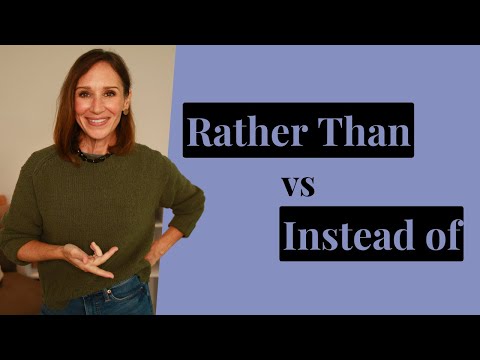
VoiceTube posted on 2024/10/24Ever get mixed up between 'rather than' and 'instead of'? This video breaks down exactly when to use each one, focusing on that tricky parallel structure so you can speak and write with more confidence! You'll pick up essential grammar for daily use and even boost your scores for exams like TOEFL and IELTS.
Learn this video on the APP!
The VoiceTube App has more in-depth practice for videos!