grammatical
US /ɡrəˈmætɪkəl/
・UK /grəˈmætɪkl/
B1
adj.AdjectiveConforming to the rules of syntax
The sentence was not grammatical so the teacher marked it wrong
Video subtitles
DON'T use advanced English! (C1/C2)

- But low frequency vocabulary and complicated grammatical structures are often more of a restriction
But low frequency vocabulary and complicated grammatical structures are often more of a restriction
- But low-frequency vocabulary and complicated grammatical structures are often more of a restriction.
But low-frequency vocabulary and complicated grammatical structures are often more of a restriction.
IELTS Speaking Band 9 Speaking Exercise for You
- In Part 1, Tala would receive a Band 9 for lexical resource, grammatical range and accuracy as well as coherence.
In Part 1, Tala would receive a Band 9 for lexical resource, grammatical range and accuracy as well as coherence.
- In part one, Tala would receive a Band 9 for lexical resource, grammatical range and accuracy, as well as coherence.
In part one, Tala would receive a Band 9 for lexical resource, grammatical range and accuracy, as well as coherence.
Update your resume and get a job!

- Make sure you have no grammatical or spelling errors on your...
Make sure you have no grammatical or spelling errors on your...
- Make sure you have no grammatical or spelling errors on your...
Make sure you have no grammatical or spelling errors on your...
Essential English Grammar: WILL or WOULD?

- Now, this is going to be a little bit more confusing because this is introducing a whole other grammatical tense.
Now, this is going to be a little bit more confusing because this is introducing a whole other grammatical tense.
- Now, this is going to be a little bit more confusing because this is introducing a whole other grammatical tense.
Now, this is going to be a little bit more confusing because this is introducing a whole other grammatical tense.
Do Indians Know How Their English Accent Sounds? | ASIAN BOSS

- I just don't understand not because of the accent, maybe because of the wrong grammatical use.
I just don't understand not because of the accent, maybe because of the wrong grammatical use.
- I find Chinese English quite funny because they don't use proper, you know, grammatical things, Chinese, I must say Chinese.
I find Chinese English quite funny because they don't use proper, you know, grammatical things, Chinese, I must say Chinese.
IELTS Speaking Score 9 India Good and Bad Analysis
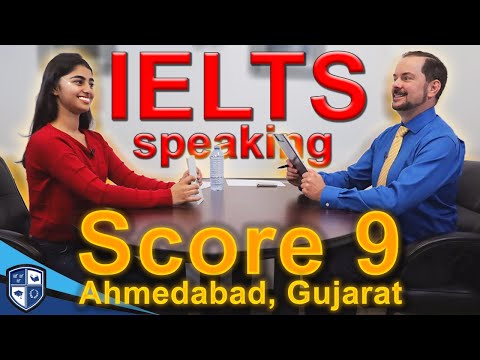
- Yesterday we had a good conversation while eating my mom's famous chicken biryani. That is the end of part one. We will now continue with part two. After analyzing each question in part one, the examiner can conclude that Arya's fluency is a band nine. She speaks without hesitation. Her grammatical range is also band nine. She uses present perfect, conditional as well as other forms of grammar. Her grammatical accuracy is about a band 8 to 8.5. Other than a couple of awkward mistakes like a missing preposition the, her grammar overall is very good. Her lexical resource is again a band nine. She uses a wide range of vocabulary including idiomatic language. And her pronunciation in part one is a band nine. The examiner does not have to concentrate or guess any of the words that Arya is using. Overall the coherence is a band nine so Arya for part one is an expert user of the English language. Now let's continue.
Yesterday we had a good conversation while eating my mom's famous chicken biryani. That is the end of part one. We will now continue with part two. After analyzing each question in part one, the examiner can conclude that Arya's fluency is a band nine. She speaks without hesitation. Her grammatical range is also band nine. She uses present perfect, conditional as well as other forms of grammar. Her grammatical accuracy is about a band 8 to 8.5. Other than a couple of awkward mistakes like a missing preposition the, her grammar overall is very good. Her lexical resource is again a band nine. She uses a wide range of vocabulary including idiomatic language. And her pronunciation in part one is a band nine. The examiner does not have to concentrate or guess any of the words that Arya is using. Overall the coherence is a band nine so Arya for part one is an expert user of the English language. Now let's continue.
- She cleverly uses the card and her notes to answer all of the questions without hesitation. Her grammatical range is also a band nine. She uses past perfect, present perfect, conditionals, adjective clauses, and other forms of grammar.
She cleverly uses the card and her notes to answer all of the questions without hesitation. Her grammatical range is also a band nine. She uses past perfect, present perfect, conditionals, adjective clauses, and other forms of grammar.
Subconscious fluency in English (by Learning at Home)

- We're beginning to understand a lot more vocabulary and grammatical structures, but the next challenge is to take that passive knowledge and turn it into active skills.
We're beginning to understand a lot more vocabulary and grammatical structures, but the next challenge is to take that passive knowledge and turn it into active skills.
- We're beginning to understand a lot more vocabulary and grammatical structures.
We're beginning to understand a lot more vocabulary and grammatical structures.
WWDC24: Apple Intelligence Is Here! (My Thoughts)

- For example, you can either rewrite something in a different tone, fix grammatical errors, or summarize a piece of text.
For example, you can either rewrite something in a different tone, fix grammatical errors, or summarize a piece of text.
- For example, you can either rewrite something in a different tone, fix grammatical errors, or summarize a piece of text.
For example, you can either rewrite something in a different tone, fix grammatical errors, or summarize a piece of text.
IELTS Speaking Band 9 Full Mark Answers - Complete Interview Kolkata India

- Jaleel's answers in part three continue to be a band nine for coherence, fluency, grammatical range accuracy, lexical resource, and pronunciation. Simply put, she is a perfect band nine. When the examiner follows up on her part two answer and asks if she has ever met Ms. Khanna since that time, immediately Jaleel responds with a present perfect. She recognizes that the question was in present perfect. So she says, no I haven't, and then continues to show fluency. She says, but
Jaleel's answers in part three continue to be a band nine for coherence, fluency, grammatical range accuracy, lexical resource, and pronunciation. Simply put, she is a perfect band nine. When the examiner follows up on her part two answer and asks if she has ever met Ms. Khanna since that time, immediately Jaleel responds with a present perfect. She recognizes that the question was in present perfect. So she says, no I haven't, and then continues to show fluency. She says, but
- Jalil's answers in part three continue to be a band nine for coherence, fluency, grammatical range accuracy, lexical resource, and
Jalil's answers in part three continue to be a band nine for coherence, fluency, grammatical range accuracy, lexical resource, and
How To Become Fluent In English With YouTube

- You will most likely make some grammatical mistakes, but that is completely normal.
You will most likely make some grammatical mistakes, but that is completely normal.
- She goes over grammatical rules in the English language really well, and it's great for beginners.
She goes over grammatical rules in the English language really well, and it's great for beginners.