
acceptable
US /ækˈsɛptəbəl/
UK /əkˈseptəbl/
- Adjective
- Satisfactory; good enough
A2Moreadequate
US /ˈædɪkwɪt/
UK /ˈædɪkwət/
- Adjective
- Enough; good enough for what is needed
A2TOEICMoreas soon as
US /æz sun æz/
UK /æz su:n æz/
- Phrase
- In a short time after (something happens)
- Without any delay; immediately
- Conjunction
- At the moment that, or immediately after.
A1Morebottom
US /ˈbɑtəm/
UK /'bɒtəm/
- Noun
- The part of your body you sit on
- Lowest position, often in a company or contest
- Verb (Transitive/Intransitive)
- To hit the lowest part of something
- To provide with a bottom.
A2TOEICMorebutt
US /bʌt/
UK /bʌt/
- Noun
- (Informal) fleshy part of your body you sit on
- The thick end of something, especially a cigarette.
- Verb (Transitive/Intransitive)
- To share a boundary by being next to
- To strike, push, or shove (someone or something) with the head.
B2Morechili
US /ˈtʃɪli/
UK /ˈtʃɪli/
- Noun
- Hot-tasting spice used in curry, etc.
B2Morecorrect
US /kəˈrɛkt/
UK /kə'rekt/
- Adjective
- Being suitable and appropriate for an occasion
- True or accurate
- Transitive Verb
- To fix a problem
- To write marks on a piece of work to show mistakes
A2Moredialogue
US /ˈdaɪəˌlɔɡ, -ˌlɑɡ/
UK /'daɪəlɒɡ/
- Noun (Countable/Uncountable)
- Conversation between two or more individuals
- A discussion or series of discussions between people or groups, especially ones aimed at resolving a problem.
B1Moredump
US /dʌmp/
UK /dʌmp/
- Transitive Verb
- To end a romantic relationship
- To put something somewhere without care
- Noun
- A place where waste or garbage is left.
- A copy of data from one part of a computer system to another.
B1Moreentertain
US /ˌentərˈteɪn/
UK /ˌentəˈteɪn/
- Transitive Verb
- To receive someone as a guest
- To provide amusement (e.g. by singing, dancing)
A2TOEICMoreessay
US /ˈɛsˌe, ɛˈse/
UK /'eseɪ/
- Noun (Countable/Uncountable)
- Short piece of written opinion on a subject
- A test of the quality of a metal or ore.
- Verb (Transitive/Intransitive)
- To attempt or try.
- To test or evaluate the quality of something.
B1Morefigure out
US /ˈfɪɡjɚ aʊt/
UK /ˈfiɡə aut/
- Phrasal Verb
- To understand the behavior of someone
- To think through logically to find a solution
- Verb (Transitive/Intransitive)
- To understand or find an answer to something.
- To find a solution to a problem or understand something.
A1Morefor instance
US /fɔr ˈɪnstəns/
UK /fɔ: ˈinstəns/
- Adverb
- As an example.
- Phrase
- As an example.
- As an illustration or case in point
B1Moreformal
US / ˈfɔrməl/
UK /'fɔ:ml/
- Adjective
- Observing rules and procedures strictly
- Behaving well, politely; wearing your best clothes
A2TOEICMoreformally
US /ˈfɔrml:ɪ/
UK /'fɔ:məlɪ/
- Adverb
- In a formal manner; officially
- In your best clothes, e.g. for a prom
B1Moregot to
US /ɡɑt tu/
UK /gɔt tu:/
- Verb (Transitive/Intransitive)
- To arrive at some place
- To have the opportunity or permission to do something
- Phrasal Verb
- To appeal to the emotions of; move
- To finally begin to start something after a delay
A1Moregrammar
US /ˈɡræmɚ/
UK /ˈgræmə(r)/
- Uncountable Noun
- Book describing the syntactic rules of a language
- Rules explaining how words are used in a language
B1Morehave to
US /hæv tu/
UK /ˈhæv tə/
- Auxiliary Verb
- Must do
A1Morein red
US /ɪn rɛd/
UK /in red/
- Phrase
- Marked or written using the colour red.
- Adjective
- Operating at a financial loss; in debt.
in trouble
US /ɪn ˈtrʌbəl/
UK /in ˈtrʌbl/
- Adjective
- Experiencing difficulties, problems, or legal issues.
- other
- In serious trouble or difficulty.
A1Moreinformal
US /ɪnˈfɔrməl/
UK /inˈfɔ:məl/
- Adjective
- Casual; relaxed
- Not official; not done by the rules
B1TOEICMoreinstance
US /ˈɪnstəns/
UK /'ɪnstəns/
- Noun (Countable/Uncountable)
- An example of something; case
- An occurrence of something.
- Transitive Verb
- To give as an example of something else
A2TOEICMorejudge
US /dʒʌdʒ/
UK /dʒʌdʒ/
- Noun (Countable/Uncountable)
- Person who decides on the results of a contest
- Person who has the power to make a decision
- Verb (Transitive/Intransitive)
- To reach a decision about who won a contest
- To form an opinion after careful consideration
A2TOEICMoreknock on
US /nɑk ɑn/
UK /nɔk ɔn/
- Phrasal Verb
- To strike a door or window to attract attention.
- Intransitive Verb
- (In rugby) to drop the ball forward.
A1Morelook over
US
UK
- Phrasal Verb
- To check something to see it works well; inspect
- To examine or inspect something quickly.
A1Moreon the door
US /ɑn ðə dɔr/
UK /ɒn ðə dɔ:/
- Preposition
- Situated on the surface or part of a door.
B1Morepermissible
US /pɚˈmɪsəbəl/
UK /pəˈmɪsəbl/
- Adjective
- That is allowed; allowable
B2Morepermission
US /pɚˈmɪʃən/
UK /pəˈmɪʃn/
- Noun (Countable/Uncountable)
- Right to do something as allowed by another
- Formal authorization from an authority.
A2Morepidgin
US /ˈpɪdʒən/
UK /ˈpɪdʒɪn/
- Noun
- Language derived from others, used for trading
C2Moreplay along
US
UK
- Phrasal Verb
- To cooperate or pretend to cooperate with someone
A1Morepretend
US /prɪˈtɛnd/
UK /prɪ'tend/
- Verb (Transitive/Intransitive)
- To act as if something is true when it is not
- Adjective
- Not real; imaginary.
A2TOEICMorequotation
US /kwoˈteʃən/
UK /kwəʊ'teɪʃn/
- Noun (Countable/Uncountable)
- Written statement of the cost of something
- Words that a person has said or written
B1TOEICMoresatisfactory
US /ˌsætɪsˈfæktəri/
UK /ˌsætɪsˈfæktəri/
- Adjective
- Good enough; acceptable
B1Moresegregation
US /ˌsɛɡrɪˈɡeʃən/
UK /ˌsegrɪˈgeɪʃn/
- Uncountable Noun
- Forced separation of people by race, color etc.
- Act separating one part of a thing from another
B2Moresink
US /sɪŋk/
UK /sɪŋk/
- Transitive Verb
- To push something down into the ground
- To dig (a well)
- Countable Noun
- Large bowl in a kitchen or washroom for washing
A2TOEICMoreslow down
US /slo daʊn/
UK /sləu daun/
- Phrasal Verb
- To reduce the speed
- To become less active or busy.
A1Morespeech
US /spitʃ/
UK /spi:tʃ/
- Uncountable Noun
- A formal talk to an audience
- Expression of ideas or opinions by talking
A2TOEICMoresyntax
US /ˈsɪnˌtæks/
UK /ˈsɪntæks/
- Uncountable Noun
- Study of the way words are organized in a sentence
B2Moretalk about it
US /tɔk əˈbaʊt ɪt/
UK /tɔ:k əˈbaut it/
- Verb (Transitive/Intransitive)
- To discuss a particular subject.
A1Moretalking about
US
UK
- Phrasal Verb
- To discuss a particular topic.
- To be constantly mentioning or bringing up a subject.
A1Moreto do with
US
UK
- Phrasal Verb
- To be about something; concern
A1Moretongue
US /tʌŋ/
UK /tʌŋ/
- Noun
- Long, thin part of (e.g. shoe under the laces)
- Meat from the mouth of an animal, cooked as food
- Transitive Verb
- To using your mouth to produce musical notes
- To use your mouth to touch something
A2Moreupset
US /ʌpˈsɛt/
UK /ʌpˈset/
- Adjective
- (Of stomach, etc.) not functioning well; sick
- Troubled, worried, or angry
- Transitive Verb
- To turn upside down or on its side
- To trouble, worry, or anger someone
A2Moreversion
US /ˈvɚʒən, -ʃən/
UK /ˈvə:ʃən/
- Noun
- Different way that someone interprets something
- New or different form of something
A2TOEICMorevocabulary
US /voˈkæbjəˌlɛri/
UK /və'kæbjələrɪ/
- Uncountable Noun
- Words that have to do with a particular subject
- The words that a person knows
B1TOEICMorework on
US /wɚk ɑn/
UK /wə:k ɔn/
- Phrasal Verb
- To devote effort to improve or develop something
- To try to persuade or influence someone.
A1More
Vocabulary
- have to: Must do
- in red: Marked or written using the colour red.
- work on: To devote effort to improve or develop something
- talking about: To discuss a particular topic.
- as soon as: In a short time after (something happens)
- slow down: To reduce the speed
- figure out: To understand the behavior of someone
- play along: To cooperate or pretend to cooperate with someone
- to do with: To be about something; concern
- on the door: Situated on the surface or part of a door.
- knock on: To strike a door or window to attract attention.
- look over: To check something to see it works well; inspect
- in trouble: Experiencing difficulties, problems, or legal issues.
- for instance: As an example.
- talk about it: To discuss a particular subject.
- got to: To arrive at some place
- pretend: To act as if something is true when it is not
- figure: To appear in a game, play or event
- situation: Place, position or area that something is in
- matter: To be of great importance; to count
- instance: An example of something; case
- completely: In every way or as much as possible
- vocabulary: Words that have to do with a particular subject
- common: Area in a city or town that is open to everyone
- version: Different way that someone interprets something
- permission: Right to do something as allowed by another
- imagine: To think creatively about; form mental picture of
- dump: To end a romantic relationship
- butt: (Informal) fleshy part of your body you sit on
- tongue: Long, thin part of (e.g. shoe under the laces)
- mean: Average of a set of numbers
- judge: Person who decides on the results of a contest
- similar: Nearly the same; alike
- upset: (Of stomach, etc.) not functioning well; sick
- deal: To cope with something - usually troubles
- form: Sports team or person's current winning record
- dialogue: Conversation between two or more individuals
- grammar: Book describing the syntactic rules of a language
- complete: To finish or reach the end of doing something
- board: Surface for posting or showing information
- adequate: Enough; good enough for what is needed
- sink: To push something down into the ground
- accept: To agree to receive or take something offered
- essay: Short piece of written opinion on a subject
- break: To create a new record e.g. running the 100m dash
- formal: Observing rules and procedures strictly
- correct: Being suitable and appropriate for an occasion
- bottom: The part of your body you sit on
- entertain: To receive someone as a guest
- allow: To admit the validity or truth of something
- informal: Casual; relaxed
- speech: A formal talk to an audience
- acceptable: Satisfactory; good enough
- syntax: Study of the way words are organized in a sentence
- segregation: Forced separation of people by race, color etc.
- chili: Hot-tasting spice used in curry, etc.
- satisfactory: Good enough; acceptable
- quotation: Written statement of the cost of something
- formally: In a formal manner; officially
- permissible: That is allowed; allowable
- pidgin: Language derived from others, used for trading
Get the full experience in the app
Learn anywhere with detailed sentence and usage analysis
01:03
She took a brave step forward, leaving behind her comfort zone to chase her dreams.
Vocabulary
- brave
adj. Having courage
- comfort zone
phr. A familiar situation where one feels safe
Explanation
a brave step is a noun phrase, where brave is an adjective modifying the noun step, meaning "a courageous step".
forward is an adverb modifying step, meaning "ahead".
The whole phrase serves as the object, answering the "what" of took (verb) — she took a brave step forward.
Get the full experience in the app
Look up words anytime with pronunciation, part of speech, and usage
brave
US/brev/
UK/breɪv/
adj.Brave
v.t.To bravely face
A2 Elementary
Get the full experience in the app
Practice speaking anytime and get instant pronunciation feedback
Try this speaking exercise.
Try practicing with this sentence.
80
0
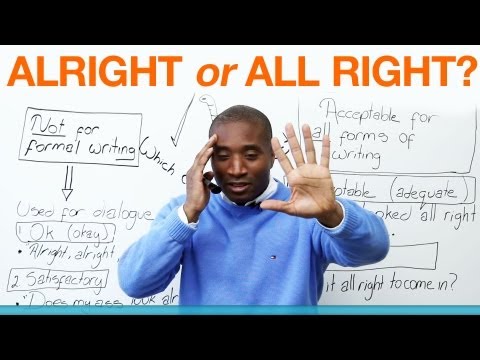
VoiceTube posted on 2014/10/21Ever wondered if 'alright' is actually all right? This super practical EngVid lesson dives deep into the correct usage of 'all right' versus its informal counterpart, showing you exactly when and how to use them in everyday conversations. You'll pick up essential grammar tips and see real dialogue examples to boost your confidence!
Learn this video on the APP!
The VoiceTube App has more in-depth practice for videos!