
accent
US /ˈækˌsɛnt/
UK /'æksent/
- Transitive Verb
- To give emphasis to (a point you are making)
- Noun
- Feature of a design, e.g. a stripe on a shirt
- Correct spoken emphasis on a part of a word
A2Moreafter all
US /ˈæftɚ ɔl/
UK /ˈɑ:ftə ɔ:l/
- Adverb
- In spite of what was expected; used to introduce a statement that supports a previous statement or explains why it was made
- Considering everything; used to indicate that something is happening or is true despite some difficulty or obstacle
- Phrase
- Despite what was expected or thought; in spite of everything.
- Taking everything into consideration; considering that.
B1Morealong with
US /əˈlɔŋ wɪð/
UK /əˈlɔŋ wið/
- Preposition
- In addition to; together with.
- Adverb
- In company or together with someone or something.
- Including; in addition to.
A2Moreanxiety
US /æŋˈzaɪɪti/
UK /æŋ'zaɪətɪ/
- Uncountable Noun
- A feeling of worry, nervousness, or unease about something that might happen, especially when the outcome is uncertain.
B1Moreas opposed to
US
UK
- Preposition
- In contrast to; rather than.
- Instead of; in place of.
A1Moreattention
US /əˈtɛnʃən/
UK /əˈtenʃn/
- Noun (Countable/Uncountable)
- Taking notice of someone or something
- Noun
- (Soldiers) Standing with straight backs
A2TOEICMoreaudience
US /ˈɔdiəns/
UK /ˈɔ:diəns/
- Noun (Countable/Uncountable)
- Group of people attending a play, movie etc.
A2TOEICMorebartender
US
UK
- Noun
- Employee who makes and serves alcohol at a bar
C2Morebreach
US /britʃ/
UK /bri:tʃ/
- Transitive Verb
- To break laws or barriers (e.g. walls)
B1TOEICMorebreak from
US
UK
- Phrasal Verb
- To separate oneself from an association or way of life, typically due to disagreement or disillusionment.
A1Morebrilliant
US /ˈbrɪljənt/
UK /'brɪlɪənt/
- Adjective
- Having a great amount of intelligence or talent
- Being very bright, like a diamond; shining
- Noun
- A diamond or other gem cut in a particular form with many facets to have exceptional brilliance.
A2Morecheck out
US /tʃɛk aʊt/
UK /tʃek aut/
- Phrase
- Phrasal Verb
- To find out information about something
- To take books out of a library
A1Moreclose up
US /kloz ʌp/
UK /kləuz ʌp/
- Countable Noun
- A photograph or film shot taken of a subject at close range.
- Adverb
- To move nearer to someone or something.
A1Morecoincidence
US /koʊˈɪnsɪdəns/
UK /kəʊˈɪnsɪdəns/
- Noun (Countable/Uncountable)
- Occurrence by chance, not design or planned
- State in which two ideas or opinions are the same
B1Moreconcept
US /ˈkɑnˌsɛpt/
UK /'kɒnsept/
- Noun (Countable/Uncountable)
- Abstract idea of something or how it works
- A plan or intention; a conception.
A2TOEICMoreconversation
US /ˌkɑnvɚˈseʃən/
UK /ˌkɒnvəˈseɪʃn/
- Uncountable Noun
- Talking with other people; discussion or chat
- General communication or interaction.
A2Morecount on
US /kaʊnt ɑn/
UK /kaunt ɔn/
- Phrasal Verb
- To depend on someone
- To be confident of and expect something
A2Moredecide
US /dɪˈsaɪd/
UK /dɪ'saɪd/
- Verb (Transitive/Intransitive)
- To make a choice or choose after thinking about it
- To make a legal judgment in court
A2TOEICMoredialog
US /'daɪəˌlɒg/
UK /'daɪəlɒg/
- Noun
- Conversation between two or more individuals
B1Moredialogue
US /ˈdaɪəˌlɔɡ, -ˌlɑɡ/
UK /'daɪəlɒɡ/
- Noun (Countable/Uncountable)
- Conversation between two or more individuals
- A discussion or series of discussions between people or groups, especially ones aimed at resolving a problem.
B1Morediscomfort
US /dɪsˈkʌmfərt/
UK /dɪsˈkʌmfət/
- Transitive Verb
- To cause to feel uncomfortable or not at ease
- Uncountable Noun
- Feelings of being uncomfortable or uneasy
B2Moredramatic
US /drəˈmætɪk/
UK /drəˈmætɪk/
- Adjective
- Gripping the attention; causing an effect
- (Of an event) sudden and extreme
B1Moredraw us into
US
UK
- Phrasal Verb
- To involve or attract someone into a situation, activity, or place.
A1Moreeerie
US /ˈɪri/
UK /ˈɪəri/
- Adjective
- Strange, mysterious and frightening
B1Moreentire
US /ɛnˈtaɪr/
UK /ɪn'taɪə(r)/
- Adjective
- Complete or full; with no part left out; whole
- Undivided; not shared or distributed.
A2TOEICMoreexplain away
US /ɪksˈpleɪn əˈweɪ/
UK /iksˈpleɪn əˈweɪ/
- other
- To attempt to remove doubt or blame by explanation.
C1Morefill in
US /fɪl ɪn/
UK /fil in/
- Phrasal Verb
- To put earth in e.g. a hole
- To explain the context so that someone understands
- Verb (Transitive/Intransitive)
- To write or type information in a blank space.
- To temporarily do someone else's job.
A1Moreframe
US /frem/
UK /freɪm/
- Transitive Verb
- To make a person that is not guilty appear guilty
- To put say or write something in a careful way
- Noun (Countable/Uncountable)
- Structure that holds a picture or photo
- A person's body shape determined by their skeleton
A2TOEICMorefrank
US /fræŋk/
UK /fræŋk/
- Proper Noun
- Member of the ancient Germanic peoples
- Person's name
- Transitive Verb
- To stamp envelopes for posting
B2TOEICMoregesture
US /ˈdʒɛstʃɚ/
UK /'dʒestʃə(r)/
- Noun (Countable/Uncountable)
- Bodily movement expressing a particular meaning
- Something you do to express gratitude, regret etc.
- Intransitive Verb
- To move your body to convey a message e.g. wave
A2Moregodfather
US /ˈɡɑdˌfɑðɚ/
UK /'ɡɒdfɑ:ðə(r)/
- Countable Noun
- Man who acts as a sponsor for a child at baptism
B2Moregoing on
US /ˈɡoɪŋ ɑn/
UK /ˈgəʊɪŋ ɔn/
- Phrasal Verb
- To continue doing something
- To happen (usually negative)
A1Moregovernor
US /ˈgʌvərnə(r)/
UK /ˈgʌvənə(r)/
- Noun
- Person who leads a state or province
B2Morehave to
US /hæv tu/
UK /ˈhæv tə/
- Auxiliary Verb
- Must do
A1Morehinges on
US
UK
- Phrasal Verb
- Depends entirely on something.
in a vacuum
US /ɪn e ˈvækjuəm/
UK /in ə ˈvækjuəm/
- Phrase
- Existing or considered without relation to other things; isolated from outside influences.
- Without any context or background information.
A1Morein control
US /ɪn kənˈtrol/
UK /in kənˈtrəul/
- Adjective
- Having the power to direct or regulate something; able to manage or direct a situation or person.
- Possessing self-restraint and the ability to manage one's own behavior and emotions.
- Phrase
- Having command or authority; managing effectively.
C1Morein favor of
US /ɪn ˈfevɚ ʌv/
UK /in ˈfeivə ɔv/
- Phrase
- Expressing support or approval for someone or something.
- To the advantage of; benefiting.
- Preposition
- Supporting or approving of something.
- To the advantage of; to the benefit of.
A1Morein focus
US /ɪn ˈfokəs/
UK /in ˈfəukəs/
- Phrase
- State in which you see something sharp and clearly
A2Morein keeping with
US
UK
- Phrase
- In agreement with; consistent with.
- Following or adhering to a particular custom or tradition.
in on
US
UK
- Phrase
- To be involved in a secret or plan.
- To be aware of something that is secret or not generally known.
A1Morein real life
US /ɪn ˈriəl laɪf/
UK /in riəl laif/
- Phrase
- In the physical world; not online or in a fictional setting.
- Actually; genuinely; not made up or fictional.
A2Morein succession
US
UK
- Phrase
- Following one after the other without interruption.
- In the correct order; sequentially.
in the frame
US /ɪn ðə ˈfreɪm/
UK /in ðə ˈfreɪm/
- other
- Believed to be involved or suspected in an event or crime.
- Being considered as a candidate or possibility.
B2Morein the scene
US
UK
- Phrase
- Present at the location where something is happening or has happened.
- Actively participating in a performance or dramatic situation.
A1Moreinstead of
US /ɪnˈstɛd ʌv/
UK /inˈsted ɔv/
- Preposition
- When one thing is replaced by another
- Adverb
- As a substitute or alternative.
A1Moreinternal
US /ɪnˈtɚnəl/
UK /inˈtə:nəl/
- Adjective
- Being or happening in the body
- Being, happening in a country, state, organization
B1TOEICMoreknock on
US /nɑk ɑn/
UK /nɔk ɔn/
- Phrasal Verb
- To strike a door or window to attract attention.
- Intransitive Verb
- (In rugby) to drop the ball forward.
A1Morelien
US /lin, ˈliən/
UK /'li:ən/
- Noun
- Law charge on property to satisfy a debt or duty
B2TOEICMorelieutenant
US /lu:ˈtenənt/
UK /lefˈtenənt/
- Noun
- Officer in the army, navy, or air force
B2Morelook at
US /lʊk æt/
UK /luk æt/
- Phrasal Verb
- To use your eyes to focus on something
- To focus your eyes on something carefully
A1Morelt
US
UK
- Abbreviation
- Short for 'lieutenant'
B2Moremartial
US /ˈmɑ:rʃl/
UK /ˈmɑ:ʃl/
- Adjective
- Concerning fighting, war, or soldiers
B1Moremeet with
US /mit wɪð/
UK /mi:t wið/
- Phrasal Verb
- To have a meeting with someone in order to discuss something.
- To encounter or experience something, often something negative.
of course
US /ʌv kɔː(r)s/
UK /ɔv kɔː(r)s/
- Adverb
- Sure ; Certainly
- Phrase
- For sure; certainly
A2Moreoff of
US /ɔf ʌv/
UK /ɔf ɔv/
- Preposition
- From a position on something; down from.
A1Moreordinary
US /ˈɔ:rdneri/
UK /'ɔ:dnrɪ/
- Adjective
- Normal or usual
- Of the rank of ordinary seaman.
- Noun
- An ecclesiastical judge or official having ordinary jurisdiction in a given area.
- Any of several simple and basic geometrical figures.
A2TOEICMoreover to
US
UK
- Preposition
- Used to hand over to someone else to speak
- The responsibility is now yours
performance
US / pɚˈfɔrməns/
UK /pə'fɔ:məns/
- Noun
- Act of doing something
- Activity done to entertain an audience
A2TOEICMorepick up on
US
UK
- Phrasal Verb
- To notice or become aware of something that is not obvious.
- To learn something by watching or listening to other people.
A1Moreplay out
US
UK
- Phrasal Verb
- To use up or exhaust
- To develop or happen in a particular way.
A1Moreprevious
US /ˈpriviəs/
UK /ˈpri:viəs/
- Adjective
- Existing or happening before the present time
- Existing or occurring immediately before in time or order.
- Noun
- A button or link that allows navigation to a preceding item or page.
A2TOEICMorepush in
US
UK
- Phrasal Verb
- To move ahead of people who are waiting in a line.
- To insert something by applying pressure.
A1Morerealization
US /ˌri:ələˈzeɪʃn/
UK /ˌri:əlaɪˈzeɪʃn/
- Uncountable Noun
- Act of noticing something not noticed before
- The achievement or making something happen.
B1TOEICMorescene
US /sin/
UK /si:n/
- Noun
- Incident where someone behaves angrily, badly
- View that looks like a picture
A2TOEICMoresequence
US /ˈsikwəns, -ˌkwɛns/
UK /'si:kwəns/
- Noun
- Part of a movie showing one part of the story
- A particular order in which related events, movements, or things follow each other.
- Transitive Verb
- To arrange things in an order they should happen
A2TOEICMoreshift
US /ʃɪft/
UK /ʃɪft/
- Verb (Transitive/Intransitive)
- To change in position or direction
- To move something from one place to another
- Noun (Countable/Uncountable)
- A change in a persons plans, opinions or beliefs
- Period of work starting at a certain time
A2Moreshift in
US
UK
- Phrasal Verb
- A change or alteration in something.
B2Moresonic
US /ˈsɑ:nɪk/
UK /ˈsɒnɪk/
- Adjective
- Concerning sound, its waves, and speed
C1Morespeak to
US /spik tu/
UK /spi:k tu:/
- Verb (Transitive/Intransitive)
- To address or communicate with someone.
- To indicate or suggest something; to be relevant to.
A1Moresubway
US /ˈsʌbˌwe/
UK /ˈsʌbweɪ/
- Noun
- Train system running under the ground in a city
B1Moresuspicious
US /səˈspɪʃəs/
UK /səˈspɪʃəs/
- Adjective
- Doubtful about someone's honesty
- Feeling that something is wrong; causing suspicion
B1Moresword
US /sɔrd/
UK /sɔ:d/
- Countable Noun
- A long metal weapon with a sharp point and edge
B1Morethink about
US /θɪŋk əˈbaʊt/
UK /θiŋk əˈbaut/
- Phrasal Verb
- To consider something carefully.
- To remember or call to mind.
A1Morethink of
US /θɪŋk ʌv/
UK /θiŋk ɔv/
- Phrasal Verb
- To look on as (being something specific); consider
- To consider or remember something.
- Verb (Transitive/Intransitive)
- To imagine or call something to mind
A1Moreunpack
US /ʌnˈpæk/
UK /ˌʌnˈpæk/
- Transitive Verb
- To try to understand by thinking about something
- To take things out of a suitcase
B1Moreunusual
US /ʌnˈjuʒuəl/
UK /ʌnˈju:ʒuəl/
- Adjective
- Being rare or uncommon; not ordinary; strange
- Remarkable or interesting because different from or better than others.
B1Morevisceral
US /ˈvɪsərəl/
UK /ˈvɪsərəl/
- Adjective
- From deep within you; caused by strong instincts
C1TOEICMorewanna
US /ˈwɑnə/
UK /'wɒnə/
- Verb (Transitive/Intransitive)
- Shortened form of 'want to'. Used only in speaking
B2More
Vocabulary
- close up: A photograph or film shot taken of a subject at close range.
- look at: To use your eyes to focus on something
- along with: In addition to; together with.
- of course: Sure ; Certainly
- think about: To consider something carefully.
- going on: To continue doing something
- in real life: In the physical world; not online or in a fictional setting.
- as opposed to: In contrast to; rather than.
- speak to: To address or communicate with someone.
- break from: To separate oneself from an association or way of life, typically due to disagreement or disillusionment.
- in a vacuum: Existing or considered without relation to other things; isolated from outside influences.
- in succession: Following one after the other without interruption.
- check out
- pick up on: To notice or become aware of something that is not obvious.
- off of: From a position on something; down from.
- in on: To be involved in a secret or plan.
- meet with: To have a meeting with someone in order to discuss something.
- over to: Used to hand over to someone else to speak
- explain away: To attempt to remove doubt or blame by explanation.
- think of: To look on as (being something specific); consider
- in control: Having the power to direct or regulate something; able to manage or direct a situation or person.
- in the frame: Believed to be involved or suspected in an event or crime.
- play out: To use up or exhaust
- hinges on: Depends entirely on something.
- after all: In spite of what was expected; used to introduce a statement that supports a previous statement or explains why it was made
- instead of: When one thing is replaced by another
- in focus: State in which you see something sharp and clearly
- in the scene: Present at the location where something is happening or has happened.
- shift in: A change or alteration in something.
- draw us into: To involve or attract someone into a situation, activity, or place.
- in keeping with: In agreement with; consistent with.
- push in: To move ahead of people who are waiting in a line.
- in favor of: Expressing support or approval for someone or something.
- knock on: To strike a door or window to attract attention.
- fill in: To put earth in e.g. a hole
- count on: To depend on someone
- have to: Must do
- anxiety: A feeling of worry, nervousness, or unease about something that might happen, especially when the outcome is uncertain.
- entire: Complete or full; with no part left out; whole
- accent: To give emphasis to (a point you are making)
- concept: Abstract idea of something or how it works
- audience: Group of people attending a play, movie etc.
- conversation: Talking with other people; discussion or chat
- brilliant: Having a great amount of intelligence or talent
- coincidence: Occurrence by chance, not design or planned
- expect: To believe something is probably going to happen
- scene: Incident where someone behaves angrily, badly
- shift: To change in position or direction
- previous: Existing or happening before the present time
- ordinary: Normal or usual
- suspicious: Doubtful about someone's honesty
- dramatic: Gripping the attention; causing an effect
- frame: To make a person that is not guilty appear guilty
- sequence: Part of a movie showing one part of the story
- attention: Taking notice of someone or something
- dialogue: Conversation between two or more individuals
- performance: Act of doing something
- gesture: Bodily movement expressing a particular meaning
- eerie: Strange, mysterious and frightening
- break: To create a new record e.g. running the 100m dash
- wanna: Shortened form of 'want to'. Used only in speaking
- internal: Being or happening in the body
- breach: To break laws or barriers (e.g. walls)
- moment: Very short or brief period of time
- visceral: From deep within you; caused by strong instincts
- single: One run in cricket or a hit baseball
- important: Having power or authority
- pain: Strong feeling of hurt or discomfort
- notice: To become aware by sight, touch, or hearing
- decide: To make a choice or choose after thinking about it
- order: Religious or social group, as of nuns
- sound: Sensible, dependable and reliable
- point: An item to be discussed
- simple: Not hard to understand or do; not complex
- discomfort: To cause to feel uncomfortable or not at ease
- martial: Concerning fighting, war, or soldiers
- sword: A long metal weapon with a sharp point and edge
- unusual: Being rare or uncommon; not ordinary; strange
- frank: Member of the ancient Germanic peoples
- wide: Having a great distance from one side to the other
- arm: To activate a weapon or bomb for use
- list: To lean to one side, like a boat or ship
- realization: Act of noticing something not noticed before
- bartender: Employee who makes and serves alcohol at a bar
- governor: Person who leads a state or province
- lieutenant: Officer in the army, navy, or air force
- subway: Train system running under the ground in a city
- unpack: To try to understand by thinking about something
- dialog: Conversation between two or more individuals
- sonic: Concerning sound, its waves, and speed
- lien: Law charge on property to satisfy a debt or duty
- godfather: Man who acts as a sponsor for a child at baptism
- lt: Short for 'lieutenant'
Get the full experience in the app
Learn anywhere with detailed sentence and usage analysis
01:03
She took a brave step forward, leaving behind her comfort zone to chase her dreams.
Vocabulary
- brave
adj. Having courage
- comfort zone
phr. A familiar situation where one feels safe
Explanation
a brave step is a noun phrase, where brave is an adjective modifying the noun step, meaning "a courageous step".
forward is an adverb modifying step, meaning "ahead".
The whole phrase serves as the object, answering the "what" of took (verb) — she took a brave step forward.
Get the full experience in the app
Look up words anytime with pronunciation, part of speech, and usage
brave
US/brev/
UK/breɪv/
adj.Brave
v.t.To bravely face
A2 Elementary
Get the full experience in the app
Practice speaking anytime and get instant pronunciation feedback
Try this speaking exercise.
Try practicing with this sentence.
80
0
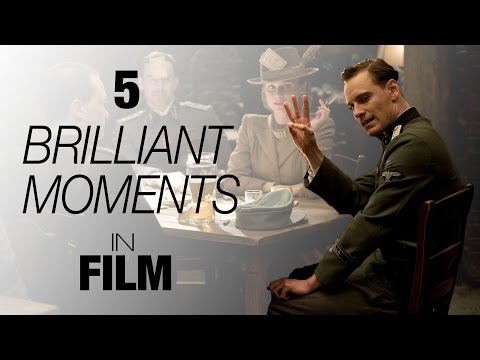
曾瑜棠 posted on 2017/01/09Ever wondered how filmmakers create those unforgettable moments? This video dives into 5 brilliant scenes, breaking down the visual storytelling and sound design that make them pop! You'll pick up some awesome advanced vocabulary related to film language that'll make you sound like a pro.
Learn this video on the APP!
The VoiceTube App has more in-depth practice for videos!