audience
US /ˈɔdiəns/
・UK /ˈɔ:diəns/
A2TOEIC
n. (c./u.)Noun (Countable/Uncountable)Group of people attending a play, movie etc.
The audience gave a big round of applause at the end of the show
Video subtitles
How Words Can Harm: Crash Course Philosophy #28
- And when they do, the problem usually comes down to the distinction between speaker meaning and audience meaning, or what a speaker intends, as opposed to what a listener understands.
And when they do, the problem usually comes down to the distinction between speaker meaning and audience meaning, or what a speaker intends, as opposed to what a listener understands.
- And when a speaker's attitude doesn't match that of their audience, their words whether they were intended to just be funny or edgy or dirty can end up being seriously harmful.
And when a speaker's attitude doesn't match that of their audience, their words whether they were intended to just be funny or edgy or dirty can end up being seriously harmful.
#AskGaryVee Episode 72: Casey Neistat on Applying to College & How to Focus on Goals
- The only time I even am comfortable pissing people off is on stage when I'm challenging the audience to the quote-unquote.
The only time I even am comfortable pissing people off is on stage when I'm challenging the audience to the quote-unquote.
- when I'm challenging the audience
when I'm challenging the audience
Bereavement: How to Transform Grief & Depression Through Spiritual Healing

- So I can even hear some in the audience saying, "Oh, Marianne, this sounds amazing,
So I can even hear some in the audience saying, "Oh, Marianne, this sounds amazing,
- So I can even hear someone in the audience
saying, “Oh, Marianne, this sounds amazing
So I can even hear someone in the audience saying, “Oh, Marianne, this sounds amazing
The First Presidential Debate: Hillary Clinton And Donald Trump (Full Debate) | NBC News
- And I do think the audience is very fluid.
And I do think the audience is very fluid.
- The audience here in the room has agreed to remain silent so that we can focus on what the candidates are saying.
The audience here in the room has agreed to remain silent so that we can focus on what the candidates are saying.
12 Signs You’re Way More Intelligent Than You Realize

- time finding an audience for your jokes because your brain works a little differently than most.
time finding an audience for your jokes because your brain works a little differently than most.
- In either case, you may have a hard time finding an audience for your jokes because your brain works a little differently than most.
In either case, you may have a hard time finding an audience for your jokes because your brain works a little differently than most.
How to Get People to Listen to You | The Harvard Business Review Guide

- If you're in a setting where your audience can read along and hear you speak at the same time, there's a better chance they'll absorb and retain what you have to say.
If you're in a setting where your audience can read along and hear you speak at the same time, there's a better chance they'll absorb and retain what you have to say.
- If you're in a setting where your audience can
If you're in a setting where your audience can
Jimmy O. Yang Says There's No Stand-up Comedy In China

- MIKE, WHO DIDN'T KNOW I WAS SITTING IN THE AUDIENCE THAT DAY
MIKE, WHO DIDN'T KNOW I WAS SITTING IN THE AUDIENCE THAT DAY
- And then eventually, five years later, Mike, who didn't even know I was sitting in the audience that day in the commencement speech, he was the one that gave me the big break.
And then eventually, five years later, Mike, who didn't even know I was sitting in the audience that day in the commencement speech, he was the one that gave me the big break.
Presentation Phrases & Public Speaking Advice | Business English Course Lesson 8
- The first topic is greeting your audience.
The first topic is greeting your audience.
- Beginning your presentation: "Let me start by giving you some background information," or "As you're aware..." If you're bringing up a topic that your audience already knows about, then you can use this phrase to introduce it.
Beginning your presentation: "Let me start by giving you some background information," or "As you're aware..." If you're bringing up a topic that your audience already knows about, then you can use this phrase to introduce it.
Cast of Avengers: Infinity War Reveals Least Trustworthy Avenger
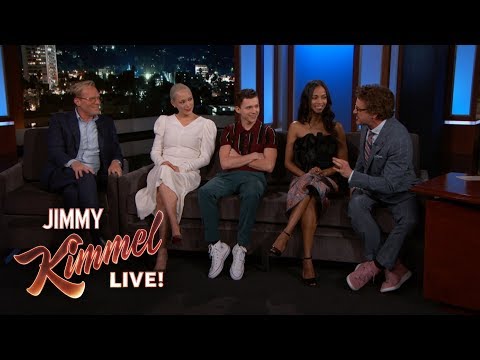
- Even the audience.
Even the audience.
- >> OH MY GOD, EVEN THE AUDIENCE.
>> OH MY GOD, EVEN THE AUDIENCE.
3 Jokes That Make People Instantly Like You

- (audience laughs)
(audience laughs)
- (audience applauds)
(audience applauds)