
along with
US /əˈlɔŋ wɪð/
UK /əˈlɔŋ wið/
- Preposition
- In addition to; together with.
- Adverb
- In company or together with someone or something.
- Including; in addition to.
A2Moreaudience
US /ˈɔdiəns/
UK /ˈɔ:diəns/
- Noun (Countable/Uncountable)
- Group of people attending a play, movie etc.
A2TOEICMoreauthor
US /ˈɔθɚ/
UK /'ɔ:θə(r)/
- Noun (Countable/Uncountable)
- Person who writes books, plays, poems etc.
- Transitive Verb
- To write book or articles
B1Morebuild up
US /bɪld ʌp/
UK /bild ʌp/
- Phrasal Verb
- To increase the amount; collect something
- To develop or increase something in stages
- Verb (Transitive/Intransitive)
- To increase or develop something gradually.
- To praise or encourage someone.
A1Morecut down
US /kʌt daʊn/
UK /kʌt daun/
- Phrasal Verb
- To reduce your use of something
- To fell a tree.
A1Moreend in
US /ɛnd ɪn/
UK /end in/
- Phrasal Verb
- To have something as the final result.
end up with
US
UK
- Phrasal Verb
- To have something as a result.
A1Morefocus
US /ˈfokəs/
UK /'fəʊkəs/
- Verb (Transitive/Intransitive)
- To see clearly by adjusting your eyes or a camera
- To keep your attention, concentration on one thing
- Noun (Countable/Uncountable)
- Main purpose or center of interest or activity
- The clarity of an image produced by a lens.
A2TOEICMorehabit
US /ˈhæbɪt/
UK /'hæbɪt/
- Noun
- Loose clothing like a cloak, worn by monks, nuns
- Usual way of behaving; something often repeated
A2TOEICMorehave to
US /hæv tu/
UK /ˈhæv tə/
- Auxiliary Verb
- Must do
A1Morehorrible
US /ˈhɔrəbəl, ˈhɑr-/
UK /ˈhɒrəbl/
- Adjective
- Very bad; causing annoyance, distaste or fear
A2TOEICMorein mind
US /ɪn maɪnd/
UK /in maind/
- Phrase
- Being aware of or considering something.
- To remember or consider something.
A2Morein the air
US
UK
- Phrase
- Present or circulating in the atmosphere.
- Felt or sensed by many people; circulating as a rumor or feeling.
- Adjective
- Being broadcast on radio or television.
A1Morein turn
US
UK
- Adverb
- One after the other in a sequence or rotation.
A1Moreinstead of
US /ɪnˈstɛd ʌv/
UK /inˈsted ɔv/
- Preposition
- When one thing is replaced by another
- Adverb
- As a substitute or alternative.
A1Moreknow about
US /noʊ əˈbaʊt/
UK /nəʊ əˈbaut/
- Phrasal Verb
- To have information or understanding of a subject or situation.
look at
US /lʊk æt/
UK /luk æt/
- Phrasal Verb
- To use your eyes to focus on something
- To focus your eyes on something carefully
A1Moreon the other hand
US
UK
- Phrase
- Considering a different aspect of the matter; alternatively.
A1Morerather than
US
UK
- Adverb
- More exactly; more correctly
- Preferably; instead
- Preposition
- Instead of
A1Morespend more time
US
UK
- Phrase
- To dedicate a greater amount of time to a particular activity or person.
A1Morespouse
US /spaʊs, spaʊz/
UK /spaʊs/
- Noun
- Someone's husband or wife
B2More
Vocabulary
- have to: Must do
- know about: To have information or understanding of a subject or situation.
- on the other hand : Considering a different aspect of the matter; alternatively.
- instead of: When one thing is replaced by another
- along with: In addition to; together with.
- rather than: More exactly; more correctly
- end in: To have something as the final result.
- in mind: Being aware of or considering something.
- spend more time: To dedicate a greater amount of time to a particular activity or person.
- look at: To use your eyes to focus on something
- in turn: One after the other in a sequence or rotation.
- cut down: To reduce your use of something
- end up with: To have something as a result.
- build up: To increase the amount; collect something
- in the air: Present or circulating in the atmosphere.
- time: Speed at which music is played; tempo
- people: Persons sharing culture, country, background, etc.
- audience: Group of people attending a play, movie etc.
- imagine: To think creatively about; form mental picture of
- effective: Working efficiently to produce a desired result
- control: A device designed to operate a machine
- habit: Loose clothing like a cloak, worn by monks, nuns
- number: Symbols such as 1, 2, 56, 793
- horrible: Very bad; causing annoyance, distaste or fear
- spouse: Someone's husband or wife
- focus: To see clearly by adjusting your eyes or a camera
- author: Person who writes books, plays, poems etc.
- watch: To keep in check, manage, or control something
- read: Person's name
- book: (Police) to officially record someone's crimes
Get the full experience in the app
Learn anywhere with detailed sentence and usage analysis
01:03
She took a brave step forward, leaving behind her comfort zone to chase her dreams.
Vocabulary
- brave
adj. Having courage
- comfort zone
phr. A familiar situation where one feels safe
Explanation
a brave step is a noun phrase, where brave is an adjective modifying the noun step, meaning "a courageous step".
forward is an adverb modifying step, meaning "ahead".
The whole phrase serves as the object, answering the "what" of took (verb) — she took a brave step forward.
Get the full experience in the app
Look up words anytime with pronunciation, part of speech, and usage
brave
US/brev/
UK/breɪv/
adj.Brave
v.t.To bravely face
A2 Elementary
Get the full experience in the app
Practice speaking anytime and get instant pronunciation feedback
Try this speaking exercise.
Try practicing with this sentence.
80
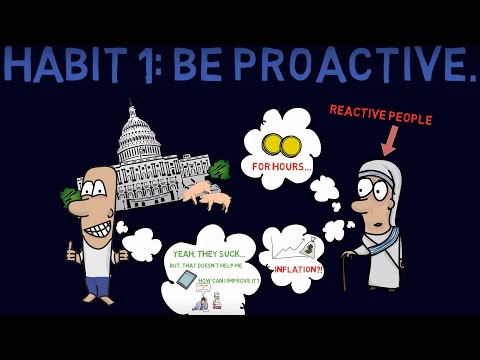
HOW TO BE SUCCESSFUL IN LIFE - THE 7 HABITS OF HIGHLY EFFECTIVE PEOPLE BY STEPHEN COVEY BOOK REVIEW
0
oradba posted on 2015/11/22Want to boost your success? This video dives into Stephen Covey's '7 Habits of Highly Effective People,' breaking down proactivity and productivity for your daily life and career. You'll pick up practical phrases and simple sentence structures that make these powerful ideas easy to understand and use!
Learn this video on the APP!
The VoiceTube App has more in-depth practice for videos!