
advance
US /ædˈvæns/
UK /əd'vɑ:ns/
- Noun
- Forward movement by an army
- An attempt to seduce someone
- Verb (Transitive/Intransitive)
- (Of an army) to move forward
- To change or improve
A2TOEICMoreas soon as
US /æz sun æz/
UK /æz su:n æz/
- Phrase
- In a short time after (something happens)
- Without any delay; immediately
- Conjunction
- At the moment that, or immediately after.
A1Moreat some point
US /æt sʌm pɔɪnt/
UK /æt sʌm pɔint/
- Phrase
- At an unspecified time, usually in the future.
A1Moreat the moment
US
UK
- Adverb
- At this time; now
A1Morebe with
US /bi wɪð/
UK /bi: wið/
- Phrasal Verb
- To accompany someone; to be in someone's presence.
- To support someone's opinion or cause.
A1Moreclause
US /klɔz/
UK /klɔ:z/
- Noun
- Part of a sentence that has its own verb
- Specific term or demand in a legal agreement
B1Morecomma
US /ˈkɑ:mə/
UK /ˈkɒmə/
- Noun
- Mark showing a pause or list in a sentence
B2Moreconnection
US /kəˈnɛkʃən/
UK /kəˈnekʃn/
- Noun (Countable/Uncountable)
- Something that joins things together; being joined
- Person you know who can help you in some way
A2Moredepending on
US
UK
- Phrasal Verb
- To rely on for support (financial or emotional)
- Influenced or determined by.
- Preposition
- Subject to; contingent on
- Relying on someone or something for support or assistance.
A2Moredescription
US /dɪˈskrɪpʃən/
UK /dɪˈskrɪpʃn/
- Noun
- Explanation of what something is like, looks like
- The type or nature of someone or something.
A2TOEICMoredigest
US /daɪˈdʒest/
UK /daɪˈdʒest/
- Verb (Transitive/Intransitive)
- To convert food into energy in your stomach
- To think over facts, news etc.; take in information
- Noun
- A summary, as of the news
B2Moredirect
US /dɪˈrɛkt, daɪ-/
UK /də'rekt/
- Transitive Verb
- To tell someone in a very clear way to do something
- To show the way by conducting or leading
- Adverb
- Coming straight from something
A2TOEICMoredistrict
US /ˈdɪstrɪkt/
UK /'dɪstrɪkt/
- Noun (Countable/Uncountable)
- Area of a country, city, or town
- A region or area known for a particular activity, industry, or feature.
A2Moreextra
US /'ekstrə/
UK /'ekstrə/
- Adjective
- More than necessary; additional
- Of especially good quality or grade.
- Noun (Countable/Uncountable)
- Items more than you need; additional items
- Person who has a small part in a movie
A2Morefigure out
US /ˈfɪɡjɚ aʊt/
UK /ˈfiɡə aut/
- Phrasal Verb
- To understand the behavior of someone
- To think through logically to find a solution
- Verb (Transitive/Intransitive)
- To understand or find an answer to something.
- To find a solution to a problem or understand something.
A1Morefinish off
US /ˈfɪnɪʃ ɔf/
UK /ˈfiniʃ ɔf/
- Phrasal Verb
- To complete the last part of something.
- To decisively defeat someone.
A2Morefor example
US
UK
- Phrase
- As an illustration or instance.
for free
US /fɔr fri/
UK /fɔ: fri:/
- Phrase
- Without charge; at no cost.
- Adjective
- Available without payment.
A2Morehave to
US /hæv tu/
UK /ˈhæv tə/
- Auxiliary Verb
- Must do
A1Morehike
US /haɪk/
UK /haɪk/
- Noun
- Large and unexpected increase in price, level etc.
- A long walk in mountains, etc. for exercise
- Intransitive Verb
- To make a large and unexpected increase in a price
- To take a long walk in mountains etc. for exercise
B1Morein fact
US /ɪn fækt/
UK /in fækt/
- Adverb
- Used to emphasize the truth of a statement, especially one that contrasts with or contradicts something else.
- Used to introduce a more detailed or surprising piece of information.
- Phrase
- Used to emphasize the truth of a statement, especially one that is surprising or contrary to what might be expected.
C1Morein the future
US /ɪn ði ˈfjutʃɚ/
UK /in ðə ˈfju:tʃə/
- Phrase
- At a later time; in times to come.
A1Moreincorrect
US /ˌɪnkəˈrɛkt/
UK /ˌɪnkəˈrekt/
- Adjective
- Being wrong or inaccurate
B1TOEICMoreinstead of
US /ɪnˈstɛd ʌv/
UK /inˈsted ɔv/
- Preposition
- When one thing is replaced by another
- Adverb
- As a substitute or alternative.
A1Morelook at
US /lʊk æt/
UK /luk æt/
- Phrasal Verb
- To use your eyes to focus on something
- To focus your eyes on something carefully
A1Morelook for
US /lʊk fɔr/
UK /luk fɔ:/
- Phrasal Verb
- To try to find a thing or person that is lost
- To expect or anticipate something.
A1Moremuch about
US /mʌtʃ əˈbaʊt/
UK /mʌtʃ əˈbaut/
- Phrase
- A lot of information or knowledge concerning something.
- To a great extent or degree regarding something; caring.
A1Morenative
US /ˈnetɪv/
UK /ˈneɪtɪv/
- Noun (Countable/Uncountable)
- Someone from or born in a specific country
- Original inhabitant, e.g. before others
- Adjective
- Caused by natural ability; innate
A2Moreoption
US /ˈɑpʃən/
UK /'ɒpʃn/
- Noun (Countable/Uncountable)
- A choice
- A right to buy or sell something at a particular price within a particular period.
A2TOEICMoreoveruse
US /ˌovɚˈjuz/
UK /ˌəʊvə'ju:z/
- Uncountable Noun
- Use of an object too often or too extensively
- Transitive Verb
- To use something too often or too extensively
B2Moreparticiple
US /pɑ:rˈtɪsɪpl/
UK /pɑ:ˈtɪsɪpl/
- Participle
- Nonfinite form of the verb, e.g. -ing or -ed forms
C2Morequiz
US /kwɪz/
UK /kwɪz/
- Noun (Countable/Uncountable)
- A game in which players answer questions on topics
- Brief spoken or written test, given to students
- Transitive Verb
- To ask a person many questions about something
B1Morereach
US /ritʃ/
UK /ri:tʃ/
- Verb (Transitive/Intransitive)
- To come to or arrive at a goal or destination
- To be long enough to get to a certain place
- Uncountable Noun
- Power or control someone has over something
A2TOEICMorerefer
US /rɪˈfɚ/
UK /rɪ'fɜ:(r)/
- Verb (Transitive/Intransitive)
- To talk about or write about something
- To give information about something
A2TOEICMoreretain
US /rɪˈten/
UK /rɪ'teɪn/
- Transitive Verb
- To continue to have or use; keep the quality of
- To keep one thing inside another for a time
A2Morescan
US /skæn/
UK /skæn/
- Transitive Verb
- To look inside of the body with a special machine
- To look at something very quickly for information
- Noun
- A look inside the body with a special machine
B1TOEICMoreshift
US /ʃɪft/
UK /ʃɪft/
- Verb (Transitive/Intransitive)
- To change in position or direction
- To move something from one place to another
- Noun (Countable/Uncountable)
- A change in a persons plans, opinions or beliefs
- Period of work starting at a certain time
A2Moresign up to
US
UK
- Phrasal Verb
- To register for something, like a service or a course.
A1Morespot
US /spɑt/
UK /spɒt/
- Noun
- A certain place or area
- A difficult time; awkward situation
- Transitive Verb
- To see someone or something by chance
A2TOEICMoresuch as
US /sʌtʃ æz/
UK /sʌtʃ æz/
- Preposition
- For example; like
A1Moretend
US /tɛnd/
UK /tend/
- Intransitive Verb
- To move or act in a certain manner
- Transitive Verb
- To take care of
A2Moretense
US /tɛns/
UK /tens/
- Noun
- The use of grammar to state the time things happen
- Adjective
- Unable to relax; feeling nervous or stressed
- Stretched tight and stiff
A2TOEICMoretogether with
US /təˈɡɛðɚ wɪð/
UK /təˈɡeðə wið/
- Preposition
- In addition to; along with.
- Including; as well as.
A1Morewith just
US
UK
- Phrase
- Using only; with no more than.
- Barely; by a narrow margin.
A2More
Vocabulary
- figure out: To understand the behavior of someone
- for free: Without charge; at no cost.
- as soon as: In a short time after (something happens)
- for example: As an illustration or instance.
- have to: Must do
- sign up to: To register for something, like a service or a course.
- be with: To accompany someone; to be in someone's presence.
- at some point: At an unspecified time, usually in the future.
- in fact: Used to emphasize the truth of a statement, especially one that contrasts with or contradicts something else.
- such as: For example; like
- at the moment: At this time; now
- instead of: When one thing is replaced by another
- look at: To use your eyes to focus on something
- look for: To try to find a thing or person that is lost
- much about: A lot of information or knowledge concerning something.
- depending on: To rely on for support (financial or emotional)
- in the future: At a later time; in times to come.
- with just: Using only; with no more than.
- together with: In addition to; along with.
- finish off: To complete the last part of something.
- figure: To appear in a game, play or event
- present: Being in attendance; being there; having turned up
- description: Explanation of what something is like, looks like
- native: Someone from or born in a specific country
- tend: To move or act in a certain manner
- common: Area in a city or town that is open to everyone
- spot: A certain place or area
- sentence: (Of a judge) to decide the punishment of
- shift: To change in position or direction
- reach: To come to or arrive at a goal or destination
- tense: The use of grammar to state the time things happen
- direct: To tell someone in a very clear way to do something
- refer: To talk about or write about something
- decision: Choice made after thinking; final judgment
- digest: To convert food into energy in your stomach
- extra: More than necessary; additional
- retain: To continue to have or use; keep the quality of
- advance: Forward movement by an army
- option: A choice
- district: Area of a country, city, or town
- click: To work well with someone or something
- connection: Something that joins things together; being joined
- quiz: A game in which players answer questions on topics
- haven: Place where people can feel safe and happy
- lot: What happens to a person in life from chance; fate
- simple: Not hard to understand or do; not complex
- clause: Part of a sentence that has its own verb
- natural: Being as one would expect; being usual or normal
- basic: At the most important or easiest (beginner) level
- perfect: So good it cannot be improved
- difference: A thing or issue that people do not agree about
- make: To arrange or prepare something e.g. dinner
- mistake: Something done wrong/calculated wrong; error
- scan: To look inside of the body with a special machine
- hike: Large and unexpected increase in price, level etc.
- participle: Nonfinite form of the verb, e.g. -ing or -ed forms
- incorrect: Being wrong or inaccurate
- comma: Mark showing a pause or list in a sentence
- overuse: Use of an object too often or too extensively
Get the full experience in the app
Learn anywhere with detailed sentence and usage analysis
01:03
She took a brave step forward, leaving behind her comfort zone to chase her dreams.
Vocabulary
- brave
adj. Having courage
- comfort zone
phr. A familiar situation where one feels safe
Explanation
a brave step is a noun phrase, where brave is an adjective modifying the noun step, meaning "a courageous step".
forward is an adverb modifying step, meaning "ahead".
The whole phrase serves as the object, answering the "what" of took (verb) — she took a brave step forward.
Get the full experience in the app
Look up words anytime with pronunciation, part of speech, and usage
brave
US/brev/
UK/breɪv/
adj.Brave
v.t.To bravely face
A2 Elementary
Get the full experience in the app
Practice speaking anytime and get instant pronunciation feedback
Try this speaking exercise.
Try practicing with this sentence.
80
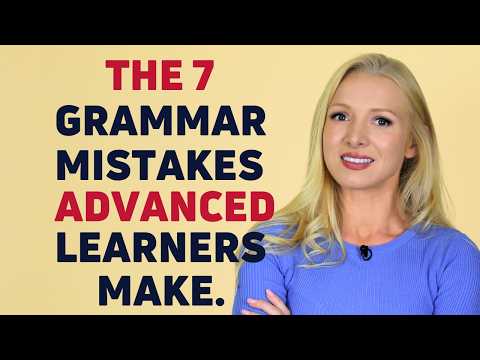
The 7 Grammar Mistakes that Advanced Learners Make
0
Susan posted on 2026/05/04Think you've mastered English grammar? Think again! This video dives into 7 common mistakes even advanced learners make with conditionals, reported speech, and relative clauses, so you can finally sound more natural and fluent. You'll get a free lesson PDF to practice spotting these tricky errors yourself!
Learn this video on the APP!
The VoiceTube App has more in-depth practice for videos!