participle
US /pɑ:rˈtɪsɪpl/
・UK /pɑ:ˈtɪsɪpl/
C2
participleParticipleNonfinite form of the verb, e.g. -ing or -ed forms
You need to add a past participle to have or has when using the present perfect tense
Video subtitles
BOX SET: English In A Minute 9 – TEN English lessons in 10 minutes!
- The expression uses 'have', an object and the action which is done to the object - and the action is always in past participle form.
The expression uses 'have', an object and the action which is done to the object - and the action is always in past participle form.
The third conditional - Grammar: Conditionals with Georgie
- In the if clause, we use the past perfect and in the result clause, we use would plus have plus a past participle.
In the if clause, we use the past perfect and in the result clause, we use would plus have plus a past participle.
- and in the result clause, we use would plus have plus a past participle.
and in the result clause, we use would plus have plus a past participle.
Learn English Tenses: The Present Perfect

- Then you take your verb and you put it into the past participle.
Then you take your verb and you put it into the past participle.
- Then you take your verb and you put it into the past participle.
Then you take your verb and you put it into the past participle.
Present perfect in English
- The structure we use for the present perfect is: subject plus have/has plus past participle plus object.
The structure we use for the present perfect is: subject plus have/has plus past participle plus object.
- plus past participle plus object.
plus past participle plus object.
IELTS Writing Task 1: How to describe a process

- and "made" - we have a past participle.
and "made" - we have a past participle.
- So, you have the object, the "be" verb, and the past participle.
So, you have the object, the "be" verb, and the past participle.
FLUENT ENGLISH: Understand & Use Contractions like a Native Speaker
- I told you with would, we use the present tense of the verb or the base verb, but if we're going to use had, it's going to be the past participle.
I told you with would, we use the present tense of the verb or the base verb, but if we're going to use had, it's going to be the past participle.
- PP in my brain means past participle.
PP in my brain means past participle.
IELTS VOCABULARY – Task 1

- It basically means "who are aged 18-25". So this is a participle, now, a reduced adjective
It basically means "who are aged 18-25". So this is a participle, now, a reduced adjective
- So this is a participle now, a reduced adjective clause, okay?
So this is a participle now, a reduced adjective clause, okay?
Past Simple and Present Perfect - English grammar tutorial video lesson
- For the present perfect, we use the auxiliary verb to have and the past participle.
For the present perfect, we use the auxiliary verb to have and the past participle.
- For the regular verbs, we make a past participle by adding -ed to the infinitive form of the verb.
For the regular verbs, we make a past participle by adding -ed to the infinitive form of the verb.
English Vocabulary: Talking about SPORTS!
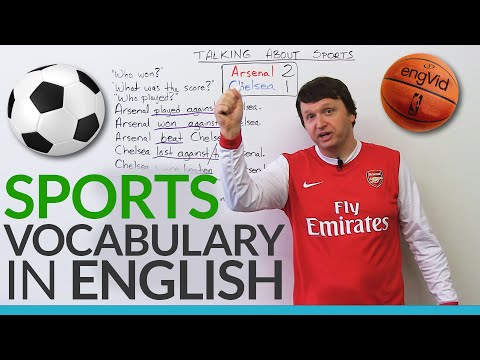
- beat". The past participle of "beat" is "beaten", so you have to say, "Chelsea were beaten by
beat". The past participle of "beat" is "beaten", so you have to say, "Chelsea were beaten by
- Here we have: "Arsenal beat Chelsea." And in the passive sense, you can say, "Chelsea were beaten by Arsenal." So we don't say "were beat." The past participle of "beat" is "beaten." So you have to say, "Chelsea were beaten by Arsenal." "They were beaten 2-1." Okay?
Here we have: "Arsenal beat Chelsea." And in the passive sense, you can say, "Chelsea were beaten by Arsenal." So we don't say "were beat." The past participle of "beat" is "beaten." So you have to say, "Chelsea were beaten by Arsenal." "They were beaten 2-1." Okay?
Learn English Tenses: PRESENT PERFECT and PAST SIMPLE
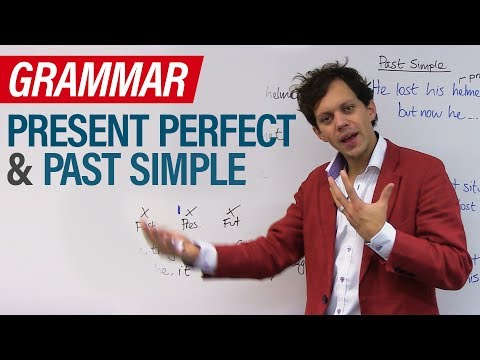
- plus "has" or "have", plus the past participle. So if it's regular, you're going to be doing
plus "has" or "have", plus the past participle. So if it's regular, you're going to be doing
- Subject plus "has" or "have" plus the past participle.
Subject plus "has" or "have" plus the past participle.