
a couple hundred
US
UK
- Determiner
- Approximately two hundred.
- Phrase
- A small number of hundreds; more than one hundred but not many.
A2Moreanswer to
US
UK
- Phrasal Verb
- To be responsible to someone and have to explain your actions to them.
- To correspond to or match a description or requirement.
A1Moreat work
US /æt wɚk/
UK /æt wə:k/
- Phrase
- Located at one's place of employment
A1Morebasically
US /ˈbesɪkəli,-kli/
UK /ˈbeɪsɪkli/
- Adverb
- Used before you explain something simply, clearly
- In essence; when you consider the most important aspects of something.
A2Morebenefit
US /ˈbɛnəfɪt/
UK /'benɪfɪt/
- Noun (Countable/Uncountable)
- Good result or effect, something advantageous
- A payment made by the state or an insurance policy to someone
- Verb (Transitive/Intransitive)
- To have a good effect or be helpful
- To receive an advantage; to be helped
A2TOEICMorebicycle
US /ˈbaɪsɪkl/
UK /ˈbaɪsɪkl/
- Noun
- 2-wheeled vehicle ridden by pushing on foot pedals
- Intransitive Verb
- To ride a two-wheeled vehicle with pedals
B1Morebob
US /bɑ:b/
UK /bɒb/
- Intransitive Verb
- To move up and down repeatedly
- Proper Noun
- Person's name
B2Morecontext
US /ˈkɑnˌtɛkst/
UK /ˈkɒntekst/
- Noun (Countable/Uncountable)
- Set of facts surrounding a person or event
- The circumstances that form the setting for an event, statement, or idea, and in terms of which it can be fully understood and assessed.
A2Morecorrect
US /kəˈrɛkt/
UK /kə'rekt/
- Adjective
- Being suitable and appropriate for an occasion
- True or accurate
- Transitive Verb
- To fix a problem
- To write marks on a piece of work to show mistakes
A2Moredisagree
US /ˌdɪsəˈɡri/
UK /ˌdɪsə'ɡri:/
- Intransitive Verb
- To have a different opinion; to fail to agree
B2TOEICMoredisagree with
US /ˌdɪsəˈɡri wɪð/
UK /ˌdisəˈɡri: wið/
- Phrasal Verb
- To have a different opinion from someone else.
- Intransitive Verb
- To cause someone to feel ill or uncomfortable.
A1Moreduck
US /dʌk/
UK /dʌk/
- Verb (Transitive/Intransitive)
- To avoid doing something that is difficult
- To lower your head to avoid hitting something
- Noun (Countable/Uncountable)
- Common type of water bird
B1Moreexpression
US /ɪkˈsprɛʃən/
UK /ɪk'spreʃn/
- Noun (Countable/Uncountable)
- Act of making your thoughts and feelings known
- Group of words that have a specific meaning
A2TOEICMorefor example
US
UK
- Phrase
- As an illustration or instance.
for the benefit
US
UK
- Phrase
- In order to help or be useful to someone or something.
A1Morefuck about
US /fʌk əˈbaʊt/
UK /fʌk əˈbaʊt/
- other
- To waste time or behave in a silly, unproductive way.
- To engage casually in sexual activity or fool around sexually.
C2Morefuck around
US /fʌk əˈraʊnd/
UK /fʌk əˈraund/
- Phrasal Verb
- To waste time; to not be serious.
- To mess with; to treat disrespectfully.
fuck it up
US /fʌk ɪt ʌp/
UK /fʌk ɪt ʌp/
- other
- To ruin or spoil something because of a mistake.
C2Moregive up
US /ɡɪv ʌp/
UK /ɡiv ʌp/
- Phrasal Verb
- To lose hope or admit defeat
- To decide to not start to try solving a problem
- Verb Phrase
- to surrender an item; hand over an item
A1Morego away
US /ɡo əˈwe/
UK /ɡəu əˈwei/
- Phrasal Verb
- To go on vacation
- To leave; depart.
A1Morehang
US /hæŋ/
UK /hæŋ/
- Transitive Verb
- To attach a picture, photograph etc. onto a wall
- To kill by putting a rope around neck and dropping
- Intransitive Verb
- To float, move softly, or remain in the air
- To remain undecided, unsolved or unclear
A2Moreharm
US /hɑrm/
UK /hɑ:m/
- Transitive Verb
- To damage, injure, or hurt someone or something
- Noun
- Damage or injury
A2Morehave to
US /hæv tu/
UK /ˈhæv tə/
- Auxiliary Verb
- Must do
A1Morelie
US /lai/
UK /laɪ/
- Intransitive Verb
- To be in a horizontal or flat position
- To say something that you know is not true
- Countable Noun
- An untrue statement, when you know it is not true
A2Morelike fuck
US /laɪk fʌk/
UK /laɪk fʌk/
- other
- Used to emphasize a very high degree or intensity.
C2Moremystery
US /ˈmɪstəri/
UK /ˈmɪstri/
- Noun (Countable/Uncountable)
- Quality of being strange and not understood
- Book, play, or film about solving a strange crime
A2Morenope
US /noʊp/
UK /nəʊp/
- Noun
- A dialect or emphatic way of saying 'No'
- A situation or idea that one strongly rejects or wants to avoid.
- Interjection
- An informal way of saying 'no'
B2Moreobject
US /ˈɑbdʒɪkt/
UK /'ɒbdʒɪkt/
- Noun (Countable/Uncountable)
- Something you can see or touch, but is not alive
- Goal or purpose of a particular plan or activity
- Verb (Transitive/Intransitive)
- To disagree; to protest against an idea or plan
- To state one's reason for disagreement
A2TOEICMoreoff of
US /ɔf ʌv/
UK /ɔf ɔv/
- Preposition
- From a position on something; down from.
A1Moreout of it
US /aʊt ʌv ɪt/
UK /aut ɔv it/
- Adjective
- Unconscious or not completely alert; dazed or confused.
- Not able to think clearly or react quickly; not with it.
A1Morephrasal
US
UK
- Adjective
- Concerning or consisting of a phrase
B1Moreproperty
US /ˈprɑpəti/
UK /'prɒpətɪ/
- Noun (Countable/Uncountable)
- Particular quality that someone or something has
- Buildings or piece of land owned by someone
A2TOEICMorescene
US /sin/
UK /si:n/
- Noun
- Incident where someone behaves angrily, badly
- View that looks like a picture
A2TOEICMorescrew
US /skru/
UK /skru:/
- Transitive Verb
- To cheat someone, as out of money/property
- To close something by turning it into place
- Countable Noun
- Long metal nail with a spiral thread
B1Moretense
US /tɛns/
UK /tens/
- Noun
- The use of grammar to state the time things happen
- Adjective
- Unable to relax; feeling nervous or stressed
- Stretched tight and stiff
A2TOEICMoreterrible
US /ˈtɛrəbəl/
UK /ˈterəbl/
- Adjective
- Very bad; horrible
- Causing great fear; frightening
A2TOEICMorevowel
US /ˈvaʊəl/
UK /ˈvaʊəl/
- Countable Noun
- A speech sound; a, e , it, o, u and sometimes y
B1Morewaste
US /west/
UK /weɪst/
- Transitive Verb
- To kill or severely harm someone
- To use valuable things ineffectively
- Uncountable Noun
- Materials left over after a process has finished
A2TOEICMoreyell
US /jɛl/
UK /jel/
- Noun
- A sudden loud cry or shout
- Intransitive Verb
- To shout loudly at someone in pain or excitement
B1More
Vocabulary
- fuck it up: To ruin or spoil something because of a mistake.
- fuck around: To waste time; to not be serious.
- have to: Must do
- go away: To go on vacation
- for example: As an illustration or instance.
- give up: To lose hope or admit defeat
- at work: Located at one's place of employment
- off of: From a position on something; down from.
- disagree with: To have a different opinion from someone else.
- a couple hundred: Approximately two hundred.
- answer to: To be responsible to someone and have to explain your actions to them.
- fuck about: To waste time or behave in a silly, unproductive way.
- out of it: Unconscious or not completely alert; dazed or confused.
- like fuck: Used to emphasize a very high degree or intensity.
- for the benefit: In order to help or be useful to someone or something.
- context: Set of facts surrounding a person or event
- expression: Act of making your thoughts and feelings known
- basically: Used before you explain something simply, clearly
- common: Area in a city or town that is open to everyone
- scene: Incident where someone behaves angrily, badly
- sentence: (Of a judge) to decide the punishment of
- property: Particular quality that someone or something has
- exist: To be present, alive or real
- mean: Average of a set of numbers
- tense: The use of grammar to state the time things happen
- screw: To cheat someone, as out of money/property
- benefit: Good result or effect, something advantageous
- board: Surface for posting or showing information
- guess: To give an answer without knowing if it is correct
- mystery: Quality of being strange and not understood
- hang: To attach a picture, photograph etc. onto a wall
- correct: Being suitable and appropriate for an occasion
- object: Something you can see or touch, but is not alive
- waste: To kill or severely harm someone
- lot: What happens to a person in life from chance; fate
- phrasal: Concerning or consisting of a phrase
- british: Concerning the culture and people of British
- terrible: Very bad; horrible
- vowel: A speech sound; a, e , it, o, u and sometimes y
- harm: To damage, injure, or hurt someone or something
- chance: The way something happens without planning
- verb: Word that expresses an action or state
- person: Man, woman or child
- mistake: Something done wrong/calculated wrong; error
- lie: To be in a horizontal or flat position
- choice: Decision between two or more possibilities
- guy: Man; boy; any person
- yell: A sudden loud cry or shout
- disagree: To have a different opinion; to fail to agree
- choose: To select; decide between several possibilities
- bob: To move up and down repeatedly
- duck: To avoid doing something that is difficult
- nope: A dialect or emphatic way of saying 'No'
- bicycle: 2-wheeled vehicle ridden by pushing on foot pedals
Get the full experience in the app
Learn anywhere with detailed sentence and usage analysis
01:03
She took a brave step forward, leaving behind her comfort zone to chase her dreams.
Vocabulary
- brave
adj. Having courage
- comfort zone
phr. A familiar situation where one feels safe
Explanation
a brave step is a noun phrase, where brave is an adjective modifying the noun step, meaning "a courageous step".
forward is an adverb modifying step, meaning "ahead".
The whole phrase serves as the object, answering the "what" of took (verb) — she took a brave step forward.
Get the full experience in the app
Look up words anytime with pronunciation, part of speech, and usage
brave
US/brev/
UK/breɪv/
adj.Brave
v.t.To bravely face
A2 Elementary
Get the full experience in the app
Practice speaking anytime and get instant pronunciation feedback
Try this speaking exercise.
Try practicing with this sentence.
80
0
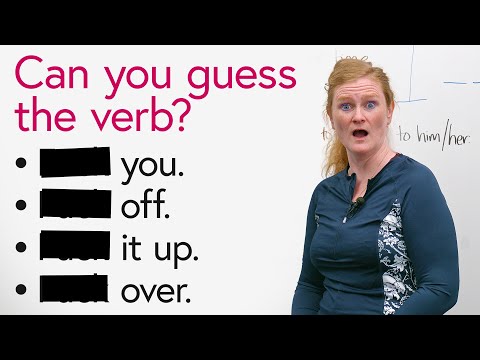
林宜悉 posted on 2026/04/01Ready to test your vocabulary in a hilarious game of Hangman? You'll guess phrasal verbs with a British twist in this fun, explicit game show that's perfect for ESL learners. Get ready to pick up some daily practical phrases and maybe even learn a few new curse words!
Learn this video on the APP!
The VoiceTube App has more in-depth practice for videos!