vowel
US /ˈvaʊəl/
・UK /ˈvaʊəl/
B1
n. (c.)Countable NounA speech sound; a, e , it, o, u and sometimes y
A vowel is made with an open mouth but other sounds require the speaker to close their teeth
Video subtitles
BOX SET: English In A Minute 7 – TEN English lessons in 10 minutes!

- Firstly, an 'e' at the end of a word can change the pronunciation of the vowel before it.
Firstly, an 'e' at the end of a word can change the pronunciation of the vowel before it.
- However, there are many exceptions to this rule. 'Love', 'come', 'some' and 'have' all have e's at the end, but the vowel sound is short.
However, there are many exceptions to this rule. 'Love', 'come', 'some' and 'have' all have e's at the end, but the vowel sound is short.
5 Secrets of American English Pronunciation: Advanced Pronunciation Lesson

- But in American English pronunciation, we often link the "S" with the vowel next to make a "Z" sound.
But in American English pronunciation, we often link the "S" with the vowel next to make a "Z" sound.
- We are linking together the "S" plus a vowel from the next word.
We are linking together the "S" plus a vowel from the next word.
English Pronunciation Practice With Connected Speech (How To Sound Like A Native Speaker)

- Normally, when we have a word which starts with a vowel after 'because', we can say 'coz'.
Normally, when we have a word which starts with a vowel after 'because', we can say 'coz'.
- Normally, when we have a word which starts with a vowel after "because," we can say "cause" and then join "cause" and the next word together.
Normally, when we have a word which starts with a vowel after "because," we can say "cause" and then join "cause" and the next word together.
English Pronunciation Tips (Speak Like A Native Speaker) - 3 Minute English Lesson

- and this word starts with a vowel.
and this word starts with a vowel.
- Let's say we have 'and' here and then we have another word after 'and', and this word starts with a vowel.
Let's say we have 'and' here and then we have another word after 'and', and this word starts with a vowel.
Speak With Me: English Speaking Practice

- This is really typical of American English where a T that's surrounded by vowel sounds is going to change to a D.
This is really typical of American English where a T that's surrounded by vowel sounds is going to change to a D.
- This is really typical of American English where a T that's surrounded by vowel sounds is going to change to a D.
This is really typical of American English where a T that's surrounded by vowel sounds is going to change to a D.
Learn ENGLISH with MODERN FAMILY — Manny's Friend is in Love with Gloria

- We drop the D sound in the word kind, and link this to off, but off changes the F to V, because it is followed by the vowel.
We drop the D sound in the word kind, and link this to off, but off changes the F to V, because it is followed by the vowel.
- of changes the f to v because it is followed by the vowel.
of changes the f to v because it is followed by the vowel.
Speaking English: Simple Exercises for a PERFECT American Accent
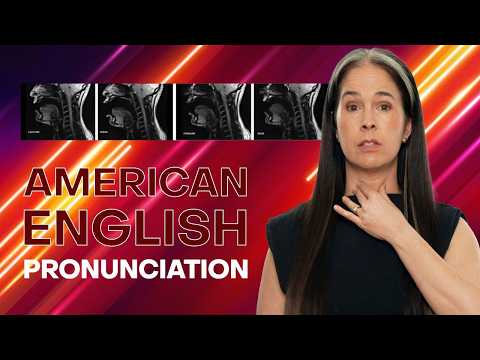
- It's singing the same note, the same vowel in four different styles.
It's singing the same note, the same vowel in four different styles.
- It's singing the same note, the same vowel, in four different styles.
It's singing the same note, the same vowel, in four different styles.
Practice Your English Pronunciation final /t/ vs /d/ Sounds | Course #27
- They sound similar, but they are different vowel sounds in English.
They sound similar, but they are different vowel sounds in English.
- They sound similar, but they are different vowel sounds in English, so you need to hear them differently.
They sound similar, but they are different vowel sounds in English, so you need to hear them differently.
Why Do You Drop the “H” in “Her”? | Minute English #shorts

- What's happening with the T and want, we often drop it after an R before a vowel.
What's happening with the T and want, we often drop it after an R before a vowel.
- We often drop it after an R before a vowel, so "want her," you'll often hear that, "want her." How did you know that Kim was the one?
We often drop it after an R before a vowel, so "want her," you'll often hear that, "want her." How did you know that Kim was the one?
First Drafts: Happy Father's Day 2025 with Evie Colbert

- Just the all vowel album.
Just the all vowel album.
- Just no just the all-vowel album.
Just no just the all-vowel album.