
accomplish
US /əˈkɑmplɪʃ/
UK /ə'kʌmplɪʃ/
- Transitive Verb
- To succeed in doing; complete successfully
B1TOEICMoreadvancement
US /ədˈvænsmənt/
UK /ədˈvɑ:nsmənt/
- Uncountable Noun
- Progress made in a field of knowledge
- Improvement; going forward; progress
B1TOEICMoreadversary
US /ˈædvərseri/
UK /ˈædvəsəri/
- Countable Noun
- Opponent who want to fight you for some reason
B2Morealphabetically
US /ˌælfə'betɪklɪ/
UK /ˌælfə'betɪklɪ/
- Adverb
- In the order of the letters of an alphabet
B1Moreask around
US /æsk əˈraʊnd/
UK /ɑ:sk əˈraʊnd/
- other
- To ask several people for information or advice.
A2Moreattention
US /əˈtɛnʃən/
UK /əˈtenʃn/
- Noun (Countable/Uncountable)
- Taking notice of someone or something
- Noun
- (Soldiers) Standing with straight backs
A2TOEICMorebasically
US /ˈbesɪkəli,-kli/
UK /ˈbeɪsɪkli/
- Adverb
- Used before you explain something simply, clearly
- In essence; when you consider the most important aspects of something.
A2Morecall attention to
US
UK
- Phrasal Verb
- To make someone notice something.
A2Morechip
US /tʃɪp/
UK /tʃɪp/
- Transitive Verb
- To break a small piece off something such as a cup
- To break into small pieces, often with a tool
- Noun (Countable/Uncountable)
- Small piece that has broken off (e.g. from cup)
- Piece of computer hardware that does calculations
B1Morechip in
US /tʃɪp ɪn/
UK /tʃip in/
- Phrasal Verb
- To contribute (donate money) to a cause
B1Morecome back
US /kʌm bæk/
UK /kʌm bæk/
- Phrasal Verb
- To reply to someone, often forcefully
- To be remembered
A1Morecompete
US /kəmˈpit/
UK /kəmˈpi:t/
- Intransitive Verb
- To try to beat others at something, e.g. a race
- To try to gain something by defeating or establishing superiority over others.
A2Moreconjunction
US /kənˈdʒʌŋkʃən/
UK /kənˈdʒʌŋkʃn/
- Noun
- Combination of things or events
- Word that joins parts of a sentence, e.g. 'and'
B1Morecontext
US /ˈkɑnˌtɛkst/
UK /ˈkɒntekst/
- Noun (Countable/Uncountable)
- Set of facts surrounding a person or event
- The circumstances that form the setting for an event, statement, or idea, and in terms of which it can be fully understood and assessed.
A2Morecontribute
US /kənˈtrɪbjut/
UK /kən'trɪbju:t/
- Verb (Transitive/Intransitive)
- To be a factor in causing something to happen
- To donate, give (money) or help to something
A2Moreconversation
US /ˌkɑnvɚˈseʃən/
UK /ˌkɒnvəˈseɪʃn/
- Uncountable Noun
- Talking with other people; discussion or chat
- General communication or interaction.
A2Morecorrect
US /kəˈrɛkt/
UK /kə'rekt/
- Adjective
- Being suitable and appropriate for an occasion
- True or accurate
- Transitive Verb
- To fix a problem
- To write marks on a piece of work to show mistakes
A2Morecount
US /kaʊnt/
UK /kaʊnt/
- Verb (Transitive/Intransitive)
- To add things together to find the total number
- To matter or be important
- Countable Noun
- Number of things added together, e.g. votes
- With the number of crimes, knockouts, as stated
A2Morecount on
US /kaʊnt ɑn/
UK /kaunt ɔn/
- Phrasal Verb
- To depend on someone
- To be confident of and expect something
A2Moredeal with
US /dil wɪð/
UK /di:l wið/
- Verb (Transitive/Intransitive)
- To buy or sell goods or services.
- Phrasal Verb
- To take action to solve a problem or manage a situation.
- To be about; concern.
A1Moredependable
US /dɪˈpɛndəbəl/
UK /dɪˈpendəbl/
- Adjective
- That can be relied on or trusted
B1Moredo over
US /du ˈovɚ/
UK /du: ˈəuvə/
- Phrasal Verb
- To repeat an action; do something again
A1Moredumb
US /dʌm/
UK /dʌm/
- Adjective
- Senseless; stupid
B1Moreend up with
US
UK
- Phrasal Verb
- To have something as a result.
A1Moreexpression
US /ɪkˈsprɛʃən/
UK /ɪk'spreʃn/
- Noun (Countable/Uncountable)
- Act of making your thoughts and feelings known
- Group of words that have a specific meaning
A2TOEICMorefix the problem
US
UK
- Transitive Verb
- To find a solution to a problem; to repair something that is broken.
A1Morefor example
US
UK
- Phrase
- As an illustration or instance.
gerund
US /ˈdʒɛrənd/
UK /ˈdʒerənd/
- Gerund
- Noun formed from a verb (such as the '-ing' form)
C2Morego up against
US /goʊ ʌp əˈgɛnst/
UK /gəu ʌp əˈgenst/
- other
- To compete or confront someone in a contest or challenge.
B2Morehave to
US /hæv tu/
UK /ˈhæv tə/
- Auxiliary Verb
- Must do
A1Morein business
US /ɪn ˈbɪznɪs/
UK /in ˈbiznis/
- Phrase
- Actively operating as a commercial enterprise.
- Having a commercial partnership or association.
A1Morein conjunction with
US /ɪn kənˈdʒʌŋkʃən wɪð/
UK /in kənˈdʒʌŋkʃən wið/
- Phrase
- Together with; along with
A1Morein detail
US /ɪn dɪˈtel/
UK /in ˈdi:teil/
- Phrase
- Thoroughly and completely; giving full particulars.
A2Morein little
US /ɪn ˈlɪtl/
UK /in ˈlɪtl/
- other
- To a small extent; insignificantly.
C2Morein terms of
US
UK
- Phrase
- With regard to; concerning a particular aspect.
A1Moreinvest
US /ɪnˈvɛst/
UK /ɪn'vest/
- Transitive Verb
- To use resources to build for the future
A2TOEICMorelook at
US /lʊk æt/
UK /luk æt/
- Phrasal Verb
- To use your eyes to focus on something
- To focus your eyes on something carefully
A1Moreother than
US
UK
- Preposition
- Except for; apart from.
- Conjunction
- Different from.
A1Morephrasal
US
UK
- Adjective
- Concerning or consisting of a phrase
B1Morepitch
US /pɪtʃ/
UK /pɪtʃ/
- Transitive Verb
- To suggest a product, idea to make someone buy
- To throw a baseball to a batter
- Noun
- Act of throwing a baseball for someone to hit
- Playing fields in sports, e.g. for soccer
B1TOEICMorepitch in
US /pɪtʃ ɪn/
UK /pitʃ in/
- Phrasal Verb
- To help or join together to accomplish something
- To contribute something, often money.
B1Morepoint out
US /pɔɪnt aʊt/
UK /pɔint aut/
- Phrasal Verb
- To make others aware of an idea
- To draw attention to something or someone
A1Morepostpone
US /postˈpon, posˈpon/
UK /pə'spəʊn/
- Transitive Verb
- To schedule for a later time
B1TOEICMorepractice
US /ˈpræktɪs/
UK /'præktɪs/
- Noun
- The office and place for legal or medical work
- Doing something many times to become better at it
- Verb (Transitive/Intransitive)
- To work as a doctor or lawyer
- To live according to the teachings of a religion
A2TOEICMorepresentation
US /ˌprɛzənˈteʃən, ˌprizən-/
UK /ˌpreznˈteɪʃn/
- Noun (Countable/Uncountable)
- Act of giving a formal talk about something
- Way in which something is displayed or shown
A2Morepriority
US /praɪˈɔrɪti, -ˈɑr-/
UK /praɪ'ɒrətɪ/
- Noun (Countable/Uncountable)
- Thing that is more important/urgent than others
- A level of importance assigned to a task or process in a computer system.
- Adjective
- Denoting something that constitutes a priority.
B1TOEICMoreproposition
US /ˌprɑ:pəˈzɪʃn/
UK /ˌprɒpəˈzɪʃn/
- Noun
- General claim or theory
- Something you want to do that may be difficult
B1TOEICMoreput off
US /pʊt ɔf/
UK /put ɔf/
- Phrasal Verb
- To take off, e.g. clothing
- To delay until a later date
A1Morereach
US /ritʃ/
UK /ri:tʃ/
- Verb (Transitive/Intransitive)
- To come to or arrive at a goal or destination
- To be long enough to get to a certain place
- Uncountable Noun
- Power or control someone has over something
A2TOEICMoreredundant
US /rɪˈdʌndənt/
UK /rɪˈdʌndənt/
- Adjective
- Not necessary or needed
- Repeating yourself using different words
B1Morerely
US /rɪˈlaɪ/
UK /rɪ'laɪ/
- Intransitive Verb
- Depend on with full trust or confidence
- To trust or have confidence in someone.
B2TOEICMorerely on
US /rɪˈlaɪ ɑn/
UK /riˈlai ɔn/
- Phrasal Verb
- To depend on someone or something
A2Moreresult
US /rɪˈzʌlt/
UK /rɪ'zʌlt/
- Noun
- Something produced through tests or experiments
- Final score of a competition, election or game
- Intransitive Verb
- To be the outcome of other causes and effects
- To happen or exist as a consequence of something.
A2Morescheduled for
US
UK
- Verb (Transitive/Intransitive)
- To be planned or arranged for a specific time.
A1Moresort out
US /sɔrt aʊt/
UK /sɔ:t aut/
- Phrasal Verb
- To find a way of dealing with a problem; resolve
- To resolve a problem; manage successfully
A1Morespell it out
US /spɛl ɪt aʊt/
UK /spel ɪt aʊt/
- other
- To explain something clearly and in detail.
B1Morespell out
US /spɛl aʊt/
UK /spel aut/
- Phrasal Verb
- To explain something in a very clear and detailed way.
- To say or write the letters of a word in the correct order.
- Transitive Verb
- To say or write the letters of a word one by one.
A2Morestay in
US /ste ɪn/
UK /stei in/
- Phrasal Verb
- To remain inside one's home.
- Intransitive Verb
- To remain as an inpatient in a hospital.
study for
US /ˈstʌdi fɔr/
UK /ˈstʌdi fɔ:/
- Phrasal Verb
- To prepare for an examination or test by learning and revising the subject matter.
task
US /tæsk/
UK /tɑ:sk/
- Noun (Countable/Uncountable)
- Big or small piece of work someone has to do
- Transitive Verb
- To be given something to do, e.g. wash dishes
A2TOEICMorethink through
US /θɪŋk θru/
UK /θiŋk θru:/
- Phrasal Verb
- To consider carefully so all points are covered
A1Moreup against
US /ʌp əˈɡenst/
UK /ʌp əˈɡenst/
- Phrase
- Facing or contending with something difficult or challenging.
- In close proximity or contact with something.
work in
US /wɚk ɪn/
UK /wə:k in/
- Phrasal Verb
- To make an opening for something in your schedule
- To fit person/thing into a schedule or sequence
A1Morework through
US
UK
- Phrasal Verb
- To deal with something systematically until it is completed
- To deal with a problem or difficult situation.
Vocabulary
- count on: To depend on someone
- think through: To consider carefully so all points are covered
- deal with
- point out: To make others aware of an idea
- spell out: To explain something in a very clear and detailed way.
- do over: To repeat an action; do something again
- put off: To take off, e.g. clothing
- up against: Facing or contending with something difficult or challenging.
- sort out: To find a way of dealing with a problem; resolve
- pitch in: To help or join together to accomplish something
- chip in: To contribute (donate money) to a cause
- go up against: To compete or confront someone in a contest or challenge.
- ask around: To ask several people for information or advice.
- have to: Must do
- for example: As an illustration or instance.
- end up with: To have something as a result.
- look at: To use your eyes to focus on something
- in terms of
- rely on: To depend on someone or something
- in business: Actively operating as a commercial enterprise.
- spell it out: To explain something clearly and in detail.
- work in: To make an opening for something in your schedule
- in conjunction with: Together with; along with
- other than: Except for; apart from.
- stay in: To remain inside one's home.
- work through: To deal with something systematically until it is completed
- call attention to: To make someone notice something.
- scheduled for: To be planned or arranged for a specific time.
- study for: To prepare for an examination or test by learning and revising the subject matter.
- fix the problem: To find a solution to a problem; to repair something that is broken.
- in detail: Thoroughly and completely; giving full particulars.
- in little: To a small extent; insignificantly.
- come back: To reply to someone, often forcefully
- sort: To organize things by putting them into groups
- context: Set of facts surrounding a person or event
- situation: Place, position or area that something is in
- expression: Act of making your thoughts and feelings known
- practice: The office and place for legal or medical work
- basically: Used before you explain something simply, clearly
- common: Area in a city or town that is open to everyone
- accomplish: To succeed in doing; complete successfully
- conversation: Talking with other people; discussion or chat
- priority: Thing that is more important/urgent than others
- position: Person's opinion or attitude about something
- dumb: Senseless; stupid
- contribute: To be a factor in causing something to happen
- bit: Device put in a horse's mouth to control it
- presentation: Act of giving a formal talk about something
- contract: To become ill as a result of getting a disease
- pitch: To suggest a product, idea to make someone buy
- task: Big or small piece of work someone has to do
- reach: To come to or arrive at a goal or destination
- deal: To cope with something - usually troubles
- similar: Nearly the same; alike
- explain: To make clear or easy to understand by describing
- attention: Taking notice of someone or something
- decision: Choice made after thinking; final judgment
- complete: To finish or reach the end of doing something
- result: Something produced through tests or experiments
- introduce: To open an essay to set the scene
- invest: To use resources to build for the future
- rely: Depend on with full trust or confidence
- correct: Being suitable and appropriate for an occasion
- organize: To arrange and plan things, e.g. a party
- company: Good feeling from being with someone else
- lot: What happens to a person in life from chance; fate
- compete: To try to beat others at something, e.g. a race
- count: To add things together to find the total number
- phrasal: Concerning or consisting of a phrase
- postpone: To schedule for a later time
- chip: To break a small piece off something such as a cup
- proposition: General claim or theory
- conjunction: Combination of things or events
- redundant: Not necessary or needed
- adversary: Opponent who want to fight you for some reason
- advancement: Progress made in a field of knowledge
- dependable: That can be relied on or trusted
- gerund: Noun formed from a verb (such as the '-ing' form)
- alphabetically: In the order of the letters of an alphabet
Get the full experience in the app
Learn anywhere with detailed sentence and usage analysis
01:03
She took a brave step forward, leaving behind her comfort zone to chase her dreams.
Vocabulary
- brave
adj. Having courage
- comfort zone
phr. A familiar situation where one feels safe
Explanation
a brave step is a noun phrase, where brave is an adjective modifying the noun step, meaning "a courageous step".
forward is an adverb modifying step, meaning "ahead".
The whole phrase serves as the object, answering the "what" of took (verb) — she took a brave step forward.
Get the full experience in the app
Look up words anytime with pronunciation, part of speech, and usage
brave
US/brev/
UK/breɪv/
adj.Brave
v.t.To bravely face
A2 Elementary
Get the full experience in the app
Practice speaking anytime and get instant pronunciation feedback
Try this speaking exercise.
Try practicing with this sentence.
80
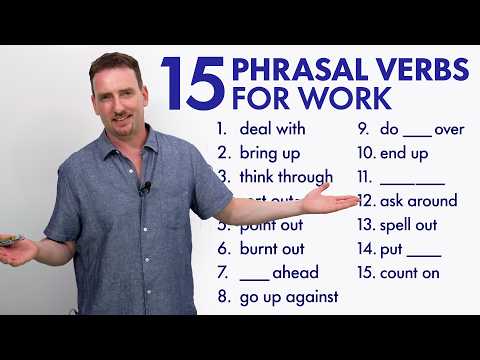
15 PHRASAL VERBS for Business and the Office
0
林宜悉 posted on 2025/06/18Struggling with office jargon? This video breaks down 15 essential phrasal verbs for the workplace, like 'deal with' and 'put off', making your business English super practical! You'll pick up common usage and clear explanations that are perfect for professionals looking to boost their communication skills.
Learn this video on the APP!
The VoiceTube App has more in-depth practice for videos!