
advantage
US /ædˈvæntɪdʒ/
UK /əd'vɑ:ntɪdʒ/
- Noun (Countable/Uncountable)
- Thing making the chance of success higher
- A positive point about something
- Transitive Verb
- To make use of something, especially to further one's own position; exploit.
A2TOEICMoreas a result of
US
UK
- Phrase
- Because of something; owing to.
A1Moreat some point
US /æt sʌm pɔɪnt/
UK /æt sʌm pɔint/
- Phrase
- At an unspecified time, usually in the future.
A1Morebased on
US
UK
- Phrasal Verb
- To use something as the foundation or starting point for something else.
- Preposition
- Using something as the main idea or foundation.
- Relying on something as evidence or justification.
A1Moreblow
US /blo/
UK /bləʊ/
- Verb (Transitive/Intransitive)
- To move something using air
- To make air come quickly out of your mouth
- Noun
- Something that causes you difficulty or sadness
- Act of making air come out of your mouth
A2Morecheck out
US /tʃɛk aʊt/
UK /tʃek aut/
- Phrase
- Phrasal Verb
- To find out information about something
- To take books out of a library
A1Morecome from
US /kʌm frʌm/
UK /kʌm frɔm/
- Phrasal Verb
- To have as your native country or city
A1Morecommon ancestor
US
UK
- Noun
- An ancestor that two or more species have in common and from which they both evolved.
B1Moreconsistently
US /kənˈsɪstəntlɪ/
UK /kən'sɪstəntlɪ/
- Adverb
- In a manner that is the same almost every time
- In every case or on every occasion; invariably
B1Moredepict
US /dɪˈpɪkt/
UK /dɪ'pɪkt/
- Transitive Verb
- To represent or describe something using words
- To represent or show something in a picture or painting; to portray visually.
B1TOEICMoredominance
US /ˈdɑmənəns/
UK /'dɒmɪnəns/
- Uncountable Noun
- Having more power, success than others
- Power and influence over others.
B1Moredominant
US /ˈdɑmənənt/
UK /ˈdɒmɪnənt/
- Adjective
- The strongest; most powerful
- Being the most common, significant or important
- Noun
- (Music) The fifth note of a scale.
B1Moreedge in
US /ɛdʒ ɪn/
UK /edʒ ɪn/
- other
- To insert oneself into a group or conversation gradually.
B2Moreemerge
US /ɪˈmɚdʒ/
UK /ɪ'mɜ:dʒ/
- Intransitive Verb
- To rise or appear out of some background
- To become known or apparent.
A2TOEICMoreeventually
US /ɪˈvɛntʃuəli/
UK /ɪˈventʃuəli/
- Adverb
- After a long time; after many attempts; in the end
- At some later time; in the future
A2Moreevolutionary
US /ˌiːvəˈluːʃəneri/
UK /ˌi:vəˈlu:ʃənri/
- Adjective
- Concerning gradual change over time
B2Moreexact
US /ɪɡˈzækt/
UK /ɪɡ'zækt/
- Adjective
- Completely correct; accurate; specific
- Transitive Verb
- To get something, sometimes using force
A2TOEICMoreextinct
US /ɪkˈstɪŋkt/
UK /ɪkˈstɪŋkt/
- Adjective
- (Of animal, etc.) having died out; with none left
- (E.g. of volcano) not active
B1TOEICMoreextreme
US /ɪkˈstrim/
UK /ɪk'stri:m/
- Adjective
- Very great in degree
- Farthest from a center
- Noun
- Effort that is thought more than is necessary
- The furthest point or limit of something.
B1Morefavor
US /ˈfevɚ/
UK /'feɪvə/
- Noun
- Support or approval from people
- Small gift given out at a party
- Transitive Verb
- To prefer or promote over another
A2Morefor example
US
UK
- Phrase
- As an illustration or instance.
for sure
US /fɔr ʃʊr/
UK /fɔ: ʃuə/
- Adverb
- Definitely; certainly; without a doubt.
- Used to emphasize a statement.
- Interjection
- An expression of strong agreement or affirmation.
A2Moregenerally
US /ˈdʒɛnərəli/
UK /ˈdʒenrəli/
- Adverb
- Usually; as a rule; by, to or for most people
A2Moregenetic
US /dʒəˈnɛtɪk/
UK /dʒəˈnetɪk/
- Adjective
- Of, relating to, or controlled by genes
- Relating to genes or heredity.
B1Morego back to
US /ɡo bæk tu/
UK /ɡəu bæk tu:/
- Phrasal Verb
- To return to a starting point
A1Moregoes to show
US
UK
- Phrase
- To demonstrate or prove something.
A1Morehand on
US /hænd ɑn/
UK /hænd ɔn/
- Phrasal Verb
- To pass or transfer something physically to someone else.
- To pass or transfer knowledge, skills, or traditions to someone else.
A1Morehand over
US /hænd ˈovɚ/
UK /hænd ˈəuvə/
- Phrasal Verb
- To give into the possession or control of another
A1Morehemisphere
US /ˈhɛmɪˌsfɪr/
UK /ˈhemɪsfɪə(r)/
- Noun (Countable/Uncountable)
- One half of a rounded, ball-like object
- One of the two masses forming the brain
B2Morein fact
US /ɪn fækt/
UK /in fækt/
- Adverb
- Used to emphasize the truth of a statement, especially one that contrasts with or contradicts something else.
- Used to introduce a more detailed or surprising piece of information.
- Phrase
- Used to emphasize the truth of a statement, especially one that is surprising or contrary to what might be expected.
C1Morein order to
US /ɪn ˈɔrdɚ tu/
UK /in ˈɔ:də tu:/
- Preposition
- For the purpose of; with the aim of.
- Phrase
- In a specific sequence or arrangement.
- With the aim of; for the purpose of.
C1Morein the first place
US
UK
- Phrase
- To begin with; as the first point or consideration.
- From the beginning; initially.
A1Moreindividual
US /ˌɪndəˈvɪdʒuəl/
UK /ˌɪndɪˈvɪdʒuəl/
- Countable Noun
- Single person, looked at separately from others
- A single thing or item, especially when part of a set or group.
- Adjective
- Made for use by one single person
- Having a distinct manner different from others
A2Morelineage
US /ˈlɪniɪdʒ/
UK /ˈlɪniɪdʒ/
- Noun
- People in someone's family who lived in the past
B2Moremajority
US /məˈdʒɔrɪti, -ˈdʒɑr-/
UK /mə'dʒɒrətɪ/
- Noun (Countable/Uncountable)
- Amount that is more than half of a group
- The age at which a person is legally considered an adult.
B1TOEICMoremake up
US /mek ʌp/
UK /meik ʌp/
- Phrasal Verb
- To invent or create a story
- To add up to
- Verb (Transitive/Intransitive)
- To invent a story, excuse, etc.
- To compensate for something lost, missed, or deficient.
A1Moremammal
US /ˈmæməl/
UK /'mæml/
- Noun
- Animal which drinks milk from its mother
B1Moremanipulate
US /məˈnɪpjəˌlet/
UK /mə'nɪpjʊleɪt/
- Transitive Verb
- To try to control others to gain an advantage
- To handle or work in a skillful manner
B1Moremanipulation
US /məˌnɪpjʊˈleʃən/
UK /məˌnɪpjʊ'leɪʃn/
- Noun (Countable/Uncountable)
- Act of controlling to gain an advantage
- Act of moving something using your hands
B1Morenavigate
US /ˈnævɪˌɡet/
UK /'nævɪɡeɪt/
- Verb (Transitive/Intransitive)
- To direct (car, plane etc.) in the right direction
- To deal successfully with something complex
B2Moreneanderthal
US
UK
- Noun
- An early form of humans long since extinct
- An extinct species of human that lived in Europe and Asia during the Ice Age.
- Adjective
- Relating to or resembling Neanderthals; uncivilized, unintelligent, or boorish.
- Relating to the DNA or genetic makeup of Neanderthals.
C1Moreof course
US /ʌv kɔː(r)s/
UK /ɔv kɔː(r)s/
- Adverb
- Sure ; Certainly
- Phrase
- For sure; certainly
A2Moreon all-fours
US /ɑn ɔl fɔrz/
UK /ɒn ɔ:l fɔ:z/
- other
- Position with hands and knees on the ground.
B1Moreon demand
US /ɑn dɪˈmænd/
UK /ɔn diˈmɑ:nd/
- Adverb
- Whenever requested or needed.
- Adjective
- Available whenever the customer wants it.
B1Moreon earth
US /ɑn ɚθ/
UK /ɔn ə:θ/
- Phrase
- Used to emphasize a question expressing surprise or anger.
- Used to emphasize that something is not possible or will not happen.
A1Moreopponent
US /əˈponənt/
UK /əˈpəʊnənt/
- Noun (Countable/Uncountable)
- Person who opposes an idea or plan; enemy
- Person that you are competing against in a game
B1Morepopulation
US /ˌpɑpjəˈleʃən/
UK /ˌpɒpjuˈleɪʃn/
- Noun (Countable/Uncountable)
- Number of people who live in a country, area etc.
- A group of individuals of one species living in a particular area.
A2TOEICMoreprimate
US /ˈpraɪmɪt, -ˌmet/
UK /'praɪmeɪt/
- Countable Noun
- One of species containing humans and monkeys
- A chief bishop or archbishop.
B2Moreprocess
US /ˈprɑsˌɛs, ˈproˌsɛs/
UK /prə'ses/
- Transitive Verb
- To organize and use data in a computer
- To deal with official forms in the way required
- Noun (Countable/Uncountable)
- Dealing with official forms in the way required
- Set of changes that occur slowly and naturally
A2TOEICMorescratch
US /skrætʃ/
UK /skrætʃ/
- Verb (Transitive/Intransitive)
- To rub your skin with your nails to stop an itch
- To make a small cut or mark on a surface
- Noun
- Action of rubbing your skin when itchy
- A small cut or mark on a surface
B1TOEICMoresignificantly
US /sɪɡˈnɪfəkəntlɪ/
UK /sɪgˈnɪfɪkəntli/
- Adverb
- In a way that is important or noticeable
- In a way that is meaningful
A2Moreslip
US /slɪp/
UK /slɪp/
- Noun (Countable/Uncountable)
- Act of beginning to fall from losing balance
- A field position in cricket
- Verb (Transitive/Intransitive)
- To begin to fall as a result of losing balance
- To escape or become free from something
B1TOEICMoresplit
US /splɪt/
UK /splɪt/
- Adjective
- No longer married or in a relationship
- (Injured) by cutting it open, as in someone's lip
- Verb (Transitive/Intransitive)
- To become divided or broken along a straight line
- To cause a cut in (lip, etc.)
A2Moresubscription
US /səbˈskrɪpʃən/
UK /səbˈskrɪpʃn/
- Noun (Countable/Uncountable)
- Regular payment for a service, magazine etc.
B1TOEICMoretangle
US /ˈtæŋɡəl/
UK /ˈtæŋgl/
- Transitive Verb
- To involve in troubles that are hard to escape
- Intransitive Verb
- (Of string, etc.) to be knotted up and hard to undo
B2Moretend
US /tɛnd/
UK /tend/
- Intransitive Verb
- To move or act in a certain manner
- Transitive Verb
- To take care of
A2Morethanks to
US /θæŋks tu/
UK /θæŋks tu:/
- Preposition
- Because of; as a result of.
A1Morethick
US /θɪk/
UK /θɪk/
- Adjective
- Difficult to see through, as fog
- Full of (people, etc.)
- Adverb
- In close association or friendship.
A2Morethink of
US /θɪŋk ʌv/
UK /θiŋk ɔv/
- Phrasal Verb
- To look on as (being something specific); consider
- To consider or remember something.
- Verb (Transitive/Intransitive)
- To imagine or call something to mind
A1Moreto do with
US
UK
- Phrasal Verb
- To be about something; concern
A1Moreto the bone
US /tu ði bon/
UK /tu: ðə bəun/
- Phrase
- Thoroughly; completely; to the innermost part.
- Extremely; utterly; to a great degree.
trait
US /tret/
UK /treɪt/
- Noun (Countable/Uncountable)
- A particular characteristic that can produce a particular type of behavior
- A genetically determined characteristic or condition.
C2Moretrial
US /ˈtraɪəl, traɪl/
UK /ˈtraɪəl/
- Noun (Countable/Uncountable)
- Hearing and judgment of a case in court
- Act or process of testing or experimenting
- Transitive Verb
- To be made or done as a test or experiment
A2TOEICMoreunexpected
US /ˌʌnɪkˈspektɪd/
UK /ˌʌnɪkˈspektɪd/
- Adjective
- Surprising because it was not expected
- Noun
- An event or occurrence that was not anticipated.
B2Moreversa
US /'vɜ:sə/
UK /'vɜ:sə/
- Adverb
- used to say that what you have just said is also true in the opposite order
C1Morewith it
US /wɪð ɪt/
UK /wið it/
- Adjective
- Intelligent, alert, and up-to-date.
- Understanding and knowledgeable about current trends or information.
A1More
Vocabulary
- thanks to: Because of; as a result of.
- hand over: To give into the possession or control of another
- based on: To use something as the foundation or starting point for something else.
- in fact: Used to emphasize the truth of a statement, especially one that contrasts with or contradicts something else.
- with it: Intelligent, alert, and up-to-date.
- think of: To look on as (being something specific); consider
- hand on: To pass or transfer something physically to someone else.
- to the bone: Thoroughly; completely; to the innermost part.
- on earth: Used to emphasize a question expressing surprise or anger.
- in order to: For the purpose of; with the aim of.
- common ancestor: An ancestor that two or more species have in common and from which they both evolved.
- in the first place: To begin with; as the first point or consideration.
- on all-fours: Position with hands and knees on the ground.
- to do with: To be about something; concern
- for sure: Definitely; certainly; without a doubt.
- at some point: At an unspecified time, usually in the future.
- as a result of: Because of something; owing to.
- make up: To invent or create a story
- go back to: To return to a starting point
- edge in: To insert oneself into a group or conversation gradually.
- come from: To have as your native country or city
- goes to show: To demonstrate or prove something.
- on demand: Whenever requested or needed.
- for example: As an illustration or instance.
- check out
- of course: Sure ; Certainly
- eventually: After a long time; after many attempts; in the end
- individual: Single person, looked at separately from others
- process: To organize and use data in a computer
- trait: A particular characteristic that can produce a particular type of behavior
- majority: Amount that is more than half of a group
- evidence: Factual proof that helps to establish the truth
- tend: To move or act in a certain manner
- extreme: Very great in degree
- advantage: Thing making the chance of success higher
- exact: Completely correct; accurate; specific
- manipulate: To try to control others to gain an advantage
- split: No longer married or in a relationship
- navigate: To direct (car, plane etc.) in the right direction
- scratch: To rub your skin with your nails to stop an itch
- slip: Act of beginning to fall from losing balance
- trial: Hearing and judgment of a case in court
- significantly: In a way that is important or noticeable
- evolutionary: Concerning gradual change over time
- consistently: In a manner that is the same almost every time
- brain: To strike someone forcefully on the head
- generally: Usually; as a rule; by, to or for most people
- genetic: Of, relating to, or controlled by genes
- dominant: The strongest; most powerful
- emerge: To rise or appear out of some background
- population: Number of people who live in a country, area etc.
- hemisphere: One half of a rounded, ball-like object
- compare: To consider how similar and different things are
- opponent: Person who opposes an idea or plan; enemy
- pretty: Being attractive to the eye in a simple way
- blow: To move something using air
- thick: Difficult to see through, as fog
- favor: Support or approval from people
- depict: To represent or describe something using words
- dominance: Having more power, success than others
- lead: Wire for electricity, computer, etc.; cable
- unexpected: Surprising because it was not expected
- extinct: (Of animal, etc.) having died out; with none left
- leave: To go away from; depart
- manipulation: Act of controlling to gain an advantage
- mammal: Animal which drinks milk from its mother
- lot: What happens to a person in life from chance; fate
- place: To put someone in a particular type of situation
- important: Having power or authority
- prefer: To like something better than something else
- information: Collection of facts and details about something
- support: To give assistance or advice to someone
- versa: used to say that what you have just said is also true in the opposite order
- great: Very good; better than before
- pull: Act of breathing in smoke, as from a pipe
- front: Behavior not showing a person's true feelings
- primate: One of species containing humans and monkeys
- subscription: Regular payment for a service, magazine etc.
- lineage: People in someone's family who lived in the past
- tangle: To involve in troubles that are hard to escape
- neanderthal: An early form of humans long since extinct
Get the full experience in the app
Learn anywhere with detailed sentence and usage analysis
01:03
She took a brave step forward, leaving behind her comfort zone to chase her dreams.
Vocabulary
- brave
adj. Having courage
- comfort zone
phr. A familiar situation where one feels safe
Explanation
a brave step is a noun phrase, where brave is an adjective modifying the noun step, meaning "a courageous step".
forward is an adverb modifying step, meaning "ahead".
The whole phrase serves as the object, answering the "what" of took (verb) — she took a brave step forward.
Get the full experience in the app
Look up words anytime with pronunciation, part of speech, and usage
brave
US/brev/
UK/breɪv/
adj.Brave
v.t.To bravely face
A2 Elementary
Get the full experience in the app
Practice speaking anytime and get instant pronunciation feedback
Try this speaking exercise.
Try practicing with this sentence.
80
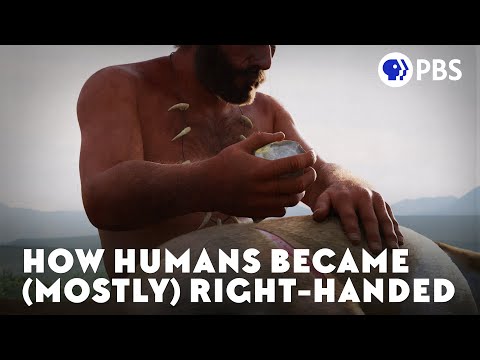
How Humans Became (Mostly) Right-Handed
0
joey joey posted on 2023/10/30Ever wondered why most people are right-handed? This fascinating video dives into human evolution, exploring how tool use and brain development might have made us this way, even looking at Neanderthal evidence! You'll pick up advanced vocabulary related to science and human history, making it a great way to boost your language skills while learning something cool.
Learn this video on the APP!
The VoiceTube App has more in-depth practice for videos!