preposition
US /ˌprɛpəˈzɪʃən/
・UK /ˌprepəˈzɪʃn/
A1
n.NounWord such as 'at' 'on' etc. showing position/time
A preposition like 'in' usually begins a phrase
Video subtitles
BOX SET: English In A Minute 7 – TEN English lessons in 10 minutes!
- In each case, we use the preposition 'to' with a person and 'for' to give the reason we're apologizing.
In each case, we use the preposition 'to' with a person and 'for' to give the reason we're apologizing.
- In each case, we use the preposition "to" with a person and "for" to give the reason we're apologising.
In each case, we use the preposition "to" with a person and "for" to give the reason we're apologising.
BOX SET: English In A Minute 10 – TEN English lessons in 10 minutes!
- Because 'for' is a preposition, you can either use a gerund or a noun.
Because 'for' is a preposition, you can either use a gerund or a noun.
- To say sorry, you might say, "Sorry, excuse me, pardon me, apologies, I sincerely apologise for interrupting or for the interruption." Because for is a preposition, you can either use a gerund or a noun.
To say sorry, you might say, "Sorry, excuse me, pardon me, apologies, I sincerely apologise for interrupting or for the interruption." Because for is a preposition, you can either use a gerund or a noun.
Advanced Prepositions of Time: “throughout”, “ahead of”, “at around”, “out of”…

- What a what? He's asking me to hurry up. We're almost out of time? Time for what? Oh, to start the lesson. Hi. Today's lesson's on prepositions of time. You might see a bit of a prepositional phrase where I put two words together, it's not just a preposition, but understand that these prepositions do tell us about time. I know you've done prepositions where it's about place or movement, right? But, you know, when we say, by, I got here by foot, or by nine o'clock, right? These ones are specific prepositions that we don't usually... Well, native speakers use, but you may not use, and I want to introduce them to you today so you can help master the language. Let's go to the board, shall we?
What a what? He's asking me to hurry up. We're almost out of time? Time for what? Oh, to start the lesson. Hi. Today's lesson's on prepositions of time. You might see a bit of a prepositional phrase where I put two words together, it's not just a preposition, but understand that these prepositions do tell us about time. I know you've done prepositions where it's about place or movement, right? But, you know, when we say, by, I got here by foot, or by nine o'clock, right? These ones are specific prepositions that we don't usually... Well, native speakers use, but you may not use, and I want to introduce them to you today so you can help master the language. Let's go to the board, shall we?
- So, he's telling me to hurry up, and I'm going to find out why I got to hurry up. Well, the first one's not about hurrying up, but it's about the word through and throughout. When we use the preposition through, we talk about going, you know, through a doorway. There's a door and you go through, meaning to go from one space, cross an area, go to another space.
So, he's telling me to hurry up, and I'm going to find out why I got to hurry up. Well, the first one's not about hurrying up, but it's about the word through and throughout. When we use the preposition through, we talk about going, you know, through a doorway. There's a door and you go through, meaning to go from one space, cross an area, go to another space.
7 Common PHRASAL VERBS for Business
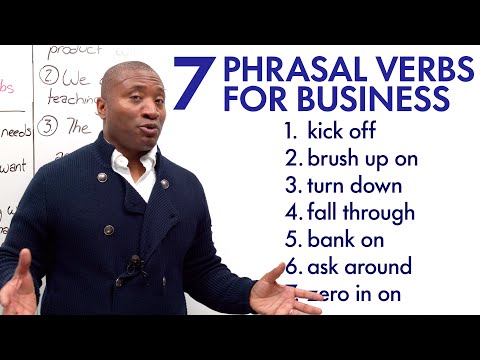
- So, I explained a lot of these phrasal verbs, and I showed you how you could look at the verb and the preposition, yeah, to kind of figure it out.
So, I explained a lot of these phrasal verbs, and I showed you how you could look at the verb and the preposition, yeah, to kind of figure it out.
- and I showed you how you could look at the verb and the preposition, yeah, to kind of figure it out.
and I showed you how you could look at the verb and the preposition, yeah, to kind of figure it out.
Describing Cities & Places In English!
- What preposition did I use after located? In.
What preposition did I use after located? In.
- What preposition did I use after "located"?
What preposition did I use after "located"?
16 “MAKE” Phrasal Verbs: “make for”, “make off”, “make out”...

- Phrasal verb is a verb and a preposition that work together as one unit to have different meanings.
Phrasal verb is a verb and a preposition that work together as one unit to have different meanings.
- And today we're going to look at phrasal verbs with "make." So, again, a quick review: phrasal verb is a verb and a preposition that work together as a one unit to have different meanings.
And today we're going to look at phrasal verbs with "make." So, again, a quick review: phrasal verb is a verb and a preposition that work together as a one unit to have different meanings.
PHRASAL VERBS for hanging out with friends
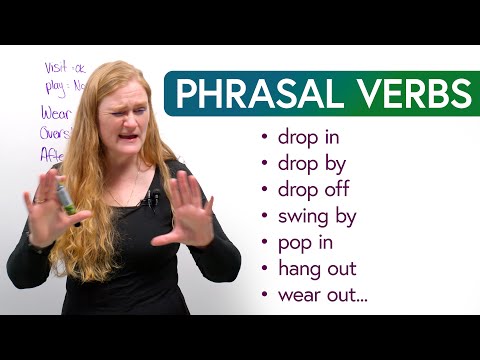
- Please, I don't know why we use a different preposition with in and by, but you can call your friend and say, hey, I'm going to drop in tomorrow.
Please, I don't know why we use a different preposition with in and by, but you can call your friend and say, hey, I'm going to drop in tomorrow.
- Please, I don't know why we use a different preposition with in and by,
Please, I don't know why we use a different preposition with in and by,
IELTS India Band 8 Movies and Home with Subtitles
- In addition, there is a couple of slight preposition and plural mistakes which amount total to that full Band score.
In addition, there is a couple of slight preposition and plural mistakes which amount total to that full Band score.
- In addition, there's a couple of slight preposition and plural mistakes, which amount total to that full band score.
In addition, there's a couple of slight preposition and plural mistakes, which amount total to that full band score.
“Blow Up”, “Tell Off”, “Let Down”: 11 PHRASAL VERBS for Emotions
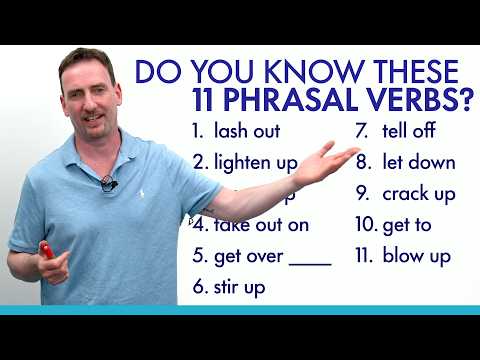
- A phrasal verb is a verb and a preposition joined together, and when they are joined together, they may have completely different meanings.
A phrasal verb is a verb and a preposition joined together, and when they are joined together, they may have completely different meanings.
- A phrasal verb is a verb and a preposition joined together,
A phrasal verb is a verb and a preposition joined together,
IELTS Speaking Score 9 India Good and Bad Analysis
- Yesterday we had a good conversation while eating my mom's famous chicken biryani. That is the end of part one. We will now continue with part two. After analyzing each question in part one, the examiner can conclude that Arya's fluency is a band nine. She speaks without hesitation. Her grammatical range is also band nine. She uses present perfect, conditional as well as other forms of grammar. Her grammatical accuracy is about a band 8 to 8.5. Other than a couple of awkward mistakes like a missing preposition the, her grammar overall is very good. Her lexical resource is again a band nine. She uses a wide range of vocabulary including idiomatic language. And her pronunciation in part one is a band nine. The examiner does not have to concentrate or guess any of the words that Arya is using. Overall the coherence is a band nine so Arya for part one is an expert user of the English language. Now let's continue.
Yesterday we had a good conversation while eating my mom's famous chicken biryani. That is the end of part one. We will now continue with part two. After analyzing each question in part one, the examiner can conclude that Arya's fluency is a band nine. She speaks without hesitation. Her grammatical range is also band nine. She uses present perfect, conditional as well as other forms of grammar. Her grammatical accuracy is about a band 8 to 8.5. Other than a couple of awkward mistakes like a missing preposition the, her grammar overall is very good. Her lexical resource is again a band nine. She uses a wide range of vocabulary including idiomatic language. And her pronunciation in part one is a band nine. The examiner does not have to concentrate or guess any of the words that Arya is using. Overall the coherence is a band nine so Arya for part one is an expert user of the English language. Now let's continue.
- Other than a couple of awkward mistakes, like a missing preposition "the," her grammar overall is very good.
Other than a couple of awkward mistakes, like a missing preposition "the," her grammar overall is very good.