Vocabulary
- lash out: To suddenly attempt to hit someone or something.
- stir up: To cause trouble; incite unrest.
- crack up: To suddenly burst out laughing
- blow up: To suddenly become angry
- loosen up: To become more relaxed and less tense.
- lighten up: To become more cheerful or less serious.
- let down
- on to: Toward something; forward
- forget about: To stop thinking about something; to ignore something.
- for example: As an illustration or instance.
- look at: To use your eyes to focus on something
- think of: To look on as (being something specific); consider
- in some places: In certain locations or areas, but not all.
- for nothing: Without payment or reward; to no purpose or effect; in vain
- take out: To apply for and get a license
- take it out of: To cause someone to feel very tired or exhausted.
- think about: To consider something carefully.
- much about: A lot of information or knowledge concerning something.
- move on: To decide to change or go to a different place
- come up to: To meet expectations
- at work: Located at one's place of employment
- in a bad way: In poor physical or emotional condition.
- got to: To arrive at some place
- come up: To come closer to someone; approach
- F off: A rude way to tell someone to go away or leave.
- swear at: To use offensive language to or about (someone).
- go away: To go on vacation
- to let: Indicates that a property is available for rent.
- high expectations: A strong belief that something will happen or be the case in the future; a high degree of anticipation.
- little bit crazy: Slightly mad or eccentric; somewhat irrational.
- to do with: To be about something; concern
- in terms of
- on the ground: Located on the surface of the earth.
- come back: To reply to someone, often forcefully
- essentially: Basically; (said when stating the basic facts)
- eventually: After a long time; after many attempts; in the end
- context: Set of facts surrounding a person or event
- situation: Place, position or area that something is in
- vocabulary: Words that have to do with a particular subject
- positive: Showing agreement or support for something
- negative: The opposite to a positive electrical charge
- completely: In every way or as much as possible
- character: Person in a story, movie or play
- emotional: Causing, feeling, or appealing to the emotions
- stress: To emphasize one or more parts of a word, sentence
- crack: Attempt to achieve a goal or objective
- frustration: Annoyance because things don't go the way you want
- bit: Device put in a horse's mouth to control it
- criticism: Article or essay that judges quality
- affect: To cause a change in something else
- abuse: To mistreat or be cruel towards someone
- mean: Average of a set of numbers
- tense: The use of grammar to state the time things happen
- physically: In a manner related to the body
- swear: To say bad or impolite words to someone
- reaction: Bodily response to a drug or something eaten
- stir: To arouse (attention or interest)
- literal: Being the basic exact meaning of a word/expression
- blow: To move something using air
- throw: To use your arm to make something fly in the air
- whip: To defeat thoroughly or easily
- quiz: A game in which players answer questions on topics
- frustrate: To make annoyed because things don't go well
- lot: What happens to a person in life from chance; fate
- phrasal: Concerning or consisting of a phrase
- hit: To have a negative impact on a person/place/thing
- explode: To express an emotion in a sudden and loud way
- preposition: Word such as 'at' 'on' etc. showing position/time
- rejection: Decision that something is not good enough
- cocktail: Mixed alcoholic drink, containing spirit like gin
- verb: Word that expresses an action or state
- change: To exchange one set of clothes for another
- remember: To give someone a gift, e.g. birthday, wedding
- person: Man, woman or child
- laugh: To make a happy sound when something is funny
- verbally: Through speech; using words
- start: First time or place that a thing exists; beginning
- annoy: To make someone angry
- yell: A sudden loud cry or shout
- tantrum: Uncontrollable fit of temper or anger
- unfortunate: Having bad luck; bringing a bad result
- lash: Small hairs that grow above and below your eyes
- disappoint: To not meet the expectations of others or yourself
- depress: To make someone feel sad or miserable
- candy: Small sweet foods made mostly of sugar
Get the full experience in the app
Learn anywhere with detailed sentence and usage analysis
01:03
She took a brave step forward, leaving behind her comfort zone to chase her dreams.
Vocabulary
- brave
adj. Having courage
- comfort zone
phr. A familiar situation where one feels safe
Explanation
a brave step is a noun phrase, where brave is an adjective modifying the noun step, meaning "a courageous step".
forward is an adverb modifying step, meaning "ahead".
The whole phrase serves as the object, answering the "what" of took (verb) — she took a brave step forward.
Get the full experience in the app
Look up words anytime with pronunciation, part of speech, and usage
brave
US/brev/
UK/breɪv/
adj.Brave
v.t.To bravely face
A2 Elementary
Get the full experience in the app
Practice speaking anytime and get instant pronunciation feedback
Try this speaking exercise.
Try practicing with this sentence.
80
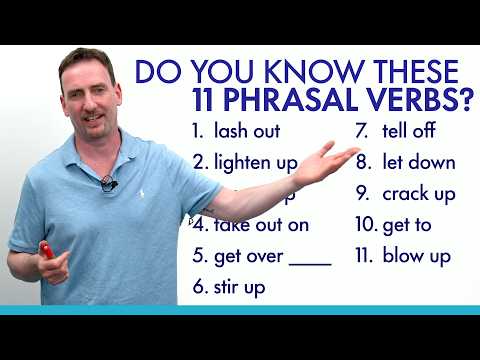
“Blow Up”, “Tell Off”, “Let Down”: 11 PHRASAL VERBS for Emotions
0
林宜悉 posted on 2025/07/17Ever feel like you're going to "blow up" or need to "tell someone off"? This video dives into 11 essential phrasal verbs for expressing emotions, perfect for boosting your everyday spoken English! You'll pick up practical vocabulary that helps you communicate your feelings more clearly and confidently.
Learn this video on the APP!
The VoiceTube App has more in-depth practice for videos!