postman
US /ˈpoʊstmən/
・UK /ˈpəʊstmən/
B2
n. (c.)Countable NounMan who delivers the mail
The postman comes in the afternoon
Video subtitles
Knock At The Cabin's Rupert Grint Answers Your Questions | Actually Me
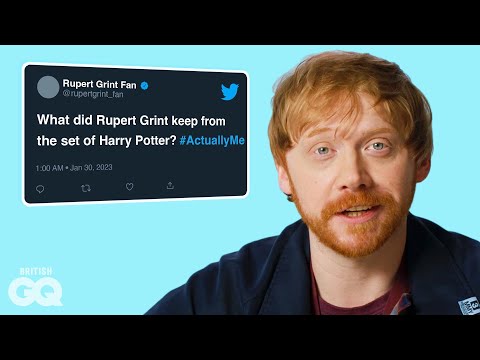
- "Is Rupert Grint the voice Postman Pat?
"Is Rupert Grint the voice Postman Pat?
- I was in "Postman Pat: The Movie."
I was in "Postman Pat: The Movie."
How to Build an MCP Server for LLM Agents: Simplify AI Integration

- And it takes in the exact same variables that we had inside of Postman where I was over here.
And it takes in the exact same variables that we had inside of Postman where I was over here.
- And it takes in the exact same variables that we had inside of Postman, where I was over here.
And it takes in the exact same variables that we had inside of Postman, where I was over here.
How To Be Polite In English
- "Wait" becomes "waited". I waited for the postman, but he did not arrive.
"Wait" becomes "waited". I waited for the postman, but he did not arrive.
- I waited for the postman, but he did not arrive.
I waited for the postman, but he did not arrive.
Steve (Rupert Friend, Colin Firth) Rus,Eng subtitles

- That stupid fucking idiot postman has only been misdelivering your letters to my flat.
That stupid fucking idiot postman has only been misdelivering your letters to my flat.
- Here, the postman is meant to ring twice, isn't he?
Here, the postman is meant to ring twice, isn't he?
HISTORY OF IDEAS - Manners

- Rousseau now contrasts favourably with modern mannered people. Rousseau tells us that people living in what he calls the state of nature were, in his eyes, far superior to educated and mannered Parisians. Their manners may have been simple, but they were honest and forthright, without the sins of what he now terms the over-civilised. Rousseau retells the story of civilisation as one of loss and decline, from a primordial state of fresh-faced curiosity, honesty and enthusiasm, to barbarous over-politeness, fakery and deceit. He describes the elaborate French court at Versailles as less civilised than an early human cave. Readers across Europe are astonished, and not a little impressed, by this impudence. For hundreds of years, moralists have been arguing that our natural selves are wild, harmful, over-sexual and dangerous, and that we must learn to tame them for the sake of others. Now Rousseau suggests the diametrical opposite. Civilisation has gone too far, it's our mannered selves that have become the problem, and the task of a properly evolved civilisation is to throw off the chains of manners, to relax us, strip off the etiquette and return to primitive frankness. Rousseau's point continues to echo down to our own times. It is his voice we can hear whenever someone sticks up for the simpler life, and suggests we dress less formally, eat dinner more casually and more readily say whatever is passing through our minds. New York, United States, 1827. A French aristocrat, Alexis de Tocqueville, is on a tour of the young United States in an effort to understand the spirit of a new kind of society, a democracy. He is immediately struck by American manners, or lack thereof. In Europe, reflects de Tocqueville, manners have been codified to emphasise hierarchical differences between people. Ordinary people defer to aristocrats, aristocrats to royalty, and so on. But in the United States, everything is done so as to suggest that there are no differences between people. No one takes off their hat to anyone, a postman can casually greet a judge, a mule driver can strike up cheerful banter with a wealthy merchant, and one cannot tell by someone's clothes whether they might be living in a mansion or a hut. Expressions like how you doing and hi are heard everywhere across the new republic. It could be charming, but the aristocratic de Tocqueville wryly notes a problem. These casual manners do not do away with class and wealth differences. They merely sentimentally disguise them. The manners of old Europe have been accused of being cruel in their stress on hierarchy.
Rousseau now contrasts favourably with modern mannered people. Rousseau tells us that people living in what he calls the state of nature were, in his eyes, far superior to educated and mannered Parisians. Their manners may have been simple, but they were honest and forthright, without the sins of what he now terms the over-civilised. Rousseau retells the story of civilisation as one of loss and decline, from a primordial state of fresh-faced curiosity, honesty and enthusiasm, to barbarous over-politeness, fakery and deceit. He describes the elaborate French court at Versailles as less civilised than an early human cave. Readers across Europe are astonished, and not a little impressed, by this impudence. For hundreds of years, moralists have been arguing that our natural selves are wild, harmful, over-sexual and dangerous, and that we must learn to tame them for the sake of others. Now Rousseau suggests the diametrical opposite. Civilisation has gone too far, it's our mannered selves that have become the problem, and the task of a properly evolved civilisation is to throw off the chains of manners, to relax us, strip off the etiquette and return to primitive frankness. Rousseau's point continues to echo down to our own times. It is his voice we can hear whenever someone sticks up for the simpler life, and suggests we dress less formally, eat dinner more casually and more readily say whatever is passing through our minds. New York, United States, 1827. A French aristocrat, Alexis de Tocqueville, is on a tour of the young United States in an effort to understand the spirit of a new kind of society, a democracy. He is immediately struck by American manners, or lack thereof. In Europe, reflects de Tocqueville, manners have been codified to emphasise hierarchical differences between people. Ordinary people defer to aristocrats, aristocrats to royalty, and so on. But in the United States, everything is done so as to suggest that there are no differences between people. No one takes off their hat to anyone, a postman can casually greet a judge, a mule driver can strike up cheerful banter with a wealthy merchant, and one cannot tell by someone's clothes whether they might be living in a mansion or a hut. Expressions like how you doing and hi are heard everywhere across the new republic. It could be charming, but the aristocratic de Tocqueville wryly notes a problem. These casual manners do not do away with class and wealth differences. They merely sentimentally disguise them. The manners of old Europe have been accused of being cruel in their stress on hierarchy.
- A postman can casually greet a judge.
A postman can casually greet a judge.
B1 English Listening Practice | English Podcast | The Truth About Money and Happiness
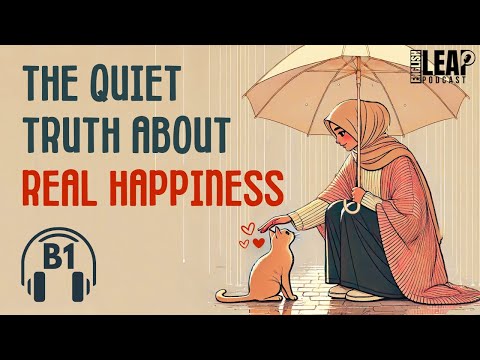
- and talked to the postman like he was family.
and talked to the postman like he was family.
- She grew herbs in small pots, made tea for neighbors, and talked to the postman like he was family.
She grew herbs in small pots, made tea for neighbors, and talked to the postman like he was family.
Inside a Creative Sydney Couple’s Small Home, Public Library and Shop, 60sqm/646sqft
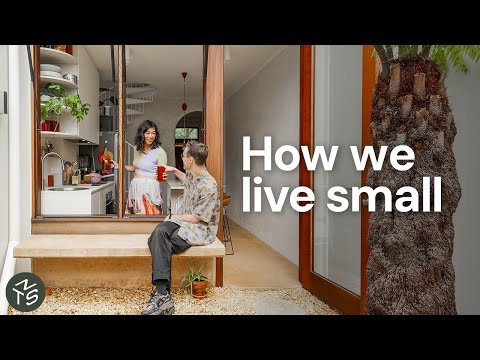
- The custom-made sculpture by Tanika Jealous was created especially for this house by the architect, and what's so funny is that when we moved into this space, the postman would actually start putting the letters in here, thinking it was a letterbox, and so we had a letterbox installed just right there to the left.
The custom-made sculpture by Tanika Jealous was created especially for this house by the architect, and what's so funny is that when we moved into this space, the postman would actually start putting the letters in here, thinking it was a letterbox, and so we had a letterbox installed just right there to the left.
- And what's so funny is that when we moved into this space, the postman would actually start putting the letters in here, thinking it was a letterbox.
And what's so funny is that when we moved into this space, the postman would actually start putting the letters in here, thinking it was a letterbox.
Scotland's Islands and Highlands

- A fun way to travel through the Highlands is with the postman.
A fun way to travel through the Highlands is with the postman.
- With the sparse population of the Highlands, in lieu of a bus service, the government allows people to ride with the postman.
With the sparse population of the Highlands, in lieu of a bus service, the government allows people to ride with the postman.
Learn the Alphabet with Peppa Pig!
- Mr. Zebra the postman is delivering a parcel to Peppa's house
Mr. Zebra the postman is delivering a parcel to Peppa's house
- Zebra, the postman, is delivering a parcel to Peppa's house.
Zebra, the postman, is delivering a parcel to Peppa's house.
GTA: The Ballad of Gay Tony - Intro & Mission #1 - I luv LC [100%] (1080p)
![GTA: The Ballad of Gay Tony - Intro & Mission #1 - I luv LC [100%] (1080p)](https://img.youtube.com/vi/5l0OU5CvDF0/hqdefault.jpg)
- You ain't no postman, Loco.
You ain't no postman, Loco.