perceptual
US /pərˈseptʃuəl/
・UK /pəˈseptʃuəl/
C1
adj.AdjectiveRelating to immediate sensory experience
It is only for distinguishing one perceptual process from another
Video subtitles
Is Bilingualism a Superpower? | Otherwords

- It's called perceptual narrowing.
It's called perceptual narrowing.
Why Does My Brain Sleep?

- During learning, when you're awake, you can purr the specific material with certain perceptual cues like sounds or smells, like a rose odor.
During learning, when you're awake, you can purr the specific material with certain perceptual cues like sounds or smells, like a rose odor.
- During learning when you're awake, you can purr the specific material with certain perceptual cues like sounds or smells, like a rose odor.
During learning when you're awake, you can purr the specific material with certain perceptual cues like sounds or smells, like a rose odor.
The Mere Exposure Effect: The Science Behind Ads
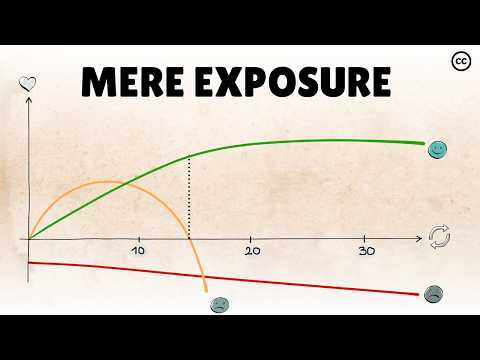
- The second is perceptual fluency.
The second is perceptual fluency.
- The second is perceptual fluency.
The second is perceptual fluency.
We are the Gods Now - Jason Silva at Sydney Opera House
- Every time we push our perceptual boundaries beyond their limits, we are reborn and refreshed and reset,
Every time we push our perceptual boundaries beyond their limits, we are reborn and refreshed and reset,
- In this study, they defined awe as an experience of such perceptual expansion, such perceptual vastness that you literally have to reconfigure, upgrade your mental schemata just to accommodate, just to take in the scale of the experience.
In this study, they defined awe as an experience of such perceptual expansion, such perceptual vastness that you literally have to reconfigure, upgrade your mental schemata just to accommodate, just to take in the scale of the experience.
What is Human Geography? Crash Course Geography #28

- And for Denali, or the renaming of many places known to indigenous peoples, the new name signifies a new perceptual region, or a region that's united by how people think about or see it.
And for Denali, or the renaming of many places known to indigenous peoples, the new name signifies a new perceptual region, or a region that's united by how people think about or see it.
- And for Denali, or the renaming of many places known to indigenous peoples, the new name signifies a new perceptual region, or a region that's united by how people think about or see it.
And for Denali, or the renaming of many places known to indigenous peoples, the new name signifies a new perceptual region, or a region that's united by how people think about or see it.
Why People get into Unhealthy Relationships
- Where others would despair of intransigence or meanness, we see every chance of being able to change a partner – so long as we keep quiet and hope. It can take an awfully long time until we are in any position to realise that all told, the situation does appear a little strange and somewhat irrevocable. That it may not be entirely to our advantage to be told again and again that we are mad for wanting greater gentleness, or demanding for seeking a deeper connection, or crazy for wondering why a partner spends so much time on their phone or out drunk with friends. We could be compared to a giant fish, a tuna perhaps, whose had its fins cut off and lost any powers of navigation, so that it bobs helplessly on the current, hoping against hope that it will be taken somewhere nice, but unable to exert any influence on its course. The famous expression runs, when people show you who they are, believe them. But it's hard to be very clear-eyed about who is good and bad when you happen to grow up with a heavy disincentive to perceive certain awkward truths about your own parents, because you were five years old, trapped in a house with them, and love wasn't readily available from anyone else. Our entire perceptual mechanism may have been twisted as a result. Like an animal that can't perceive certain frequencies of light, our emotional eyes may have grown up unable to see difficult traits for what they are. Coldness now just looks like honourable absorption in more important tasks. Sarcasm is read as wit. Being belittled feels like care. We're always more likely to think of ourselves as bad for failing to elicit kindness from a fundamentally lovely person whom we'll continue to adore and admire, despite one or two signs of trouble, as opposed to conceiving that we might have fallen in with a jerk. We may be deep into our lives before we decide we might have had enough of suffering, and start to be curious about what kindness and presence might feel like. We may ever so slightly determine that though our partner may be using every ounce of their considerable logic and charm to secure the status quo, they might in the end just be taking us for a long ride. We don't have to be here. We are, astonishingly, not five anymore. If we're not happy, we can run.
Where others would despair of intransigence or meanness, we see every chance of being able to change a partner – so long as we keep quiet and hope. It can take an awfully long time until we are in any position to realise that all told, the situation does appear a little strange and somewhat irrevocable. That it may not be entirely to our advantage to be told again and again that we are mad for wanting greater gentleness, or demanding for seeking a deeper connection, or crazy for wondering why a partner spends so much time on their phone or out drunk with friends. We could be compared to a giant fish, a tuna perhaps, whose had its fins cut off and lost any powers of navigation, so that it bobs helplessly on the current, hoping against hope that it will be taken somewhere nice, but unable to exert any influence on its course. The famous expression runs, when people show you who they are, believe them. But it's hard to be very clear-eyed about who is good and bad when you happen to grow up with a heavy disincentive to perceive certain awkward truths about your own parents, because you were five years old, trapped in a house with them, and love wasn't readily available from anyone else. Our entire perceptual mechanism may have been twisted as a result. Like an animal that can't perceive certain frequencies of light, our emotional eyes may have grown up unable to see difficult traits for what they are. Coldness now just looks like honourable absorption in more important tasks. Sarcasm is read as wit. Being belittled feels like care. We're always more likely to think of ourselves as bad for failing to elicit kindness from a fundamentally lovely person whom we'll continue to adore and admire, despite one or two signs of trouble, as opposed to conceiving that we might have fallen in with a jerk. We may be deep into our lives before we decide we might have had enough of suffering, and start to be curious about what kindness and presence might feel like. We may ever so slightly determine that though our partner may be using every ounce of their considerable logic and charm to secure the status quo, they might in the end just be taking us for a long ride. We don't have to be here. We are, astonishingly, not five anymore. If we're not happy, we can run.
- Our entire perceptual mechanism may have been twisted as a result—like an animal that can't perceive certain frequencies of light, our emotional eyes may have grown up unable to see difficult traits for what they are.
Our entire perceptual mechanism may have been twisted as a result—like an animal that can't perceive certain frequencies of light, our emotional eyes may have grown up unable to see difficult traits for what they are.
Peter Joseph - Where are we now? - London 2009-07-25

- Jacques Fresco, who dropped out of school at the age of 14, has a great example regarding this perceptual point.
Jacques Fresco, who dropped out of school at the age of 14, has a great example regarding this perceptual point.
- has a great example regarding this perceptual point.
has a great example regarding this perceptual point.
To Sleep, Perchance to Dream - Crash Course Psychology #9
- So, even though it may seem like you’re dead to the world, when you sleep, your perceptual
So, even though it may seem like you’re dead to the world, when you sleep, your perceptual
- So even though it may seem like you're dead to the world when you sleep, your perceptual window remains slightly open.
So even though it may seem like you're dead to the world when you sleep, your perceptual window remains slightly open.
Perceiving is Believing - Crash Course Psychology #7
- perceptual set. - The psychological factors that determine how you perceive your environment.
perceptual set. - The psychological factors that determine how you perceive your environment.
- Sometimes seeing is believing, but perceptual set theory teaches us that believing is also
Sometimes seeing is believing, but perceptual set theory teaches us that believing is also
How Airplanes Are Designed To Feel Bigger On The Inside

- We know that from perceptual research; a well-lit interior always looks more spacious.
We know that from perceptual research; a well-lit interior always looks more spacious.
- We know that from perceptual research, a well-lit interior always looks more spacious.
We know that from perceptual research, a well-lit interior always looks more spacious.