incorporated
US /ɪn'kɔ:rpəreɪtɪd/
・UK /ɪn'kɔ:pəreɪtɪd/
B1
adj.AdjectiveOrganized and maintained as a legal corporation
The last company I worked for was SAS Philippines, Incorporated
v.t.Transitive VerbTo form into a company or business corporation
The organization incorporated last year due to increased sales
v.t.Transitive VerbTo include or involve as part of something else
The result of the test was incorporated in his report
Video subtitles
Knight

- Linguistically, the association of horse ownership with social status extends back at least as far as ancient Greece, where many aristocratic names incorporated the Greek word for horse, like Hippocras and Xenagyp.
Linguistically, the association of horse ownership with social status extends back at least as far as ancient Greece, where many aristocratic names incorporated the Greek word for horse, like Hippocras and Xenagyp.
- status extends back at least as far as ancient Greece, where many aristocratic names incorporated
status extends back at least as far as ancient Greece, where many aristocratic names incorporated
Doctor Who Minecraft - Doctor Who: The Fan Show

- We really liked the way you incorporated different types of Minecraft blocks into the titles.
We really liked the way you incorporated different types of Minecraft blocks into the titles.
- We really liked the way you incorporated different types of Minecraft blocks into the titles.
We really liked the way you incorporated different types of Minecraft blocks into the titles.
No-Bake Oreo Cheesecake Recipe

- Pour the dissolved gelatin into the bowl with the cream cheese and sugar and mix together until well incorporated.
Pour the dissolved gelatin into the bowl with the cream cheese and sugar and mix together until well incorporated.
- until well incorporated. Switch to a whisk and pour in the whipped cream. Use the whisk
until well incorporated. Switch to a whisk and pour in the whipped cream. Use the whisk
Why Taiwan's East Coast Is Basically Empty
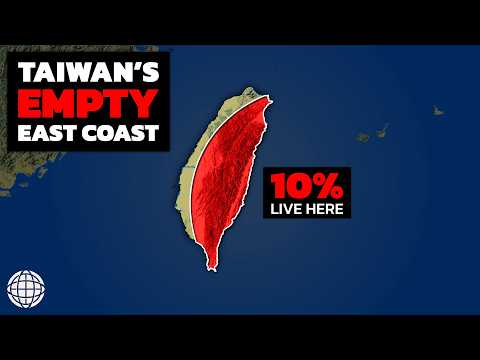
- It's not actually recognized as an independent state and this has a lot to do with how and why Taiwan was settled by China and One of the most important things to remember in this story is that the island has been home to indigenous peoples for thousands of years These people are not directly related to the Chinese In fact, they are Austronesian speaking groups who arrived along the same migration patterns as New Zealand, Polynesia Hawaii and Indonesia these indigenous groups developed distinct cultures and lived in scattered communities Primarily in the mountainous interior and along the coasts their presence remains a significant part of Taiwan's identity today Though they make up only about 2% of the population or about 600,000 people So in a way Taiwan is as much of a colonized country as many parts of the Western Hemisphere But let's get back to how modern Taiwan was established the earliest mentions of Taiwan interacting with China begin around the year 230 when military troops from the Eastern Wu Kingdom of China's Three kingdoms period landed on its shores though There is some debate on whether this was actually Taiwan that they landed on or not Various reports would include some mention of Taiwan albeit under different names for the next 1,400 years During the 1600s Taiwan became a contested territory the Dutch established a colony in the south the Spanish briefly held territory in the north and Chinese settlers mostly from Fujian province Gradually moved on to the island the Dutch were eventually expelled by Koxinga a Ming loyalist who used Taiwan as a base of resistance against the Qing Dynasty however his rule was short-lived as Qing forces took control of Taiwan in 1683 and Incorporated it into their Empire for over two centuries Taiwan remained under Qing rule though its position on the Empire's periphery meant it was often overlooked this changed in 1895 when the Qing were forced to cede Taiwan to Japan after their defeat in the first Sino-Japanese war the Japanese brought Modernization to the island building infrastructure railways and industry while also implementing strict colonial rule Though resistance existed Japan's influence reshaped Taiwan leaving a legacy that persists in aspects of its architecture education and economy after Japan's defeat in World War two Taiwan was handed back to China in 1945 and this proved to be very lucky for the Taiwan that exists today While remaining as a backwater through much of China's history Taiwan would eventually occupy a prominent place in the Chinese Civil War which had begun in the late 1920s The Nationalist Republic of China government under Chiang Kai-shek fought against the communist forces led by Mao Zedong despite initial advantages the Nationalists suffered a series of devastating defeats due to poor leadership corruption and dwindling public support by 1949 the communists had gained control of mainland China Forcing the Nationalist government to retreat to Taiwan Chiang Kai-shek and his followers established their base on the island bringing with them millions of refugees military forces and much of China's cultural and financial wealth at the time though the Nationalist government continued to claim sovereignty over all of China its control was Effectively limited to Taiwan and a few offshore islands It was during this period that saw much of the Western world namely the United States Canada and Western Europe aligned with Taiwan and recognized it as a country leaving mainland China as a global outsider however between 1950 and 1971 this recognition gradually eroded as Western countries sought to recognize mainland China as the sole China in order to establish trade with the much larger economic base and Because mainland China still claimed ownership of Taiwan it mandated that no country could recognize Taiwan as an independent country Despite the fact that it is independent for all intents and purposes This isolated Taiwan from global diplomacy, but not from global trade despite its diplomatic isolation Taiwan's economy surged in the late 1900s transforming from an agrarian society into a global industrial and technological powerhouse Democratic reforms began in the late 1980s culminating in the first direct presidential election in 1996 since then Taiwan has functioned as a democratic society distinct from mainland China Despite Beijing's continued claims over the island which leads us to today's population divide Hey, sorry for the interruption.
It's not actually recognized as an independent state and this has a lot to do with how and why Taiwan was settled by China and One of the most important things to remember in this story is that the island has been home to indigenous peoples for thousands of years These people are not directly related to the Chinese In fact, they are Austronesian speaking groups who arrived along the same migration patterns as New Zealand, Polynesia Hawaii and Indonesia these indigenous groups developed distinct cultures and lived in scattered communities Primarily in the mountainous interior and along the coasts their presence remains a significant part of Taiwan's identity today Though they make up only about 2% of the population or about 600,000 people So in a way Taiwan is as much of a colonized country as many parts of the Western Hemisphere But let's get back to how modern Taiwan was established the earliest mentions of Taiwan interacting with China begin around the year 230 when military troops from the Eastern Wu Kingdom of China's Three kingdoms period landed on its shores though There is some debate on whether this was actually Taiwan that they landed on or not Various reports would include some mention of Taiwan albeit under different names for the next 1,400 years During the 1600s Taiwan became a contested territory the Dutch established a colony in the south the Spanish briefly held territory in the north and Chinese settlers mostly from Fujian province Gradually moved on to the island the Dutch were eventually expelled by Koxinga a Ming loyalist who used Taiwan as a base of resistance against the Qing Dynasty however his rule was short-lived as Qing forces took control of Taiwan in 1683 and Incorporated it into their Empire for over two centuries Taiwan remained under Qing rule though its position on the Empire's periphery meant it was often overlooked this changed in 1895 when the Qing were forced to cede Taiwan to Japan after their defeat in the first Sino-Japanese war the Japanese brought Modernization to the island building infrastructure railways and industry while also implementing strict colonial rule Though resistance existed Japan's influence reshaped Taiwan leaving a legacy that persists in aspects of its architecture education and economy after Japan's defeat in World War two Taiwan was handed back to China in 1945 and this proved to be very lucky for the Taiwan that exists today While remaining as a backwater through much of China's history Taiwan would eventually occupy a prominent place in the Chinese Civil War which had begun in the late 1920s The Nationalist Republic of China government under Chiang Kai-shek fought against the communist forces led by Mao Zedong despite initial advantages the Nationalists suffered a series of devastating defeats due to poor leadership corruption and dwindling public support by 1949 the communists had gained control of mainland China Forcing the Nationalist government to retreat to Taiwan Chiang Kai-shek and his followers established their base on the island bringing with them millions of refugees military forces and much of China's cultural and financial wealth at the time though the Nationalist government continued to claim sovereignty over all of China its control was Effectively limited to Taiwan and a few offshore islands It was during this period that saw much of the Western world namely the United States Canada and Western Europe aligned with Taiwan and recognized it as a country leaving mainland China as a global outsider however between 1950 and 1971 this recognition gradually eroded as Western countries sought to recognize mainland China as the sole China in order to establish trade with the much larger economic base and Because mainland China still claimed ownership of Taiwan it mandated that no country could recognize Taiwan as an independent country Despite the fact that it is independent for all intents and purposes This isolated Taiwan from global diplomacy, but not from global trade despite its diplomatic isolation Taiwan's economy surged in the late 1900s transforming from an agrarian society into a global industrial and technological powerhouse Democratic reforms began in the late 1980s culminating in the first direct presidential election in 1996 since then Taiwan has functioned as a democratic society distinct from mainland China Despite Beijing's continued claims over the island which leads us to today's population divide Hey, sorry for the interruption.
- However, his rule was short-lived, as Qing forces took control of Taiwan in 1683 and incorporated it into their empire.
However, his rule was short-lived, as Qing forces took control of Taiwan in 1683 and incorporated it into their empire.
The Story of: Gerhard Richter (1932–Today)

- Realism, and with reference to Socialist Realism, but also a label Richter wasn't too satisfied about. Richter was interested in current affairs, consumer society, new media and popular culture. He incorporated these elements into his painterly practice, depicting for instance televisions, design magazines, advertisements or political figures and events. This was the genesis of Richter's professional oeuvre, and photography was the starting point, something which used to be impossible with his academic background. He combined photography with his characteristic blurred effect, and immediately started to examine the relationship between both media, photography and painting, a true pillar within his artistic practice. The German artist was interested and fascinated by the dialectic relation between the objectivity and the subjectivity when painting photographs. For Richter, the photograph was the most perfect picture. He could eliminate conscious thinking, as the picture does not change, it is absolute, autonomous, unconditional and not linked to any style. With his blurred effect, he made everything equal, equally important and simultaneously equally unimportant. He was strongly drawn to depicting certain subjects from found photographic material. Think of military subjects, family portraits, images from newspapers or magazines. These selected images all have their very own narrative and motive to be painted, most often combining death or suffering, and its exploitation of death and suffering in media. From 1963 until 1964, Richter had his first exhibitions and commercial successes, collaborating with several galleries, and also collectors were starting to get really interested in his work and career. A landmark year for Gerhard Richter was 1966, for many reasons. The first, the birth of his daughter, Betty, whom he iconically painted in 1988. He also painted his wife
Realism, and with reference to Socialist Realism, but also a label Richter wasn't too satisfied about. Richter was interested in current affairs, consumer society, new media and popular culture. He incorporated these elements into his painterly practice, depicting for instance televisions, design magazines, advertisements or political figures and events. This was the genesis of Richter's professional oeuvre, and photography was the starting point, something which used to be impossible with his academic background. He combined photography with his characteristic blurred effect, and immediately started to examine the relationship between both media, photography and painting, a true pillar within his artistic practice. The German artist was interested and fascinated by the dialectic relation between the objectivity and the subjectivity when painting photographs. For Richter, the photograph was the most perfect picture. He could eliminate conscious thinking, as the picture does not change, it is absolute, autonomous, unconditional and not linked to any style. With his blurred effect, he made everything equal, equally important and simultaneously equally unimportant. He was strongly drawn to depicting certain subjects from found photographic material. Think of military subjects, family portraits, images from newspapers or magazines. These selected images all have their very own narrative and motive to be painted, most often combining death or suffering, and its exploitation of death and suffering in media. From 1963 until 1964, Richter had his first exhibitions and commercial successes, collaborating with several galleries, and also collectors were starting to get really interested in his work and career. A landmark year for Gerhard Richter was 1966, for many reasons. The first, the birth of his daughter, Betty, whom he iconically painted in 1988. He also painted his wife
- He incorporated these elements into his painterly practice, depicting, for instance, televisions, design magazines, advertisements, or political figures and events.
He incorporated these elements into his painterly practice, depicting, for instance, televisions, design magazines, advertisements, or political figures and events.
The History of Halloween
- When the Roman Empire conquered Celtic territory later on, some of ancient rome's religious traditions, such as its festival of the dead, were incorporated into the celebration of Samhain.
When the Roman Empire conquered Celtic territory later on, some of ancient rome's religious traditions, such as its festival of the dead, were incorporated into the celebration of Samhain.
- When the Roman Empire conquered Celtic territory later on, some of ancient Rome's religious traditions, such as its Festival of the Dead, were incorporated into the celebration of Samhain.
When the Roman Empire conquered Celtic territory later on, some of ancient Rome's religious traditions, such as its Festival of the Dead, were incorporated into the celebration of Samhain.
McSpaghetti? Inside McDonald’s International Menu Strategy | WSJ Economics Of
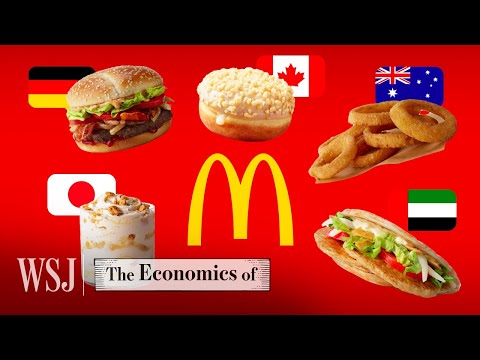
- Local flavors are incorporated in several ways.
Local flavors are incorporated in several ways.
- Local flavors are incorporated in several ways.
Local flavors are incorporated in several ways.
Sounds of Japan that 99% Foreigners Can’t Name All
- Well, if you speak any Japanese at all Then maybe this one was rather easy But if you don't speak any at all This one might be kind of hard Well, the sound is actually coming from the Yakiimo roasted sweet potato song Usually played in the winter by a truck vendor Cruising the neighborhood, selling their warm sweet potatoes The Japanese version of the ice cream truck on cold days These Yakiimo trucks actually became popular Since they could move to high traffic areas in the winter Where people wanted warm snacks And this song itself was made in Tokyo Based on the vague idea of the original Yakiimo song There were many variations But before the 60s, when the cassette tape became popular The version became standard For some reason, when I hear this song I kind of feel a little bit cold and also hungry at the same time Number four Let's try this one I'll give you a clue This song is not the Don Quixote song Which everyone already knows I thought that one would be too easy This song is actually from Yodobashi Camera Which plays non-stop And the melody was adapted from the song Battle Hymn of the Republic The founder Terukazu Fujisawa himself wrote the lyrics And since the main store was at Shinjuku West Exit He incorporated the Yamanote train line and Chuo train line in the lyrics So people could know where the store was located For me, it's just as catchy as the Don Quixote song Where they both forever just get stuck in your head At least for the day Number five Let's see if you've heard this one before Three, two, one So this one varies from area to area But it's basically Japan's afternoon go-home song It's played on the loudspeakers throughout the neighborhood Including parks In my Tokyo neighborhood, it plays at 5 p.m. every day Signaling everyone that it's getting late And it's time to make your way home Interestingly, it serves another purpose It's a daily test to ensure the proper working order Of the neighborhood's emergency system Used for major earthquakes or any other major disaster events That need warning Even in the event of a power outage The system can continue to broadcast using its own battery So this is one of those sounds that I recognized early on But didn't know what it was for until much, much later I'm just glad that this sound is actually pretty calming You know what one of the sounds I love the most coming from Japan?
Well, if you speak any Japanese at all Then maybe this one was rather easy But if you don't speak any at all This one might be kind of hard Well, the sound is actually coming from the Yakiimo roasted sweet potato song Usually played in the winter by a truck vendor Cruising the neighborhood, selling their warm sweet potatoes The Japanese version of the ice cream truck on cold days These Yakiimo trucks actually became popular Since they could move to high traffic areas in the winter Where people wanted warm snacks And this song itself was made in Tokyo Based on the vague idea of the original Yakiimo song There were many variations But before the 60s, when the cassette tape became popular The version became standard For some reason, when I hear this song I kind of feel a little bit cold and also hungry at the same time Number four Let's try this one I'll give you a clue This song is not the Don Quixote song Which everyone already knows I thought that one would be too easy This song is actually from Yodobashi Camera Which plays non-stop And the melody was adapted from the song Battle Hymn of the Republic The founder Terukazu Fujisawa himself wrote the lyrics And since the main store was at Shinjuku West Exit He incorporated the Yamanote train line and Chuo train line in the lyrics So people could know where the store was located For me, it's just as catchy as the Don Quixote song Where they both forever just get stuck in your head At least for the day Number five Let's see if you've heard this one before Three, two, one So this one varies from area to area But it's basically Japan's afternoon go-home song It's played on the loudspeakers throughout the neighborhood Including parks In my Tokyo neighborhood, it plays at 5 p.m. every day Signaling everyone that it's getting late And it's time to make your way home Interestingly, it serves another purpose It's a daily test to ensure the proper working order Of the neighborhood's emergency system Used for major earthquakes or any other major disaster events That need warning Even in the event of a power outage The system can continue to broadcast using its own battery So this is one of those sounds that I recognized early on But didn't know what it was for until much, much later I'm just glad that this sound is actually pretty calming You know what one of the sounds I love the most coming from Japan?
- And since the main store was at Shinjuku West Exit, he incorporated the Yamanote train line and Chuo train line in the lyrics so people could know where the store was located.
And since the main store was at Shinjuku West Exit, he incorporated the Yamanote train line and Chuo train line in the lyrics so people could know where the store was located.
Traffic Cam Caper | S1 E21 | Full Episode | Phineas and Ferb | @disneyxd
- Rutherford's Byrd Sable Incorporated!
Rutherford's Byrd Sable Incorporated!
- ♪ Doofenshmirtz Evil Incorporated
♪ Doofenshmirtz Evil Incorporated
A conversation on Claude Code
- So the terminal is almost like the most universal of all the interfaces, in that it's flexible and it's kind of incorporated into everybody's workflow already.
So the terminal is almost like the most universal of all the interfaces, in that it's flexible and it's kind of incorporated into everybody's workflow already.
- So the terminal is almost the most universal of all the interfaces, in that it's flexible, and it's incorporated into everybody's workflow already.
So the terminal is almost the most universal of all the interfaces, in that it's flexible, and it's incorporated into everybody's workflow already.