flexion
US /ˈflɛkʃən/
・UK /ˈflekʃn/
A1
n.NounState of being flexed (as of a joint)deviation from a straight or normal courseact of bending a joint; especially a joint between the bones of a limb so that the angle between them is decreased
Video subtitles
How To Fix Back Pain (7 Science Backed Steps)
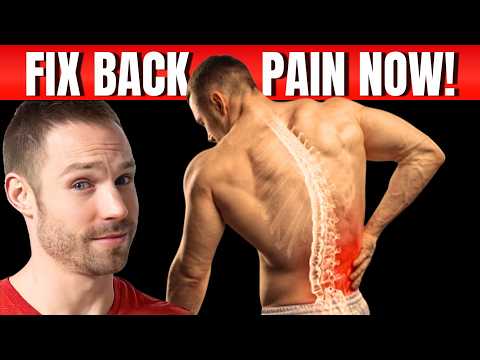
- To start, if your pain is worse when sitting slouched and pulling up on the underside of a chair, or with bending movements and lifts like picking up objects from the ground, or especially deadlifting, your pain can be categorized as a flexion intolerance, often due to a disc bulge or herniation.
To start, if your pain is worse when sitting slouched and pulling up on the underside of a chair, or with bending movements and lifts like picking up objects from the ground, or especially deadlifting, your pain can be categorized as a flexion intolerance, often due to a disc bulge or herniation.
- If this sounds familiar, you need to learn how to avoid spine flexion when sitting by using some support for your low back and with bending tasks by hinging about your hips.
If this sounds familiar, you need to learn how to avoid spine flexion when sitting by using some support for your low back and with bending tasks by hinging about your hips.
STOP Doing These Exercises For Low Back Pain!
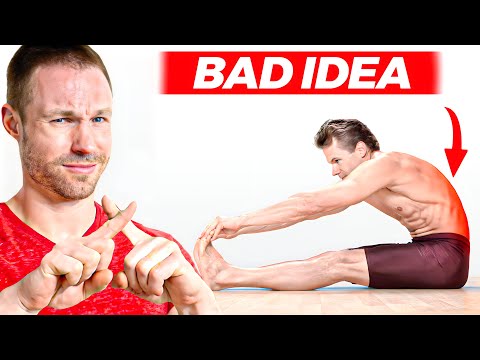
- And for a lot of people, especially if you have an irritated disc, you're pulling into a lot of spinal flexion and just irritating something that's already very sensitized.
And for a lot of people, especially if you have an irritated disc, you're pulling into a lot of spinal flexion and just irritating something that's already very sensitized.
- And for a lot of people, especially if you have an irritated disc, you're pulling into a lot of spinal flexion and just irritating something that's already very sensitized.
And for a lot of people, especially if you have an irritated disc, you're pulling into a lot of spinal flexion and just irritating something that's already very sensitized.
The Last Split Squat Video You'll Ever Need
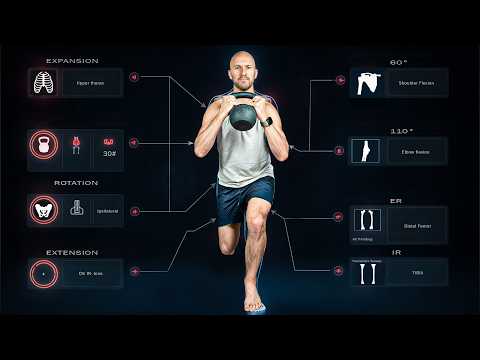
- And that's because external rotation occurs both in the early ranges of hip flexion and deep, as well as terminal hip extension.
And that's because external rotation occurs both in the early ranges of hip flexion and deep, as well as terminal hip extension.
- and that's because external rotation occurs both in the early ranges of hip flexion and deep, as well as terminal hip extension.
and that's because external rotation occurs both in the early ranges of hip flexion and deep, as well as terminal hip extension.
古人類学者だけど「原始人」について質問ある? | Tech Support | WIRED Japan

- We have flexion here.
We have flexion here.
- This flexion gives us a resonating space that allows us to make the full range of vowel sounds.
This flexion gives us a resonating space that allows us to make the full range of vowel sounds.
How to Snowboard in Trees
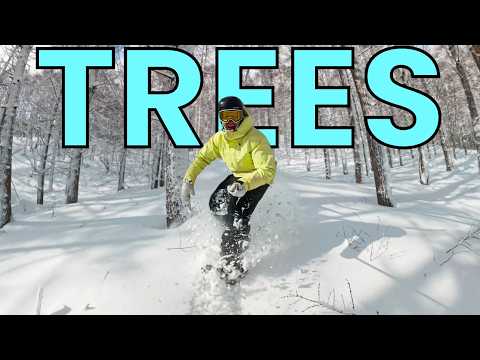
- The movement pattern I use with flexion and extension is again very similar to what I'm doing in the bumps.
The movement pattern I use with flexion and extension is again very similar to what I'm doing in the bumps.
- The movement pattern I use with flexion and extension is, again, very similar to what I'm doing in the bumps.
The movement pattern I use with flexion and extension is, again, very similar to what I'm doing in the bumps.
Improve Your Squat! Full Mobility Workshop (eng sub)

- Especially the direction of your dorsal flexion, the upward movement of your foot towards your shinbone.
Especially the direction of your dorsal flexion, the upward movement of your foot towards your shinbone.
- What happened to your knee? A flexion of around 150 degree. -Oh well, I feel the pain already. -You do?
What happened to your knee? A flexion of around 150 degree. -Oh well, I feel the pain already. -You do?
Understanding Tension vs. Compression in Flexibility Training | Anatomy Lab
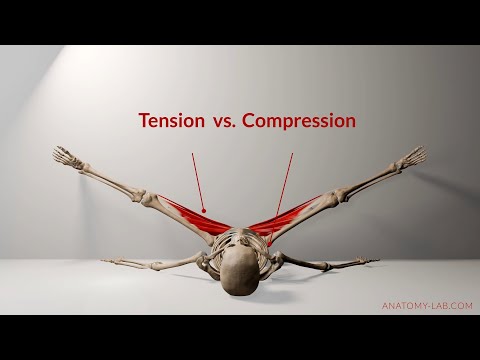
- This is your unique bone structure determining the limit of your backbend Now that we've seen how compression works in the spine, let's move on to a different kind of stretch For example, a wall stretch Lie on your back with your legs up against the wall as if you were making a split As you let your legs open out to the side, you'll feel tension in the muscles of the inside of your legs Particularly the adductors But if you feel a hard stop on the outside of your hips where the femur meets the pelvis, that's compression Also pay attention whether you feel any differences between the right and left side It's common for people to have subtle differences in muscle tension or bone shape If you only feel the stretch in your adductors and not compression, that's again perfectly fine It just means you haven't hit your bone limit yet and you have potential for stretching Try this exercise and notice what you feel, especially when comparing the left and right side Lastly, let's try hip flexion with a bent knee Try pulling your knee towards your chest with your leg bent In this position, you'll probably feel more tension in the back of your hip or glutes But as you keep pulling your knee closer, you will eventually reach a point where your movement stops due to compression This is where the head of the femur meets the pelvis Just like with the wall stretch, compare the right and left sides There may be differences in how each side feels One side might reach compression before the other Take some time to play around with the position of your femur and notice where the restriction is coming from If you don't encounter compression, that means you haven't reached your bone limit yet and you have more room to stretch If you do feel compression, don't be discouraged It's your body's way of showing you your limits and understanding this will help you to move more safely and effectively in your practice Remember, whether it's tension or compression, learning to feel the difference will help you to stop fighting against your body and start working with it Before we wrap up for today, I want to give credit where credit is due This knowledge about tension and compression wasn't discovered by me It was pioneered by Paul Grilly, who's a yin yoga teacher and a master of his art If you are interested in learning more, I highly recommend checking out his website He has a lot of images of human bones that will show you exactly what we are talking about today And it will give you an even clearer understanding of these concepts I want to thank you for your time today and I hope you enjoyed this video and you will benefit from it If you have any questions, feel free to leave them in the comments You can support the channel by subscribing or sharing or liking And of course, if you want to, follow me on Instagram or check out my store Until next time, here in the Anatomy Lab Anatomy of the Body
This is your unique bone structure determining the limit of your backbend Now that we've seen how compression works in the spine, let's move on to a different kind of stretch For example, a wall stretch Lie on your back with your legs up against the wall as if you were making a split As you let your legs open out to the side, you'll feel tension in the muscles of the inside of your legs Particularly the adductors But if you feel a hard stop on the outside of your hips where the femur meets the pelvis, that's compression Also pay attention whether you feel any differences between the right and left side It's common for people to have subtle differences in muscle tension or bone shape If you only feel the stretch in your adductors and not compression, that's again perfectly fine It just means you haven't hit your bone limit yet and you have potential for stretching Try this exercise and notice what you feel, especially when comparing the left and right side Lastly, let's try hip flexion with a bent knee Try pulling your knee towards your chest with your leg bent In this position, you'll probably feel more tension in the back of your hip or glutes But as you keep pulling your knee closer, you will eventually reach a point where your movement stops due to compression This is where the head of the femur meets the pelvis Just like with the wall stretch, compare the right and left sides There may be differences in how each side feels One side might reach compression before the other Take some time to play around with the position of your femur and notice where the restriction is coming from If you don't encounter compression, that means you haven't reached your bone limit yet and you have more room to stretch If you do feel compression, don't be discouraged It's your body's way of showing you your limits and understanding this will help you to move more safely and effectively in your practice Remember, whether it's tension or compression, learning to feel the difference will help you to stop fighting against your body and start working with it Before we wrap up for today, I want to give credit where credit is due This knowledge about tension and compression wasn't discovered by me It was pioneered by Paul Grilly, who's a yin yoga teacher and a master of his art If you are interested in learning more, I highly recommend checking out his website He has a lot of images of human bones that will show you exactly what we are talking about today And it will give you an even clearer understanding of these concepts I want to thank you for your time today and I hope you enjoyed this video and you will benefit from it If you have any questions, feel free to leave them in the comments You can support the channel by subscribing or sharing or liking And of course, if you want to, follow me on Instagram or check out my store Until next time, here in the Anatomy Lab Anatomy of the Body
- Lastly, let's try hip flexion with a bent knee.
Lastly, let's try hip flexion with a bent knee.
Pancake stretch for beginners
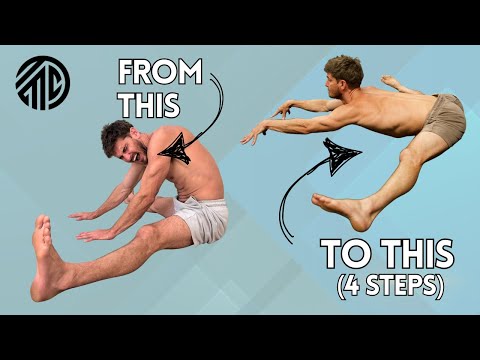
- This one is going to be looking at articulating and rolling through the spine, so spinal flexion, also strengthening and lengthening the hamstrings.
This one is going to be looking at articulating and rolling through the spine, so spinal flexion, also strengthening and lengthening the hamstrings.
- This one is going to be looking at articulating and rolling through the spine, so spinal flexion, also strengthening and lengthening the hamstrings.
This one is going to be looking at articulating and rolling through the spine, so spinal flexion, also strengthening and lengthening the hamstrings.
Correct Forward Head Posture with 3 Things - Dr. Berg
- and you're going to start to do extension-type exercises as well as, on your back, doing flexion-type exercises.
and you're going to start to do extension-type exercises as well as, on your back, doing flexion-type exercises.
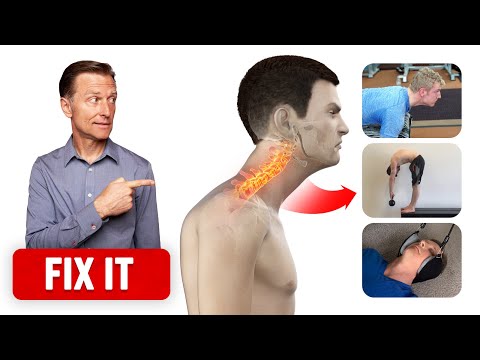
- Now the third thing I would recommend after the stretching and the traction would be neck strengthening exercises and you would get on all fours and you're going to start to do extension type exercises as well as on your back doing flexion type exercises.
Now the third thing I would recommend after the stretching and the traction would be neck strengthening exercises and you would get on all fours and you're going to start to do extension type exercises as well as on your back doing flexion type exercises.
Why 95% of Amateurs Can’t Create PGA Wrist Motion!
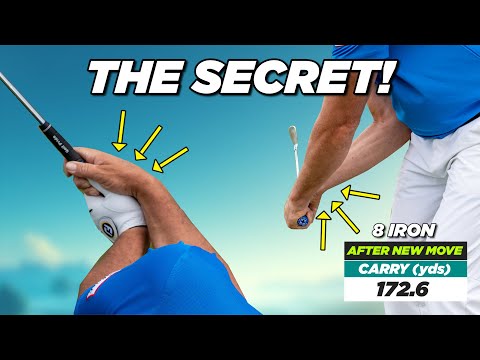
- There's a combination of rotation, then you've got right wrist flexion, left wrist extension, and we can combine the two.
There's a combination of rotation, then you've got right wrist flexion, left wrist extension, and we can combine the two.
- There's a combination of right wrist flexion.
There's a combination of right wrist flexion.