alveolar
US /æl'vi:ələr/
・UK /ælˈvi:ələ(r)/
C2
adj.Adjective(Of sound) when tongue touches back of top teeth
Alveolar consonants are consonant sounds produced when the tongue touches the ridge behind the teeth on the roof of the mouth.
Video subtitles
Pronunciation Tutorial 3: English Vowels and the International Phonetic Alphabet

- - the velarizing diacritic - we used it in the voiced alveolar lateral consonant l, and
- the velarizing diacritic - we used it in the voiced alveolar lateral consonant l, and
- The valorizing diacritic, we used it in the voiced, alveolar, lateral consonant L, and
The valorizing diacritic, we used it in the voiced, alveolar, lateral consonant L, and
Pronunciation Tutorial 2: English Pronunciation and IPA: Manner
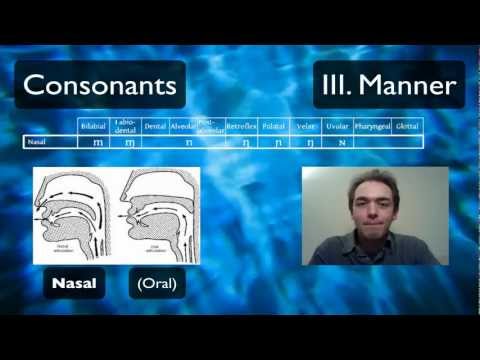
- which isn't used very often - it's like alveolar but with the underside of the tongue. I'll
which isn't used very often - it's like alveolar but with the underside of the tongue. I'll
- It's like alveolar but with the underside of the tongue, here.
It's like alveolar but with the underside of the tongue, here.
Pronunciation Tutorial 1: English Pronunciation and IPA: Voicing and Place
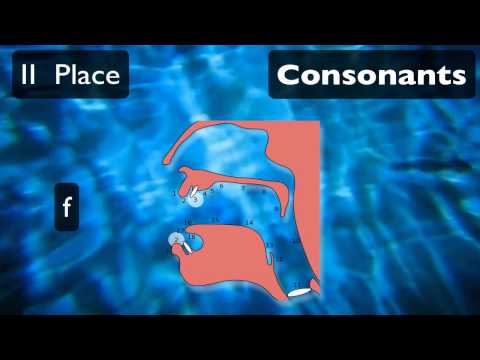
- 3 is your upper teeth, 4 is that ridge behind your teeth known as the alveolar ridge.
3 is your upper teeth, 4 is that ridge behind your teeth known as the alveolar ridge.
- are just in between spots, so 5 is in between 4 and 6 - between your alveolar ridge and
are just in between spots, so 5 is in between 4 and 6 - between your alveolar ridge and
Why do Italians sound Italian? | Improve Your Accent

- It's sometimes called a rolling R, but linguists call it an alveolar tap or trill.
It's sometimes called a rolling R, but linguists call it an alveolar tap or trill.
- It's sometimes called a rolling R, but linguists call it an alveolar tap or trill.
It's sometimes called a rolling R, but linguists call it an alveolar tap or trill.
How to Pronounce: /n/ (thin) and /ŋ/ (thing)

- You put the tip of your tongue up to the top of your mouth, if you want to be really specific, very close to your alveolar ridge.
You put the tip of your tongue up to the top of your mouth, if you want to be really specific, very close to your alveolar ridge.
- So it's not on the roof of your mouth, it's not the palate, it's a little bit kind of between your teeth and the alveolar ridge.
So it's not on the roof of your mouth, it's not the palate, it's a little bit kind of between your teeth and the alveolar ridge.
How to Pronounce LEAD & LEAD- American English Heteronym Pronunciation Lesson

- To be super specific it's the alveolar ridge which is the little piece of skin that just starts to touch the top of the teeth.
To be super specific it's the alveolar ridge which is the little piece of skin that just starts to touch the top of the teeth.
- To be super specific, it's the alveolar ridge, which is the little piece of skin that just starts to touch the top of the teeth.
To be super specific, it's the alveolar ridge, which is the little piece of skin that just starts to touch the top of the teeth.
Chapter 6 - The Cardiorespiratory, Endocrine, and Digestive Systems

- We want to make sure that the blood is pumping correctly so that it can extract the oxygen at the alveolar level, and then it gets everything to where it's got to go back to the heart and then to the rest of the body.
We want to make sure that the blood is pumping correctly so that it can extract the oxygen at the alveolar level, and then it gets everything to where it's got to go back to the heart and then to the rest of the body.
- We want to make sure that the blood is pumping correctly so that it can extract the oxygen at the alveolar level,
We want to make sure that the blood is pumping correctly so that it can extract the oxygen at the alveolar level,
How Are British English and American English Different?

- In the US they sometimes sound like "duh," an alveolar tap instead of "tuh," an alveolar stop.
In the US they sometimes sound like "duh," an alveolar tap instead of "tuh," an alveolar stop.
- In the US, they sometimes sound like /ɾ/ (an alveolar tap) instead of /t/ (an alveolar
In the US, they sometimes sound like /ɾ/ (an alveolar tap) instead of /t/ (an alveolar
A Look Back - Top 10 Consonant Mistakes in American English by Learners | Rebroadcast from July 2025

- And what you are going to do—I see I have an error on my slides—we are not touching the alveolar ridge.
And what you are going to do—I see I have an error on my slides—we are not touching the alveolar ridge.
- And what you are going to do—I see I have an error on my slides—we are not touching the alveolar ridge.
And what you are going to do—I see I have an error on my slides—we are not touching the alveolar ridge.
Flap T: Really a D Sound? American English Pronunciation

- The alveolar flap is in many languages, usually represented by the letter R.
The alveolar flap is in many languages, usually represented by the letter R.