
academic
US /ˌækəˈdɛmɪk/
UK /ˌækə'demɪk/
- Adjective
- Concerning education, schools, universities, etc.
- Concerning education, schools, universities, etc.
- Noun (Countable/Uncountable)
- Educator teaching at a college or university
- A subject taught at schools and universities.
B1Moreauthor
US /ˈɔθɚ/
UK /'ɔ:θə(r)/
- Noun (Countable/Uncountable)
- Person who writes books, plays, poems etc.
- Transitive Verb
- To write book or articles
B1Morebasically
US /ˈbesɪkəli,-kli/
UK /ˈbeɪsɪkli/
- Adverb
- Used before you explain something simply, clearly
- In essence; when you consider the most important aspects of something.
A2Morebulk
US /bʌlk/
UK /bʌlk/
- Uncountable Noun
- Most of something; majority of
- Big size; largeness; heaviness
B1TOEICMorechemical
US /ˈkɛmɪkəl/
UK /ˈkemɪkl/
- Noun (Countable/Uncountable)
- Basic substance produced by mixing elements
- The branch of science concerned with the substances of which matter is composed, the investigation of their properties and reactions, and the use of such reactions to form new substances.
- Adjective
- Made of various elements
A2Morecome up
US /kʌm ʌp/
UK /kʌm ʌp/
- Phrasal Verb
- To come closer to someone; approach
- (Of sun) to rise into the sky in the morning
A1Morecommunicate
US /kəˈmjunɪˌket/
UK /kə'mju:nɪkeɪt/
- Verb (Transitive/Intransitive)
- To give and exchange information
- To convey or make known (information, feelings, etc.)
A2Morecommunity
US /kəˈmjunɪti/
UK /kə'mju:nətɪ/
- Noun (Countable/Uncountable)
- Group of people who share a common idea or area
- A feeling of fellowship with others, as a result of sharing common attitudes, interests, and goals.
- Adjective
- Relating to or shared by the people in a particular area.
- Shared or participated in by all members of a group
A2Moreconsume
US /kənˈsum/
UK /kən'sju:m/
- Transitive Verb
- To eat, drink, buy or use up something
- To take all your energy; focus the attention
A2TOEICMoredestination
US /ˌdɛstəˈneʃən/
UK /ˌdestɪˈneɪʃn/
- Noun
- The place you are traveling to
- A place regarded as worth visiting or traveling to.
B1TOEICMoredetrimental
US /ˌdɛtrəˈmɛntl/
UK /ˌdetrɪˈmentl/
- Adjective
- Harmful
B2Moreengage
US /ɪn'gedʒ/
UK /ɪn'ɡeɪdʒ/
- Transitive Verb
- To start to fight with an enemy
- To hire someone for a task or job
A2TOEICMoreexhilarate
US
UK
- Transitive Verb
- To cause someone to feel very happy and excited
C1Morefor example
US
UK
- Phrase
- As an illustration or instance.
foremost
US /ˈfɔrˌmost,ˈfor-/
UK /'fɔ:məʊst/
- Adjective
- Being the best or most important
- Adverb
- In the most prominent or important position.
B1TOEICMorego away
US /ɡo əˈwe/
UK /ɡəu əˈwei/
- Phrasal Verb
- To go on vacation
- To leave; depart.
A1Morego over all
US
UK
- Phrasal Verb
- To review or examine every part of something carefully.
A2Moregrammar
US /ˈɡræmɚ/
UK /ˈgræmə(r)/
- Uncountable Noun
- Book describing the syntactic rules of a language
- Rules explaining how words are used in a language
B1Moregrammatical
US /ɡrəˈmætɪkəl/
UK /grəˈmætɪkl/
- Adjective
- Conforming to the rules of syntax
B1Morehalfway
US /ˌhæfˈweɪ/
UK /ˌhɑ:fˈweɪ/
- Adverb
- A middle point between two extremes
- At or to a point equidistant between two places.
- Adjective
- Located at or being at a point equidistant between two places.
- Partially completed; at an intermediate stage.
B2Morehave to
US /hæv tu/
UK /ˈhæv tə/
- Auxiliary Verb
- Must do
A1Morehazardous
US /ˈhæzədəs/
UK /'hæzədəs/
- Adjective
- Involving danger, risk, and potential damages
- Relating to substances or conditions that can cause harm to people or the environment.
B1TOEICMorehypothesis
US /haɪˈpɑθɪsɪs/
UK /haɪˈpɒθəsɪs/
- Noun
- A theory trying to explain something
- A supposition or proposed explanation made on the basis of limited evidence as a starting point for further investigation.
B1Moreidentify
US /aɪˈdɛntəˌfaɪ/
UK /aɪ'dentɪfaɪ/
- Transitive Verb
- To indicate who or what someone or something is
- To say exactly what something is
B1TOEICMorein fact
US /ɪn fækt/
UK /in fækt/
- Adverb
- Used to emphasize the truth of a statement, especially one that contrasts with or contradicts something else.
- Used to introduce a more detailed or surprising piece of information.
- Phrase
- Used to emphasize the truth of a statement, especially one that is surprising or contrary to what might be expected.
C1Morein order to
US /ɪn ˈɔrdɚ tu/
UK /in ˈɔ:də tu:/
- Preposition
- For the purpose of; with the aim of.
- Phrase
- In a specific sequence or arrangement.
- With the aim of; for the purpose of.
C1Morein other words
US
UK
- Phrase
- Stating something in a different way, often to make it clearer or more understandable.
in terms of
US
UK
- Phrase
- With regard to; concerning a particular aspect.
A1Morein the end
US /ɪn ði ɛnd/
UK /in ðə end/
- Phrase
- Finally; after a period of time or series of events.
- Ultimately; as the final result or consequence.
A1Morein the world
US /ɪn ði wɜrld/
UK /in ðə wɜː(r)ld/
- Phrase
- Used to emphasize a question expressing surprise, confusion, disbelief
- Used to indicate the extent or degree of something, often in a superlative sense
A1Morelook at
US /lʊk æt/
UK /luk æt/
- Phrasal Verb
- To use your eyes to focus on something
- To focus your eyes on something carefully
A1Morenegative
US /ˈnɛɡətɪv/
UK /'neɡətɪv/
- Noun
- The opposite to a positive electrical charge
- In grammar, containing words such as 'no' or 'not'
- Adjective
- Being harmful, unwanted or unhelpful
- In mathematics, being less than zero
A2Moreof course
US /ʌv kɔː(r)s/
UK /ɔv kɔː(r)s/
- Adverb
- Sure ; Certainly
- Phrase
- For sure; certainly
A2Moreof means
US /ʌv minz/
UK /əv mi:nz/
- other
- Having resources or wealth available for use.
B2Moreorganization
US /ˌɔrɡənɪˈzeʃən/
UK /ˌɔ:gənaɪˈzeɪʃn/
- Noun (Countable/Uncountable)
- Group of people with a particular purpose
- The way in which something is structured or arranged.
A2Moreoriginal
US /əˈrɪdʒənəl/
UK /ə'rɪdʒənl/
- Adjective
- Being first made, thought or performed; fresh
- Being unique or thinking differently from others
- Noun (Countable/Uncountable)
- A work of art, writing, or music that is not a copy.
- A person of fresh initiative or inventiveness.
A2TOEICMoreover time
US /ˈovɚ taɪm/
UK /ˈəuvə taim/
- Phrase
- Gradually; as time passes.
- During a long period.
- Adverb
- Gradually; as time passes.
B1Morepace
US /pes/
UK /peɪs/
- Noun (Countable/Uncountable)
- Rate of speed at which something moves or happens
- Single step, often used to measure a distance
- Verb (Transitive/Intransitive)
- To set and control your speed, as in a race
- To walk with slow purposeful steps
A2Moreparagraph
US /ˈpærəgræf/
UK /ˈpærəgrɑ:f/
- Noun (Countable/Uncountable)
- Section of writing dealing with one point
- A section or clause in a legal document.
- Transitive Verb
- To organize a written work into paragraphs
B1TOEICMoreparaphrase
US /ˈpærəˌfrez/
UK /ˈpærəfreɪz/
- Noun
- Summary of another person's words
B2Morephysique
US /fɪˈzik/
UK /fɪˈzi:k/
- Noun
- The shape and size of a human body
C1Moreplastic
US /ˈplæstɪk/
UK /'plæstɪk/
- Uncountable Noun
- Stiff but usually flexible man-made material
- Adjective
- Being easily formed or shaped
A2Morepraise
US /preɪz/
UK /preɪz/
- Transitive Verb
- To express approval of something or someone
- To express thanks, respect, and love
- Uncountable Noun
- Expression of approval of something/someone
- Expression of thanks, respect, and love
B1Moreprecarious
US /prɪˈkɛriəs/
UK /prɪˈkeəriəs/
- Adjective
- Not secure; likely to fall over/off; dangerous
B2TOEICMoreresin
US /ˈrezn/
UK /ˈrezɪn/
- Uncountable Noun
- Sticky substance that is produced by some trees
B2Morescientific
US /ˌsaɪənˈtɪfɪk/
UK /ˌsaɪənˈtɪfɪk/
- Adjective
- Concerning academic study of the physical world
- Systematic and precise, following a methodology.
- Noun
- Relating to or used in science.
A2Morespecialist
US /ˈspɛʃəlɪst/
UK /'speʃəlɪst/
- Noun
- Person who works in one specific area or field
B1Morespecific
US /spɪˈsɪfɪk/
UK /spəˈsɪfɪk/
- Adjective
- Precise; particular; just about that thing
- Concerning one particular thing or kind of thing
A2Moresynonym
US /ˈsɪnəˌnɪm/
UK /ˈsɪnənɪm/
- Noun
- Word that has the same meaning as another word
B2Morethink of
US /θɪŋk ʌv/
UK /θiŋk ɔv/
- Phrasal Verb
- To look on as (being something specific); consider
- To consider or remember something.
- Verb (Transitive/Intransitive)
- To imagine or call something to mind
A1Moretoxin
US /ˈtɑ:ksɪn/
UK /ˈtɒksɪn/
- Noun
- Any poisonous substance
B1Moretreacherous
US /ˈtrɛtʃərəs/
UK /ˈtretʃərəs/
- Adjective
- Dangerously unstable and unpredictable
B2TOEICMoreversion
US /ˈvɚʒən, -ʃən/
UK /ˈvə:ʃən/
- Noun
- Different way that someone interprets something
- New or different form of something
A2TOEICMorevibrant
US /ˈvaɪbrənt/
UK /ˈvaɪbrənt/
- Adjective
- Having a lot of energy and being very active
B1Morevocabulary
US /voˈkæbjəˌlɛri/
UK /və'kæbjələrɪ/
- Uncountable Noun
- Words that have to do with a particular subject
- The words that a person knows
B1TOEICMore
Vocabulary
- look at: To use your eyes to focus on something
- over time: Gradually; as time passes.
- in the world: Used to emphasize a question expressing surprise, confusion, disbelief
- for example: As an illustration or instance.
- go away: To go on vacation
- think of: To look on as (being something specific); consider
- come up: To come closer to someone; approach
- go over all: To review or examine every part of something carefully.
- of means: Having resources or wealth available for use.
- in the end: Finally; after a period of time or series of events.
- in other words: Stating something in a different way, often to make it clearer or more understandable.
- in order to: For the purpose of; with the aim of.
- in fact: Used to emphasize the truth of a statement, especially one that contrasts with or contradicts something else.
- have to: Must do
- in terms of
- of course: Sure ; Certainly
- specific: Precise; particular; just about that thing
- engage: To start to fight with an enemy
- basically: Used before you explain something simply, clearly
- vocabulary: Words that have to do with a particular subject
- destination: The place you are traveling to
- negative: The opposite to a positive electrical charge
- common: Area in a city or town that is open to everyone
- community: Group of people who share a common idea or area
- version: Different way that someone interprets something
- sentence: (Of a judge) to decide the punishment of
- consume: To eat, drink, buy or use up something
- academic: Concerning education, schools, universities, etc.
- foremost: Being the best or most important
- identify: To indicate who or what someone or something is
- amount: Quantity of something
- hypothesis: A theory trying to explain something
- bit: Device put in a horse's mouth to control it
- grammar: Book describing the syntactic rules of a language
- detrimental: Harmful
- compare: To consider how similar and different things are
- reason: To think and make conclusions in a logical manner
- scientific: Concerning academic study of the physical world
- vibrant: Having a lot of energy and being very active
- bulk: Most of something; majority of
- pace: Rate of speed at which something moves or happens
- communicate: To give and exchange information
- break: To create a new record e.g. running the 100m dash
- praise: To express approval of something or someone
- plastic: Stiff but usually flexible man-made material
- text: To send a message by phone or other device
- paragraph: Section of writing dealing with one point
- original: Being first made, thought or performed; fresh
- chemical: Basic substance produced by mixing elements
- click: To work well with someone or something
- paraphrase: Summary of another person's words
- author: Person who writes books, plays, poems etc.
- organization: Group of people with a particular purpose
- important: Having power or authority
- place: To put someone in a particular type of situation
- notice: To become aware by sight, touch, or hearing
- information: Collection of facts and details about something
- point: An item to be discussed
- toxin: Any poisonous substance
- hazardous: Involving danger, risk, and potential damages
- step: Movement done as part of a particular dance
- synonym: Word that has the same meaning as another word
- treacherous: Dangerously unstable and unpredictable
- specialist: Person who works in one specific area or field
- grammatical: Conforming to the rules of syntax
- physique: The shape and size of a human body
- precarious: Not secure; likely to fall over/off; dangerous
- halfway: A middle point between two extremes
- resin: Sticky substance that is produced by some trees
- exhilarate: To cause someone to feel very happy and excited
Get the full experience in the app
Learn anywhere with detailed sentence and usage analysis
01:03
She took a brave step forward, leaving behind her comfort zone to chase her dreams.
Vocabulary
- brave
adj. Having courage
- comfort zone
phr. A familiar situation where one feels safe
Explanation
a brave step is a noun phrase, where brave is an adjective modifying the noun step, meaning "a courageous step".
forward is an adverb modifying step, meaning "ahead".
The whole phrase serves as the object, answering the "what" of took (verb) — she took a brave step forward.
Get the full experience in the app
Look up words anytime with pronunciation, part of speech, and usage
brave
US/brev/
UK/breɪv/
adj.Brave
v.t.To bravely face
A2 Elementary
Get the full experience in the app
Practice speaking anytime and get instant pronunciation feedback
Try this speaking exercise.
Try practicing with this sentence.
80
Paraphrasing: The Basic Steps
0
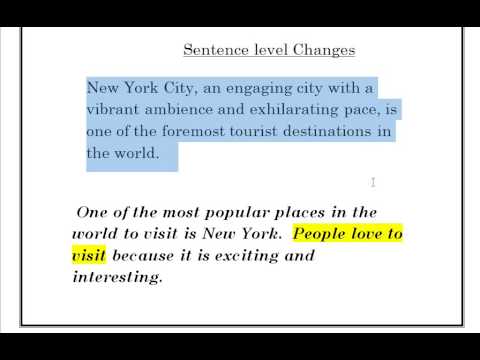
ben posted on 2017/05/29Struggling to put ideas into your own words without losing the original meaning? This video breaks down the essential steps for paraphrasing, helping you avoid plagiarism and cite sources like a pro! You'll pick up advanced vocabulary and learn how to restructure sentences, making your academic writing shine.
Learn this video on the APP!
The VoiceTube App has more in-depth practice for videos!