
after all
US /ˈæftɚ ɔl/
UK /ˈɑ:ftə ɔ:l/
- Adverb
- In spite of what was expected; used to introduce a statement that supports a previous statement or explains why it was made
- Considering everything; used to indicate that something is happening or is true despite some difficulty or obstacle
- Phrase
- Despite what was expected or thought; in spite of everything.
- Taking everything into consideration; considering that.
B1Moreaspect
US /ˈæspɛkt/
UK /'æspekt/
- Noun (Countable/Uncountable)
- Way something looks or seems to be
- An element, feature, or quality of something
A2TOEICMorebaby
US /ˈbeɪbi/
UK /ˈbeɪbi/
- Countable Noun
- A very young child, who cannot yet speak
- Transitive Verb
- To treat someone as if they were newly born
A2Morebasically
US /ˈbesɪkəli,-kli/
UK /ˈbeɪsɪkli/
- Adverb
- Used before you explain something simply, clearly
- In essence; when you consider the most important aspects of something.
A2Morecheck out
US /tʃɛk aʊt/
UK /tʃek aut/
- Phrase
- Phrasal Verb
- To find out information about something
- To take books out of a library
A1Moreclause
US /klɔz/
UK /klɔ:z/
- Noun
- Part of a sentence that has its own verb
- Specific term or demand in a legal agreement
B1Morecontainer
US /kənˈtenɚ/
UK /kənˈteɪnə(r)/
- Noun (Countable/Uncountable)
- An object that can be used to hold things
- A large metal box used for transporting goods
A2Morecontinuous
US /kənˈtɪnjuəs/
UK /kənˈtɪnjuəs/
- Adjective
- Happening, existing, or performed without stops
- Extending or prolonged without interruption or cessation.
A2Morecountable
US /'kaʊntəbl/
UK /'kaʊntəbl/
- Adjective
- (Of nouns) that can exist in the plural
B1Moredefinite
US /ˈdɛfənɪt/
UK /ˈdefɪnət/
- Adjective
- Not likely to change; clearly decided
- Clearly stated or decided; not vague or doubtful.
A2Moredestroy
US /dɪˈstrɔɪ/
UK /dɪ'strɔɪ/
- Transitive Verb
- To damage so badly that something no longer exists
- To defeat someone or something easily
A2TOEICMoreduration
US /duˈreɪʃn/
UK /djuˈreɪʃn/
- Uncountable Noun
- Length of time that something lasts
B1TOEICMoreearthquake
US /ˈɜ:rθkweɪk/
UK /ˈɜ:θkweɪk/
- Noun (Countable/Uncountable)
- Heavy shaking of the ground due to natural forces
- A series of vibrations in the earth caused by the abrupt movement of rock far below the surface
B1Moreerupt
US /ɪˈrʌpt/
UK /ɪˈrʌpt/
- Verb (Transitive/Intransitive)
- To begin doing something or happen suddenly
- (Volcano) to spill hot rocks, smoke, and fire
B1Moreeruption
US /ɪˈrʌpʃən/
UK /ɪ'rʌpʃn/
- Noun
- Act of happening suddenly or begin doing
- Process of a volcano shooting out hot rocks
B1Moreexact
US /ɪɡˈzækt/
UK /ɪɡ'zækt/
- Adjective
- Completely correct; accurate; specific
- Transitive Verb
- To get something, sometimes using force
A2TOEICMoreflowed
US
UK
- Intransitive Verb
- To move steadily and easily in a certain direction
A2Morefor example
US
UK
- Phrase
- As an illustration or instance.
grammar
US /ˈɡræmɚ/
UK /ˈgræmə(r)/
- Uncountable Noun
- Book describing the syntactic rules of a language
- Rules explaining how words are used in a language
B1Morein mind
US /ɪn maɪnd/
UK /in maind/
- Phrase
- Being aware of or considering something.
- To remember or consider something.
A2Moreinterchange
US /ˌɪntɚˈtʃendʒ/
UK /'ɪntətʃeɪndʒ/
- Noun (Countable/Uncountable)
- Exchange of something, e.g. ideas or information
- Place where two roads or highways meet
- Transitive Verb
- To put one thing in the place of another
B2Morelava
US /'lɑ:və/
UK /ˈlɑ:və/
- Uncountable Noun
- Very hot liquid rock flowing from a volcano
B2Morelook at
US /lʊk æt/
UK /luk æt/
- Phrasal Verb
- To use your eyes to focus on something
- To focus your eyes on something carefully
A1Moremarker
US /ˈmɑ:rkə(r)/
UK /ˈmɑ:kə(r)/
- Noun (Countable/Uncountable)
- Something that is easy to recognize or identify
- Thick pen used for writing, e.g. on boards
B1Morematch
US /mætʃ/
UK /mætʃ/
- Verb (Transitive/Intransitive)
- To equal or be as good as something else
- To work well or look good with something else
- Noun
- Something that is equal to or the same as another
- Small stick you strike to light a fire candle etc.
A2TOEICMoremix
US /mɪks/
UK /mɪks/
- Transitive Verb
- To combine two or more things to make one
- Noun (Countable/Uncountable)
- A combination of more than two things
A2Moreon a trip
US
UK
- Phrase
- Traveling; away from home for a period of time.
A1Moreout of town
US /aʊt ʌv taʊn/
UK /aut ɔv taun/
- Phrase
- Away from one's usual place of residence or work; absent from the local area.
- Adjective
- Not available in the local area; absent and unreachable.
A1Moreplural
US /ˈplʊrəl/
UK /ˈpluərəl/
- Adjective
- Being more than one person or thing
B1Morepossessive
US /pəˈzɛsɪv/
UK /pəˈzesɪv/
- Adjective
- Wanting someone's complete attention, love
- (Grammar) word establishing ownership
- Noun
- (Grammar) word establishing ownership
B1Morepronoun
US /ˈproˌnaʊn/
UK /ˈprəʊnaʊn/
- Pronoun
- A word that replaces a noun like 'it' 'she' etc.
A2Morepronunciation
US /prəˌnʌnsiˈeʃən/
UK /prəˌnʌnsiˈeɪʃn/
- Noun (Countable/Uncountable)
- How a word is said; how a word sounds
- The manner in which someone utters a word.
B1Morerequest
US /rɪˈkwɛst/
UK /rɪ'kwest/
- Transitive Verb
- To ask for, usually politely and formally
- Noun
- Thing that has been asked for
- A signal to a computer system or program to perform a task.
A2TOEICMoresection
US / ˈsɛkʃən/
UK /'sekʃn/
- Noun (Countable/Uncountable)
- A part of a whole
- Specific group of people from a larger group
- Transitive Verb
- To divide something into smaller parts
B1TOEICMoreshake
US /ʃek/
UK /ʃeɪk/
- Verb (Transitive/Intransitive)
- To cause someone to be surprised or upset
- To cause a belief, idea, or feeling to weaken
- Countable Noun
- Drink made by shaking milk with fruit or flavors
A2Moresingular
US /ˈsɪŋɡjəlɚ/
UK /ˈsɪŋgjələ(r)/
- Noun
- Form of a word referring to only one person/thing
- Adjective
- Seeming odd or unusual
- One of
B2Morespecific
US /spɪˈsɪfɪk/
UK /spəˈsɪfɪk/
- Adjective
- Precise; particular; just about that thing
- Concerning one particular thing or kind of thing
A2Morespill
US /spɪl/
UK /spɪl/
- Noun
- Accident when someone falls
- Act of allowing a fluid to escape
- Verb (Transitive/Intransitive)
- To come out of and spread beyond limits
- To tell secrets or let information escape
B1Moretalking about
US
UK
- Phrasal Verb
- To discuss a particular topic.
- To be constantly mentioning or bringing up a subject.
A1Moretechnically
US /ˈtɛknɪkl:ɪ/
UK /ˈteknɪkli/
- Adverb
- In an exact and particular manner
- With technical skill or expertise.
A2Moretrip
US /trɪp/
UK /trɪp/
- Verb (Transitive/Intransitive)
- To release an electrical switch
- To fall by catching your foot on something
- Noun
- Act of falling down; falling over an obstacle
- Journey or visit to a place
A2Moretrip out
US
UK
- Phrasal Verb
- To hallucinate, especially as a result of taking drugs.
- To be very surprised, amazed, or excited.
A1Morevolcano
US /vɑ:lˈkeɪnoʊ/
UK /vɒlˈkeɪnəʊ/
- Noun (Countable/Uncountable)
- Mountain through which hot liquid earth can erupt
B1Morewhole class
US
UK
- Noun (Countable/Uncountable)
- The entirety of a class of students.
- Adjective
- Involving or pertaining to the entire class.
A1More
Vocabulary
- talking about: To discuss a particular topic.
- look at: To use your eyes to focus on something
- after all: In spite of what was expected; used to introduce a statement that supports a previous statement or explains why it was made
- whole class: The entirety of a class of students.
- trip out: To hallucinate, especially as a result of taking drugs.
- out of town: Away from one's usual place of residence or work; absent from the local area.
- on a trip: Traveling; away from home for a period of time.
- in mind: Being aware of or considering something.
- for example: As an illustration or instance.
- check out
- study: To focus on learning something usually at school
- talk: Style of speaking
- time: Speed at which music is played; tempo
- stop: To block or close something
- important: Having power or authority
- baby: A very young child, who cannot yet speak
- group: Two or more musicians who play music together
- remember: To give someone a gift, e.g. birthday, wedding
- day: A period of 24 hours beginning at midnight
- tomorrow: The time that is to come; the future
- class: To place things into groups by common qualities
- bus: A large road vehicle used for carrying many people
- money: Coins or notes we use to pay for things
- understand: To know the meaning of language, what someone says
- lesson: Something done to learn or teach something; class
- complete: To finish or reach the end of doing something
- cry: To sound an animal may make to call its family
- singular: Form of a word referring to only one person/thing
- difference: A thing or issue that people do not agree about
- trip: To release an electrical switch
- plural: Being more than one person or thing
- noun: The subject or object of a sentence
- sound: Sensible, dependable and reliable
- improve: To make, or become, something better
- adjective: A word that describes a noun, e.g. happy
- hope: When you wish something will happen; what you wish
- match: To equal or be as good as something else
- steal: A bargain; something bought very cheaply
- mix: To combine two or more things to make one
- grammar: Book describing the syntactic rules of a language
- destroy: To damage so badly that something no longer exists
- countable: (Of nouns) that can exist in the plural
- meaning: To express a particular idea or thought
- possessive: Wanting someone's complete attention, love
- pronunciation: How a word is said; how a word sounds
- request: To ask for, usually politely and formally
- exact: Completely correct; accurate; specific
- section: A part of a whole
- pronoun: A word that replaces a noun like 'it' 'she' etc.
- spill: Accident when someone falls
- completely: In every way or as much as possible
- shake: To cause someone to be surprised or upset
- flowed: To move steadily and easily in a certain direction
- definite: Not likely to change; clearly decided
- useless: Having no use; incapable of functioning properly
- package: Box or container items are placed in for mailing
- volcano: Mountain through which hot liquid earth can erupt
- specific: Precise; particular; just about that thing
- basically: Used before you explain something simply, clearly
- earthquake: Heavy shaking of the ground due to natural forces
- clause: Part of a sentence that has its own verb
- continuous: Happening, existing, or performed without stops
- container: An object that can be used to hold things
- technically: In an exact and particular manner
- aspect: Way something looks or seems to be
- duration: Length of time that something lasts
- erupt: To begin doing something or happen suddenly
- eruption: Act of happening suddenly or begin doing
- lava: Very hot liquid rock flowing from a volcano
- interchange: Exchange of something, e.g. ideas or information
- marker: Something that is easy to recognize or identify
Get the full experience in the app
Learn anywhere with detailed sentence and usage analysis
01:03
She took a brave step forward, leaving behind her comfort zone to chase her dreams.
Vocabulary
- brave
adj. Having courage
- comfort zone
phr. A familiar situation where one feels safe
Explanation
a brave step is a noun phrase, where brave is an adjective modifying the noun step, meaning "a courageous step".
forward is an adverb modifying step, meaning "ahead".
The whole phrase serves as the object, answering the "what" of took (verb) — she took a brave step forward.
Get the full experience in the app
Look up words anytime with pronunciation, part of speech, and usage
brave
US/brev/
UK/breɪv/
adj.Brave
v.t.To bravely face
A2 Elementary
Get the full experience in the app
Practice speaking anytime and get instant pronunciation feedback
Try this speaking exercise.
Try practicing with this sentence.
80
0
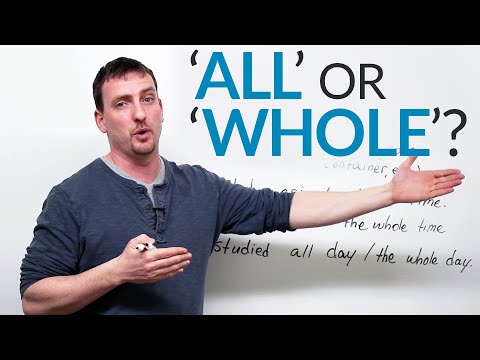
VoiceTube posted on 2013/06/05Ever get confused between 'all' and 'whole'? This super practical lesson breaks down exactly when to use each one, helping you sound more natural in everyday conversations! You'll pick up essential grammar tips and pronunciation advice that's perfect for ESL learners.
Learn this video on the APP!
The VoiceTube App has more in-depth practice for videos!