singular
US /ˈsɪŋɡjəlɚ/
・UK /ˈsɪŋgjələ(r)/
B2
n.NounForm of a word referring to only one person/thing
The singular of this word is "shoe."
adj.AdjectiveSeeming odd or unusual
It is a singular experience to come across a nest as the eggs are hatching
adj.AdjectiveOne of
The singular form of the word 'mice,’ is 'mouse.'
adj.AdjectiveHaving remarkable or special qualities
She had the singular ability of loving the most hopeless people
Video subtitles
BOX SET: English In A Minute 10 – TEN English lessons in 10 minutes!
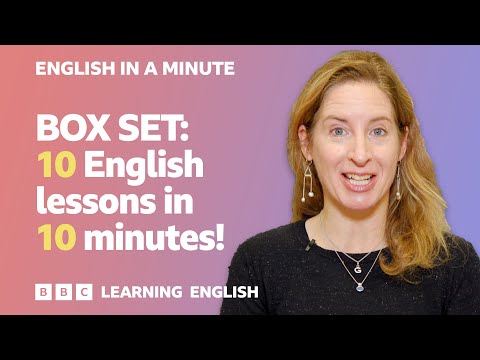
- 'Whole' means the complete amount of something, and is followed by uncountable nouns or singular nouns.
'Whole' means the complete amount of something, and is followed by uncountable nouns or singular nouns.
- Whole means the complete amount of something and is followed by uncountable nouns or singular nouns.
Whole means the complete amount of something and is followed by uncountable nouns or singular nouns.
UV light kills viruses. Why isn't it everywhere?

- there's no singular approach.
there's no singular approach.
How To Use HAVE, HAS & HAD In English (Beginner Vocabulary/Grammar)

- As you can see, we normally use 'has' with singular nouns. A singular noun is one thing.
As you can see, we normally use 'has' with singular nouns. A singular noun is one thing.
- So just remember, normally 'have' with plural, 'has' with singular and 'had' with singular and plural.
So just remember, normally 'have' with plural, 'has' with singular and 'had' with singular and plural.
Learn English Grammar: NOUN, VERB, ADVERB, ADJECTIVE

- But remember when you conjugating the verb to be, oh, if it's singular, we use is, so we say toronto is that's our verb.
But remember when you conjugating the verb to be, oh, if it's singular, we use is, so we say toronto is that's our verb.
- But remember, when you conjugate the verb "to be..." Oh, if it's singular, we use "is." So, we say "Toronto is." That's our verb.
But remember, when you conjugate the verb "to be..." Oh, if it's singular, we use "is." So, we say "Toronto is." That's our verb.
Describing Cities & Places In English!

- And outskirt, is it singular or plural? Always plural. Outskirts.
And outskirt, is it singular or plural? Always plural. Outskirts.
- And "outskirt," is it singular or plural?
And "outskirt," is it singular or plural?
A Christmas Carol by Charles Dickens Full Audiobook with Subtitles and Chapters

- in singular contradiction of that wintry emblem, had its dress trimmed with summer flowers.
in singular contradiction of that wintry emblem, had its dress trimmed with summer flowers.
- and, in singular contradiction of that wintry emblem, had its dress trimmed with summer flowers.
and, in singular contradiction of that wintry emblem, had its dress trimmed with summer flowers.
F1 The Movie: Behind The Scenes With Brad Pitt | Exclusive Interview

- And then being in that is so singular.
And then being in that is so singular.
- It's the most singular thing I've ever been a part of.
It's the most singular thing I've ever been a part of.
‘I like dog’ – Fix this sentence! #shorts
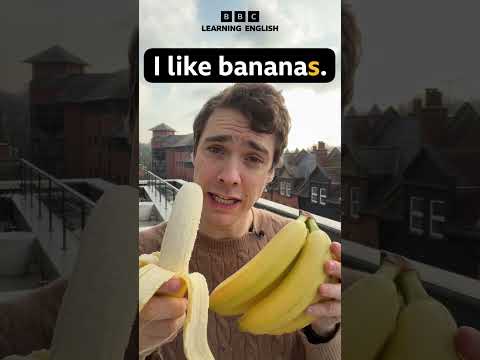
- When we talk about the things we like, we don't usually use the singular;
When we talk about the things we like, we don't usually use the singular;
- When we talk about the things we like, we don't usually use the singular, we use the plural form of the noun.
When we talk about the things we like, we don't usually use the singular, we use the plural form of the noun.
How to use MUCH MANY and A LOT OF | Confusing English Grammar Rules
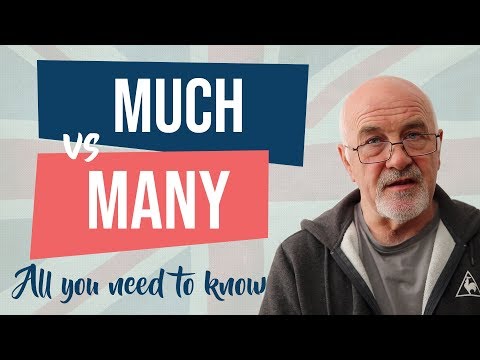
- And 'uncountable' is where they don't have a natural plural, so this one word is for the singular and the plural.
And 'uncountable' is where they don't have a natural plural, so this one word is for the singular and the plural.
- Okay, so as always rice in the singular, rice in the plural.
Okay, so as always rice in the singular, rice in the plural.
Givaudan Food Experiences

- Feeling each moment, a singular experience has the power to transform perspectives, to inspire, to shock.
Feeling each moment, a singular experience has the power to transform perspectives, to inspire, to shock.
- A singular experience has the power to transform perspectives.
A singular experience has the power to transform perspectives.