
accuse
US /əˈkjuz/
UK /ə'kju:z/
- Transitive Verb
- To claim that someone has done something wrong
A2Moreanger
US /ˈæŋɡɚ/
UK /ˈæŋgə(r)/
- Transitive Verb
- To make someone mad, upset, or annoyed
- Uncountable Noun
- Feelings of being upset, mad or annoyed
- A strong feeling we can get if we think we're being treated badly
A2TOEICMoreat least
US /æt list/
UK /æt li:st/
- Adverb
- As a minimum
- Not less than
- Phrase
- No less than; at the minimum
- Used to indicate that something is positive in a bad situation.
C2Moreattorney
US /əˈtɚni/
UK /ə'tɜ:nɪ/
- Countable Noun
- Person giving legal advice; a lawyer
B2TOEICMoreblock
US /blɑk/
UK /blɒk/
- Noun (Countable/Uncountable)
- Solid piece of material used for building
- A piece of wood, chocolate etc.
- Transitive Verb
- To stop from going forward or making progress
- To obstruct or prevent the movement or passage of.
A2Morecamp
US /kæmp/
UK /kæmp/
- Noun (Countable/Uncountable)
- A (military) base
- Exaggerated behavior meant to be funny
- Intransitive Verb
- To live temporarily, e.g. in a tent or a vehicle
A2Morecapital
US /ˈkæpɪtl/
UK /'kæpɪtl/
- Noun
- Writing the first letter of a word in big letters
- Official main city of a country, province or state
- Adjective
- Main, or major
- (Of an offense) liable to the death penalty.
A2Morecelebrate
US /ˈsɛləˌbret/
UK /'selɪbreɪt/
- Verb (Transitive/Intransitive)
- To observe an event or occasion, e.g. a birthday
- To lead or participate in a religious ceremony
A2Morecoalition
US /ˌkoəˈlɪʃən/
UK /ˌkəʊəˈlɪʃn/
- Noun
- Union of separate political parties
B1Morecoming and going
US /ˈkʌmɪŋ ənd ˈɡoɪŋ/
UK /ˈkʌmɪŋ ænd ˈgəʊɪŋ/
- Uncountable Noun
- The activity of people arriving and departing from a place.
- Adjective
- Intermittent; not constant or reliable.
A1Morecorrespondent
US /ˌkɔrɪˈspɑndənt, ˌkɑr-/
UK /ˌkɒrəˈspɒndənt/
- Countable Noun
- Journalist, as one reporting from other countries
B1Morecrowd
US /kraʊd/
UK /kraʊd/
- Verb (Transitive/Intransitive)
- To force too many things, people into
- (Lots of people) to meet together in one place
- Noun (Countable/Uncountable)
- Large group of people together in one place
A2Moredeem
US /dim/
UK /di:m/
- Transitive Verb
- To judge something to be a certain thing, way
B2Moredemand
US /dɪˈmænd/
UK /dɪ'mɑ:nd/
- Noun (Countable/Uncountable)
- Desire customers have to buy product, service
- A strong request for someone to do something
- Transitive Verb
- To strongly request someone to do something
- To need something.
A2TOEICMoredemonstration
US /ˌdɛmənˈstreʃən/
UK /ˌdemənˈstreɪʃn/
- Noun
- Open showing of emotion
- Public gathering showing disagreement or support
B1TOEICMoredeputy
US /ˈdɛpjəti/
UK /ˈdepjuti/
- Noun
- Assistant to a leader who acts on his, her behalf
B1Moredirect
US /dɪˈrɛkt, daɪ-/
UK /də'rekt/
- Transitive Verb
- To tell someone in a very clear way to do something
- To show the way by conducting or leading
- Adverb
- Coming straight from something
A2TOEICMoredistinctive
US /dɪˈstɪŋktɪv/
UK /dɪˈstɪŋktɪv/
- Adjective
- Having a quality that is different from others
- Having a quality or characteristic that makes a person or thing different from others; easily distinguishable.
A2TOEICMorefund
US /fʌnd/
UK /fʌnd/
- Transitive Verb
- To supply money for something
- Noun (Countable/Uncountable)
- Money collected, saved, or provided for a purpose
- A specific account into which you put money
A2TOEICMoregovern
US /ˈgʌvərn/
UK /ˈgʌvn/
- Transitive Verb
- To officially control land and make policies
- To control the actions or behaviour of someone
B1Morehandle
US /ˈhændl/
UK /'hændl/
- Transitive Verb
- To cope with or take responsibility for
- To control a machine, car etc.
- Countable Noun
- The part of a door you hold to open it
- Thing you hold to carry or open a bag, pan etc.
A2TOEICMorehuge
US /hjudʒ/
UK /hju:dʒ/
- Adjective
- Very very large
A2Moreillegal
US /ɪˈliɡəl/
UK /ɪ'li:ɡl/
- Adjective
- Not allowed by the laws or rules
- Prohibited by law; illicit.
A2Moreindependence
US /ˌɪndɪˈpɛndəns/
UK /ˌɪndɪ'pendəns/
- Uncountable Noun
- Having the freedom to make your own decisions
- The state of not relying on others for financial support or assistance.
A2Moreinvestigate
US /ɪnˈvɛstɪˌɡet/
UK /ɪn'vestɪɡeɪt/
- Verb (Transitive/Intransitive)
- To try to find out facts; to carry out research
A2Morelook at
US /lʊk æt/
UK /luk æt/
- Phrasal Verb
- To use your eyes to focus on something
- To focus your eyes on something carefully
A1Moreminister
US /ˈmɪnɪstɚ/
UK /'mɪnɪstə(r)/
- Noun
- An official who heads a government department
- Person who performs Christian services
A2Morenumber of people
US /ˈnʌmbɚ ʌv ˈpipəl/
UK /ˈnʌmbə ɔv ˈpi:pl/
- Phrase
- The total count of individuals within a group or gathering.
- A statistical figure representing the population size or a subset thereof.
A1Moreof course
US /ʌv kɔː(r)s/
UK /ɔv kɔː(r)s/
- Adverb
- Sure ; Certainly
- Phrase
- For sure; certainly
A2Moreon the streets
US /ɑn ðə strits/
UK /ɒn ðə stri:ts/
- other
- Without a home; homeless or exposed outdoors.
B2Moreovernight
US /ˈovɚˌnaɪt/
UK /ˌəʊvə'naɪt/
- Adverb
- (Becoming famous, etc.) in a short amount of time
- For or during the night
- Adjective
- Lasting or taking place during the night
- Delivered or intended to be delivered on the next day
B1Morepack in
US /pæk ɪn/
UK /pæk in/
- Phrasal Verb
- To decide to stop doing something
A1Moreparticipation
US /pɑ:rˌtɪsɪˈpeɪʃn/
UK /pɑ:ˌtɪsɪˈpeɪʃn/
- Uncountable Noun
- Act of being involved in something
- The involvement of individuals in making decisions that affect them.
C1Morepray
US /pre/
UK /preɪ/
- Intransitive Verb
- To speak to your god to request help
- Verb (Transitive/Intransitive)
- To wish or hope for something to happen or be true
A2Moreprime
US /praɪm/
UK /praɪm/
- Transitive Verb
- To get a person ready for; prepare someone
- To coat with paint to prepare it for the main coat
- Adjective
- Concerning the highest in quality or value
- Concerning the highest level of achievement
A2TOEICMoreprotestor
US
UK
- Countable Noun
- A person who publicly demonstrates strong objection to something.
- An activist involved in protests.
B2Moreput up with
US /pʊt ʌp wɪð/
UK /put ʌp wið/
- Phrasal Verb
- To suffer (a difficult thing) without complaining
- To endure or accept something undesirable.
A1Morerally
US /ˈræli/
UK /'rælɪ/
- Noun (Countable/Uncountable)
- Public meeting to support or oppose something
- A race for motor vehicles over public roads
- Verb (Transitive/Intransitive)
- To meet publicly to support or oppose something
- To race cars in the countryside
B1Moreregister
US /ˈrɛdʒɪstɚ/
UK /'redʒɪstə(r)/
- Transitive Verb
- To record your name on an official list; sign up
- To show an amount on a measurement device
- Noun
- Till; machine used add up things you buy
- Range of notes of a person's (singing) voice
A2Morereplace
US /rɪˈples/
UK /rɪ'pleɪs/
- Transitive Verb
- To use instead of something else
- To return an item to its original location
A2TOEICMoreresignation
US /ˌrɛzɪɡˈneʃən/
UK /ˌrezɪgˈneɪʃn/
- Uncountable Noun
- Reluctant acceptance when a thing can't be avoided
- Act of leaving a job because you want to
B1TOEICMorerespect
US /rɪˈspɛkt/
UK /rɪ'spekt/
- Transitive Verb
- To follow the established rules
- To think very highly of another person
- Noun
- Behavior that follows the established rules
- Regard or admiration for someone or something
A2TOEICMorerule
US /ruːl/
UK /ruːl/
- Noun (Countable/Uncountable)
- Something that is normal and usually happens
- Governmental control or power over a region
- Verb (Transitive/Intransitive)
- To decide legally, especially in court
- To have control or influence
A2TOEICMoresack
US /sæk/
UK /sæk/
- Verb (Transitive/Intransitive)
- To put something in a large bag
- To dismiss a person from their job; fire
- Countable Noun
- Large strong bag made of fibers, plastic, etc.
B1Morescandal
US /ˈskændl/
UK /'skændl/
- Noun
- Unacceptable/immoral event causing public shock
B1Moreset up
US /sɛt ʌp/
UK /set ʌp/
- Phrasal Verb
- To make arrangements for something; establish
- Verb (Transitive/Intransitive)
- To arrange or prepare something for use.
- To start a business, organization, etc.
A1Moreshut
US /ʃʌt/
UK /ʃʌt/
- Intransitive Verb
- To stop being open for business
- Transitive Verb
- To close something, e.g. a door
A2Moreshut down
US /ʃʌt daʊn/
UK /ʃʌt daun/
- Phrasal Verb
- To close an operating system, e.g. on a computer
- To stop a factory/machine from operating
- Transitive Verb
- To deactivate a nuclear reactor.
- To turn off a computer or other electronic device.
A2Moresignificant
US /sɪɡˈnɪfɪkənt/
UK /sɪgˈnɪfɪkənt/
- Adjective
- Large enough to be noticed or have an effect
- Having meaning; important; noticeable
A2TOEICMoresquare
US /skwɛr/
UK /skweə(r)/
- Noun (Countable/Uncountable)
- Shape with 4 equal length sides and 4 equal angles
- The result of multiplying Length by the width
- Adjective
- Being fair or honest
- Multiply a number by itself e.g. 2x2 or 6x6
A2TOEICMorestupid
US /ˈstu:pɪd/
UK /ˈstju:pɪd/
- Adjective
- Not intelligent; lacking ability to learn easily
- Noun
- A stupid person.
A2Moresuspicion
US /səˈspɪʃən/
UK /sə'spɪʃn/
- Uncountable Noun
- Feeling that something or something is doubtful
- Feeling that someone could be guilty of something
B1Moreterribly
US /ˈtɛrəbli/
UK /ˈterəbli/
- Adverb
- To an extreme degree; badly; very
- Very; extremely
B1Moreto date
US /tu det/
UK /tu: deit/
- Phrase
- Up to the present time; until now.
- Verb (Transitive/Intransitive)
- To go out on romantic dates with someone.
C2Moreweekend
US /ˈwi:kend/
UK /ˌwi:kˈend/
- Noun
- Saturday and Sunday, after the normal working week
A2More
Vocabulary
- of course: Sure ; Certainly
- on the streets: Without a home; homeless or exposed outdoors.
- coming and going: The activity of people arriving and departing from a place.
- look at: To use your eyes to focus on something
- number of people: The total count of individuals within a group or gathering.
- put up with: To suffer (a difficult thing) without complaining
- at least: As a minimum
- set up
- shut down: To close an operating system, e.g. on a computer
- pack in: To decide to stop doing something
- to date: Up to the present time; until now.
- answer: To reply to a question someone asks
- bank: A financial institution that keeps or lends money
- day: A period of 24 hours beginning at midnight
- weekend: Saturday and Sunday, after the normal working week
- people: Persons sharing culture, country, background, etc.
- tomorrow: The time that is to come; the future
- lot: What happens to a person in life from chance; fate
- country: An area of land that is controlled by a government
- money: Coins or notes we use to pay for things
- question: To ask for or try to get information
- wrong: Action that is harmful, unjust or illegal
- change: To exchange one set of clothes for another
- head: To hit a ball with your head in a game
- kind: In a caring and helpful manner
- yellow: Color of lemons or the sun
- police: People, often in uniforms, who solve crimes
- capital: Writing the first letter of a word in big letters
- pray: To speak to your god to request help
- cleared: To recover from or remove a problem
- camp: A (military) base
- left: To go away from; depart
- crowd: To force too many things, people into
- shut: To stop being open for business
- square: Shape with 4 equal length sides and 4 equal angles
- call: A order or request for action
- move: To cause someone to have certain emotions
- immediately: Without any delay; straight away
- turn: To become (a particular age)
- build: Your physical shape; physique
- account: An advantage
- stupid: Not intelligent; lacking ability to learn easily
- register: To record your name on an official list; sign up
- government: Group of people and system that rule a nation
- direct: To tell someone in a very clear way to do something
- celebrate: To observe an event or occasion, e.g. a birthday
- huge: Very very large
- respect: To follow the established rules
- block: Solid piece of material used for building
- handle: To cope with or take responsibility for
- demand: Desire customers have to buy product, service
- rule: Something that is normal and usually happens
- terribly: To an extreme degree; badly; very
- overnight: (Becoming famous, etc.) in a short amount of time
- replace: To use instead of something else
- minister: An official who heads a government department
- prime: To get a person ready for; prepare someone
- independence: Having the freedom to make your own decisions
- govern: To officially control land and make policies
- scandal: Unacceptable/immoral event causing public shock
- accuse: To claim that someone has done something wrong
- demonstration: Open showing of emotion
- anger: To make someone mad, upset, or annoyed
- significant: Large enough to be noticed or have an effect
- protestor: A person who publicly demonstrates strong objection to something.
- sack: To put something in a large bag
- suspicion: Feeling that something or something is doubtful
- investigate: To try to find out facts; to carry out research
- participation: Act of being involved in something
- illegal: Not allowed by the laws or rules
- deputy: Assistant to a leader who acts on his, her behalf
- distinctive: Having a quality that is different from others
- fund: To supply money for something
- resignation: Reluctant acceptance when a thing can't be avoided
- deem: To judge something to be a certain thing, way
- rally: Public meeting to support or oppose something
- coalition: Union of separate political parties
- correspondent: Journalist, as one reporting from other countries
- attorney: Person giving legal advice; a lawyer
- program: To make someone act or think in a certain way
Get the full experience in the app
Learn anywhere with detailed sentence and usage analysis
01:03
She took a brave step forward, leaving behind her comfort zone to chase her dreams.
Vocabulary
- brave
adj. Having courage
- comfort zone
phr. A familiar situation where one feels safe
Explanation
a brave step is a noun phrase, where brave is an adjective modifying the noun step, meaning "a courageous step".
forward is an adverb modifying step, meaning "ahead".
The whole phrase serves as the object, answering the "what" of took (verb) — she took a brave step forward.
Get the full experience in the app
Look up words anytime with pronunciation, part of speech, and usage
brave
US/brev/
UK/breɪv/
adj.Brave
v.t.To bravely face
A2 Elementary
Get the full experience in the app
Practice speaking anytime and get instant pronunciation feedback
Try this speaking exercise.
Try practicing with this sentence.
80
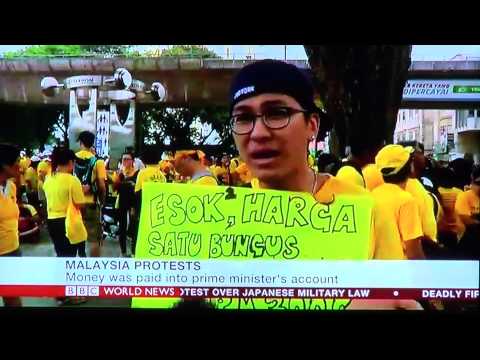
BERSIH 4 Day #2 reported by BBC World News (subtitle included)
0
John Lee posted on 2015/09/03Ever wondered about the massive protests in Malaysia related to the 1MDB scandal? This BBC World News report dives deep into the events in Kuala Lumpur, giving you a fantastic chance to pick up vocabulary related to anti-corruption and mass movements. You'll also get a great feel for situational dialogue and cultural context straight from the news!
Learn this video on the APP!
The VoiceTube App has more in-depth practice for videos!