
actual
US /ˈæktʃuəl/
UK /ˈæktʃuəl/
- Adjective
- Real or existing in fact, not imagined; real
- Current; existing at the present time.
A2TOEICMoreapparently
US /əˈpærəntlɪ/
UK /əˈpærəntli/
- Adverb
- According to what you heard; from what can be seen
A2TOEICMoreapplication
US /ˌæplɪˈkeʃən/
UK /ˌæplɪˈkeɪʃn/
- Noun (Countable/Uncountable)
- Software program, e.g. for smart phone
- Process of spreading a substance over a surface
A2TOEICMorearranged in
US
UK
- Verb (Transitive/Intransitive)
- Organized or placed in a specific order or manner within a particular space or format.
- Displayed or set out attractively within something.
as long as
US /æz lɔŋ æz/
UK /æz lɔŋ æz/
- Conjunction
- For the period that; provided that.
- For the length of time that
- Preposition
- On the condition that; providing that.
- Having the same length as.
A1Moreas one
US
UK
- Adverb
- Acting or moving together at the same time.
- In complete agreement or unity.
- Phrase
- With a single voice or opinion; unanimously.
- In perfect harmony or unison.
A1Moreas well as
US /æz wɛl æz/
UK /æz wel æz/
- Adverb
- Also; in addition to
- Preposition
- In addition to; and also.
A1Moreasset
US /ˈæsˌɛt/
UK /'æset/
- Noun (Countable/Uncountable)
- Thing that has value to you
A2TOEICMoreat least
US /æt list/
UK /æt li:st/
- Adverb
- As a minimum
- Not less than
- Phrase
- No less than; at the minimum
- Used to indicate that something is positive in a bad situation.
C2Moreat the same time
US
UK
- Phrase
- Simultaneously; at the identical moment.
- Nevertheless; however; used to introduce a contrasting or qualifying statement.
A1Moreautomatically
US /ˌɔtəˈmætɪkl:ɪ/
UK /ˌɔ:tə'mætɪklɪ/
- Adverb
- In a way not requiring control by a person
B1Moreback out
US /bæk aʊt/
UK /bæk aut/
- Phrasal Verb
- To say you will now not do something you promised
A1Morebased on
US
UK
- Phrasal Verb
- To use something as the foundation or starting point for something else.
- Preposition
- Using something as the main idea or foundation.
- Relying on something as evidence or justification.
A1Morebe with
US /bi wɪð/
UK /bi: wið/
- Phrasal Verb
- To accompany someone; to be in someone's presence.
- To support someone's opinion or cause.
A1Morebutton
US /ˈbʌtn/
UK /'bʌtn/
- Noun (Countable/Uncountable)
- Small round piece material used to fasten clothing
- Switch activated by pressing
- Transitive Verb
- To fasten e.g. a shirt, coat
- To suppress or restrain (feelings, etc.).
A2TOEICMoreby default
US /baɪ dɪˈfɔlt/
UK /bai diˈfɔ:lt/
- Adverb
- Automatically, unless the user specifies otherwise.
- Because of a lack of any other action or choice.
character
US /ˈkærəktɚ/
UK /'kærəktə(r)/
- Noun
- Person in a story, movie or play
- Writing symbols, e.g. alphabet or Chinese writing
A2Morecombine
US /kəmˈbaɪn/
UK /kəmˈbaɪn/
- Verb (Transitive/Intransitive)
- To mix several things together to form one thing
- To harvest by means of a combine.
- Noun (Countable/Uncountable)
- A harvesting machine for cutting, threshing, and cleaning grain.
- A mixture of different things.
A2Morecomparison
US /kəmˈpærɪsən/
UK /kəmˈpærɪsn/
- Noun (Countable/Uncountable)
- Act of comparing things
- The quality or state of being similar or alike.
A2Morecorrect
US /kəˈrɛkt/
UK /kə'rekt/
- Adjective
- Being suitable and appropriate for an occasion
- True or accurate
- Transitive Verb
- To fix a problem
- To write marks on a piece of work to show mistakes
A2Morecrop
US /krɑp/
UK /krɒp/
- Noun (Countable/Uncountable)
- Plants grown on a farm for food, e.g. corn or rice
- Section of short, thick hair
- Transitive Verb
- To cut something to a shorter length or size
- To cut (something, especially hair) short.
B1Morecube
US /kjub/
UK /kju:b/
- Noun
- Solid object that has six square sides
- Transitive Verb
- To cut food into the shape of small cubes
- To multiply a number by itself three times
B2Moredatum
US /ˈdetəm, ˈdætəm, ˈdɑtəm/
UK /ˈdeɪtəm/
- Noun
- Item of factual information
B1Moredo in
US
UK
- Phrasal Verb
- To make completely tired out and exhausted
- To destroy or cause damage to someone
A1Moreedge case
US
UK
- Noun
- A problem or situation that only occurs at extreme operating parameters.
- A situation that occurs only at the extreme end of possible conditions.
B1Moreexcept for
US /ɪkˈsɛpt fɔr/
UK /ikˈsept fɔ:/
- Preposition
- Not including; excluding.
fade out
US /fed aʊt/
UK /feid aut/
- Phrasal Verb
- To gradually decrease in visibility or audibility.
- To gradually disappear or become obsolete.
- Intransitive Verb
- To end a scene in a film by gradually reducing the visibility of the image.
B2Morefeature
US /ˈfitʃɚ/
UK /'fi:tʃə(r)/
- Noun (Countable/Uncountable)
- Special report in a magazine or paper
- Distinctive or important point of something
- Transitive Verb
- To highlight or give special importance to
- To give prominence to; to present or promote as a special or important item.
A2TOEICMorefigure out
US /ˈfɪɡjɚ aʊt/
UK /ˈfiɡə aut/
- Phrasal Verb
- To understand the behavior of someone
- To think through logically to find a solution
- Verb (Transitive/Intransitive)
- To understand or find an answer to something.
- To find a solution to a problem or understand something.
A1Morefinite
US /ˈfaɪˌnaɪt/
UK /ˈfaɪnaɪt/
- Adjective
- Having limits; lasting for a limited time
B1Morefor some reason
US /fɔr sʌm ˈrizən/
UK /fɔ: sʌm ˈri:zən/
- Phrase
- For a reason that is not known or not easily explained.
A1Morefractal
US /ˈfræktəl/
UK /ˈfræktl/
- Adjective
- Geometric pattern that is repeated at every scale
- Relating to or resembling a fractal.
- Noun
- A geometric shape that contains detailed structure at arbitrarily small scales, usually having a fractal dimension strictly exceeding the topological dimension.
C1Moreget through
US /ɡɛt θru/
UK /ɡet θru:/
- Phrasal Verb
- To arrive at the end of or finish something
- To succeed in contacting someone by phone
A1Moreglow
US /ɡlo/
UK /ɡləʊ/
- Noun
- Pink color in the face, e.g. from exercise/emotion
- Pleasant feeling, as of happiness or satisfaction
- Intransitive Verb
- To look very healthy and contented
- To emit a steady even light
B1Morego back to
US /ɡo bæk tu/
UK /ɡəu bæk tu:/
- Phrasal Verb
- To return to a starting point
A1Moregoing on
US /ˈɡoɪŋ ɑn/
UK /ˈgəʊɪŋ ɔn/
- Phrasal Verb
- To continue doing something
- To happen (usually negative)
A1Morehave to
US /hæv tu/
UK /ˈhæv tə/
- Auxiliary Verb
- Must do
A1Morein any case
US /ɪn ˈɛni kes/
UK /in ˈeni keis/
- Phrase
- Whatever happens; regardless of what has happened or may happen.
A1Morein different ways
US
UK
- Phrase
- Using various methods or approaches; with variety.
- In varying manners or styles; not uniformly.
A1Morein fact
US /ɪn fækt/
UK /in fækt/
- Adverb
- Used to emphasize the truth of a statement, especially one that contrasts with or contradicts something else.
- Used to introduce a more detailed or surprising piece of information.
- Phrase
- Used to emphasize the truth of a statement, especially one that is surprising or contrary to what might be expected.
C1Morein on
US
UK
- Phrase
- To be involved in a secret or plan.
- To be aware of something that is secret or not generally known.
A1Morein the world
US /ɪn ði wɜrld/
UK /in ðə wɜː(r)ld/
- Phrase
- Used to emphasize a question expressing surprise, confusion, disbelief
- Used to indicate the extent or degree of something, often in a superlative sense
A1Moreinsert
US /ɪnˈsɜ:rt/
UK /ɪnˈsɜ:t/
- Transitive Verb
- To put something into a certain place or spot
- To add (writing) to something.
- Noun
- Act of putting into a certain place or spot
- A leaflet or section inserted in a magazine or newspaper.
B1TOEICMoreinside of
US /ɪnˈsaɪd ʌv/
UK /inˈsaid ɔv/
- Preposition
- Within; in the inner part of.
- Within a certain period of time.
A1Moreinstead of
US /ɪnˈstɛd ʌv/
UK /inˈsted ɔv/
- Preposition
- When one thing is replaced by another
- Adverb
- As a substitute or alternative.
A1Moreinteract with
US /ˌɪntɚˈækt wɪð/
UK /ˌɪntərˈækt wið/
- Phrase
- Verb (Transitive/Intransitive)
- To engage in communication or action involving mutual or reciprocal influence.
- To use a computer interface to achieve a specific goal.
A2Morejust kind of
US
UK
- Phrase
- Used to express a feeling or state in a vague or hesitant way.
- Used to indicate something is approximately or generally similar to something else.
A2Morekeep it off
US
UK
- Phrasal Verb
- To avoid gaining weight again after having lost it.
A2Morelook at
US /lʊk æt/
UK /luk æt/
- Phrasal Verb
- To use your eyes to focus on something
- To focus your eyes on something carefully
A1Moremove back
US /muv bæk/
UK /mu:v bæk/
- Phrasal Verb
- To retreat or withdraw from a position.
- To reposition or shift something to a previous location.
A2Moremove over
US /muv ˈovɚ/
UK /mu:v ˈəuvə/
- Phrasal Verb
- To make room for someone or something by shifting position.
- To change one's job or position within an organization.
move to
US /muv tu/
UK /mu:v tu:/
- Phrasal Verb
- To change the place where you live or work.
- Verb (Transitive/Intransitive)
- To proceed to the next stage or action.
A2Moreobject
US /ˈɑbdʒɪkt/
UK /'ɒbdʒɪkt/
- Noun (Countable/Uncountable)
- Something you can see or touch, but is not alive
- Goal or purpose of a particular plan or activity
- Verb (Transitive/Intransitive)
- To disagree; to protest against an idea or plan
- To state one's reason for disagreement
A2TOEICMoreof choice
US /əv tʃɔɪs/
UK /əv tʃɔɪs/
- other
- Indicating something is preferred or selected deliberately.
B2Moreof course
US /ʌv kɔː(r)s/
UK /ɔv kɔː(r)s/
- Adverb
- Sure ; Certainly
- Phrase
- For sure; certainly
A2Moreof itself
US /ʌv ɪtˈself/
UK /əv ɪtˈself/
- other
- Happening automatically without external cause or help.
B1Moreof the like
US /ʌv ðə laɪk/
UK /əv ðə laɪk/
- other
- And similar kinds or types; alike in category.
B2Moreoff of
US /ɔf ʌv/
UK /ɔf ɔv/
- Preposition
- From a position on something; down from.
A1Moreon earth
US /ɑn ɚθ/
UK /ɔn ə:θ/
- Phrase
- Used to emphasize a question expressing surprise or anger.
- Used to emphasize that something is not possible or will not happen.
A1Moreon the button
US
UK
- Phrase
- Exactly right; perfectly.
- Adjective
- Precise; accurate.
- Perfect; flawless.
B1Moreon the door
US /ɑn ðə dɔr/
UK /ɒn ðə dɔ:/
- Preposition
- Situated on the surface or part of a door.
B1Moreon the inside
US /ɑn ði ɪnˈsaɪd/
UK /ɔn ðə inˈsaid/
- Phrase
- Having a position of authority or influence within an organization or system.
- In prison; incarcerated.
- Adjective
- Possessing secret or confidential information.
A1Moreon the slide
US
UK
- Phrase
- In a state of decline or deterioration.
- Losing control or influence; declining in status.
- Adjective
- (Informal) Dishonest or untrustworthy; engaging in shady practices.
A1Moreover to
US
UK
- Preposition
- Used to hand over to someone else to speak
- The responsibility is now yours
portal
US /ˈpɔrtl, ˈpor-/
UK /'pɔ:tl/
- Noun
- Type of gate or entry point, e.g. to the internet
B2Morepowerpoint
US
UK
- Noun
- Software package to make presentations
C2Morepresentation
US /ˌprɛzənˈteʃən, ˌprizən-/
UK /ˌpreznˈteɪʃn/
- Noun (Countable/Uncountable)
- Act of giving a formal talk about something
- Way in which something is displayed or shown
A2Morequick question
US
UK
- Noun (Countable/Uncountable)
- A brief and simple inquiry.
- Phrase
- An introductory phrase indicating a question requiring a prompt answer.
A1Morerandom
US /ˈrændəm/
UK /'rændəm/
- Adjective
- Chosen, done without a particular plan or pattern
B1Morerectangle
US /ˈrɛkˌtæŋɡəl/
UK /ˈrektæŋgl/
- Noun
- Four-sided geometrical shape with all right angles
B1TOEICMoreresolution
US /ˌrɛzəˈluʃən/
UK /ˌrezə'lu:ʃn/
- Noun (Countable/Uncountable)
- End part of a story resolving the conflict
- Ability of a screen or camera to display pixels
C2Morerid
US /rɪd/
UK /rɪd/
- Transitive Verb
- To cause to no longer have (pest, problem)
- Adjective
- Freed or delivered from something.
A2Moresame time
US
UK
- Phrase
- Occurring simultaneously or at the same point in time.
- At the identical time as before; recurring at a fixed hour.
- Noun
- An equal duration or period.
A1Moresearch for
US /sɚtʃ fɔr/
UK /sə:tʃ fɔ:/
- Phrasal Verb
- To try to find someone or something.
B1Moreseparate
US /'sepəreɪt/
UK /'sepəreɪt/
- Adjective
- Being different from or unrelated to another
- Not connected; different.
- Transitive Verb
- To divide two things by being in between them
- To move things away from each other
A2TOEICMoreset to
US /sɛt tu/
UK /set tu:/
- Phrasal Verb
- To energetically begin to do, e.g. making a fire
A1Moreset up
US /sɛt ʌp/
UK /set ʌp/
- Phrasal Verb
- To make arrangements for something; establish
- Verb (Transitive/Intransitive)
- To arrange or prepare something for use.
- To start a business, organization, etc.
A1Moresimulate
US /ˈsɪmjəˌlet/
UK /'sɪmjʊleɪt/
- Transitive Verb
- To copy something or look or behave like it
B1TOEICMoresnap to
US /snæp tu/
UK /snæp tu/
- other
- To suddenly become alert and attentive to what is happening.
B2Morestart off
US /stɑrt ɔf/
UK /stɑ:t ɔf/
- Phrasal Verb
- To begin or commence something.
- To begin a journey.
B2Morestart on
US /stɑrt ɑn/
UK /stɑ:t ɔn/
- Phrasal Verb
- To begin or start doing something.
- To criticize or complain to someone repeatedly.
A1Morestep off
US /stɛp ɔf/
UK /step ɔf/
- Phrasal Verb
- To leave or move away from a place or situation, often used as a command.
- To begin a journey or race.
A2Morestep to
US
UK
- Phrasal Verb
- To approach someone or something, often with a specific purpose.
- To challenge or confront someone, often aggressively.
A1Morestuff
US /stʌf/
UK /stʌf/
- Uncountable Noun
- Generic description for things, materials, objects
- Transitive Verb
- To push material inside something, with force
B1Moretheoretically
US /ˌθiəˈretɪkli/
UK /ˌθɪə'retɪklɪ/
- Adverb
- As regards ideas that could be true
B2Morethink about
US /θɪŋk əˈbaʊt/
UK /θiŋk əˈbaut/
- Phrasal Verb
- To consider something carefully.
- To remember or call to mind.
A1Moreto do with
US
UK
- Phrasal Verb
- To be about something; concern
A1Moreton
US /tʌn/
UK /tʌn/
- Noun
- Unit of weight; 907 kilograms (US); 1016 (UK)
A2Moretransition
US /trænˈzɪʃən, -ˈsɪʃ-/
UK /trænˈzɪʃn/
- Noun
- Change from one state, movement, place to another
- Intransitive Verb
- To change state, movement, place, or subject
B1Moretrigger
US /ˈtrɪɡɚ/
UK /'trɪɡə(r)/
- Noun
- Lever on a gun that you pull to fire
- Device that starts a process
- Transitive Verb
- To start a process off e.g. a memory
- To cause something to begin or happen.
B1Moreturn to
US /tɚn tu/
UK /tə:n tu:/
- Phrasal Verb
- To go to someone for help, advice, or information.
- To start doing or using something, often something bad or undesirable.
A1Morewait for
US /wet fɔr/
UK /weit fɔ:/
- Phrasal Verb
- To wait until someone comes, or something happens
A1Morewarp
US /wɔ:rp/
UK /wɔ:p/
- Noun
- Twist or bend in something normally straight
- Transitive Verb
- To influence someone to become bad/do evil thing
B2Morewith respect to
US /wɪð rɪˈspɛkt tu/
UK /wið risˈpekt tu:/
- Preposition
- In relation to; regarding.
- Phrase
- In relation to; concerning.
A1Morezoom
US /zum/
UK /zu:m/
- Noun
- Camera lens used to magnify images
- Intransitive Verb
- To move along or go somewhere very quickly
B1Morezoom in on
US
UK
- Phrasal Verb
- To adjust a camera or lens to make a subject appear closer.
- To focus attention on something specific.
A1More
Vocabulary
- have to: Must do
- on the button: Exactly right; perfectly.
- figure out: To understand the behavior of someone
- go back to: To return to a starting point
- set up
- set to: To energetically begin to do, e.g. making a fire
- on the slide: In a state of decline or deterioration.
- look at: To use your eyes to focus on something
- do in: To make completely tired out and exhausted
- in fact: Used to emphasize the truth of a statement, especially one that contrasts with or contradicts something else.
- instead of: When one thing is replaced by another
- on the door: Situated on the surface or part of a door.
- start on: To begin or start doing something.
- fade out: To gradually decrease in visibility or audibility.
- edge case: A problem or situation that only occurs at extreme operating parameters.
- by default: Automatically, unless the user specifies otherwise.
- inside of: Within; in the inner part of.
- of course: Sure ; Certainly
- at the same time: Simultaneously; at the identical moment.
- same time: Occurring simultaneously or at the same point in time.
- except for: Not including; excluding.
- move over: To make room for someone or something by shifting position.
- based on: To use something as the foundation or starting point for something else.
- to do with: To be about something; concern
- at least: As a minimum
- of the like: And similar kinds or types; alike in category.
- going on: To continue doing something
- as well as: Also; in addition to
- quick question: A brief and simple inquiry.
- of choice: Indicating something is preferred or selected deliberately.
- in different ways: Using various methods or approaches; with variety.
- interact with
- snap to: To suddenly become alert and attentive to what is happening.
- keep it off: To avoid gaining weight again after having lost it.
- turn to: To go to someone for help, advice, or information.
- with respect to: In relation to; regarding.
- over to: Used to hand over to someone else to speak
- be with: To accompany someone; to be in someone's presence.
- get through: To arrive at the end of or finish something
- off of: From a position on something; down from.
- step off: To leave or move away from a place or situation, often used as a command.
- think about: To consider something carefully.
- start off: To begin or commence something.
- arranged in: Organized or placed in a specific order or manner within a particular space or format.
- as one: Acting or moving together at the same time.
- just kind of: Used to express a feeling or state in a vague or hesitant way.
- step to: To approach someone or something, often with a specific purpose.
- back out: To say you will now not do something you promised
- move to: To change the place where you live or work.
- move back: To retreat or withdraw from a position.
- as long as: For the period that; provided that.
- of itself: Happening automatically without external cause or help.
- search for: To try to find someone or something.
- on the inside: Having a position of authority or influence within an organization or system.
- in any case: Whatever happens; regardless of what has happened or may happen.
- zoom in on: To adjust a camera or lens to make a subject appear closer.
- in on: To be involved in a secret or plan.
- on earth: Used to emphasize a question expressing surprise or anger.
- wait for: To wait until someone comes, or something happens
- for some reason: For a reason that is not known or not easily explained.
- in the world: Used to emphasize a question expressing surprise, confusion, disbelief
- stuff: Generic description for things, materials, objects
- sort: To organize things by putting them into groups
- apparently: According to what you heard; from what can be seen
- figure: To appear in a game, play or event
- trigger: Lever on a gun that you pull to fire
- character: Person in a story, movie or play
- sense: Certain mental feeling or emotion
- expect: To believe something is probably going to happen
- random: Chosen, done without a particular plan or pattern
- rid: To cause to no longer have (pest, problem)
- separate: Being different from or unrelated to another
- feature: Special report in a magazine or paper
- bit: Device put in a horse's mouth to control it
- presentation: Act of giving a formal talk about something
- automatically: In a way not requiring control by a person
- state: Region within a country, with its own government
- resolution: End part of a story resolving the conflict
- effect: An advantage, benefit
- comparison: Act of comparing things
- asset: Thing that has value to you
- pretty: Being attractive to the eye in a simple way
- reason: To think and make conclusions in a logical manner
- transition: Change from one state, movement, place to another
- actual: Real or existing in fact, not imagined; real
- guess: To give an answer without knowing if it is correct
- application: Software program, e.g. for smart phone
- click: To work well with someone or something
- theoretically: As regards ideas that could be true
- shape: The outer form of something, what it looks like
- correct: Being suitable and appropriate for an occasion
- object: Something you can see or touch, but is not alive
- crop: Plants grown on a farm for food, e.g. corn or rice
- text: To send a message by phone or other device
- combine: To mix several things together to form one thing
- lot: What happens to a person in life from chance; fate
- important: Having power or authority
- ton: Unit of weight; 907 kilograms (US); 1016 (UK)
- button: Small round piece material used to fasten clothing
- finite: Having limits; lasting for a limited time
- glow: Pink color in the face, e.g. from exercise/emotion
- simulate: To copy something or look or behave like it
- insert: To put something into a certain place or spot
- portal: Type of gate or entry point, e.g. to the internet
- rectangle: Four-sided geometrical shape with all right angles
- datum: Item of factual information
- cube: Solid object that has six square sides
- warp: Twist or bend in something normally straight
- zoom: Camera lens used to magnify images
- fractal: Geometric pattern that is repeated at every scale
- powerpoint: Software package to make presentations
Get the full experience in the app
Learn anywhere with detailed sentence and usage analysis
01:03
She took a brave step forward, leaving behind her comfort zone to chase her dreams.
Vocabulary
- brave
adj. Having courage
- comfort zone
phr. A familiar situation where one feels safe
Explanation
a brave step is a noun phrase, where brave is an adjective modifying the noun step, meaning "a courageous step".
forward is an adverb modifying step, meaning "ahead".
The whole phrase serves as the object, answering the "what" of took (verb) — she took a brave step forward.
Get the full experience in the app
Look up words anytime with pronunciation, part of speech, and usage
brave
US/brev/
UK/breɪv/
adj.Brave
v.t.To bravely face
A2 Elementary
Get the full experience in the app
Practice speaking anytime and get instant pronunciation feedback
Try this speaking exercise.
Try practicing with this sentence.
80
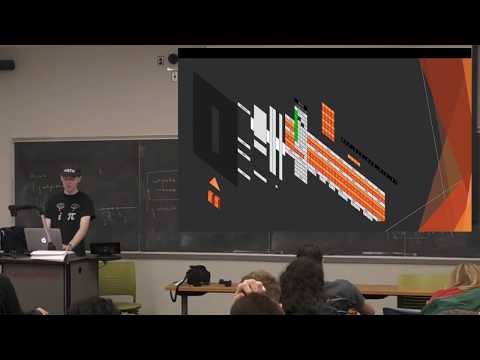
Great Impractical Ideas in Computer Science: PowerPoint Programming
0
林宜悉 posted on 2026/11/26Have you ever wondered if you could turn a simple presentation tool into a functioning computer? This quirky lecture explores how to use PowerPoint for programming logic and Turing machines while helping you pick up essential technical vocabulary like 'finite state automata' and 'edge cases.' It is a fun, unconventional way to sharpen your English skills while learning how to hack your favorite software!
Learn this video on the APP!
The VoiceTube App has more in-depth practice for videos!