
action
US /ˈækʃən/
UK /'ækʃn/
- Noun (Countable/Uncountable)
- Something that a person or thing does
- A lawsuit.
- Intransitive Verb
- To act to do something
A2Moreanswer to
US
UK
- Phrasal Verb
- To be responsible to someone and have to explain your actions to them.
- To correspond to or match a description or requirement.
A1Morearound the world
US /əˈraʊnd ði wɜrld/
UK /əˈraund ðə wɜː(r)ld/
- Phrase
- In or to many countries.
- In various places throughout the world.
A2Morebreak down
US /brek daʊn/
UK /breik daun/
- Phrasal Verb
- To forcibly break, destroy or make collapse
- (Machine) to stop working or become weaker
A1Morebreak it down
US
UK
- Phrasal Verb
- To simplify something complex into smaller, more manageable parts.
- To explain something in a detailed and understandable way.
A2Moreclear out
US /klɪr aʊt/
UK /kliə aut/
- Phrasal Verb
- To empty things out of a place
A1Morecome over to
US
UK
- Phrasal Verb
- To visit someone's house
A1Moreeliminate
US /ɪˈlɪməˌnet/
UK /ɪ'lɪmɪneɪt/
- Transitive Verb
- To completely remove; to get rid of
- To remove from a contest by beating them
B1TOEICMoreexercise
US /ˈɛksɚˌsaɪz/
UK /'eksəsaɪz/
- Verb (Transitive/Intransitive)
- To work out to become stronger and healthier
- To retain your ability or practice your skills
- Noun (Countable/Uncountable)
- Physical activity to increase health and strength
- Set of questions in a text book
A2Moreget out of
US /ɡɛt aʊt ʌv/
UK /ɡet aut ɔv/
- Phrasal Verb
- To leave or escape responsibilities, troubles
- To leave a small, enclosed vehicle
A1Morego for it
US /ɡo fɔr ɪt/
UK /ɡəu fɔ: it/
- Interjection
- An expression of encouragement or approval.
- Intransitive Verb
- To try to achieve something; to make an attempt.
A1Moregot to
US /ɡɑt tu/
UK /gɔt tu:/
- Verb (Transitive/Intransitive)
- To arrive at some place
- To have the opportunity or permission to do something
- Phrasal Verb
- To appeal to the emotions of; move
- To finally begin to start something after a delay
A1Morehandle
US /ˈhændl/
UK /'hændl/
- Transitive Verb
- To cope with or take responsibility for
- To control a machine, car etc.
- Countable Noun
- The part of a door you hold to open it
- Thing you hold to carry or open a bag, pan etc.
A2TOEICMorehave to
US /hæv tu/
UK /ˈhæv tə/
- Auxiliary Verb
- Must do
A1Morein fact
US /ɪn fækt/
UK /in fækt/
- Adverb
- Used to emphasize the truth of a statement, especially one that contrasts with or contradicts something else.
- Used to introduce a more detailed or surprising piece of information.
- Phrase
- Used to emphasize the truth of a statement, especially one that is surprising or contrary to what might be expected.
C1Morein the end
US /ɪn ði ɛnd/
UK /in ðə end/
- Phrase
- Finally; after a period of time or series of events.
- Ultimately; as the final result or consequence.
A1Morelook at
US /lʊk æt/
UK /luk æt/
- Phrasal Verb
- To use your eyes to focus on something
- To focus your eyes on something carefully
A1Moremark
US /mɑrk/
UK /mɑ:k/
- Proper Noun
- Person's name
- Transitive Verb
- To put a dirty spot or line on something
- To give a grade for homework
A2TOEICMoreover to
US
UK
- Preposition
- Used to hand over to someone else to speak
- The responsibility is now yours
right for
US
UK
- Adjective
- Suitable or appropriate for a particular person, purpose, or situation.
- Correct or most appropriate.
A1Moreslow down
US /slo daʊn/
UK /sləu daun/
- Phrasal Verb
- To reduce the speed
- To become less active or busy.
A1Morestress
US / strɛs/
UK /stres/
- Transitive Verb
- To emphasize one or more parts of a word, sentence
- To put pressure on something or someone
- Noun (Countable/Uncountable)
- Emphasis on part of a word or sentence
- Pressure on something or someone
A2TOEICMorestressed
US
UK
- Transitive Verb
- To emphasize one or more parts of a word, sentence
- To put pressure on something or someone
- Intransitive Verb
- To be in a state of mental tension due to problems
A2Moreto the left
US
UK
- Phrase
- In or toward the left direction.
- Situated on the left side of.
truth
US /truθ/
UK /tru:θ/
- Uncountable Noun
- Real facts about something
A2Moreused to
US /juzd tu/
UK /ˈju:st tə/
- Adjective
- Did regularly before, but don't do now
- Auxiliary Verb
- Have done before, but do not do now
A1Morework out
US /wɚk aʊt/
UK /wə:k aut/
- Phrasal Verb
- To find a way to do something, by thinking
A1More
Vocabulary
- look at: To use your eyes to focus on something
- slow down: To reduce the speed
- get out of: To leave or escape responsibilities, troubles
- have to: Must do
- right for: Suitable or appropriate for a particular person, purpose, or situation.
- to the left: In or toward the left direction.
- break down: To forcibly break, destroy or make collapse
- in fact: Used to emphasize the truth of a statement, especially one that contrasts with or contradicts something else.
- got to: To arrive at some place
- break it down: To simplify something complex into smaller, more manageable parts.
- work out
- in the end: Finally; after a period of time or series of events.
- answer to: To be responsible to someone and have to explain your actions to them.
- used to: Did regularly before, but don't do now
- clear out: To empty things out of a place
- go for it: An expression of encouragement or approval.
- over to: Used to hand over to someone else to speak
- around the world: In or to many countries.
- come over to: To visit someone's house
- present: Being in attendance; being there; having turned up
- stress: To emphasize one or more parts of a word, sentence
- break: To create a new record e.g. running the 100m dash
- eliminate: To completely remove; to get rid of
- moment: Very short or brief period of time
- single: One run in cricket or a hit baseball
- exercise: To work out to become stronger and healthier
- action: Something that a person or thing does
- daily: Happening every day
- handle: To cope with or take responsibility for
- truth: Real facts about something
- stressed: To emphasize one or more parts of a word, sentence
- mark: Person's name
- eat: To put food in your mouth
- clean: Completely; entirely
Get the full experience in the app
Learn anywhere with detailed sentence and usage analysis
01:03
She took a brave step forward, leaving behind her comfort zone to chase her dreams.
Vocabulary
- brave
adj. Having courage
- comfort zone
phr. A familiar situation where one feels safe
Explanation
a brave step is a noun phrase, where brave is an adjective modifying the noun step, meaning "a courageous step".
forward is an adverb modifying step, meaning "ahead".
The whole phrase serves as the object, answering the "what" of took (verb) — she took a brave step forward.
Get the full experience in the app
Look up words anytime with pronunciation, part of speech, and usage
brave
US/brev/
UK/breɪv/
adj.Brave
v.t.To bravely face
A2 Elementary
Get the full experience in the app
Practice speaking anytime and get instant pronunciation feedback
Try this speaking exercise.
Try practicing with this sentence.
80
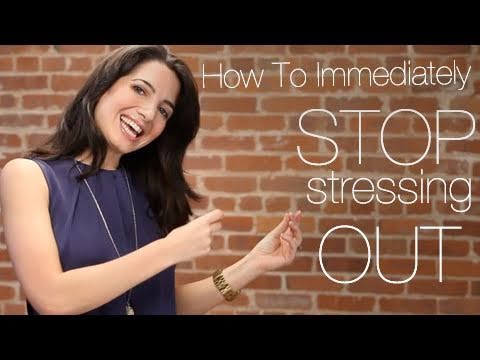
How To Immediately Stop Stressing Out
0
Halu Hsieh posted on 2015/02/21Feeling overwhelmed? This video shares actionable advice from Marie Forleo on how to immediately stop stressing out, perfect for busy professionals! You'll pick up practical tips on meditation, clean eating, and daily exercise to help you manage stress and feel more in control.
Learn this video on the APP!
The VoiceTube App has more in-depth practice for videos!