
absolutely
US /ˈæbsəˌlutli, ˌæbsəˈlutli/
UK /ˈæbsəlu:tli/
- Adverb
- Completely; totally; very
- Considered independently and without relation to other things; viewed abstractly; as, quantity absolutely considered.
A2Morealignment with
US
UK
- Noun
- A state of agreement or cooperation between people, groups, or organizations.
- The correct positioning of something in relation to something else.
A1Morealong with
US /əˈlɔŋ wɪð/
UK /əˈlɔŋ wið/
- Preposition
- In addition to; together with.
- Adverb
- In company or together with someone or something.
- Including; in addition to.
A2Moreas soon as
US /æz sun æz/
UK /æz su:n æz/
- Phrase
- In a short time after (something happens)
- Without any delay; immediately
- Conjunction
- At the moment that, or immediately after.
A1Moreat speed
US
UK
- Phrase
- Moving quickly.
A1Moreat the moment
US
UK
- Adverb
- At this time; now
A1Morebear
US /bɛr/
UK /bɛː/
- Transitive Verb
- To accept (responsibilities or duties)
- To give birth to a child; to produce fruit
- Countable Noun
- Large brown animal with fur that lives in forests
- Someone who expects stock market to fall
A2Morebreak down
US /brek daʊn/
UK /breik daun/
- Phrasal Verb
- To forcibly break, destroy or make collapse
- (Machine) to stop working or become weaker
A1Morecattle
US /ˈkætl/
UK /ˈkætl/
- Noun (Countable/Uncountable)
- Cows or bulls on a farm
- Individual animals of the bovine species.
B1Morecome around
US /kʌm əˈraʊnd/
UK /kʌm əˈraund/
- Phrasal Verb
- To eventually change your opinion or be persuaded to agree with someone else's.
- To visit someone at their house.
A1Morecorrect
US /kəˈrɛkt/
UK /kə'rekt/
- Adjective
- Being suitable and appropriate for an occasion
- True or accurate
- Transitive Verb
- To fix a problem
- To write marks on a piece of work to show mistakes
A2Morecount
US /kaʊnt/
UK /kaʊnt/
- Verb (Transitive/Intransitive)
- To add things together to find the total number
- To matter or be important
- Countable Noun
- Number of things added together, e.g. votes
- With the number of crimes, knockouts, as stated
A2Morecrack
US /kræk/
UK /kræk/
- Noun (Countable/Uncountable)
- Attempt to achieve a goal or objective
- Unexpected and hard hit to the body
- Verb (Transitive/Intransitive)
- To attempt to achieve a goal or objective
- To hit someone or something hard and unexpectedly
B1Morecrane
US /kren/
UK /kreɪn/
- Noun (Countable/Uncountable)
- Water bird characterized by its long neck and legs
- Tall machine that lifts heavy objects in the air
- Verb (Transitive/Intransitive)
- To stretch (neck) or lean to get better view
B2Morecrew
US /kru/
UK /kru:/
- Countable Noun
- Organized group of workers (e.g. on a ship)
- Skilled group of people working together on a task
- Intransitive Verb
- To work as part of a crew.
A2TOEICMoredeal with
US /dil wɪð/
UK /di:l wið/
- Verb (Transitive/Intransitive)
- To buy or sell goods or services.
- Phrasal Verb
- To take action to solve a problem or manage a situation.
- To be about; concern.
A1Moredevice
US /dɪˈvaɪs/
UK /dɪˈvaɪs/
- Noun (Countable/Uncountable)
- Object, machine, or equipment for a specific use
- Method of doing something; a way
A2TOEICMoredisagree with
US /ˌdɪsəˈɡri wɪð/
UK /ˌdisəˈɡri: wið/
- Phrasal Verb
- To have a different opinion from someone else.
- Intransitive Verb
- To cause someone to feel ill or uncomfortable.
A1Moreengage
US /ɪn'gedʒ/
UK /ɪn'ɡeɪdʒ/
- Transitive Verb
- To start to fight with an enemy
- To hire someone for a task or job
A2TOEICMorefirst shot
US
UK
- Noun
- The first attempt at doing something.
- The first opportunity to do something.
for now
US /fɔr naʊ/
UK /fɔ: nau/
- Phrase
- Temporarily; for the present time.
- In the short term; for the immediate future.
A1Moreforget about
US /fɚˈɡɛt əˈbaʊt/
UK /fəˈɡet əˈbaut/
- Phrasal Verb
- To stop thinking about something; to ignore something.
A1Moreglitch
US /ɡlɪtʃ/
UK /ɡlɪtʃ/
- Noun
- Small problem, fault preventing something working
- Intransitive Verb
- To experience a sudden malfunction or irregularity.
C1Morego away
US /ɡo əˈwe/
UK /ɡəu əˈwei/
- Phrasal Verb
- To go on vacation
- To leave; depart.
A1Moregot to
US /ɡɑt tu/
UK /gɔt tu:/
- Verb (Transitive/Intransitive)
- To arrive at some place
- To have the opportunity or permission to do something
- Phrasal Verb
- To appeal to the emotions of; move
- To finally begin to start something after a delay
A1Morehalfway
US /ˌhæfˈweɪ/
UK /ˌhɑ:fˈweɪ/
- Adverb
- A middle point between two extremes
- At or to a point equidistant between two places.
- Adjective
- Located at or being at a point equidistant between two places.
- Partially completed; at an intermediate stage.
B2Morehalfway there
US
UK
- Phrase
- Having completed half of the required distance or task; making good progress.
- Interjection
- An expression of encouragement, indicating that significant progress has been made and the goal is within reach.
A1Morehave to
US /hæv tu/
UK /ˈhæv tə/
- Auxiliary Verb
- Must do
A1Morehistorical
US /hɪˈstɔrɪkəl,-ˈstɑr-/
UK /hɪˈstɒrɪkl/
- Adjective
- Connected with the past
B1Morehistorically
US /hɪsˈtɔrɪkl:ɪ/
UK /hɪ'stɒrɪklɪ/
- Adverb
- In history; in the past
B1Moreimpressive
US /ɪmˈprɛsɪv/
UK /ɪmˈpresɪv/
- Adjective
- Causing admiration or respect; grand or expensive
- Having a strong effect, commanding attention.
B1TOEICMorein person
US /ɪn ˈpɜːrsn/
UK /in ˈpɜːsn/
- Adverb
- Physically present; not by proxy or remotely.
- Face-to-face; not through electronic communication.
A1Morein question
US /ɪn ˈkwɛstʃən/
UK /in ˈkwestʃən/
- Adjective
- Being doubted or disputed; under discussion.
- Referring to someone or something that has already been mentioned.
A1Morein the end
US /ɪn ði ɛnd/
UK /in ðə end/
- Phrase
- Finally; after a period of time or series of events.
- Ultimately; as the final result or consequence.
A1Morein unison
US /ɪn ˈjunɪsən/
UK /in ˈju:nɪsən/
- Adverb
- Together; at the same time; in a way that shows complete agreement
- Adjective
- Performing the same notes or movements at the same time.
A1Moreinstead of
US /ɪnˈstɛd ʌv/
UK /inˈsted ɔv/
- Preposition
- When one thing is replaced by another
- Adverb
- As a substitute or alternative.
A1Morekeep it up
US /kip ɪt ʌp/
UK /ki:p it ʌp/
- Phrasal Verb
- To continue doing something well
A1Morelaunch
US /lɔntʃ, lɑntʃ/
UK /lɔ:ntʃ/
- Noun
- Starting a new project; introducing new product
- Act of firing rockets into the air
- Transitive Verb
- To start a new project; start selling a product
- To put a rocket into the air
A2TOEICMorelime
US /laɪm/
UK /laɪm/
- Noun (Countable/Uncountable)
- White containing calcium used in farming
- Small, round and sour fruit with hard green skin
- Adjective
- Bright green color
B2Morelock in
US
UK
- Phrasal Verb
- To secure something, such as a price or deal, for a specific period.
- To confine someone or something in a place by locking the door.
A1Morelook around
US /lʊk əˈraʊnd/
UK /luk əˈraund/
- Phrasal Verb
- To explore a place; search for something.
A1Morelook at
US /lʊk æt/
UK /luk æt/
- Phrasal Verb
- To use your eyes to focus on something
- To focus your eyes on something carefully
A1Morelump
US /lʌmp/
UK /lʌmp/
- Noun (Countable/Uncountable)
- Small swollen mass in body, e.g. showing disease
- A small hard part of something smooth
- Transitive Verb
- To combine things together in a group
- To group things together indiscriminately.
B1Moremission
US /ˈmɪʃən/
UK /'mɪʃn/
- Noun (Countable/Uncountable)
- A task or role someone is given to do
- Special assignment given to a person or group
B1TOEICMorenavy
US /ˈnevi/
UK /ˈneɪvi/
- Noun (Countable/Uncountable)
- Very dark shade of blue
- Armed force consisting of ships, sailors etc.
B1Moreof course
US /ʌv kɔː(r)s/
UK /ɔv kɔː(r)s/
- Adverb
- Sure ; Certainly
- Phrase
- For sure; certainly
A2Moreoff of
US /ɔf ʌv/
UK /ɔf ɔv/
- Preposition
- From a position on something; down from.
A1Moreon camera
US /ɑn ˈkæmərə/
UK /ɔn ˈkæmərə/
- Adverb
- While being filmed or recorded.
- Adjective
- Having qualities that make one appear good or effective when filmed.
A1Moreon the other side of
US /ɑn ði ˈʌðɚ ˈsaɪd ʌv/
UK /ɒn ði ˈʌðə ˈsaɪd ɒv/
- Preposition
- Located across something from a given point.
A2Moreother than
US
UK
- Preposition
- Except for; apart from.
- Conjunction
- Different from.
A1Moreout of the way
US /aʊt ʌv ði we/
UK /aut ɔv ðə wei/
- Adjective
- Remote; isolated.
- No longer obstructing or hindering.
- Phrase
- Not obstructing or impeding progress; in a position where one does not cause an obstruction.
- Completed; finished; no longer needing attention.
B1Moreover time
US /ˈovɚ taɪm/
UK /ˈəuvə taim/
- Phrase
- Gradually; as time passes.
- During a long period.
- Adverb
- Gradually; as time passes.
B1Moreowl
US /aʊl/
UK /aʊl/
- Noun
- Bird with large eyes that hunts at night
B1Morepace
US /pes/
UK /peɪs/
- Noun (Countable/Uncountable)
- Rate of speed at which something moves or happens
- Single step, often used to measure a distance
- Verb (Transitive/Intransitive)
- To set and control your speed, as in a race
- To walk with slow purposeful steps
A2Moreplanet
US /ˈplænɪt/
UK /'plænɪt/
- Noun (Countable/Uncountable)
- One of the bodies that orbit the sun
- A different world or sphere of existence.
- Proper Noun
- The earth.
A2Morepoint up
US
UK
- Phrasal Verb
- To emphasize or draw attention to something.
A1Morepull back
US /pʊl bæk/
UK /pul bæk/
- Phrasal Verb
- To move to a safer area; retreat
A1Morepull down
US /pʊl daʊn/
UK /pul daun/
- Phrasal Verb
- To destroy an old building; demolish
- To depress someone by saying bad things
A1Morerelease
US /rɪ'li:s/
UK /rɪ'li:s/
- Transitive Verb
- To free someone from a responsibility or burden
- To allow a film, music etc. to be sold/distributed
- Noun
- Act of freeing someone from a duty or burden
- Introduction of a new product, film, book, etc.
A2TOEICMoreremain
US /rɪˈmen/
UK /rɪˈmeɪn/
- Intransitive Verb
- To be left behind; to continue to exist
- To stay in a place when other people have gone
A2TOEICMorerope
US /rop/
UK /rəʊp/
- Countable Noun
- A thick string made by twisting fibers together
- Transitive Verb
- To tie/attach animals, etc. together using a rope
- To enclose or cordon off an area with a rope.
B1Morerun by
US
UK
- Phrasal Verb
- To be managed or controlled by someone or a group.
- To show or tell something to someone briefly to get their opinion or approval.
A1Morerun in
US /rʌn ɪn/
UK /rʌn in/
- Phrasal Verb
- To arrest person and take them to police station
- To drive engine slowly until ready for normal use
A1Moreset up
US /sɛt ʌp/
UK /set ʌp/
- Phrasal Verb
- To make arrangements for something; establish
- Verb (Transitive/Intransitive)
- To arrange or prepare something for use.
- To start a business, organization, etc.
A1Moreslack
US /slæk/
UK /slæk/
- Uncountable Noun
- Condition of being looser or not tight
- Adjective
- Doing something poorly; not making enough effort
B2TOEICMoreslightly
US /ˈslaɪtli/
UK /ˈslaɪtli/
- Adverb
- Only a little
B1Moreslip off
US
UK
- Phrasal Verb
- To remove (a piece of clothing) quickly and easily.
- To slide unintentionally from a surface.
B1Moreslow down
US /slo daʊn/
UK /sləu daun/
- Phrasal Verb
- To reduce the speed
- To become less active or busy.
A1Morestand behind
US /stænd bɪˈhaɪnd/
UK /stænd biˈhaind/
- Phrasal Verb
- To support or defend someone or something.
- To take responsibility for something.
A2Morestand with
US /stænd wɪð/
UK /stænd wið/
- Phrasal Verb
- To support or defend someone or something.
A1Morestart off
US /stɑrt ɔf/
UK /stɑ:t ɔf/
- Phrasal Verb
- To begin or commence something.
- To begin a journey.
B2Morestay in
US /ste ɪn/
UK /stei in/
- Phrasal Verb
- To remain inside one's home.
- Intransitive Verb
- To remain as an inpatient in a hospital.
step off
US /stɛp ɔf/
UK /step ɔf/
- Phrasal Verb
- To leave or move away from a place or situation, often used as a command.
- To begin a journey or race.
A2Morestuff
US /stʌf/
UK /stʌf/
- Uncountable Noun
- Generic description for things, materials, objects
- Transitive Verb
- To push material inside something, with force
B1Moretake down
US /tek daʊn/
UK /teik daun/
- Phrasal Verb
- To capture physically
- To break something into pieces, e.g. a radio
A1Moretalk on
US /tɔk ɑn/
UK /tɔ:k ɔn/
- Phrasal Verb
- To talk at length about a particular subject.
- To scold or lecture someone at length.
A1Moretalking about
US
UK
- Phrasal Verb
- To discuss a particular topic.
- To be constantly mentioning or bringing up a subject.
A1Moretension
US /ˈtɛnʃən/
UK /'tenʃn/
- Uncountable Noun
- Feeling of anxiety and inability to relax
- Degree to which something is stretched tight
A2TOEICMorethrow over
US /θro ˈovɚ/
UK /θrəu ˈəuvə/
- Phrasal Verb
- To propel something over something else
A1Moreto let
US /tu lɛt/
UK /tu let/
- Preposition
- Indicates that a property is available for rent.
A2Moretreadmill
US /ˈtrɛdˌmɪl/
UK /ˈtredmɪl/
- Noun
- Boring job, with repetitive tasks
C2Moretrigger
US /ˈtrɪɡɚ/
UK /'trɪɡə(r)/
- Noun
- Lever on a gun that you pull to fire
- Device that starts a process
- Transitive Verb
- To start a process off e.g. a memory
- To cause something to begin or happen.
B1Moreup there
US /ʌp ðɛr/
UK /ʌp ðɛə/
- Adverb
- In or to a higher place or position; far away.
- In heaven.
A1Moreused to
US /juzd tu/
UK /ˈju:st tə/
- Adjective
- Did regularly before, but don't do now
- Auxiliary Verb
- Have done before, but do not do now
A1Morewant in
US
UK
- Intransitive Verb
- To desire to participate or be included in something.
A1Morewhip
US /hwɪp, wɪp/
UK /wɪp/
- Transitive Verb
- To defeat thoroughly or easily
- To beat with a type of long rope
- Countable Noun
- A long rope used to hit people or animals
B1Morewild
US /waɪld/
UK /waɪld/
- Adverb
- In a manner which lacks control
- Adjective
- Living in nature; not tame
- (Of land) not developed by people
A2Morewinch
US /wɪntʃ/
UK /wɪntʃ/
- Noun
- Device using rope/chain to lift/pull heavy things
- Transitive Verb
- Pull or lift up with or as if with a winch
C1Morewithout me
US
UK
- Phrase
- Not including me; excluding me.
A2Morework out
US /wɚk aʊt/
UK /wə:k aut/
- Phrasal Verb
- To find a way to do something, by thinking
A1Morewound
US /waʊnd/
UK /waʊnd/
- Transitive Verb
- To rotate a part of say a watch to make it work
- To hurt someone emotionally
- Noun (Countable/Uncountable)
- Sadness or displeasure caused by a bad memory
- Physical injury, especially that suffered in war
A2More
Vocabulary
- got to: To arrive at some place
- run by: To be managed or controlled by someone or a group.
- of course: Sure ; Certainly
- take down: To capture physically
- throw over: To propel something over something else
- halfway there: Having completed half of the required distance or task; making good progress.
- as soon as: In a short time after (something happens)
- at speed: Moving quickly.
- talking about: To discuss a particular topic.
- look around: To explore a place; search for something.
- first shot: The first attempt at doing something.
- stay in: To remain inside one's home.
- off of: From a position on something; down from.
- disagree with: To have a different opinion from someone else.
- over time: Gradually; as time passes.
- want in: To desire to participate or be included in something.
- other than: Except for; apart from.
- deal with
- instead of: When one thing is replaced by another
- run in: To arrest person and take them to police station
- look at: To use your eyes to focus on something
- have to: Must do
- break down: To forcibly break, destroy or make collapse
- in unison: Together; at the same time; in a way that shows complete agreement
- start off: To begin or commence something.
- step off: To leave or move away from a place or situation, often used as a command.
- in question: Being doubted or disputed; under discussion.
- up there: In or to a higher place or position; far away.
- at the moment: At this time; now
- point up: To emphasize or draw attention to something.
- slip off: To remove (a piece of clothing) quickly and easily.
- alignment with: A state of agreement or cooperation between people, groups, or organizations.
- go away: To go on vacation
- on camera: While being filmed or recorded.
- in person: Physically present; not by proxy or remotely.
- for now: Temporarily; for the present time.
- used to: Did regularly before, but don't do now
- in the end: Finally; after a period of time or series of events.
- along with: In addition to; together with.
- lock in: To secure something, such as a price or deal, for a specific period.
- set up
- on the other side of: Located across something from a given point.
- pull down: To destroy an old building; demolish
- slow down: To reduce the speed
- work out
- out of the way: Remote; isolated.
- come around: To eventually change your opinion or be persuaded to agree with someone else's.
- keep it up: To continue doing something well
- talk on: To talk at length about a particular subject.
- without me: Not including me; excluding me.
- stand behind: To support or defend someone or something.
- pull back: To move to a safer area; retreat
- stand with: To support or defend someone or something.
- to let: Indicates that a property is available for rent.
- forget about: To stop thinking about something; to ignore something.
- stuff: Generic description for things, materials, objects
- absolutely: Completely; totally; very
- engage: To start to fight with an enemy
- trigger: Lever on a gun that you pull to fire
- slightly: Only a little
- impressive: Causing admiration or respect; grand or expensive
- position: Person's opinion or attitude about something
- crack: Attempt to achieve a goal or objective
- bit: Device put in a horse's mouth to control it
- remain: To be left behind; to continue to exist
- release: To free someone from a responsibility or burden
- launch: Starting a new project; introducing new product
- tension: Feeling of anxiety and inability to relax
- planet: One of the bodies that orbit the sun
- crew: Organized group of workers (e.g. on a ship)
- pace: Rate of speed at which something moves or happens
- treadmill: Boring job, with repetitive tasks
- break: To create a new record e.g. running the 100m dash
- device: Object, machine, or equipment for a specific use
- whip: To defeat thoroughly or easily
- correct: Being suitable and appropriate for an occasion
- leave: To go away from; depart
- bear: To accept (responsibilities or duties)
- wound: To rotate a part of say a watch to make it work
- moment: Very short or brief period of time
- lot: What happens to a person in life from chance; fate
- wild: In a manner which lacks control
- count: To add things together to find the total number
- century: Period of 100 years
- place: To put someone in a particular type of situation
- system: Set of organized, planned ideas that work together
- mission: A task or role someone is given to do
- piece: A counter in a board game
- stand: To be a candidate in an election
- protect: To defend someone or something from harm or danger
- pull: Act of breathing in smoke, as from a pipe
- find: To become aware of something that is happening
- land: Region or country
- cattle: Cows or bulls on a farm
- lump: Small swollen mass in body, e.g. showing disease
- glitch: Small problem, fault preventing something working
- halfway: A middle point between two extremes
- slack: Condition of being looser or not tight
- historical: Connected with the past
- rope: A thick string made by twisting fibers together
- owl: Bird with large eyes that hunts at night
- crane: Water bird characterized by its long neck and legs
- historically: In history; in the past
- navy: Very dark shade of blue
- lime: White containing calcium used in farming
- winch: Device using rope/chain to lift/pull heavy things
Get the full experience in the app
Learn anywhere with detailed sentence and usage analysis
01:03
She took a brave step forward, leaving behind her comfort zone to chase her dreams.
Vocabulary
- brave
adj. Having courage
- comfort zone
phr. A familiar situation where one feels safe
Explanation
a brave step is a noun phrase, where brave is an adjective modifying the noun step, meaning "a courageous step".
forward is an adverb modifying step, meaning "ahead".
The whole phrase serves as the object, answering the "what" of took (verb) — she took a brave step forward.
Get the full experience in the app
Look up words anytime with pronunciation, part of speech, and usage
brave
US/brev/
UK/breɪv/
adj.Brave
v.t.To bravely face
A2 Elementary
Get the full experience in the app
Practice speaking anytime and get instant pronunciation feedback
Try this speaking exercise.
Try practicing with this sentence.
80
0
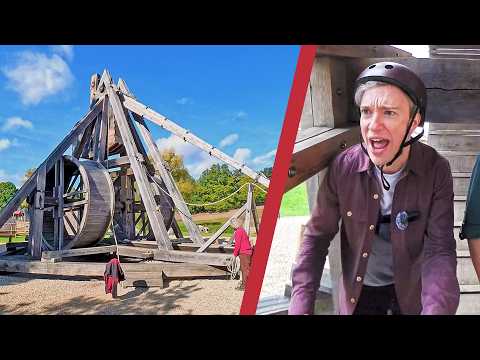
林宜悉 posted on 2026/07/06Ever wondered how a colossal trebuchet works? This video takes you inside Warwick Castle for a fascinating look at this ancient war machine, from its massive scale to the surprising physics behind its launch. You'll pick up some great vocabulary for describing large structures and powerful actions, all while seeing history come to life!
Learn this video on the APP!
The VoiceTube App has more in-depth practice for videos!