
above all
US /əˈbʌv ɔl/
UK /əˈbʌv ɔ:l/
- Phrase
- Most importantly; more than anything else.
A1Moreaccountable
US /əˈkaʊntəbəl/
UK /əˈkaʊntəbl/
- Adjective
- Be responsible to someone or for some activity
B1Moreaffect
US /əˈfɛkt/
UK /ə'fekt/
- Transitive Verb
- To cause a change in something else
- To pretend to have or feel (something).
- Noun
- (Psychology) Emotion or feeling.
A2TOEICMoreamounted to
US
UK
- Phrasal Verb
- To have reached a total of; to be equal to.
- To have been the same as, or have had the same effect as.
A1Moreanswer to
US
UK
- Phrasal Verb
- To be responsible to someone and have to explain your actions to them.
- To correspond to or match a description or requirement.
A1Moreapart from
US /əˈpɑrt frʌm/
UK /əˈpɑ:t frɔm/
- Preposition
- Except for; not considering
- In addition to; as well as
appetite
US /ˈæpɪˌtaɪt/
UK /'æpɪtaɪt/
- Noun
- Feeling of hunger or desire for something
B1Moreas soon as
US /æz sun æz/
UK /æz su:n æz/
- Phrase
- In a short time after (something happens)
- Without any delay; immediately
- Conjunction
- At the moment that, or immediately after.
A1Moreas well as
US /æz wɛl æz/
UK /æz wel æz/
- Adverb
- Also; in addition to
- Preposition
- In addition to; and also.
A1Moreat the moment
US
UK
- Adverb
- At this time; now
A1Moreat the same time
US
UK
- Phrase
- Simultaneously; at the identical moment.
- Nevertheless; however; used to introduce a contrasting or qualifying statement.
A1Moreback into
US /bæk ˈɪntu/
UK /bæk ˈɪntuː/
- Phrasal Verb
- To drive a vehicle backwards into a space or area.
- To accidentally collide with something while moving backwards.
A1Morecapacity
US /kəˈpæsɪti/
UK /kə'pæsətɪ/
- Noun (Countable/Uncountable)
- Ability to hold, involve or contain (e.g. liquids)
- Largest amount of something that can be produced
B1Morecatastrophe
US /kəˈtæstrəfi/
UK /kə'tæstrəfɪ/
- Noun (Countable/Uncountable)
- Very bad disaster causing much suffering, etc.
- A complete failure; a fiasco.
B2Morecatastrophic
US /ˌkætəˈstrɑfɪk/
UK /ˌkætə'strɒfɪk/
- Adjective
- Causing a lot of damage or suffering
B2Morecease
US /sis/
UK /si:s/
- Verb (Transitive/Intransitive)
- To come or bring to an end; stop continuing
B1Morechallenge
US /ˈtʃæləndʒ/
UK /'tʃælɪndʒ/
- Noun (Countable/Uncountable)
- An activity you wish to try that may be hard to do
- Act of formally inviting someone to compete
- Transitive Verb
- To formally invite someone to compete at something
- To question the correctness of something
A2Morecome up
US /kʌm ʌp/
UK /kʌm ʌp/
- Phrasal Verb
- To come closer to someone; approach
- (Of sun) to rise into the sky in the morning
A1Morecommit
US /kəˈmɪt/
UK /kə'mɪt/
- Transitive Verb
- To do something bad, usually a crime
- To promise your permanent love or loyalty (to)
A2TOEICMorecommitment
US /kəˈmɪtmənt/
UK /kə'mɪtmənt/
- Noun
- Permanent love or concern for person, thing
- Promise or decision to do something for a purpose
A2Morecommunity
US /kəˈmjunɪti/
UK /kə'mju:nətɪ/
- Noun (Countable/Uncountable)
- Group of people who share a common idea or area
- A feeling of fellowship with others, as a result of sharing common attitudes, interests, and goals.
- Adjective
- Relating to or shared by the people in a particular area.
- Shared or participated in by all members of a group
A2Moreconflict
US /ˈkɑnˌflɪkt/
UK /'kɒnflɪkt/
- Noun (Countable/Uncountable)
- Argument or struggle between two or more parties
- A serious disagreement or argument.
- Verb (Transitive/Intransitive)
- To have opposite ideas; to disagree; To not match
A2Moreconfront
US /kənˈfrʌnt/
UK /kən'frʌnt/
- Transitive Verb
- To make someone, e.g. who has lied, face the truth
- (Of problem) to face someone who must deal with it
B1Moredeal in
US /dil ɪn/
UK /di:l in/
- Phrasal Verb
- To buy and sell a particular product or products.
A1Moredeal to
US /dil tə/
UK /di:l tə/
- other
- To give or inflict something, often harm or punishment.
C1Moredeal with
US /dil wɪð/
UK /di:l wið/
- Verb (Transitive/Intransitive)
- To buy or sell goods or services.
- Phrasal Verb
- To take action to solve a problem or manage a situation.
- To be about; concern.
A1Moredespite the fact
US
UK
- Preposition
- In spite of; notwithstanding.
- Conjunction
- Even though; although.
A2Moredialogue
US /ˈdaɪəˌlɔɡ, -ˌlɑɡ/
UK /'daɪəlɒɡ/
- Noun (Countable/Uncountable)
- Conversation between two or more individuals
- A discussion or series of discussions between people or groups, especially ones aimed at resolving a problem.
B1Moredisease
US /dɪˈziz/
UK /dɪˈzi:z/
- Noun (Countable/Uncountable)
- Illness that affects a person, animal, or plant
- A disorder of structure or function in a plant, especially one caused by a pathogen.
- Transitive Verb
- To affect with disease; to corrupt or sicken.
A2TOEICMoredismantle
US /dɪsˈmæntl/
UK /dɪs'mæntl/
- Transitive Verb
- To take something apart in an organized way
- To gradually cause something to come to an end or fail.
B2Moreemergency response
US
UK
- Noun (Countable/Uncountable)
- The actions taken to deal with an unexpected and dangerous event.
- Immediate medical assistance given in an emergency situation.
B1Moreequation
US /ɪˈkweʒən, -ʃən/
UK /ɪˈkweɪʒn/
- Noun (Countable/Uncountable)
- Mathematical statement showing things to be equal
- Complex set of different facts, ideas or issues
B1Moreexpertise
US /ˌekspɜːrˈtiːz/
UK /ˌekspɜ:ˈti:z/
- Uncountable Noun
- The special knowledge that an expert has
- Expert skill or knowledge in a particular field.
B1TOEICMoreextent
US /ɪkˈstɛnt/
UK /ɪkˈstent/
- Noun (Countable/Uncountable)
- Point, level or limit to which something reaches
- Range or space included in something
A2TOEICMorefar worse
US
UK
- Adjective
- Significantly more unpleasant, serious, or severe.
- In a much poorer state of health or physical condition.
- Adverb
- To a much greater degree of inferiority or unsuitability.
A2Morefor example
US
UK
- Phrase
- As an illustration or instance.
for now
US /fɔr naʊ/
UK /fɔ: nau/
- Phrase
- Temporarily; for the present time.
- In the short term; for the immediate future.
A1Morefor the sake of
US /fɔr ði sek ʌv/
UK /fɔ: ðə seik ɔv/
- Phrase
- For the purpose of; in the interest of.
A1Morefrank
US /fræŋk/
UK /fræŋk/
- Proper Noun
- Member of the ancient Germanic peoples
- Person's name
- Transitive Verb
- To stamp envelopes for posting
B2TOEICMorefrom the start
US /frʌm ði stɑrt/
UK /frɔm ðə stɑ:t/
- Phrase
- From the very beginning; from the outset.
A1Morego back to
US /ɡo bæk tu/
UK /ɡəu bæk tu:/
- Phrasal Verb
- To return to a starting point
A1Moregrateful
US /ˈɡretfəl/
UK /ˈgreɪtfl/
- Adjective
- Feeling or showing thanks; thankful
B1TOEICMorehas over
US
UK
- Phrasal Verb
- To invite someone to your house.
- To have more than a certain number or amount.
A1Morehave to
US /hæv tu/
UK /ˈhæv tə/
- Auxiliary Verb
- Must do
A1Morehumanitarian
US /hju:ˌmænɪˈteriən/
UK /hju:ˌmænɪˈteəriən/
- Noun
- Person who tries to help those in a crisis
- Adjective
- Concerned with or seeking to promote human welfare.
B2Moreillness
US /ˈɪlnɪs/
UK /ˈɪlnəs/
- Uncountable Noun
- Unhealthy condition of the mind or body
- A particular instance or type of disease.
A2Moreimperative
US /ɪmˈpɛrətɪv/
UK /ɪm'perətɪv/
- Noun
- The state of demanding notice or attention
- Adjective
- Absolutely necessary; that must be done
B2TOEICMorein addition to
US /ɪn əˈdɪʃən tu/
UK /in əˈdiʃən tu:/
- Preposition
- Besides; as well as
- Phrase
- Besides; as well as.
- Furthermore; moreover.
B1Morein areas
US
UK
- Phrase
- Located or occurring within specific regions or locations.
- Relating to specific fields, subjects, or disciplines.
A1Morein light of
US /ɪn laɪt ʌv/
UK /in lait ɔv/
- Phrase
- Because of; considering
- Preposition
- Considering; taking into account
- Because of; as a result of
A1Morein mind
US /ɪn maɪnd/
UK /in maind/
- Phrase
- Being aware of or considering something.
- To remember or consider something.
A2Morein order to
US /ɪn ˈɔrdɚ tu/
UK /in ˈɔ:də tu:/
- Preposition
- For the purpose of; with the aim of.
- Phrase
- In a specific sequence or arrangement.
- With the aim of; for the purpose of.
C1Morein peace
US /ɪn pis/
UK /in pi:s/
- Phrase
- In a state of tranquility, without disturbance or conflict.
- In a state of non-war, without armed conflict.
B1Morein the world
US /ɪn ði wɜrld/
UK /in ðə wɜː(r)ld/
- Phrase
- Used to emphasize a question expressing surprise, confusion, or disbelief.
- Used to indicate the extent or degree of something, often in a superlative sense.
A1Moreirrational
US /ɪˈræʃənəl/
UK /ɪˈræʃənl/
- Adjective
- Not sensible or reasonable; illogical
- A real number that cannot be expressed as a ratio of two integers.
B2Moreissue
US /ˈɪʃu/
UK /'ɪʃu:/
- Transitive Verb
- To make something available to be used or sold
- To deliver a statement, etc. in an official manner
- Noun (Countable/Uncountable)
- Important topic discussed, debated or argued over
- Single edition of a magazine
A2TOEICMorelight on
US /laɪt ɑn/
UK /lait ɔn/
- Phrasal Verb
- To illuminate something.
- To discover something unexpectedly.
- Adjective
- Gentle or delicate in the use of something.
A1Morelook at
US /lʊk æt/
UK /luk æt/
- Phrasal Verb
- To use your eyes to focus on something
- To focus your eyes on something carefully
A1Moremagnitude
US /ˈmæɡnɪˌtud, -ˌtjud/
UK /ˈmægnɪtju:d/
- Noun
- Number representing force of an earthquake
- Size or importance
B2Moremitigate
US /ˈmɪtˌɪɡet/
UK /'mɪtɪɡeɪt/
- Transitive Verb
- To make less severe or serious
B2TOEICMoreneutralize
US /ˈnu:trəlaɪz/
UK /ˈnju:trəlaɪz/
- Transitive Verb
- To remove or take away a threat
B2Morenext to
US /nɛkst tu/
UK /nekst tu:/
- Preposition
- Being located along side another
- In comparison with
- Adverb
- Almost; nearly
A1Moreof course
US /ʌv kɔː(r)s/
UK /ɔv kɔː(r)s/
- Adverb
- Sure ; Certainly
- Phrase
- For sure; certainly
A2Moreoff the table
US
UK
- Phrase
- No longer being considered or discussed.
- Removed from the table.
A1Moreon record
US /ɑn rɪˈkɚd/
UK /ɔn riˈkɔ:d/
- Adverb
- Formally and publicly stated
- Adjective
- Officially documented or registered.
A1Moreon the ground
US
UK
- Phrase
- Located on the surface of the earth.
- Present and available in a particular place, especially to deal with a situation.
on the line
US /ɑn ði laɪn/
UK /ɔn ðə lain/
- Phrase
- At risk; in a situation where something could be lost.
- Having a great deal of responsibility.
A1Moreon to
US /ɑn tu/
UK /ɔn tu:/
- Preposition
- Toward something; forward
- Aware of someone's activities.
- Adjective
- Aware of someone's deception or illegal activities.
A1Moreonce and for all
US /wʌns ənd fɔr ɔl/
UK /wʌns ænd fɔ: ɔ:l/
- Phrase
- Completely and finally; decisively.
- In a definitive and conclusive manner.
A2Moreongoing
US /ˈɑ:ngoʊɪŋ/
UK /ˈɒngəʊɪŋ/
- Adjective
- Continuing to exist or be in progress
- Noun (Countable/Uncountable)
- A situation or process that is currently taking place or is in progress.
- A problem or difficulty that continues to exist or happen.
B1Moreother than
US
UK
- Preposition
- Except for; apart from.
- Conjunction
- Different from.
A1Moreoutbreak
US /ˈaʊtˌbrek/
UK /ˈaʊtbreɪk/
- Noun (Countable/Uncountable)
- Sudden occurrence of illness, discontent etc.
- A sudden occurrence of something unwelcome, such as war or disease.
B2Moreoutside of
US /aʊtˈsaɪd ʌv/
UK /ˌautˈsaid ɔv/
- Preposition
- Located or situated beyond the boundaries or confines of something.
- Beyond the scope, range, or limits of something.
A1Moreover to
US
UK
- Preposition
- Used to hand over to someone else to speak
- The responsibility is now yours
pack up
US
UK
- Phrasal Verb
- To put things into boxes and take them home
A1Moreperspective
US /pɚˈspɛktɪv/
UK /pə'spektɪv/
- Noun (Countable/Uncountable)
- Artistic method of creating a sense of distance
- Ability to understand what is important in life
B1TOEICMorepresence
US /ˈprɛzəns/
UK /ˈprezns/
- Noun
- The same place or area that a person is
- Ability to reach a market, group of people etc.
A2Morepriority
US /praɪˈɔrɪti, -ˈɑr-/
UK /praɪ'ɒrətɪ/
- Noun (Countable/Uncountable)
- Thing that is more important/urgent than others
- A level of importance assigned to a task or process in a computer system.
- Adjective
- Denoting something that constitutes a priority.
B1TOEICMoreregion
US /ˈridʒən/
UK /'ri:dʒən/
- Noun (Countable/Uncountable)
- Part of a country, of the world, area, etc.
- A part of the body
A2TOEICMoreresearch
US /rɪˈsɚtʃ, ˈriˌsɚtʃ/
UK /rɪ'sɜ:tʃ/
- Verb (Transitive/Intransitive)
- To study in order to discover new ideas and facts
- To study the market relating to marketing products and services.
- Noun (Countable/Uncountable)
- Study done to discover new ideas and facts
- A particular area or topic of study.
A2TOEICMoreresolve
US /rɪˈzɑlv/
UK /rɪ'zɒlv/
- Verb (Transitive/Intransitive)
- To make a decision to do something
- To find an answer, solution to a problem/ question
- Uncountable Noun
- Firm determination to do something.
B1TOEICMoreresponse
US /rɪˈspɑns/
UK /riˈspɔns/
- Noun
- Something said/written as an answer to something
- Reaction to something that has occurred
A2TOEICMoreright next to
US
UK
- Preposition
- Immediately adjacent to; in very close proximity to.
- Figuratively very close to; on the verge of.
A1Moreroot out
US /rut aʊt/
UK /ru:t aut/
- Phrasal Verb
- To find and get rid of something completely, especially something unpleasant or unwanted.
B2Moresame time
US
UK
- Phrase
- Occurring simultaneously or at the same point in time.
- At the identical time as before; recurring at a fixed hour.
- Noun
- An equal duration or period.
A1Moresanction
US /ˈsæŋkʃən/
UK /'sæŋkʃn/
- Noun (Countable/Uncountable)
- Official support or approval
- Action taken to force a country to obey laws
- Transitive Verb
- To allow or approve something
B2TOEICMoreset aside
US
UK
- Phrasal Verb
- To reject or throw away, e.g. an idea
- To separate and save for another use or time
- Transitive Verb
- To keep or save something for use at a later time.
- To designate or allocate something for a specific purpose or group.
A1Moreshow up
US /ʃo ʌp/
UK /ʃəu ʌp/
- Phrasal Verb
- To arrive or be seen at a place, e.g. a party
- To be noticeably better than (someone else)
A1Moreshy away from
US
UK
- Phrasal Verb
- To avoid something because of nervousness or a lack of confidence.
A2Morespeak of
US /spik ʌv/
UK /spi:k ɔv/
- Phrasal Verb
- To mention someone or something in conversation.
B1Morespread
US /sprɛd/
UK /spred/
- Noun (Countable/Uncountable)
- A big meal, often laid out as a buffet
- The distance between two things
- Verb (Transitive/Intransitive)
- To place over a large area; to cover a large area
- (Of ideas, gossip) to pass to and affect others
A2TOEICMorestrain
US /stren/
UK /streɪn/
- Transitive Verb
- To remove the water from (food) using a colander
- To injure a muscle, leg etc. by using it too much
- Noun (Countable/Uncountable)
- Injury to a muscle, leg etc. through overuse
- Type or variation of a disease or bacillus
B2Moresuch as
US /sʌtʃ æz/
UK /sʌtʃ æz/
- Preposition
- For example; like
A1Moretalking about
US
UK
- Phrasal Verb
- To discuss a particular topic.
- To be constantly mentioning or bringing up a subject.
A1Moreterritory
US /ˈtɛrɪˌtɔri, -ˌtori/
UK /'terətrɪ/
- Noun (Countable/Uncountable)
- Area of land defended by an animal
- Area of particular knowledge or experience
B1TOEICMoreto date
US /tu det/
UK /tu: deit/
- Phrase
- Up to the present time; until now.
- Verb (Transitive/Intransitive)
- To go out on romantic dates with someone.
C2Moreunder the circumstances
US
UK
- Phrase
- Considering the situation; given the facts.
vaccine
US /vækˈsin,ˈvækˌsin/
UK /'væksi:n/
- Noun (Countable/Uncountable)
- Shot using weak disease cells to stop same disease
- A preparation of weakened or killed microorganisms, or of antigenic proteins derived from them, used to induce protective immunity in animals.
B2Morevirus
US /ˈvaɪrəs/
UK /'vaɪrəs/
- Noun
- File secretly put on computers to cause harm
- Living organism that causes disease or sickness
B1Morewhatsoever
US /ˌhwɑtsoˈɛvɚ,ˌhwʌt-,ˌwɑt,ˌwʌt-/
UK /ˌwɒtsəʊ'evə/
- Determiner
- Used to add emphasis to an idea being expressed
B2Morewith it
US /wɪð ɪt/
UK /wið it/
- Adjective
- Intelligent, alert, and up-to-date.
- Understanding and knowledgeable about current trends or information.
A1Morewithdraw from
US
UK
- Phrasal Verb
- To take out or remove (something) from a place or container.
- To stop participating in or being involved with something.
A1More
Vocabulary
- in order to: For the purpose of; with the aim of.
- of course: Sure ; Certainly
- have to: Must do
- talking about: To discuss a particular topic.
- despite the fact: In spite of; notwithstanding.
- look at: To use your eyes to focus on something
- in the world: Used to emphasize a question expressing surprise, confusion, or disbelief.
- at the same time: Simultaneously; at the identical moment.
- same time: Occurring simultaneously or at the same point in time.
- as soon as: In a short time after (something happens)
- on the ground: Located on the surface of the earth.
- in areas: Located or occurring within specific regions or locations.
- emergency response: The actions taken to deal with an unexpected and dangerous event.
- deal with
- in addition to: Besides; as well as
- as well as: Also; in addition to
- deal in: To buy and sell a particular product or products.
- show up: To arrive or be seen at a place, e.g. a party
- come up: To come closer to someone; approach
- far worse: Significantly more unpleasant, serious, or severe.
- above all: Most importantly; more than anything else.
- back into: To drive a vehicle backwards into a space or area.
- on to: Toward something; forward
- at the moment: At this time; now
- to date: Up to the present time; until now.
- from the start: From the very beginning; from the outset.
- has over: To invite someone to your house.
- on record: Formally and publicly stated
- apart from: Except for; not considering
- outside of: Located or situated beyond the boundaries or confines of something.
- for example: As an illustration or instance.
- in mind: Being aware of or considering something.
- answer to: To be responsible to someone and have to explain your actions to them.
- such as: For example; like
- light on: To illuminate something.
- set aside: To reject or throw away, e.g. an idea
- withdraw from: To take out or remove (something) from a place or container.
- over to: Used to hand over to someone else to speak
- other than: Except for; apart from.
- speak of: To mention someone or something in conversation.
- on the line: At risk; in a situation where something could be lost.
- in light of: Because of; considering
- for the sake of: For the purpose of; in the interest of.
- pack up: To put things into boxes and take them home
- with it: Intelligent, alert, and up-to-date.
- under the circumstances: Considering the situation; given the facts.
- go back to: To return to a starting point
- in peace: In a state of tranquility, without disturbance or conflict.
- once and for all: Completely and finally; decisively.
- off the table: No longer being considered or discussed.
- deal to: To give or inflict something, often harm or punishment.
- amounted to: To have reached a total of; to be equal to.
- right next to: Immediately adjacent to; in very close proximity to.
- next to: Being located along side another
- shy away from: To avoid something because of nervousness or a lack of confidence.
- root out: To find and get rid of something completely, especially something unpleasant or unwanted.
- for now: Temporarily; for the present time.
- perspective: Artistic method of creating a sense of distance
- commitment: Permanent love or concern for person, thing
- present: Being in attendance; being there; having turned up
- situation: Place, position or area that something is in
- term: Conditions applying to an agreement, contract
- presence: The same place or area that a person is
- conflict: Argument or struggle between two or more parties
- capacity: Ability to hold, involve or contain (e.g. liquids)
- appetite: Feeling of hunger or desire for something
- strain: To remove the water from (food) using a colander
- community: Group of people who share a common idea or area
- priority: Thing that is more important/urgent than others
- catastrophic: Causing a lot of damage or suffering
- disease: Illness that affects a person, animal, or plant
- extent: Point, level or limit to which something reaches
- commit: To do something bad, usually a crime
- research: To study in order to discover new ideas and facts
- spread: A big meal, often laid out as a buffet
- territory: Area of land defended by an animal
- imperative: The state of demanding notice or attention
- affect: To cause a change in something else
- accountable: Be responsible to someone or for some activity
- dialogue: Conversation between two or more individuals
- issue: To make something available to be used or sold
- deal: To cope with something - usually troubles
- confront: To make someone, e.g. who has lied, face the truth
- response: Something said/written as an answer to something
- catastrophe: Very bad disaster causing much suffering, etc.
- explain: To make clear or easy to understand by describing
- expertise: The special knowledge that an expert has
- region: Part of a country, of the world, area, etc.
- vaccine: Shot using weak disease cells to stop same disease
- challenge: An activity you wish to try that may be hard to do
- illness: Unhealthy condition of the mind or body
- irrational: Not sensible or reasonable; illogical
- interest: Best or most advantageous thing for someone
- provide: To make available; to supply for use
- equation: Mathematical statement showing things to be equal
- outbreak: Sudden occurrence of illness, discontent etc.
- magnitude: Number representing force of an earthquake
- mitigate: To make less severe or serious
- grateful: Feeling or showing thanks; thankful
- normal: Standard or regular way of doing something
- resolve: To make a decision to do something
- whatsoever: Used to add emphasis to an idea being expressed
- important: Having power or authority
- sign: Indication that something exists or will happen
- sanction: Official support or approval
- order: Religious or social group, as of nuns
- ongoing: Continuing to exist or be in progress
- fact: Something that is known or proved to be true
- public: Owned by the government
- government: Group of people and system that rule a nation
- rumor: To gossip; to tell a story about other people
- humanitarian: Person who tries to help those in a crisis
- virus: File secretly put on computers to cause harm
- cease: To come or bring to an end; stop continuing
- dismantle: To take something apart in an organized way
- frank: Member of the ancient Germanic peoples
- neutralize: To remove or take away a threat
Get the full experience in the app
Learn anywhere with detailed sentence and usage analysis
01:03
She took a brave step forward, leaving behind her comfort zone to chase her dreams.
Vocabulary
- brave
adj. Having courage
- comfort zone
phr. A familiar situation where one feels safe
Explanation
a brave step is a noun phrase, where brave is an adjective modifying the noun step, meaning "a courageous step".
forward is an adverb modifying step, meaning "ahead".
The whole phrase serves as the object, answering the "what" of took (verb) — she took a brave step forward.
Get the full experience in the app
Look up words anytime with pronunciation, part of speech, and usage
brave
US/brev/
UK/breɪv/
adj.Brave
v.t.To bravely face
A2 Elementary
Get the full experience in the app
Practice speaking anytime and get instant pronunciation feedback
Try this speaking exercise.
Try practicing with this sentence.
80
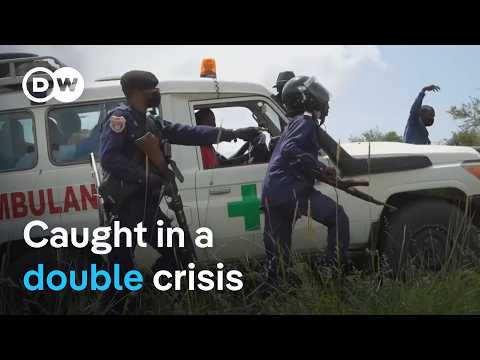
Ebola in DR Congo: Can a country in conflict contain it? | DW News
0
林宜悉 posted on 2026/05/28This DW News report dives into the devastating impact of conflict on the Ebola outbreak in the Democratic Republic of Congo. You'll hear about the challenges of fighting disease amidst war and learn key phrases for discussing public health crises and international aid.
Learn this video on the APP!
The VoiceTube App has more in-depth practice for videos!