
additional
US /ə'dɪʃənl/
UK /əˈdɪʃənl/
- Adjective
- Further or added
- Extra to what already exists
A2TOEICMoreat the moment
US
UK
- Adverb
- At this time; now
A1Moreborne
US /bɔ:rn/
UK /bɔ:n/
- Verb (Transitive/Intransitive)
- To give birth to a child; to produce fruit
B1Morecruelty
US /ˈkruəlti/
UK /ˈkru:əlti/
- Uncountable Noun
- Intention to hurt others or be mean to them
B1Moredawn
US /dɔn/
UK /dɔ:n/
- Uncountable Noun
- First light of day
- Intransitive Verb
- To begin to grow light as the sun rises
- To begin to be understood for the first time
B1Moredusk
US /dʌsk/
UK /dʌsk/
- Uncountable Noun
- Time before night when it is not yet dark
B1Morefever
US /ˈfivɚ/
UK /'fi:və(r)/
- Noun (Countable/Uncountable)
- A high body temperature, indicating illness
- State of excited emotion or activity
- Transitive Verb
- To cause to have a fever.
B1Moreflare
US /flɛr/
UK /fleə(r)/
- Intransitive Verb
- To become angry or excited suddenly
- To burn or shine suddenly and briefly
- Noun
- A brief bright light
- Light/fire used to signal for help/warn of danger
B2Moreflare up
US /flɛr ʌp/
UK /flɛə ʌp/
- Intransitive Verb
- To suddenly worsen or become more intense (of a medical condition).
- To suddenly become angry or violent.
- Phrasal Verb
- To suddenly become angry or violent.
- To suddenly become worse or more intense (of a medical condition).
A1Moreflock
US /flɑ:k/
UK /flɒk/
- Countable Noun
- Group of animals or birds that live together
- Group of people who gather or travel together
- Intransitive Verb
- To gather together or move as a group
B2Moreguard
US /ɡɑrd/
UK /ɡɑ:d/
- Transitive Verb
- To keep watch over something to protect it
- Noun (Countable/Uncountable)
- Someone who watches a place or prevents escapes
- A player in basketball whose primary role is to handle the ball and initiate the offense.
A2Morehumanity
US /hjuˈmænɪti/
UK /hju:ˈmænəti/
- Uncountable Noun
- Quality of being understanding or sympathetic
- Compassionate behavior, especially towards those suffering.
- Noun (Countable/Uncountable)
- All human beings collectively; the human race.
A2Moreideally
US /aɪˈdiəli/
UK /aɪ'di:əlɪ/
- Adverb
- In a perfect way; very suitably
- In theory; according to an ideal or theoretical standard.
B2Moreimmune
US /ɪˈmjoon/
UK /ɪˈmju:n/
- Adjective
- Having a special protection from, e.g. the law
- Protected against a particular disease or condition because of antibodies or vaccination.
B1Moreinfect
US /ɪnˈfɛkt/
UK /ɪn'fekt/
- Transitive Verb
- To introduce a computer virus to
- To give a disease, bacteria or virus to
B1Moreinvolve
US /ɪnˈvɑlv/
UK /ɪn'vɒlv/
- Transitive Verb
- To have or be included as a part of something
- To cause (a person or group) to take part in an event or activity.
A2TOEICMorelancet
US /ˈlænsɪt/
UK /ˈlɑ:nsɪt/
- Noun
- Surgical knife used e.g. for small incisions
C2TOEICMoreloose
US /lus/
UK /lu:s/
- Transitive Verb
- To shoot or fire something from a gun
- Adjective
- (Idea, thought, or work) unclear or imprecise
- Not tightly attached or held
A2Moremosquito
US /məˈski:toʊ/
UK /məˈski:təʊ/
- Countable Noun
- Small flying insect which sucks blood
B1Morenasty
US /ˈnæsti/
UK /'nɑ:stɪ/
- Adjective
- Very bad, unpleasant, or offensive
- Unkind; unpleasant.
A2Morenausea
US /ˈnɔziə, -ʒə, -siə, -ʃə/
UK /ˈnɔ:ziə/
- Uncountable Noun
- Feeling of sickness so that you feel like vomiting
- A feeling of revulsion; disgust.
B2Moreoccasionally
US /əˈkeɪʒən(ə)li/
UK /əˈkeɪʒnəli/
- Adverb
- Not very often; sometimes; seldom
- Happening or appearing irregularly.
A2Moreof course
US /ʌv kɔː(r)s/
UK /ɔv kɔː(r)s/
- Adverb
- Sure ; Certainly
- Phrase
- For sure; certainly
A2Morephrase
US /frez/
UK /freɪz/
- Noun
- Common expression or saying
- Section of musical notes in a piece of music
- Verb (Transitive/Intransitive)
- To choose words to say what you mean clearly
A2Morepopulation
US /ˌpɑpjəˈleʃən/
UK /ˌpɒpjuˈleɪʃn/
- Noun (Countable/Uncountable)
- Number of people who live in a country, area etc.
- A group of individuals of one species living in a particular area.
A2TOEICMorepositive
US /ˈpɑzɪtɪv/
UK /ˈpɒzətɪv/
- Adjective
- Showing agreement or support for something
- Being sure about something; knowing the truth
- Noun
- A photograph in which light areas are light and dark areas are dark
A2Morepractical
US /ˈpræktɪkəl/
UK /ˈpræktɪkl/
- Adjective
- Relating to what is sensible, real or useful
- Relating to experience, action, or practice; not theoretical or ideal.
- Noun
- A practical exam or lesson.
- A person concerned chiefly with the practice of something; a person with practical skills.
A2TOEICMoreramp
US /ræmp/
UK /ræmp/
- Noun
- Path that increases in height as you walk up it
- Transitive Verb
- To slope or incline; (phrasal: ramp up) to increase the level or amount of something sharply; to furnish with a sloping surface.
B2Moreramp up
US /ræmp ʌp/
UK /ræmp ʌp/
- Phrasal Verb
- To increase the level or amount of something sharply.
repellent
US /rɪˈpɛlənt/
UK /rɪˈpelənt/
- Adjective
- Making or forcing someone or something go away
- Spray used to get rid of bugs
- Noun
- A substance used to drive away insects or other pests.
B2Morereservoir
US /ˈrezərvwɑ:(r)/
UK /ˈrezəvwɑ:(r)/
- Noun (Countable/Uncountable)
- A lake storing water for use by the community
- Large, extra supply of something future use
B1Moreridiculous
US /rɪˈdɪkjələs/
UK /rɪˈdɪkjələs/
- Adjective
- Funny or foolish; deserving to be laughed at
A2Morerural
US /ˈrʊrəl/
UK /ˈruərəl/
- Adjective
- Concerning the country as opposed to the city
B1Moresentinel
US /ˈsɛntənəl/
UK /'sentɪnl/
- Countable Noun
- Soldier responsible for watching or guarding
C1TOEICMorestrip
US /strɪp/
UK /strɪp/
- Transitive Verb
- To remove your clothes (often sexily for someone)
- To remove something, e.g. paint from a wall
- Countable Noun
- Long narrow piece, such as ribbon or land
B1Moresuffer
US / ˈsʌfɚ/
UK /'sʌfə(r)/
- Verb (Transitive/Intransitive)
- To experience pain, illness, or injury
- To allow or permit something, especially something unpleasant.
A2Moresurveillance
US /sɚˈveləns/
UK /sɜ:'veɪləns/
- Uncountable Noun
- Careful watching of a person/place, e.g. by police
B2TOEICMorethrive
US /θraɪv/
UK /θraɪv/
- Intransitive Verb
- To be or become healthy or successful
- To grow or develop well; to flourish.
B2TOEICMoretrack
US /træk/
UK /træk/
- Transitive Verb
- To use marks to follow a wild animal
- To move a certain way/follow a particular course
- Noun
- A circular course for running
- Course or way someone takes, e.g. in education
A2TOEICMoretransmission
US /trænsˈmɪʃən, trænz-/
UK /trænsˈmɪʃn/
- Noun
- Part of car including gears affecting speed of car
- Electronic signal sent by radio waves; broadcast
B1Morevaccine
US /vækˈsin,ˈvækˌsin/
UK /'væksi:n/
- Noun (Countable/Uncountable)
- Shot using weak disease cells to stop same disease
- A preparation of weakened or killed microorganisms, or of antigenic proteins derived from them, used to induce protective immunity in animals.
B2Morevirus
US /ˈvaɪrəs/
UK /'vaɪrəs/
- Noun
- File secretly put on computers to cause harm
- Living organism that causes disease or sickness
B1Morewiggly
US
UK
- Adjective
- Curved or curving in and out in series of curves
C1Morewild
US /waɪld/
UK /waɪld/
- Adverb
- In a manner which lacks control
- Adjective
- Living in nature; not tame
- (Of land) not developed by people
A2More
Vocabulary
- flare up: To suddenly worsen or become more intense (of a medical condition).
- at the moment: At this time; now
- ramp up: To increase the level or amount of something sharply.
- of course: Sure ; Certainly
- phrase: Common expression or saying
- immune: Having a special protection from, e.g. the law
- ridiculous: Funny or foolish; deserving to be laughed at
- nasty: Very bad, unpleasant, or offensive
- thrive: To be or become healthy or successful
- positive: Showing agreement or support for something
- practical: Relating to what is sensible, real or useful
- amount: Quantity of something
- track: To use marks to follow a wild animal
- bit: Device put in a horse's mouth to control it
- nausea: Feeling of sickness so that you feel like vomiting
- surveillance: Careful watching of a person/place, e.g. by police
- suffer: To experience pain, illness, or injury
- occasionally: Not very often; sometimes; seldom
- population: Number of people who live in a country, area etc.
- vaccine: Shot using weak disease cells to stop same disease
- involve: To have or be included as a part of something
- strip: To remove your clothes (often sexily for someone)
- humanity: Quality of being understanding or sympathetic
- dawn: First light of day
- rural: Concerning the country as opposed to the city
- flock: Group of animals or birds that live together
- guard: To keep watch over something to protect it
- ramp: Path that increases in height as you walk up it
- wild: In a manner which lacks control
- additional: Further or added
- ideally: In a perfect way; very suitably
- important: Having power or authority
- loose: To shoot or fire something from a gun
- system: Set of organized, planned ideas that work together
- continue: To do something without stopping, or after pausing
- programme: A plan or schedule of events
- catch: Amount of something that has been caught
- fever: A high body temperature, indicating illness
- virus: File secretly put on computers to cause harm
- flare: To become angry or excited suddenly
- area: Amount of measured space
- transmission: Part of car including gears affecting speed of car
- carry: To have a child, be pregnant
- cruelty: Intention to hurt others or be mean to them
- season: One of Spring, Summer, Autumn (Fall) and Winter
- know: To be familiar with a person or place, thing
- reservoir: A lake storing water for use by the community
- repellent: Making or forcing someone or something go away
- work: The product of some artistic or literary endeavor
- band: Group of people who work together e.g. play music
- keep: Large, strong tower in the middle of a castle
- give: Degree of flexibility in something, a material
- mosquito: Small flying insect which sucks blood
- infect: To introduce a computer virus to
- dusk: Time before night when it is not yet dark
- borne: To give birth to a child; to produce fruit
- sentinel: Soldier responsible for watching or guarding
- wiggly: Curved or curving in and out in series of curves
- lancet: Surgical knife used e.g. for small incisions
Get the full experience in the app
Learn anywhere with detailed sentence and usage analysis
01:03
She took a brave step forward, leaving behind her comfort zone to chase her dreams.
Vocabulary
- brave
adj. Having courage
- comfort zone
phr. A familiar situation where one feels safe
Explanation
a brave step is a noun phrase, where brave is an adjective modifying the noun step, meaning "a courageous step".
forward is an adverb modifying step, meaning "ahead".
The whole phrase serves as the object, answering the "what" of took (verb) — she took a brave step forward.
Get the full experience in the app
Look up words anytime with pronunciation, part of speech, and usage
brave
US/brev/
UK/breɪv/
adj.Brave
v.t.To bravely face
A2 Elementary
Get the full experience in the app
Practice speaking anytime and get instant pronunciation feedback
Try this speaking exercise.
Try practicing with this sentence.
80
0
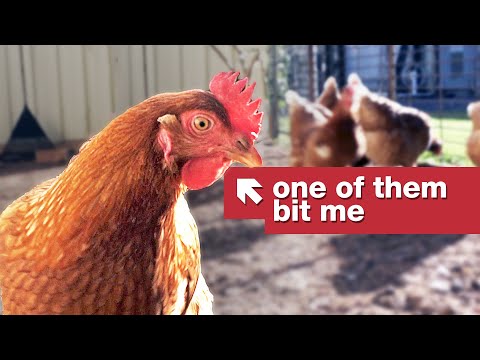
林宜悉 posted on 2026/04/07Did you know chickens can be heroes? This video reveals how sentinel chickens help detect dangerous mosquito-borne viruses like Murray Valley Encephalitis, acting as an early warning system! You'll pick up advanced vocabulary related to public health and learn about practical ways to stay safe, especially if you love spending time outdoors in places like New South Wales.
Learn this video on the APP!
The VoiceTube App has more in-depth practice for videos!