
accomplish
US /əˈkɑmplɪʃ/
UK /ə'kʌmplɪʃ/
- Transitive Verb
- To succeed in doing; complete successfully
B1TOEICMoreadministration
US / ædˌmɪnɪˈstreʃən/
UK /ədˌmɪnɪˈstreɪʃn/
- Uncountable Noun
- Act of giving e.g. medicine to a patient
- The work of running something, e.g. a business
B1TOEICMoreanticipate
US /ænˈtɪsəˌpet/
UK /æn'tɪsɪpeɪt/
- Transitive Verb
- To expect or look ahead to something positively
- To be aware of something that might happen
B1TOEICMorearab
US
UK
- Noun
- Citizen of an Arabic speaking nation
C2Moreas time goes by
US /əz taɪm ɡoʊz baɪ/
UK /əz taɪm gəuz baɪ/
- other
- Over the course of time; as time passes.
B2Moreas well as
US /æz wɛl æz/
UK /æz wel æz/
- Adverb
- Also; in addition to
- Preposition
- In addition to; and also.
A1Moreat some point
US /æt sʌm pɔɪnt/
UK /æt sʌm pɔint/
- Phrase
- At an unspecified time, usually in the future.
A1Morebombardment
US /bɒm'bɑ:dmənt/
UK /bɒm'bɑ:dmənt/
- Noun
- Act of dropping bombs on a place
C1Morebuffer
US /ˈbʌfɚ/
UK /ˈbʌfə(r)/
- Noun (Countable/Uncountable)
- Data in computer memory allowing fast access
- Protection to prevent things mixing
- Transitive Verb
- To store data in special memory for fast access
- To protect a thing by separating it from
B2Moreby the day
US /baɪ ði de/
UK /bai ðə dei/
- Phrase
- With each passing day; daily.
- For each day worked.
A1Morecalculus
US /ˈkælkjələs/
UK /ˈkælkjələs/
- Uncountable Noun
- Branch of math dealing with rates of change, etc.
C1Morecelebrate
US /ˈsɛləˌbret/
UK /'selɪbreɪt/
- Verb (Transitive/Intransitive)
- To observe an event or occasion, e.g. a birthday
- To lead or participate in a religious ceremony
A2Morecheck out
US /tʃɛk aʊt/
UK /tʃek aut/
- Phrase
- Phrasal Verb
- To find out information about something
- To take books out of a library
A1Morecollapse
US /kəˈlæps/
UK /kə'læps/
- Verb (Transitive/Intransitive)
- To fold (e.g. a stroller) down to make it smaller
- To suddenly fall down or break apart into pieces
- Noun
- The sudden failure of a structure or system.
- The sudden failure of a bodily organ or function.
B1Moredeclare
US /dɪˈklɛr/
UK /dɪ'kleə(r)/
- Transitive Verb
- To make a statement in a strong and confident way
- To show the cost of things purchased overseas
A2TOEICMoredefinition
US /ˌdɛfəˈnɪʃən/
UK /ˌdefɪˈnɪʃn/
- Noun (Countable/Uncountable)
- Explanation of word's meaning, as in dictionaries
- The sharpness of an image on a screen
A2TOEICMoredeprive
US /dɪˈpraɪv/
UK /dɪˈpraɪv/
- Transitive Verb
- To deny someone access to or take away something
B2Moredespise
US /dɪˈspaɪz/
UK /dɪ'spaɪz/
- Transitive Verb
- To have no respect whatsoever for a person/thing
B2Morediverse
US /dɪˈvɚs, daɪ-, ˈdaɪˌvɚs/
UK /daɪˈvɜ:s/
- Adjective
- Being varied or different from each other
- Very different from each other
B1TOEICMoreendure
US /ɛnˈdʊr, -ˈdjʊr/
UK /ɪn'djʊə(r)/
- Intransitive Verb
- To last for a long time; continue to exist
- Transitive Verb
- To accept difficulties without struggle
B1TOEICMoreentire
US /ɛnˈtaɪr/
UK /ɪn'taɪə(r)/
- Adjective
- Complete or full; with no part left out; whole
- Undivided; not shared or distributed.
A2TOEICMoreethnic
US /ˈɛθnɪk/
UK /ˈeθnɪk/
- Adjective
- Of people who share the same culture, traditions
- Belonging to a minority group that differs in culture, religion, or origin from the dominant group of a society.
B1Moreevacuate
US /ɪˈvækjuˌet/
UK /ɪ'vækjʊeɪt/
- Transitive Verb
- To move people from dangerous to a safe places
B2Morefinish off
US /ˈfɪnɪʃ ɔf/
UK /ˈfiniʃ ɔf/
- Phrasal Verb
- To complete the last part of something.
- To decisively defeat someone.
A2Morefor now
US /fɔr naʊ/
UK /fɔ: nau/
- Phrase
- Temporarily; for the present time.
- In the short term; for the immediate future.
A1Morehave to
US /hæv tu/
UK /ˈhæv tə/
- Auxiliary Verb
- Must do
A1Moreimpression
US /ɪmˈprɛʃən/
UK /ɪmˈpreʃn/
- Noun (Countable/Uncountable)
- Effect or feeling resulting from an experience
- Act of pressing into a material to make a pattern
B1TOEICMorein control
US /ɪn kənˈtrol/
UK /in kənˈtrəul/
- Adjective
- Having the power to direct or regulate something; able to manage or direct a situation or person.
- Possessing self-restraint and the ability to manage one's own behavior and emotions.
- Phrase
- Having command or authority; managing effectively.
C1Morein power
US /ɪn ˈpaʊɚ/
UK /in ˈpauə/
- Adjective
- Having control of a country or organization.
- Phrase
- During a period of holding authority or control.
B1Morein terms of
US
UK
- Phrase
- With regard to; concerning a particular aspect.
A1Moreintegrity
US /ɪnˈtɛɡrɪti/
UK /ɪnˈtegrəti/
- Uncountable Noun
- Quality of being honest, fair and honorable
- The state of being whole and undivided.
B1TOEICMoreinterrupt
US /ˌɪntəˈrʌpt/
UK /ˌɪntə'rʌpt/
- Verb (Transitive/Intransitive)
- To stop something from happening for a while
- To stop someone from speaking by saying or doing something.
- Noun
- A signal that stops a computer from working on one thing and starts it working on something else.
B1TOEICMoreintervention
US /ˌɪntə'venʃn/
UK /ˌɪntə'venʃn/
- Noun (Countable/Uncountable)
- Getting involved to solve a disagreement, problem
- The use of military force by a country in another country's internal affairs.
B1Morekick off
US /kɪk ɔf/
UK /kik ɔf/
- Verb (Transitive/Intransitive)
- To start a football match.
- To start a campaign or event.
- Phrasal Verb
- To begin or start something.
- To remove (shoes) by kicking.
A1Morelength
US /leŋθ/
UK /leŋθ/
- Noun (Countable/Uncountable)
- Distance from one end of a pool to the other
- Measurement of distance or of time
- Adjective
- Being long in extent.
A2Morelive through
US /liv θru/
UK /liv θru:/
- Phrasal Verb
- To experience something difficult or painful and survive it.
A2Morelook at
US /lʊk æt/
UK /luk æt/
- Phrasal Verb
- To use your eyes to focus on something
- To focus your eyes on something carefully
A1Moremake of
US /mek ʌv/
UK /meik ɔv/
- Phrasal Verb
- To understand or have an opinion about something
- To create or produce something from a particular material
A1Moremilitary
US /ˈmɪlɪˌtɛri/
UK /'mɪlətrɪ/
- Noun
- Army or armed forces
- Adjective
- Concerning the army or navy
B1Moremonolith
US /ˈmɑnəˌlɪθ/
UK /'mɒnəlɪθ/
- Noun
- Large block of stone standing by itself
C1Moreobliterate
US /əˈblɪtəˌret,oˈblɪt-/
UK /ə'blɪtəreɪt/
- Transitive Verb
- To completely destroy; rub out; stamp out
B2Moreoutline
US /ˈaʊtˌlaɪn/
UK /ˈaʊtlaɪn/
- Noun (Countable/Uncountable)
- Line around the outer edge of something
- A summary of the important points of a plan, etc.
- Transitive Verb
- To draw around the outer edges of something
- To summarize the important points of a plan, etc.
A2Morepodcast
US /'pɑ:dkæst/
UK /'pɒdkɑ:st/
- Noun (Countable/Uncountable)
- A digital recording (e.g. radio show) for download
A2Moreproximity
US /prɑkˈsɪmɪti/
UK /prɒk'sɪmətɪ/
- Uncountable Noun
- State of being near or close to something
B2TOEICMoreramp
US /ræmp/
UK /ræmp/
- Noun
- Path that increases in height as you walk up it
- Transitive Verb
- To slope or incline; (phrasal: ramp up) to increase the level or amount of something sharply; to furnish with a sloping surface.
B2Moreramp up
US /ræmp ʌp/
UK /ræmp ʌp/
- Phrasal Verb
- To increase the level or amount of something sharply.
regime
US /reˈʒim, rɪ-/
UK /reɪˈʒi:m/
- Noun
- A system of management; a form of government
B1Moreregion
US /ˈridʒən/
UK /'ri:dʒən/
- Noun (Countable/Uncountable)
- Part of a country, of the world, area, etc.
- A part of the body
A2TOEICMoreresolve
US /rɪˈzɑlv/
UK /rɪ'zɒlv/
- Verb (Transitive/Intransitive)
- To make a decision to do something
- To find an answer, solution to a problem/ question
- Uncountable Noun
- Firm determination to do something.
B1TOEICMoreresponse
US /rɪˈspɑns/
UK /riˈspɔns/
- Noun
- Something said/written as an answer to something
- Reaction to something that has occurred
A2TOEICMoreresult
US /rɪˈzʌlt/
UK /rɪ'zʌlt/
- Noun
- Something produced through tests or experiments
- Final score of a competition, election or game
- Intransitive Verb
- To be the outcome of other causes and effects
- To happen or exist as a consequence of something.
A2Moreresult in
US /rɪˈzʌlt ɪn/
UK /riˈzʌlt in/
- Phrasal Verb
- To cause or produce as a consequence.
rhetoric
US /ˈrɛtərɪk/
UK /ˈretərɪk/
- Uncountable Noun
- The study of public speaking or writing techniques
B2TOEICMorerole
US /rol/
UK /rəʊl/
- Noun
- Character played by an actor
- Part you play in an activity; job; responsibility
A2Moreseparate
US /'sepəreɪt/
UK /'sepəreɪt/
- Adjective
- Being different from or unrelated to another
- Not connected; different.
- Transitive Verb
- To divide two things by being in between them
- To move things away from each other
A2TOEICMoreshockwave
US
UK
- Noun
- A wave of energy (e.g. after an earthquake)
C2Morespectrum
US /ˈspɛktrəm/
UK /'spektrəm/
- Noun
- The wavelengths of colors from red to violet
- a range of different positions, opinions, etc. between two extreme points
B1Morespeculative
US /ˈspɛkjulətɪv, -ˌle-/
UK /ˈspekjələtɪv/
- Adjective
- Not based on sure knowledge; based on intuition
- Based on conjecture or abstract reasoning; theoretical rather than demonstrably factual.
B2Morestay in
US /ste ɪn/
UK /stei in/
- Phrasal Verb
- To remain inside one's home.
- Intransitive Verb
- To remain as an inpatient in a hospital.
strategy
US /ˈstrætədʒi/
UK /'strætədʒɪ/
- Noun (Countable/Uncountable)
- Careful plan or method for achieving a goal
- Branch of military dealing with command
A2TOEICMoresurvival
US /sɚˈvaɪvəl/
UK /səˈvaɪvl/
- Uncountable Noun
- Act of continuing to exist when facing difficulty
A2Moretarget
US /ˈtɑrɡɪt/
UK /'tɑ:ɡɪt/
- Noun (Countable/Uncountable)
- A goal or amount you are trying to achieve
- Group you are trying to sell to or influence
- Transitive Verb
- To try to influence; direct a message toward
- (Army) to aim an attack at something
A2TOEICMoreunder control
US /ˈʌndɚ kənˈtrol/
UK /ˈʌndə kənˈtrəul/
- Adjective
- Being managed or restrained; not out of hand.
- Having one's emotions or impulses restrained.
- Phrase
- A situation that is being managed effectively.
C1More
Vocabulary
- look at: To use your eyes to focus on something
- have to: Must do
- result in: To cause or produce as a consequence.
- in terms of
- kick off: To start a football match.
- at some point: At an unspecified time, usually in the future.
- stay in: To remain inside one's home.
- in power: Having control of a country or organization.
- as well as: Also; in addition to
- ramp up: To increase the level or amount of something sharply.
- under control: Being managed or restrained; not out of hand.
- by the day: With each passing day; daily.
- make of: To understand or have an opinion about something
- live through: To experience something difficult or painful and survive it.
- as time goes by: Over the course of time; as time passes.
- finish off: To complete the last part of something.
- in control: Having the power to direct or regulate something; able to manage or direct a situation or person.
- check out
- for now: Temporarily; for the present time.
- entire: Complete or full; with no part left out; whole
- mindset: Way someone things about something
- strategy: Careful plan or method for achieving a goal
- integrity: Quality of being honest, fair and honorable
- spectrum: The wavelengths of colors from red to violet
- sense: Certain mental feeling or emotion
- accomplish: To succeed in doing; complete successfully
- separate: Being different from or unrelated to another
- diverse: Being varied or different from each other
- definition: Explanation of word's meaning, as in dictionaries
- impression: Effect or feeling resulting from an experience
- military: Army or armed forces
- collapse: To fold (e.g. a stroller) down to make it smaller
- endure: To last for a long time; continue to exist
- proximity: State of being near or close to something
- similar: Nearly the same; alike
- regime: A system of management; a form of government
- response: Something said/written as an answer to something
- region: Part of a country, of the world, area, etc.
- anticipate: To expect or look ahead to something positively
- interrupt: To stop something from happening for a while
- result: Something produced through tests or experiments
- administration: Act of giving e.g. medicine to a patient
- intervention: Getting involved to solve a disagreement, problem
- rhetoric: The study of public speaking or writing techniques
- ethnic: Of people who share the same culture, traditions
- declare: To make a statement in a strong and confident way
- ground: To break (coffee, etc.) into tiny bits with machine
- role: Character played by an actor
- leave: To go away from; depart
- target: A goal or amount you are trying to achieve
- deprive: To deny someone access to or take away something
- ramp: Path that increases in height as you walk up it
- resolve: To make a decision to do something
- lot: What happens to a person in life from chance; fate
- obliterate: To completely destroy; rub out; stamp out
- evacuate: To move people from dangerous to a safe places
- survival: Act of continuing to exist when facing difficulty
- control: A device designed to operate a machine
- fact: Something that is known or proved to be true
- language: Words or signs used to communicate messages
- despise: To have no respect whatsoever for a person/thing
- length: Distance from one end of a pool to the other
- podcast: A digital recording (e.g. radio show) for download
- change: To exchange one set of clothes for another
- outline: Line around the outer edge of something
- celebrate: To observe an event or occasion, e.g. a birthday
- service: Work that a person does to assist others
- think: To have an idea about something without certainty
- feel: To be aware of or experience an emotion, sensation
- country: An area of land that is controlled by a government
- speculative: Not based on sure knowledge; based on intuition
- time: Speed at which music is played; tempo
- buffer: Data in computer memory allowing fast access
- bombardment: Act of dropping bombs on a place
- calculus: Branch of math dealing with rates of change, etc.
- arab: Citizen of an Arabic speaking nation
- shockwave: A wave of energy (e.g. after an earthquake)
- monolith: Large block of stone standing by itself
Get the full experience in the app
Learn anywhere with detailed sentence and usage analysis
01:03
She took a brave step forward, leaving behind her comfort zone to chase her dreams.
Vocabulary
- brave
adj. Having courage
- comfort zone
phr. A familiar situation where one feels safe
Explanation
a brave step is a noun phrase, where brave is an adjective modifying the noun step, meaning "a courageous step".
forward is an adverb modifying step, meaning "ahead".
The whole phrase serves as the object, answering the "what" of took (verb) — she took a brave step forward.
Get the full experience in the app
Look up words anytime with pronunciation, part of speech, and usage
brave
US/brev/
UK/breɪv/
adj.Brave
v.t.To bravely face
A2 Elementary
Get the full experience in the app
Practice speaking anytime and get instant pronunciation feedback
Try this speaking exercise.
Try practicing with this sentence.
80
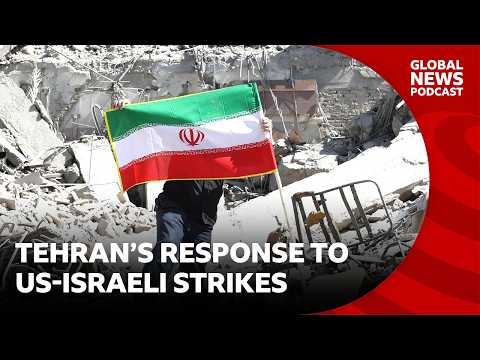
Iran's survival strategy against US ‘’control’ | Global News Podcast
0
Richard VT posted on 2026/03/05Ever wondered how Iran navigates complex geopolitical challenges with the US? This in-depth analysis from the Global News Podcast dives into Iran's survival strategies, offering a fascinating look at Middle Eastern conflicts and energy security. You'll pick up advanced vocabulary and gain a deeper understanding of global affairs!
Learn this video on the APP!
The VoiceTube App has more in-depth practice for videos!