
amazing
US /ə'meɪzɪŋ/
UK /ə'meɪzɪŋ/
- Adjective
- Surprising in a pleasing way
- Transitive Verb
- To cause wonder; to surprise completely
A2Moreas with
US /æz wɪð/
UK /æz wið/
- Preposition
- In the same way that something happens or is true of something else.
A1Moreat school
US
UK
- Phrase
- Present and attending school.
A1Moreat work
US /æt wɚk/
UK /æt wə:k/
- Phrase
- Located at one's place of employment
A1Morebasically
US /ˈbesɪkəli,-kli/
UK /ˈbeɪsɪkli/
- Adverb
- Used before you explain something simply, clearly
- In essence; when you consider the most important aspects of something.
A2Moreblame
US /blem/
UK /bleɪm/
- Transitive Verb
- To say someone is responsible for something bad
- Noun (Countable/Uncountable)
- Act of saying someone did something bad
A2TOEICMorebully
US /ˈbʊli/
UK /'bʊlɪ/
- Noun (Countable/Uncountable)
- a person who habitually seeks to harm or intimidate those whom they perceive as vulnerable
- A person who uses superior strength or influence to intimidate others.
- Verb (Transitive/Intransitive)
- seek to harm, intimidate, or coerce (someone perceived as vulnerable)
B2Morecolleague
US /ˈkɑlˌiɡ/
UK /'kɒli:ɡ/
- Noun (Countable/Uncountable)
- Person you work or cooperate with
- A fellow member of a profession
A2Morecollocation
US /ˌkɑ:ləˈkeɪʃn/
UK /ˌkɒləˈkeɪʃn/
- Noun
- Grouping of words frequently occurring together
C2Morecome back
US /kʌm bæk/
UK /kʌm bæk/
- Phrasal Verb
- To reply to someone, often forcefully
- To be remembered
A1Morecriticize
US /ˈkrɪtɪˌsaɪz/
UK /ˈkrɪtɪsaɪz/
- Transitive Verb
- To assess the work of others
- To say that someone or something is bad
B1Morecrowd
US /kraʊd/
UK /kraʊd/
- Verb (Transitive/Intransitive)
- To force too many things, people into
- (Lots of people) to meet together in one place
- Noun (Countable/Uncountable)
- Large group of people together in one place
A2Moredefend
US /dɪˈfɛnd/
UK /dɪ'fend/
- Transitive Verb
- To protect and explain your position in court
- To protect against an attack
B1TOEICMoredeviate
US /ˈdiviˌet/
UK /ˈdi:vieɪt/
- Intransitive Verb
- To do something unusual or different; depart from
- To differ or diverge in opinion, belief, or character
- Adjective
- Departing from usual or accepted standards; atypical
B1Moredown with
US /daʊn wɪð/
UK /daun wið/
- Adjective
- Suffering from an illness.
- Agreeable to; in favor of.
- Interjection
- An expression of opposition to something.
A1Moreemployee
US /ɪmˈplɔɪi:/
UK /ɪmˈplɔɪi:/
- Countable Noun
- Person who works for someone else for payment
- A person working for a government agency.
A2TOEICMoreexperience in
US
UK
- Phrase
- Knowledge or skill gained from doing something for a period of time.
- Exposure to or involvement in a particular activity or situation.
B1Moreexpression
US /ɪkˈsprɛʃən/
UK /ɪk'spreʃn/
- Noun (Countable/Uncountable)
- Act of making your thoughts and feelings known
- Group of words that have a specific meaning
A2TOEICMorefault
US /fɔlt/
UK /fɔ:lt/
- Noun (Countable/Uncountable)
- A failure or negative aspect of
- Crack in the earth where earthquakes can happen
- Transitive Verb
- To blame someone, something for a negative result
A2Morefor example
US
UK
- Phrase
- As an illustration or instance.
for someone
US /fɚ ˈsʌmwʌn/
UK /fə ˈsʌmwʌn/
- other
- On behalf of or intended for a particular person.
A1Morefor the rest
US /fɔr ði rɛst/
UK /fɔ: ðə rest/
- Phrase
- Concerning the remaining people or things.
- During the remaining part of a period of time.
A1Moregenerally
US /ˈdʒɛnərəli/
UK /ˈdʒenrəli/
- Adverb
- Usually; as a rule; by, to or for most people
A2Moreget lost
US /ɡɛt lɔst/
UK /ɡet lɔ:st/
- Intransitive Verb
- An impolite way of telling someone to go away.
- To become unable to find your way; to lose your sense of direction.
- Interjection
- An impolite way of telling someone to go away.
A1Moregive up
US /ɡɪv ʌp/
UK /ɡiv ʌp/
- Phrasal Verb
- To lose hope or admit defeat
- To decide to not start to try solving a problem
- Verb Phrase
- to surrender an item; hand over an item
A1Moreharm
US /hɑrm/
UK /hɑ:m/
- Transitive Verb
- To damage, injure, or hurt someone or something
- Noun
- Damage or injury
A2Morehave to
US /hæv tu/
UK /ˈhæv tə/
- Auxiliary Verb
- Must do
A1Morehorror
US /ˈhɔrɚ, ˈhɑr-/
UK /ˈhɒrə(r)/
- Noun (Countable/Uncountable)
- Feeling of great shock or fear; thing causing it
B1Moreidiom
US /ˈɪdiəm/
UK /ˈɪdiəm/
- Noun
- Phrase with a special, metaphoric meaning
B2Moreidiomatic
US /ˌɪdiəˈmætɪk/
UK /ˌɪdiəˈmætɪk/
- Adjective
- Concerning idioms
B2Morein a bad way
US /ɪn ə bæd weɪ/
UK /ɪn ə bæd wei/
- other
- In poor physical or emotional condition.
B2Morein a minute
US
UK
- Phrase
- Very soon; in a short amount of time.
- Within the duration of one minute.
A1Morein relation to
US /ɪn rɪˈleʃən tu/
UK /in riˈleiʃən tu:/
- Phrase
- Concerning; with reference to; regarding.
- Compared with.
B1Morein terms of
US
UK
- Phrase
- With regard to; concerning a particular aspect.
A1Morein trouble
US /ɪn ˈtrʌbəl/
UK /in ˈtrʌbl/
- Adjective
- Experiencing difficulties, problems, or legal issues.
- other
- In serious trouble or difficulty.
A1Moreintentionally
US /ɪnˈtɛnʃənl:ɪ/
UK /ɪn'tenʃənəlɪ/
- Adverb
- With a plan to do or achieve something
- In a deliberate and purposeful manner.
B1Moreliteral
US /ˈlɪtərəl/
UK /ˈlɪtərəl/
- Adjective
- Being the basic exact meaning of a word/expression
- Being real and true and without exaggerating
B1Morelook at
US /lʊk æt/
UK /luk æt/
- Phrasal Verb
- To use your eyes to focus on something
- To focus your eyes on something carefully
A1Moremakeup
US /ˈmekˌʌp/
UK /'meɪkʌp/
- Uncountable Noun
- Substance put on the face to make you look pretty
- The way in which something is formed or composed.
- Transitive Verb
- To invent or fabricate something.
- To compensate for something.
B2Moremessy
US /ˈmɛsi/
UK /'mesɪ/
- Adjective
- Being complex or difficult to fix
- Being untidy or dirty
A2Morenail
US /nel/
UK /neɪl/
- Countable Noun
- Pointed piece of metal used to join pieces of wood
- Hard part at the end of your finger
- Transitive Verb
- To attach things together with metal nails
- To catch someone doing an illegal activity
B1Moreparticiple
US /pɑ:rˈtɪsɪpl/
UK /pɑ:ˈtɪsɪpl/
- Participle
- Nonfinite form of the verb, e.g. -ing or -ed forms
C2Morepermanently
US /ˈpəmənəntlɪ/
UK /'pɜ:mənəntlɪ/
- Adverb
- For a long time; always
- In a way that is firmly or securely fixed in place.
B1Morephrasal
US
UK
- Adjective
- Concerning or consisting of a phrase
B1Morepunch
US /pʌntʃ/
UK /pʌntʃ/
- Noun (Countable/Uncountable)
- Alcoholic drink made from wine and fruit, etc.
- Transitive Verb
- To hit something very hard with a closed hand
- To make a hole in something with a special tool
B1Moreput together
US /pʊt təˈɡɛðɚ/
UK /put təˈɡeðə/
- Phrasal Verb
- To build or assemble something small, e.g. a toy
- To organize or arrange something.
A1Morequit
US /kwɪt/
UK /kwɪt/
- Verb (Transitive/Intransitive)
- To leave a job
- To leave a place
- Intransitive Verb
- To leave a school etc. without finishing
B1Morequiz
US /kwɪz/
UK /kwɪz/
- Noun (Countable/Uncountable)
- A game in which players answer questions on topics
- Brief spoken or written test, given to students
- Transitive Verb
- To ask a person many questions about something
B1Moreright back
US /raɪt bæk/
UK /rait bæk/
- Interjection
- Said when someone says they will return soon, indicating you expect their prompt return.
- Adverb
- Immediately; very soon after going.
A1Moreseparate
US /'sepəreɪt/
UK /'sepəreɪt/
- Adjective
- Being different from or unrelated to another
- Not connected; different.
- Transitive Verb
- To divide two things by being in between them
- To move things away from each other
A2TOEICMoresore
US /sɔr, sor/
UK /sɔ:(r)/
- Noun
- An open or raised painful spot on the skin
- Adjective
- Angry; annoyed
- Upset or angry about something that happened
A2Morestay in
US /ste ɪn/
UK /stei in/
- Phrasal Verb
- To remain inside one's home.
- Intransitive Verb
- To remain as an inpatient in a hospital.
stick
US /stɪk/
UK /stɪk/
- Verb (Transitive/Intransitive)
- To push a sharp or pointed object into something
- To join together using glue or paste
- Countable Noun
- Long thin piece of wood from a tree
A2Morestick around
US /stɪk əˈraʊnd/
UK /stik əˈraund/
- Phrasal Verb
- To remain in place; not leave or go
A2Morestick by
US
UK
- Phrase
- Phrasal Verb
- To continue to support someone or something during a difficult time.
A2Morestick it out
US
UK
- Phrasal Verb
- To endure to the end; persevere through difficulties.
A1Morestick it to
US /stɪk ɪt tu/
UK /stik it tu:/
- Phrasal Verb
- To defeat someone, especially someone who is arrogant or powerful.
stick out like a sore thumb
US /stɪk aʊt laɪk ə sɔɚ θʌm/
UK /stik aʊt laɪk ə sɔ: θʌm/
- other
- To be very noticeable or obvious in an unpleasant way.
B2Morestick together
US
UK
- Phrasal Verb
- To support each other; remain united.
- To adhere physically; to be joined by an adhesive substance.
B1Morestick up for
US /stɪk ʌp fɔr/
UK /stik ʌp fɔ:/
- Phrasal Verb
- To defend (yourself, someone else)
A2Morestick with
US /stɪk wɪð/
UK /stik wið/
- Phrasal Verb
- To continue to support or stay loyal to someone or something.
- To continue doing or using something; to persevere.
A1Moreswollen
US /ˈswolən/
UK /ˈswəʊlən/
- Verb (Transitive/Intransitive)
- To increase in size or number larger than normal
- To become larger than normal, often due to injury
- Adjective
- Increased in size due to injury
B1Moretattooed
US
UK
- Transitive Verb
- To put a permanent ink drawing on a person's skin
- Adjective
- Having tattoos.
B2Morethink about
US /θɪŋk əˈbaʊt/
UK /θiŋk əˈbaut/
- Phrasal Verb
- To consider something carefully.
- To remember or call to mind.
A1Morethink of
US /θɪŋk ʌv/
UK /θiŋk ɔv/
- Phrasal Verb
- To look on as (being something specific); consider
- To consider or remember something.
- Verb (Transitive/Intransitive)
- To imagine or call something to mind
A1Morethreaten
US /ˈθrɛtn/
UK /ˈθretn/
- Transitive Verb
- To cause something potential harm, or put at risk
- To say you may harm or hurt someone
A2Morethumb
US /θʌm/
UK /θʌm/
- Intransitive Verb
- To use your thumb to request a ride in a car
- Countable Noun
- Part of a glove that goes over the thumb
- The short, thick finger on the side of your hand
B1Moretogether with
US /təˈɡɛðɚ wɪð/
UK /təˈɡeðə wið/
- Preposition
- In addition to; along with.
- Including; as well as.
A1Moreusage
US /ˈjusɪdʒ, -zɪdʒ/
UK /ˈju:sɪdʒ/
- Noun (Countable/Uncountable)
- Amount something is used
- Way something is actually used
B2Morevaluable
US /ˈvæljuəbəl, ˈvæljə-/
UK /ˈvæljuəbl/
- Adjective
- Being useful or important
- Being worth a lot of money
B1TOEICMorewhatnot
US /ˈwɑːt.nɑːt/
UK /ˈwɒt.nɒt/
- Noun
- Miscellaneous curios
- Uncountable Noun
- And other similar things
C1More
Vocabulary
- stick with: To continue to support or stay loyal to someone or something.
- stick it to: To defeat someone, especially someone who is arrogant or powerful.
- stick by
- stick up for: To defend (yourself, someone else)
- give up: To lose hope or admit defeat
- stick around: To remain in place; not leave or go
- stick together: To support each other; remain united.
- look at: To use your eyes to focus on something
- stick it out: To endure to the end; persevere through difficulties.
- for example: As an illustration or instance.
- stick out like a sore thumb: To be very noticeable or obvious in an unpleasant way.
- think of: To look on as (being something specific); consider
- put together: To build or assemble something small, e.g. a toy
- have to: Must do
- for someone: On behalf of or intended for a particular person.
- at school: Present and attending school.
- at work: Located at one's place of employment
- in relation to: Concerning; with reference to; regarding.
- in a bad way: In poor physical or emotional condition.
- stay in: To remain inside one's home.
- in a minute: Very soon; in a short amount of time.
- right back: Said when someone says they will return soon, indicating you expect their prompt return.
- think about: To consider something carefully.
- in terms of
- together with: In addition to; along with.
- get lost: An impolite way of telling someone to go away.
- experience in: Knowledge or skill gained from doing something for a period of time.
- for the rest: Concerning the remaining people or things.
- as with: In the same way that something happens or is true of something else.
- in trouble: Experiencing difficulties, problems, or legal issues.
- down with: Suffering from an illness.
- come back: To reply to someone, often forcefully
- stick: To push a sharp or pointed object into something
- situation: Place, position or area that something is in
- expression: Act of making your thoughts and feelings known
- basically: Used before you explain something simply, clearly
- experience: Thing a person has done or that happened to them
- common: Area in a city or town that is open to everyone
- separate: Being different from or unrelated to another
- blame: To say someone is responsible for something bad
- bit: Device put in a horse's mouth to control it
- brain: To strike someone forcefully on the head
- mean: Average of a set of numbers
- similar: Nearly the same; alike
- crowd: To force too many things, people into
- generally: Usually; as a rule; by, to or for most people
- intentionally: With a plan to do or achieve something
- valuable: Being useful or important
- messy: Being complex or difficult to fix
- idiom: Phrase with a special, metaphoric meaning
- literal: Being the basic exact meaning of a word/expression
- deviate: To do something unusual or different; depart from
- permanently: For a long time; always
- colleague: Person you work or cooperate with
- thumb: To use your thumb to request a ride in a car
- quiz: A game in which players answer questions on topics
- mind: To be bothered or upset by something
- leave: To go away from; depart
- fault: A failure or negative aspect of
- criticize: To assess the work of others
- swollen: To increase in size or number larger than normal
- bully: a person who habitually seeks to harm or intimidate those whom they perceive as vulnerable
- phrasal: Concerning or consisting of a phrase
- punch: Alcoholic drink made from wine and fruit, etc.
- harm: To damage, injure, or hurt someone or something
- continue: To do something without stopping, or after pausing
- preposition: Word such as 'at' 'on' etc. showing position/time
- adjective: A word that describes a noun, e.g. happy
- threaten: To cause something potential harm, or put at risk
- horror: Feeling of great shock or fear; thing causing it
- defend: To protect and explain your position in court
- usage: Amount something is used
- point: An item to be discussed
- amazing: Surprising in a pleasing way
- wrong: Action that is harmful, unjust or illegal
- nail: Pointed piece of metal used to join pieces of wood
- employee: Person who works for someone else for payment
- sore: An open or raised painful spot on the skin
- verb: Word that expresses an action or state
- quit: To leave a job
- makeup: Substance put on the face to make you look pretty
- participle: Nonfinite form of the verb, e.g. -ing or -ed forms
- collocation: Grouping of words frequently occurring together
- whatnot: Miscellaneous curios
- idiomatic: Concerning idioms
- tattooed: To put a permanent ink drawing on a person's skin
Get the full experience in the app
Learn anywhere with detailed sentence and usage analysis
01:03
She took a brave step forward, leaving behind her comfort zone to chase her dreams.
Vocabulary
- brave
adj. Having courage
- comfort zone
phr. A familiar situation where one feels safe
Explanation
a brave step is a noun phrase, where brave is an adjective modifying the noun step, meaning "a courageous step".
forward is an adverb modifying step, meaning "ahead".
The whole phrase serves as the object, answering the "what" of took (verb) — she took a brave step forward.
Get the full experience in the app
Look up words anytime with pronunciation, part of speech, and usage
brave
US/brev/
UK/breɪv/
adj.Brave
v.t.To bravely face
A2 Elementary
Get the full experience in the app
Practice speaking anytime and get instant pronunciation feedback
Try this speaking exercise.
Try practicing with this sentence.
80
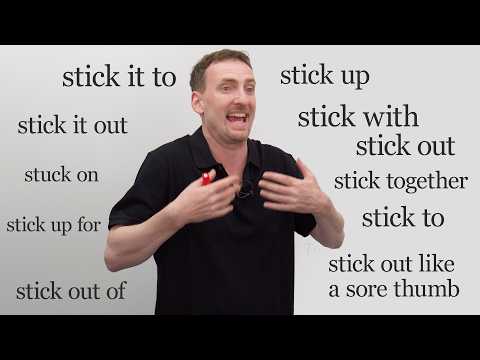
15 PHRASAL VERBS with “STICK”: stick up, stick out, stick to, stick with...
0
林宜悉 posted on 2026/01/31Ever get confused by all the ways we use 'stick'? This video breaks down 15 essential phrasal verbs like 'stick up', 'stick out', and 'stick to' with clear explanations and daily practical examples. You'll pick up tons of useful vocabulary and grammar to sound more natural in everyday conversations!
Learn this video on the APP!
The VoiceTube App has more in-depth practice for videos!