
a bit much
US /ə bɪt mʌtʃ/
UK /ə bit mʌtʃ/
- other
- Slightly too extreme or unreasonable.
B2Moreabove average
US /əˈbʌv ˈævərɪdʒ/
UK /əˈbʌv ˈævəridʒ/
- Phrase
- Adjective
- Better than average; exceeding the norm.
A2Moreaffect
US /əˈfɛkt/
UK /ə'fekt/
- Transitive Verb
- To cause a change in something else
- To pretend to have or feel (something).
- Noun
- (Psychology) Emotion or feeling.
A2TOEICMorealtruism
US /ˈæltruˌɪzəm/
UK /ˈæltruɪzəm/
- Uncountable Noun
- Selfless concern for the well-being of others
C1Morealtruistic
US
UK
- Adjective
- Selfless concern for the well-being of others
C1Moreas long as
US /æz lɔŋ æz/
UK /æz lɔŋ æz/
- Conjunction
- For the period that; provided that.
- For the length of time that
- Preposition
- On the condition that; providing that.
- Having the same length as.
A1Moreat least
US /æt list/
UK /æt li:st/
- Adverb
- As a minimum
- Not less than
- Phrase
- No less than; at the minimum
- Used to indicate that something is positive in a bad situation.
C2Moreat the end of the day
US
UK
- Phrase
- Ultimately; when everything else is considered.
- After a day's work or activities.
A1Moreat the most
US /ət ðə ˈmoʊst/
UK /ət ðə ˈməust/
- other
- No more than; maximum amount or degree.
A2Moreaverage
US /ˈævərɪdʒ, ˈævrɪdʒ/
UK /'ævərɪdʒ/
- Noun (Countable/Uncountable)
- Total of numbers divided by the number of items
- Transitive Verb
- To add numbers then divide by the number of items
A2TOEICMorebenefit
US /ˈbɛnəfɪt/
UK /'benɪfɪt/
- Noun (Countable/Uncountable)
- Good result or effect, something advantageous
- A payment made by the state or an insurance policy to someone
- Verb (Transitive/Intransitive)
- To have a good effect or be helpful
- To receive an advantage; to be helped
A2TOEICMoreblob
US /blɑ:b/
UK /blɒb/
- Noun
- Object that does not have a regular shape
C1Morebring back
US /brɪŋ bæk/
UK /briŋ bæk/
- Phrasal Verb
- To cause to remember
- To return something
A1Moreby accident
US /baɪ ˈæksɪdənt/
UK /bai ˈæksidənt/
- Phrase
- Without intending to; unintentionally.
calculation
US /ˌkælkjəˈleʃən/
UK /ˌkælkjuˈleɪʃn/
- Noun (Countable/Uncountable)
- Process or result of using mathematics
- An educated guess about something
B2Morechange over
US
UK
- Phrasal Verb
- To switch from one thing to another.
A2Morecompetitive
US /kəmˈpɛtɪtɪv/
UK /kəmˈpetətɪv/
- Adjective
- Being strongly driven to win or be better than
- As good as or better than others.
B1Morecomplex
US /kəmˈplɛks, ˈkɑmˌplɛks/
UK /'kɒmpleks/
- Countable Noun
- Group of buildings all used for the same purpose
- Adjective
- Not being simple; having many parts or aspects
A2Moreconcept
US /ˈkɑnˌsɛpt/
UK /'kɒnsept/
- Noun (Countable/Uncountable)
- Abstract idea of something or how it works
- A plan or intention; a conception.
A2TOEICMorecondition
US /kənˈdɪʃən/
UK /kənˈdɪʃn/
- Transitive Verb
- To improve something to make it better
- To cause to behave automatically in a certain way
- Noun (Countable/Uncountable)
- Disease or other medical problem
- The state of living you are in, e.g. good health
A2Morecowardly
US /ˈkaʊədli/
UK /'kaʊədlɪ/
- Adjective
- Being fearful and unable to do something right
B2Morecurrent
US /ˈkɚrənt, ˈkʌr-/
UK /'kʌrənt/
- Uncountable Noun
- Electricity flowing through wires
- Movement of water in a river, or air in the sky
- Adjective
- Happening or being in the present time
- In general use or accepted by most people.
A2Moredeceive
US /dɪˈsiv/
UK /dɪ'si:v/
- Transitive Verb
- To make someone believe something that is not true
B1Moredescent
US /dɪˈsɛnt/
UK /dɪˈsent/
- Noun
- Movement downward; movement toward something bad
- The origin of your family; your family before you
B1Moreequation
US /ɪˈkweʒən, -ʃən/
UK /ɪˈkweɪʒn/
- Noun (Countable/Uncountable)
- Mathematical statement showing things to be equal
- Complex set of different facts, ideas or issues
B1Moreeven out
US /ˈivən aʊt/
UK /ˈi:vən aut/
- Phrasal Verb
- To become level or uniform.
- To distribute something equally or uniformly.
A1Moreexplore
US /ɪkˈsplɔr/
UK /ɪk'splɔ:(r)/
- Transitive Verb
- To examine something in detail to learn about it
- To travel to a place to discover more about it
A2TOEICMoreextinct
US /ɪkˈstɪŋkt/
UK /ɪkˈstɪŋkt/
- Adjective
- (Of animal, etc.) having died out; with none left
- (E.g. of volcano) not active
B1TOEICMorefall into place
US
UK
- Phrasal Verb
- To arrange neatly or tidily; to start to make sense
- Intransitive Verb
- To assume the correct or appropriate position; to become properly arranged.
A1Morefeel like
US
UK
- Intransitive Verb
- To have a desire or inclination for something.
- To have a particular quality or sensation; resemble.
A1Morefigure out
US /ˈfɪɡjɚ aʊt/
UK /ˈfiɡə aut/
- Phrasal Verb
- To understand the behavior of someone
- To think through logically to find a solution
- Verb (Transitive/Intransitive)
- To understand or find an answer to something.
- To find a solution to a problem or understand something.
A1Morefitness
US /ˈfɪtnɪs/
UK /ˈfɪtnəs/
- Uncountable Noun
- Good physical condition; being in shape
B1Moreflaw
US /flɔ/
UK /flɔ:/
- Noun (Countable/Uncountable)
- Quality that makes something imperfect
- A weakness or undesirable quality.
- Transitive Verb
- To impair, damage, or spoil.
B1TOEICMoreflaw in
US
UK
- Noun
- A defect or imperfection in something.
- A weakness or error in an argument or reasoning.
for example
US
UK
- Phrase
- As an illustration or instance.
for now
US /fɔr naʊ/
UK /fɔ: nau/
- Phrase
- Temporarily; for the present time.
- In the short term; for the immediate future.
A1Morefraction
US /ˈfrækʃən/
UK /ˈfrækʃn/
- Noun (Countable/Uncountable)
- Small part of something
- A numerical quantity that is not a whole number (e.g., 1/2, 0.5).
B1TOEICMorefrequency
US /ˈfrikwənsi/
UK /'fri:kwənsɪ/
- Uncountable Noun
- Number of repetitions of (radio or sound) wave
- How often something happens
B1TOEICMoregene
US /dʒin/
UK /dʒi:n/
- Noun
- Part of cell controlling development of a thing
B1Moregenetic
US /dʒəˈnɛtɪk/
UK /dʒəˈnetɪk/
- Adjective
- Of, relating to, or controlled by genes
- Relating to genes or heredity.
B1Morego around
US /ɡo əˈraʊnd/
UK /ɡəu əˈraund/
- Phrasal Verb
- (Of news, gossip) to be known; circulate
- To go here and there, from place to place; wander
A1Morego below
US /ɡoʊ bɪˈloʊ/
UK /ɡəʊ bɪˈləu/
- other
- To move down to a lower deck or level, especially on a ship.
B1Morego out
US /ɡo aʊt/
UK /ɡəu aut/
- Phrase
- To leave a building (e.g. a house)
- Phrasal Verb
- (Of a fire) to burn out; be extinguished
- Go out of fashion to stop being fashionable
A1Moregot to
US /ɡɑt tu/
UK /gɔt tu:/
- Verb (Transitive/Intransitive)
- To arrive at some place
- To have the opportunity or permission to do something
- Phrasal Verb
- To appeal to the emotions of; move
- To finally begin to start something after a delay
A1Morehave to
US /hæv tu/
UK /ˈhæv tə/
- Auxiliary Verb
- Must do
A1Morehindsight
US /ˈhaɪndˌsaɪt/
UK /'haɪndsaɪt/
- Uncountable Noun
- Understanding the nature of an event afterwards
C1Moreidentical
US /aɪˈdɛntɪkəl/
UK /aɪˈdentɪkl/
- Adjective
- The same in every way
- Satisfied by all values of the variables involved.
B1Moreignore
US /ɪɡˈnɔr, -ˈnor/
UK /ɪɡ'nɔ:(r)/
- Transitive Verb
- To not listen to, look at, or pay attention to
A2TOEICMorein future
US /ɪn ˈfjutʃɚ/
UK /ɪn ˈfju:tʃə/
- Preposition
- At a time yet to come; from now onwards.
A2Morein general
US /ɪn ˈdʒɛnərəl/
UK /in ˈdʒenərəl/
- Phrase
- Typically; usually; on the whole.
- Not specific or detailed; broadly.
- Adjective
- Not detailed or specific; overall.
C2Morein mind
US /ɪn maɪnd/
UK /in maind/
- Phrase
- Being aware of or considering something.
- To remember or consider something.
A2Morein question
US /ɪn ˈkwɛstʃən/
UK /in ˈkwestʃən/
- Adjective
- Being doubted or disputed; under discussion.
- Referring to someone or something that has already been mentioned.
A1Morein real life
US /ɪn ˈriəl laɪf/
UK /in riəl laif/
- Phrase
- In the physical world; not online or in a fictional setting.
- Actually; genuinely; not made up or fictional.
A2Morein the future
US /ɪn ði ˈfjutʃɚ/
UK /in ðə ˈfju:tʃə/
- Phrase
- At a later time; in times to come.
A1Morein the green
US /ɪn ðə ˈɡrin/
UK /in ðə ˈɡri:n/
- other
- Having a financial profit or gain.
- On the putting surface of a golf course.
B2Moreinclusive
US /ɪnˈklusɪv/
UK /ɪnˈklu:sɪv/
- Adjective
- Covering or including everything
B2TOEICMoreinstead of
US /ɪnˈstɛd ʌv/
UK /inˈsted ɔv/
- Preposition
- When one thing is replaced by another
- Adverb
- As a substitute or alternative.
A1Morelong for
US /lɔŋ fɔr/
UK /lɔŋ fɔ:/
- Phrasal Verb
- To have a strong desire or yearning for something.
A1Morelook at
US /lʊk æt/
UK /luk æt/
- Phrasal Verb
- To use your eyes to focus on something
- To focus your eyes on something carefully
A1Morelook back
US /lʊk bæk/
UK /luk bæk/
- Phrasal Verb
- To think about past events
A1Morelose money
US /luz ˈmʌni/
UK /lu:z ˈmʌni/
- Intransitive Verb
- To suffer a financial loss; to not make a profit.
A1Moremix up
US /mɪks ʌp/
UK /miks ʌp/
- Phrasal Verb
- To put various things together so they become one
- To cause things to become confused
- Verb (Transitive/Intransitive)
- To confuse (two or more things or people).
- To stir or agitate something.
A1Morename for
US
UK
- Phrasal Verb
- To give someone or something a particular name, often in honor of someone else.
A1Morenegative
US /ˈnɛɡətɪv/
UK /'neɡətɪv/
- Noun
- The opposite to a positive electrical charge
- In grammar, containing words such as 'no' or 'not'
- Adjective
- Being harmful, unwanted or unhelpful
- In mathematics, being less than zero
A2Moreon average
US /ɑn ˈævərɪdʒ/
UK /ɔn ˈævəridʒ/
- Phrase
- Typically; usually; based on an average calculation.
B1Moreoption
US /ˈɑpʃən/
UK /'ɒpʃn/
- Noun (Countable/Uncountable)
- A choice
- A right to buy or sell something at a particular price within a particular period.
A2TOEICMoreover time
US /ˈovɚ taɪm/
UK /ˈəuvə taim/
- Phrase
- Gradually; as time passes.
- During a long period.
- Adverb
- Gradually; as time passes.
B1Morepopulation
US /ˌpɑpjəˈleʃən/
UK /ˌpɒpjuˈleɪʃn/
- Noun (Countable/Uncountable)
- Number of people who live in a country, area etc.
- A group of individuals of one species living in a particular area.
A2TOEICMorepositive
US /ˈpɑzɪtɪv/
UK /ˈpɒzətɪv/
- Adjective
- Showing agreement or support for something
- Being sure about something; knowing the truth
- Noun
- A photograph in which light areas are light and dark areas are dark
A2Morepredator
US /ˈprɛdətɚ, -ˌtɔr/
UK /'predətə(r)/
- Countable Noun
- An animal that hunts and kills other animals
- Person preying on the weak to gain advantage
B1Morepuddle
US /ˈpʌdl/
UK /ˈpʌdl/
- Countable Noun
- Small pool of water or liquid on the ground
- Intransitive Verb
- To collect into a small pool
B2Morerather than
US
UK
- Adverb
- More exactly; more correctly
- Preferably; instead
- Preposition
- Instead of
A1Morereproduce
US /ˌriprəˈdus, -ˈdjus/
UK /ˌri:prə'dju:s/
- Verb (Transitive/Intransitive)
- To make a copy of something
- To have children/young; grow roots/new plants
B1Morerule in
US
UK
- Phrasal Verb
- To make an official decision in favor of someone in a legal case.
B1Moresimulation
US /ˌsɪmjəˈleʃən/
UK /ˌsɪmjuˈleɪʃn/
- Noun
- A copying method to study the real world
B1TOEICMoresink in
US /sɪŋk ɪn/
UK /siŋk in/
- Phrasal Verb
- (Of an idea) to slowly be understood or felt
- To penetrate a surface.
A2Morestay together
US
UK
- Intransitive Verb
- To remain in a relationship or partnership.
- To remain in a group; not to separate.
A1Morestick together
US
UK
- Phrasal Verb
- To support each other; remain united.
- To adhere physically; to be joined by an adhesive substance.
B1Morestick with
US /stɪk wɪð/
UK /stik wið/
- Phrasal Verb
- To continue to support or stay loyal to someone or something.
- To continue doing or using something; to persevere.
A1Morestructure
US /ˈstrʌk.tʃɚ/
UK /ˈstrʌk.tʃə/
- Noun (Countable/Uncountable)
- The way in which the parts of a system or object are arranged or organized, or a system arranged in this way
- A building or other man-made object.
- Transitive Verb
- To plan, organize, or arrange the parts of something
A2TOEICMoresurvive
US /sɚˈvaɪv/
UK /sə'vaɪv/
- Intransitive Verb
- To continue to live despite illness or trouble
A2TOEICMoretake over
US /tek ˈovɚ/
UK /teik ˈəuvə/
- Phrasal Verb
- To gain control of (a company) from someone else
- To assume control or possession of something.
A1Moretake some time
US
UK
- Verb (Transitive/Intransitive)
- To allocate or dedicate a period to a specific activity or purpose.
A1Moreto the effect
US /tu ði ɪˈfɛkt/
UK /tu ði iˈfekt/
- other
- Expressed in a way conveying the general meaning or intention.
B2Moreup there
US /ʌp ðɛr/
UK /ʌp ðɛə/
- Adverb
- In or to a higher place or position; far away.
- In heaven.
A1Morewash away
US /wɑʃ əˈwe/
UK /wɔʃ əˈwei/
- Phrasal Verb
- To remove something by the action of water.
- To gradually eliminate or make something disappear.
A2Morewith respect to
US /wɪð rɪˈspɛkt tu/
UK /wið risˈpekt tu:/
- Preposition
- In relation to; regarding.
- Phrase
- In relation to; concerning.
A1More
Vocabulary
- over time: Gradually; as time passes.
- at least: As a minimum
- instead of: When one thing is replaced by another
- on average: Typically; usually; based on an average calculation.
- look at: To use your eyes to focus on something
- have to: Must do
- figure out: To understand the behavior of someone
- as long as: For the period that; provided that.
- go out: To leave a building (e.g. a house)
- got to: To arrive at some place
- for now: Temporarily; for the present time.
- above average
- rather than: More exactly; more correctly
- by accident: Without intending to; unintentionally.
- even out: To become level or uniform.
- long for: To have a strong desire or yearning for something.
- for example: As an illustration or instance.
- lose money: To suffer a financial loss; to not make a profit.
- go around: (Of news, gossip) to be known; circulate
- stick together: To support each other; remain united.
- in the green: Having a financial profit or gain.
- in real life: In the physical world; not online or in a fictional setting.
- take over: To gain control of (a company) from someone else
- stay together: To remain in a relationship or partnership.
- in mind: Being aware of or considering something.
- to the effect: Expressed in a way conveying the general meaning or intention.
- mix up: To put various things together so they become one
- at the end of the day: Ultimately; when everything else is considered.
- stick with: To continue to support or stay loyal to someone or something.
- bring back: To cause to remember
- name for: To give someone or something a particular name, often in honor of someone else.
- change over: To switch from one thing to another.
- a bit much: Slightly too extreme or unreasonable.
- feel like: To have a desire or inclination for something.
- take some time: To allocate or dedicate a period to a specific activity or purpose.
- sink in: (Of an idea) to slowly be understood or felt
- go below: To move down to a lower deck or level, especially on a ship.
- flaw in: A defect or imperfection in something.
- wash away: To remove something by the action of water.
- in question: Being doubted or disputed; under discussion.
- fall into place: To arrange neatly or tidily; to start to make sense
- with respect to: In relation to; regarding.
- look back: To think about past events
- at the most: No more than; maximum amount or degree.
- in the future: At a later time; in times to come.
- rule in: To make an official decision in favor of someone in a legal case.
- in general: Typically; usually; on the whole.
- up there: In or to a higher place or position; far away.
- in future: At a time yet to come; from now onwards.
- figure: To appear in a game, play or event
- situation: Place, position or area that something is in
- concept: Abstract idea of something or how it works
- average: Total of numbers divided by the number of items
- positive: Showing agreement or support for something
- structure: The way in which the parts of a system or object are arranged or organized, or a system arranged in this way
- negative: The opposite to a positive electrical charge
- sense: Certain mental feeling or emotion
- expect: To believe something is probably going to happen
- complex: Group of buildings all used for the same purpose
- current: Electricity flowing through wires
- environment: Natural world in which plants and animals live
- explore: To examine something in detail to learn about it
- flaw: Quality that makes something imperfect
- bit: Device put in a horse's mouth to control it
- predator: An animal that hunts and kills other animals
- affect: To cause a change in something else
- condition: To improve something to make it better
- fraction: Small part of something
- ignore: To not listen to, look at, or pay attention to
- genetic: Of, relating to, or controlled by genes
- behavior: The way a person or thing acts; manner
- population: Number of people who live in a country, area etc.
- benefit: Good result or effect, something advantageous
- effect: An advantage, benefit
- apply: To spread a substance or liquid over a surface
- identical: The same in every way
- pretty: Being attractive to the eye in a simple way
- survive: To continue to live despite illness or trouble
- option: A choice
- equal: Same in shape, size, or number
- competitive: Being strongly driven to win or be better than
- equation: Mathematical statement showing things to be equal
- extinct: (Of animal, etc.) having died out; with none left
- frequency: Number of repetitions of (radio or sound) wave
- equally: In an equal, even, or identical manner
- kind: In a caring and helpful manner
- deceive: To make someone believe something that is not true
- learn: To get knowledge or skills by study or experience
- build: Your physical shape; physique
- fitness: Good physical condition; being in shape
- hindsight: Understanding the nature of an event afterwards
- puddle: Small pool of water or liquid on the ground
- reproduce: To make a copy of something
- simulation: A copying method to study the real world
- gene: Part of cell controlling development of a thing
- descent: Movement downward; movement toward something bad
- altruistic: Selfless concern for the well-being of others
- blob: Object that does not have a regular shape
- inclusive: Covering or including everything
- altruism: Selfless concern for the well-being of others
- cowardly: Being fearful and unable to do something right
- calculation: Process or result of using mathematics
Get the full experience in the app
Learn anywhere with detailed sentence and usage analysis
01:03
She took a brave step forward, leaving behind her comfort zone to chase her dreams.
Vocabulary
- brave
adj. Having courage
- comfort zone
phr. A familiar situation where one feels safe
Explanation
a brave step is a noun phrase, where brave is an adjective modifying the noun step, meaning "a courageous step".
forward is an adverb modifying step, meaning "ahead".
The whole phrase serves as the object, answering the "what" of took (verb) — she took a brave step forward.
Get the full experience in the app
Look up words anytime with pronunciation, part of speech, and usage
brave
US/brev/
UK/breɪv/
adj.Brave
v.t.To bravely face
A2 Elementary
Get the full experience in the app
Practice speaking anytime and get instant pronunciation feedback
Try this speaking exercise.
Try practicing with this sentence.
80
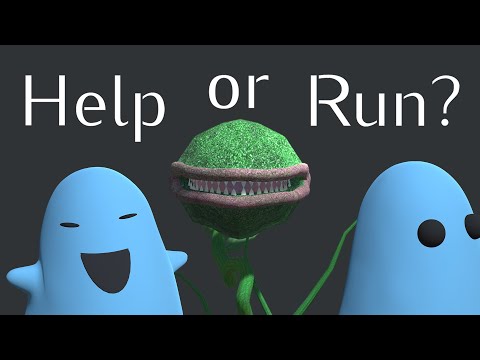
Simulating the Evolution of Sacrificing for Family
0
Yuxixi posted on 2025/11/19Ever wondered why animals sacrifice themselves for family? This video dives into the fascinating science behind kin selection and Hamilton's rule, using cool evolutionary simulations to explain how genes 'gamble' for survival! You'll pick up some advanced vocabulary like 'inclusive fitness' and 'genetic relatedness' while exploring this complex topic.
Learn this video on the APP!
The VoiceTube App has more in-depth practice for videos!