relation
US /rɪˈleɪʃn/
・UK /rɪˈleɪʃn/
A2TOEIC
n. (c./u.)Noun (Countable/Uncountable)Connection between two or more things
There is a relation between standing in the rain and catching a cold
n. (c./u.)Noun (Countable/Uncountable)A member of your family
She is a distant relation, I think a third or fourth cousin
n. (c./u.)Noun (Countable/Uncountable)Way in which two or more things are connected
I do not understand the complex relation between time and space
n. (c./u.)Noun (Countable/Uncountable)An account or narration of events.
His relation of the events was gripping.
n. (c./u.)Noun (Countable/Uncountable)A set of ordered pairs.
The relation 'less than' is a transitive relation.
n. (c./u.)Noun (Countable/Uncountable)A logical connection or dependence between things.
The relation between the premise and the conclusion is crucial in logic.
Video subtitles
The First Presidential Debate: Hillary Clinton And Donald Trump (Full Debate) | NBC News

- You need a better community, you know, relation.
You need a better community, you know, relation.
- RELATION.
RELATION.
Prime Minister's Questions: 17 January 2018

- profit warning, which is why we took action in relation to the contracts that we issued.
profit warning, which is why we took action in relation to the contracts that we issued.
- and that's why we took action in relation to the contracts that we issued.
and that's why we took action in relation to the contracts that we issued.
The Vocabulary Show: Kitchens & cooking - Learn 28 English words and phrases in 11 minutes! ??

- Now there are many, many examples of onomatopoeia in the kitchen and in relation to cooking.
Now there are many, many examples of onomatopoeia in the kitchen and in relation to cooking.
- in the kitchen and in relation to cooking.
in the kitchen and in relation to cooking.
Self-Esteem
- We don't feel inadequate in relation to everyone who has more than us.
We don't feel inadequate in relation to everyone who has more than us.
- We don't feel inadequate in relation to everyone who has more than us
We don't feel inadequate in relation to everyone who has more than us
The Life Changing Effect of Small Talk With Strangers

- minor social exchanges. They stand, in relation to lengthy friendships,
minor social exchanges. They stand, in relation to lengthy friendships,
The Story of: Gerhard Richter (1932–Today)
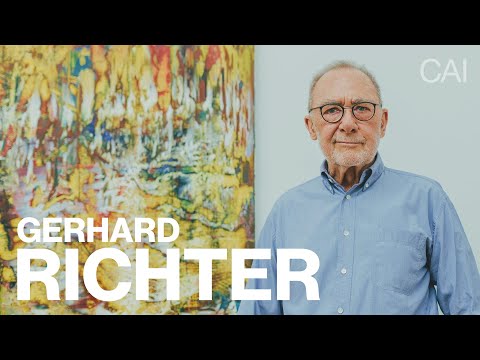
- Realism, and with reference to Socialist Realism, but also a label Richter wasn't too satisfied about. Richter was interested in current affairs, consumer society, new media and popular culture. He incorporated these elements into his painterly practice, depicting for instance televisions, design magazines, advertisements or political figures and events. This was the genesis of Richter's professional oeuvre, and photography was the starting point, something which used to be impossible with his academic background. He combined photography with his characteristic blurred effect, and immediately started to examine the relationship between both media, photography and painting, a true pillar within his artistic practice. The German artist was interested and fascinated by the dialectic relation between the objectivity and the subjectivity when painting photographs. For Richter, the photograph was the most perfect picture. He could eliminate conscious thinking, as the picture does not change, it is absolute, autonomous, unconditional and not linked to any style. With his blurred effect, he made everything equal, equally important and simultaneously equally unimportant. He was strongly drawn to depicting certain subjects from found photographic material. Think of military subjects, family portraits, images from newspapers or magazines. These selected images all have their very own narrative and motive to be painted, most often combining death or suffering, and its exploitation of death and suffering in media. From 1963 until 1964, Richter had his first exhibitions and commercial successes, collaborating with several galleries, and also collectors were starting to get really interested in his work and career. A landmark year for Gerhard Richter was 1966, for many reasons. The first, the birth of his daughter, Betty, whom he iconically painted in 1988. He also painted his wife
Realism, and with reference to Socialist Realism, but also a label Richter wasn't too satisfied about. Richter was interested in current affairs, consumer society, new media and popular culture. He incorporated these elements into his painterly practice, depicting for instance televisions, design magazines, advertisements or political figures and events. This was the genesis of Richter's professional oeuvre, and photography was the starting point, something which used to be impossible with his academic background. He combined photography with his characteristic blurred effect, and immediately started to examine the relationship between both media, photography and painting, a true pillar within his artistic practice. The German artist was interested and fascinated by the dialectic relation between the objectivity and the subjectivity when painting photographs. For Richter, the photograph was the most perfect picture. He could eliminate conscious thinking, as the picture does not change, it is absolute, autonomous, unconditional and not linked to any style. With his blurred effect, he made everything equal, equally important and simultaneously equally unimportant. He was strongly drawn to depicting certain subjects from found photographic material. Think of military subjects, family portraits, images from newspapers or magazines. These selected images all have their very own narrative and motive to be painted, most often combining death or suffering, and its exploitation of death and suffering in media. From 1963 until 1964, Richter had his first exhibitions and commercial successes, collaborating with several galleries, and also collectors were starting to get really interested in his work and career. A landmark year for Gerhard Richter was 1966, for many reasons. The first, the birth of his daughter, Betty, whom he iconically painted in 1988. He also painted his wife
- These experiments brought him to his formalum or in-paintings, in which he continued to examine the relation between representation and abstraction. What started as a representational painting was being reworked in such a manner, the imagery was entirely obliterated, using gestural brushstrokes and thick impastos. Uniquely, Richter made these gestural brushstrokes without being expressive, pulling the paint across the canvas in an emotionless manner, involving expression as an impelling force of painting. Doing so, Richter emphasised the painterly gesture, a witness of Richter's engagement towards the abstract as a counter-model of the figurative, coming to terms with the new possibilities for painting offered by abstraction and minimalism. Furthermore, from a personal perspective, the 1970s were not the happiest of years for Gerhard Richter, as his marriage with Emma was gradually coming to an end, and he lost his very dear friend Blinke Palermo unexpectedly in 1976. As a result, his grey paintings, but also his figurative works, think of his seascapes in particular, are embedded with a deep melancholy.
These experiments brought him to his formalum or in-paintings, in which he continued to examine the relation between representation and abstraction. What started as a representational painting was being reworked in such a manner, the imagery was entirely obliterated, using gestural brushstrokes and thick impastos. Uniquely, Richter made these gestural brushstrokes without being expressive, pulling the paint across the canvas in an emotionless manner, involving expression as an impelling force of painting. Doing so, Richter emphasised the painterly gesture, a witness of Richter's engagement towards the abstract as a counter-model of the figurative, coming to terms with the new possibilities for painting offered by abstraction and minimalism. Furthermore, from a personal perspective, the 1970s were not the happiest of years for Gerhard Richter, as his marriage with Emma was gradually coming to an end, and he lost his very dear friend Blinke Palermo unexpectedly in 1976. As a result, his grey paintings, but also his figurative works, think of his seascapes in particular, are embedded with a deep melancholy.
How I Plan and Organise my Week To Get Things Done

- If you watch my video on how to live a more interesting life, I talked about the concept of planning it in and doing it anyways, and I talked about that in relation to planning little adventures in your life and then doing them anyways, no matter how you felt on the day.
If you watch my video on how to live a more interesting life, I talked about the concept of planning it in and doing it anyways, and I talked about that in relation to planning little adventures in your life and then doing them anyways, no matter how you felt on the day.
- and I talked about that in relation to planning little adventures in your life and then doing them anyways no matter how you felt on the day.
and I talked about that in relation to planning little adventures in your life and then doing them anyways no matter how you felt on the day.
I Analysed 100 Years of Gold Prices, This Is What I Found
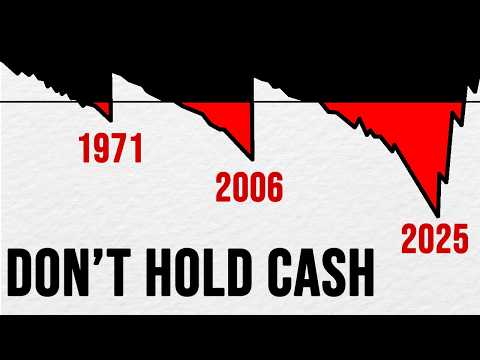
- When the dollar loses its value, gold prices rise because in relation to the dollar, gold has actually grown, since gold is limited in supply, but the dollar can be printed by the Federal Reserve of the United States.
When the dollar loses its value, gold prices rise because in relation to the dollar, gold has actually grown, since gold is limited in supply, but the dollar can be printed by the Federal Reserve of the United States.
- When the dollar loses its value, gold prices rise because in relation to the dollar, gold has actually grown since gold is limited in supply,
When the dollar loses its value, gold prices rise because in relation to the dollar, gold has actually grown since gold is limited in supply,
Pixar's Coco: Philosophy of Death – Wisecrack Quick Take

- An interesting way to think about this is through the lens of philosopher Jean Baudrillard, who talks about death as a kind of social relation.
An interesting way to think about this is through the lens of philosopher Jean Baudrillard, who talks about death as a kind of social relation.
- Baudrillard compares this to certain non-Western cultures in which death has a symbolic relation of exchange with the living.
Baudrillard compares this to certain non-Western cultures in which death has a symbolic relation of exchange with the living.
BBC News Review: Cancer vaccine?

- So we can use "pioneer" in relation to a new method, a new technique, or an area of knowledge.
So we can use "pioneer" in relation to a new method, a new technique, or an area of knowledge.
- So we can use pioneer in relation to a new method, a new technique, or an area of knowledge.
So we can use pioneer in relation to a new method, a new technique, or an area of knowledge.