pressurize
US /ˈprɛʃəˌraɪz/
・UK /'preʃəraɪz/
A2
v.t.Transitive VerbTo add pressure to something (e.g. a diving suit)
We pressurize the space suit before we go into space
Video subtitles
The benefits of exercise for longevity

- so you have to you have to have every aspect of the motor control Coordination ability to dissipate force ability to receive force Ability to balance motor, you know There's so much that goes in disability that it I think got a full half chapter in the book And it's far and away the most complicated to explain, but it's really obvious to see it when it's not there So, you know, this is every one of us is lacking in stability and it was the biggest Re-education for me as I pivoted to this way of training so it's it's everything from learning how to appropriately pressurize your intra-abdominal space to how to Unlock your ribs maintain an appropriate center of gravity how to be able to Isometrically contract muscles as necessary how to be able to do it under control how to have good foot mechanics, right?
so you have to you have to have every aspect of the motor control Coordination ability to dissipate force ability to receive force Ability to balance motor, you know There's so much that goes in disability that it I think got a full half chapter in the book And it's far and away the most complicated to explain, but it's really obvious to see it when it's not there So, you know, this is every one of us is lacking in stability and it was the biggest Re-education for me as I pivoted to this way of training so it's it's everything from learning how to appropriately pressurize your intra-abdominal space to how to Unlock your ribs maintain an appropriate center of gravity how to be able to Isometrically contract muscles as necessary how to be able to do it under control how to have good foot mechanics, right?
- Um, so it's, it's everything from learning how to appropriately pressurize your intra-abdominal space to how to, um, unlock your ribs, maintain an appropriate center of gravity, how to be able to isometrically contract muscles as necessary, how to be able to do it under control, how to have good foot mechanics, right?
Um, so it's, it's everything from learning how to appropriately pressurize your intra-abdominal space to how to, um, unlock your ribs, maintain an appropriate center of gravity, how to be able to isometrically contract muscles as necessary, how to be able to do it under control, how to have good foot mechanics, right?
6 Soda Gadgets Put to the Test
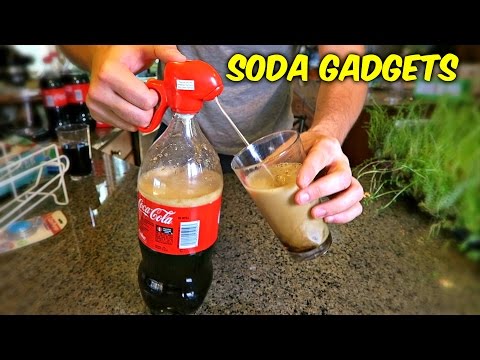
- so again, don't over pressurize it 'cause you're gonna have a cool pop like that
so again, don't over pressurize it 'cause you're gonna have a cool pop like that
- So again, don't over-pressurize it because you're going to have a cool pop like that.
So again, don't over-pressurize it because you're going to have a cool pop like that.
How to STOP Water From Freezing
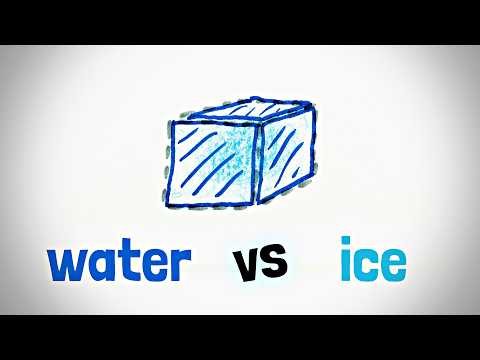
- I made a previous video about how, since water expands when it freezes, if you try to freeze water inside a rigid container, any of it that becomes ice will expand and pressurize the container, eventually stopping the rest of the water from freezing. So if you have supercooled water inside a rigid container, there aren't just the two competing factions of interior wanting to freeze and surface wanting to melt – there's a third player, pressure. Pressure makes it harder for ice crystals to grow, so pressure, like the surface, wants ice crystals to melt. Obviously, if you have a large amount of water, a tiny amount of it freezing into ice and expanding doesn't pressurize the remaining liquid very much, so a lot of ice can form before there's enough pressure to matter. Pressure simply doesn't come into the picture until way beyond the tipping point size for runaway ice crystal formation. But if you have a tiny amount of water, the pressure can be substantially affected by the formation of even a single tiny ice crystal. For containers that are smaller than a few tenths of a micrometer in size, instead of a tipping point where once an ice crystal gets big enough it keeps growing and growing, in this case the pressure's desire to melt overwhelms the interior's desire to freeze for all crystal sizes, and all ice crystals want to melt regardless of their size. So supercooled water in a tiny, rigid bottle won't freeze no matter how hard you smack it, as long as the bottle is tiny enough. For water 1°C below zero, the bottle needs to be less than 200 nm long.
I made a previous video about how, since water expands when it freezes, if you try to freeze water inside a rigid container, any of it that becomes ice will expand and pressurize the container, eventually stopping the rest of the water from freezing. So if you have supercooled water inside a rigid container, there aren't just the two competing factions of interior wanting to freeze and surface wanting to melt – there's a third player, pressure. Pressure makes it harder for ice crystals to grow, so pressure, like the surface, wants ice crystals to melt. Obviously, if you have a large amount of water, a tiny amount of it freezing into ice and expanding doesn't pressurize the remaining liquid very much, so a lot of ice can form before there's enough pressure to matter. Pressure simply doesn't come into the picture until way beyond the tipping point size for runaway ice crystal formation. But if you have a tiny amount of water, the pressure can be substantially affected by the formation of even a single tiny ice crystal. For containers that are smaller than a few tenths of a micrometer in size, instead of a tipping point where once an ice crystal gets big enough it keeps growing and growing, in this case the pressure's desire to melt overwhelms the interior's desire to freeze for all crystal sizes, and all ice crystals want to melt regardless of their size. So supercooled water in a tiny, rigid bottle won't freeze no matter how hard you smack it, as long as the bottle is tiny enough. For water 1°C below zero, the bottle needs to be less than 200 nm long.
- I made a previous video about how, since water expands when it freezes, if you try to freeze water inside a rigid container, any of it that becomes ice will expand and pressurize the container, eventually stopping the rest of the water from freezing.
I made a previous video about how, since water expands when it freezes, if you try to freeze water inside a rigid container, any of it that becomes ice will expand and pressurize the container, eventually stopping the rest of the water from freezing.
Bill Gates 比爾蓋茲談能源:至零方休的革新! (中英雙字幕)

- And that's to take all the CO2 after you've burned it, going out the flu, pressurize it, create a liquid, put it somewhere,
And that's to take all the CO2 after you've burned it, going out the flu, pressurize it, create a liquid, put it somewhere,
- And that's to take all the CO2 after you've burned it, going out the flu, pressurize it, create a liquid, put it somewhere,
And that's to take all the CO2 after you've burned it, going out the flu, pressurize it, create a liquid, put it somewhere,
What's Hidden Under Antarctica?

- Like, would it pressurize and blow everything out?
Like, would it pressurize and blow everything out?
- Like, would it pressurize and blow everything out?
Like, would it pressurize and blow everything out?
I Paid $25,000 to Find This Leak
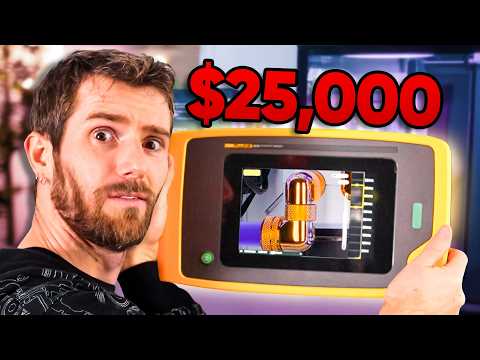
- All we need to do is pressurize our loop.
All we need to do is pressurize our loop.
- All we need to do is pressurize our loop.
All we need to do is pressurize our loop.
'Gun to the knife fight': Ret. Admiral reveals what US holds over Iran

- And he can, at this point, either come up with something to pressurize the Iranians to get to the table.
And he can, at this point, either come up with something to pressurize the Iranians to get to the table.
What If Your Airplane Door Burst Open Mid-Flight?
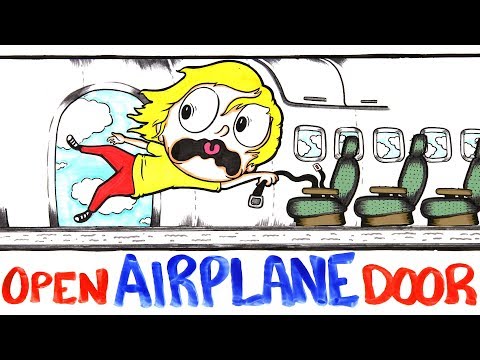
- Commercial airplanes pressurize their cabins to match the atmospheric pressure of 8,000 to 10,000 feet above sea level,
Commercial airplanes pressurize their cabins to match the atmospheric pressure of 8,000 to 10,000 feet above sea level,