phonetic
US /fəˈnɛtɪk/
・UK /fəˈnetɪk/
C1
adj.AdjectiveConcerning the sounds of languages
A language's phonetic system includes all of the sounds that are found in that language
Video subtitles
4 things to study EVERY DAY to become fluent in English

- but I would say that the best place to start is the IPA, the International Phonetic Alphabet.
but I would say that the best place to start is the IPA, the International Phonetic Alphabet.
- Now, in complicated terms, the IPA is an alphabetic system of phonetic notation based on the Latin language.
Now, in complicated terms, the IPA is an alphabetic system of phonetic notation based on the Latin language.
Start a language from scratch (the natural way)

- So the thought I would leave you with is try to think of starting a new language in terms of not that you're going to deliberately learn a list of most frequent words or you're going to deliberately read this explanation using the International Phonetic Alphabet, which I never use, you're just going to listen and get used to it.
So the thought I would leave you with is try to think of starting a new language in terms of not that you're going to deliberately learn a list of most frequent words or you're going to deliberately read this explanation using the International Phonetic Alphabet, which I never use, you're just going to listen and get used to it.
- So if you like the International Phonetic Alphabet, by all means, if you prefer reading, by all means, if you prefer reading grammar rules, by all means, do all those things that are going to keep you motivated, make sure you know why you're learning the language, make sure you know the kinds of activities that will keep you motivated, and as long as you remain active in the language, you are going to accumulate this sort of database of reference so that you can start inferring with more and more accuracy when you hear the language and when you go to use the language.
So if you like the International Phonetic Alphabet, by all means, if you prefer reading, by all means, if you prefer reading grammar rules, by all means, do all those things that are going to keep you motivated, make sure you know why you're learning the language, make sure you know the kinds of activities that will keep you motivated, and as long as you remain active in the language, you are going to accumulate this sort of database of reference so that you can start inferring with more and more accuracy when you hear the language and when you go to use the language.
How to pronounce ‘A’ in English (It's not that easy!)

- And if you're not sure what these blue things are, these are the phonetic spellings.
And if you're not sure what these blue things are, these are the phonetic spellings.
- And if you're not sure what these blue things are, these are the phonetic spellings.
And if you're not sure what these blue things are, these are the phonetic spellings.
Learn to Pronounce the M Sound /m/ - American English Ultimate Pronunciation Challenge Master Class
- This is the phonetic transcription for the M sound, it is the lowercase letter M.
This is the phonetic transcription for the M sound, it is the lowercase letter M.
- This is the phonetic transcription for the M sound.
This is the phonetic transcription for the M sound.
Consonant Sound / j / as in "yes" – American English Pronunciation

- We'll be using a special phonetic symbol, "yh", for this sound.
We'll be using a special phonetic symbol, "yh", for this sound.
- We'll be using a special phonetic symbol, "-y," for this sound.
We'll be using a special phonetic symbol, "-y," for this sound.
Learn to Pronounce the Short i Sound /ɪ/ - American English Ultimate Pronunciation Master Class
- Here is the phonetic symbol for the short I sound that we hear in the word it and in sit.
Here is the phonetic symbol for the short I sound that we hear in the word it and in sit.
- Here is the phonetic symbol for the short "i" sound that we hear in the word "it" and in "sit." Okay.
Here is the phonetic symbol for the short "i" sound that we hear in the word "it" and in "sit." Okay.
Speak and be understood! ‘TH’ & ‘D’ Sounds in English

- Then, you have the letter D, and the symbol, the phonetic symbol is the same, so I didn't write it.
Then, you have the letter D, and the symbol, the phonetic symbol is the same, so I didn't write it.
- The phonetic symbol is the same, so I didn't write it.
The phonetic symbol is the same, so I didn't write it.
3 ways to pronounce the QU sound in English
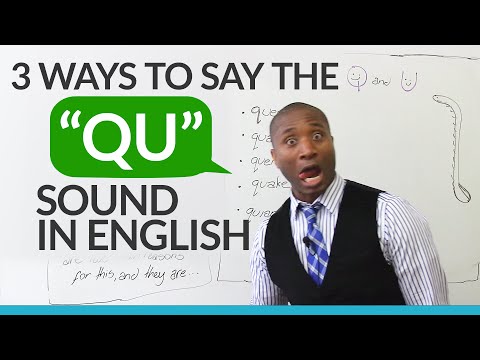
- "quail", all "kwa", obviously. Right? Well, English today is not a phonetic language.
"quail", all "kwa", obviously. Right? Well, English today is not a phonetic language.
- Well, English today is not a phonetic language.
Well, English today is not a phonetic language.
Facebook Town Hall with President Obama
- Jay Aptine [phonetic] from Williamsburg,
Jay Aptine [phonetic] from Williamsburg,
- So Cesar Fernandez [phonetic] and Elisa Rectanas [phonetic]
So Cesar Fernandez [phonetic] and Elisa Rectanas [phonetic]
English Sounds - L [l] Consonant - How to make the L [l] Consonant
![English Sounds - L [l] Consonant - How to make the L [l] Consonant](https://img.youtube.com/vi/FP0jHNoFqWo/hqdefault.jpg)
- But if you look up a word in the dictionary, there's only one international phonetic alphabet symbol for both kinds of L.
But if you look up a word in the dictionary, there's only one international phonetic alphabet symbol for both kinds of L.
- there's only one International Phonetic Alphabet symbol for both kinds of L.
there's only one International Phonetic Alphabet symbol for both kinds of L.