discerning
US /dɪˈsɜ:rnɪŋ/
・UK /dɪˈsɜ:nɪŋ/
B2
v.t./i.Verb (Transitive/Intransitive)To be able to tell differences, see shapes, etc.
Discerning taste, a discerning eye for color
Video subtitles
Why You Need to Have a Proper Adolescence
- Adolescence is an initially inarticulate and then gradually more discerning protest against
Adolescence is an initially inarticulate and then gradually more discerning protest against
NYU's 2022 Commencement Speaker Taylor Swift

- Be discerning.
Be discerning.
- Be discerning.
Be discerning.
President Obama Delivers the Rutgers University Commencement Address

- But ironically, the flood of information hasn't made us more discerning of the truth.
But ironically, the flood of information hasn't made us more discerning of the truth.
- us more discerning of the truth.
us more discerning of the truth.
The Worst Airline Experiences - Key & Peele

- For the discerning passenger.
For the discerning passenger.
- Mm, for the discerning passenger.
Mm, for the discerning passenger.
How Wounded People Seek Out further Punishment
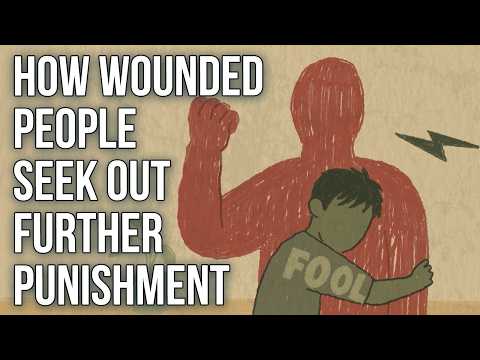
- It's just that for us, home was a place of grief and persecution. It's easy enough to see why children put up with poor treatment. They're born radically powerless. They can't run away. They are utterly at the mercy of others. They can't even think especially straight. What they must do, above all else, is adapt. Which in practice means learning to put up with poor treatment. They have to develop an advanced skill at not noticing quite how awful things are, an expertise at being unfazed by cruelty and neglect. Children in deprived circumstances tend to be geniuses at looking away, disassociating and making light of things. Of course, it might not be perfect that their father screams at them constantly, but there are some interesting shows on television and there's a really fascinating bit of the garden to explore in the morning. You can climb up the big tree and imagine it's a little house. And of course, ideally their mother wouldn't be so mocking and disloyal. But that's just the way things are, neither more or less sad than the fact it's often raining and there's a lot of homework to do. In any case, the bad treatment almost certainly has to do with something that they, the child, have done wrong. Badly treated children tend to take a compulsively generous view of those who injure them. Obviously, they aren't nasty on purpose. That would make no sense. Clearly, their ostensible brutality has sound explanations. It must be because they, the child, is in the wrong. That's why they're being neglected. That's why they've been declared fools. That's why they're being bullied. It's a great deal easier to believe that the parent is tough, yet fundamentally right, rather than gratuitously callous and unjustifiably hostile. In other words, what a bad childhood trains us to do, above all else, is to indulge meanness. The muscle that normally functions to repel attacks has had to be starved and has atrophied. In order to survive, we had to lose the ability to work out what was good and bad for us, lest we discover that we spent 18 years in the company of fiends. What this means for our futures is that we will be extremely poor at discerning when the partners we let into our lives cross the border into selfishness and malevolence. We'll continue under a narcoleptic command not to notice that we're being robbed and deceived. We'll be as blind to the blows now as we were then. For a long time, it simply won't occur to us to wonder why we've ended up paying for everything for the partner, or why they're unreliable in their promises, or constantly prioritise their friends over us, or are angrily defensive whenever we raise a complaint. We will simply, as we had to early on, fall into line and invent elaborate explanations for their behaviour. They're good, but they're tired. They're durable, but under pressure at work. They're fierce, but compensating for their childhood traumas, for which we have a lot of sympathy. Anything other than the more straightforward conclusion, we've fallen in with unconcerned egoists. We shouldn't compound our disloyalty towards ourselves by feeling, on top of everything else, ashamed for our tolerance. It isn't weakness, it's a survival strategy from childhood that served a very sensible purpose then but is liable to be ruining our lives now. To wake ourselves up, we need to consider our choices as if someone else had made them. We might wonder what we would advise a friend to do if they were in our situation. And through such a lens, we might start to perceive that the treatment we're facing isn't, as we've long thought, a sign of our partner's depth or complexity, but in the end, something much more humble, evidence that we need to get away. But this will be only a momentary liberation until we can understand the more fundamental issue, that the muscle most people use to eject poison has withered because of a distinctive history. We need to reverse the direction of our psychological fate. Our early suffering should not condemn us to yet more pain. It is what gives us an especially powerful claim on original sources of kindness, tenderness and calm.
It's just that for us, home was a place of grief and persecution. It's easy enough to see why children put up with poor treatment. They're born radically powerless. They can't run away. They are utterly at the mercy of others. They can't even think especially straight. What they must do, above all else, is adapt. Which in practice means learning to put up with poor treatment. They have to develop an advanced skill at not noticing quite how awful things are, an expertise at being unfazed by cruelty and neglect. Children in deprived circumstances tend to be geniuses at looking away, disassociating and making light of things. Of course, it might not be perfect that their father screams at them constantly, but there are some interesting shows on television and there's a really fascinating bit of the garden to explore in the morning. You can climb up the big tree and imagine it's a little house. And of course, ideally their mother wouldn't be so mocking and disloyal. But that's just the way things are, neither more or less sad than the fact it's often raining and there's a lot of homework to do. In any case, the bad treatment almost certainly has to do with something that they, the child, have done wrong. Badly treated children tend to take a compulsively generous view of those who injure them. Obviously, they aren't nasty on purpose. That would make no sense. Clearly, their ostensible brutality has sound explanations. It must be because they, the child, is in the wrong. That's why they're being neglected. That's why they've been declared fools. That's why they're being bullied. It's a great deal easier to believe that the parent is tough, yet fundamentally right, rather than gratuitously callous and unjustifiably hostile. In other words, what a bad childhood trains us to do, above all else, is to indulge meanness. The muscle that normally functions to repel attacks has had to be starved and has atrophied. In order to survive, we had to lose the ability to work out what was good and bad for us, lest we discover that we spent 18 years in the company of fiends. What this means for our futures is that we will be extremely poor at discerning when the partners we let into our lives cross the border into selfishness and malevolence. We'll continue under a narcoleptic command not to notice that we're being robbed and deceived. We'll be as blind to the blows now as we were then. For a long time, it simply won't occur to us to wonder why we've ended up paying for everything for the partner, or why they're unreliable in their promises, or constantly prioritise their friends over us, or are angrily defensive whenever we raise a complaint. We will simply, as we had to early on, fall into line and invent elaborate explanations for their behaviour. They're good, but they're tired. They're durable, but under pressure at work. They're fierce, but compensating for their childhood traumas, for which we have a lot of sympathy. Anything other than the more straightforward conclusion, we've fallen in with unconcerned egoists. We shouldn't compound our disloyalty towards ourselves by feeling, on top of everything else, ashamed for our tolerance. It isn't weakness, it's a survival strategy from childhood that served a very sensible purpose then but is liable to be ruining our lives now. To wake ourselves up, we need to consider our choices as if someone else had made them. We might wonder what we would advise a friend to do if they were in our situation. And through such a lens, we might start to perceive that the treatment we're facing isn't, as we've long thought, a sign of our partner's depth or complexity, but in the end, something much more humble, evidence that we need to get away. But this will be only a momentary liberation until we can understand the more fundamental issue, that the muscle most people use to eject poison has withered because of a distinctive history. We need to reverse the direction of our psychological fate. Our early suffering should not condemn us to yet more pain. It is what gives us an especially powerful claim on original sources of kindness, tenderness and calm.
- What this means for our futures is that we will be extremely poor at discerning when the partners we let into our lives cross the border into selfishness and malevolence.
What this means for our futures is that we will be extremely poor at discerning when the partners we let into our lives cross the border into selfishness and malevolence.
The Mark of True Love...

- We humans have an immense appetite for complicated things, neuroscience, astrophysics and molecular biology of course, but also barely decipherable books, abstract works of art and avant-garde pieces of theatre without plot or character, all of which perhaps evoke the primordial puzzles of the universe and our own always ineffable existence within it. But our veneration for complexity can reach a most painful, time-consuming and futile zenith in one area in particular – relationships. It's here that we find otherwise discerning and hard-headed people exhibiting extreme patience, often lasting over a succession of tormented years, for what we can call complicated situations. The complexities may arise from some of the following dynamics. A beloved partner who wants to commit and surely will one day but not quite yet on account of this or that factor or not entirely because of certain psychological fears or not conclusively or at least not without certain important caveats. They may need space, freedom or what they call a chance to explore though quite what was still not wholly clear, though we have asked them on many occasions. Then a partner with whom there are a lot of misunderstandings, around whom words often lose their standard meanings, around whom we may have to spend hours untangling what was truly meant and around whom gestures or deeds that we previously thought uncontentious suddenly become the occasion for major surprising aggravations. Or a partner who in principle is there for us and in theory loves us very very much but in actuality – like last week and the week before that – is constantly remarkably busy, unable to respond to our texts, out with their compelling friends or concentrated on their always extremely demanding job. Or a partner with whom we sit up late at night on many occasions with a pad and paper to hand attempting to determine where the issues are coming from, what is at play and how things might be handled before, baffled and upset, we finally have to retreat to bed a little after 1am feeling fragile and tearful.
We humans have an immense appetite for complicated things, neuroscience, astrophysics and molecular biology of course, but also barely decipherable books, abstract works of art and avant-garde pieces of theatre without plot or character, all of which perhaps evoke the primordial puzzles of the universe and our own always ineffable existence within it. But our veneration for complexity can reach a most painful, time-consuming and futile zenith in one area in particular – relationships. It's here that we find otherwise discerning and hard-headed people exhibiting extreme patience, often lasting over a succession of tormented years, for what we can call complicated situations. The complexities may arise from some of the following dynamics. A beloved partner who wants to commit and surely will one day but not quite yet on account of this or that factor or not entirely because of certain psychological fears or not conclusively or at least not without certain important caveats. They may need space, freedom or what they call a chance to explore though quite what was still not wholly clear, though we have asked them on many occasions. Then a partner with whom there are a lot of misunderstandings, around whom words often lose their standard meanings, around whom we may have to spend hours untangling what was truly meant and around whom gestures or deeds that we previously thought uncontentious suddenly become the occasion for major surprising aggravations. Or a partner who in principle is there for us and in theory loves us very very much but in actuality – like last week and the week before that – is constantly remarkably busy, unable to respond to our texts, out with their compelling friends or concentrated on their always extremely demanding job. Or a partner with whom we sit up late at night on many occasions with a pad and paper to hand attempting to determine where the issues are coming from, what is at play and how things might be handled before, baffled and upset, we finally have to retreat to bed a little after 1am feeling fragile and tearful.
- It's here that we find otherwise discerning and hard-headed people exhibiting extreme patience, often lasting over a succession of tormented years, for what we can call complicated situations.
It's here that we find otherwise discerning and hard-headed people exhibiting extreme patience, often lasting over a succession of tormented years, for what we can call complicated situations.
Burnout as a Quiet, Shy, Introvert at Work (& How to Recognize It)

- So the solution here is you need to be discerning.
So the solution here is you need to be discerning.
- Being discerning of where I put my time and effort and where I ensure high quality work is done has led to me feeling more at ease, calm and relaxed within myself so that I could have the energy to do other things.
Being discerning of where I put my time and effort and where I ensure high quality work is done has led to me feeling more at ease, calm and relaxed within myself so that I could have the energy to do other things.
I'll prove you can't in under 10 minutes

- Speaking of information, did you know that if I put an object into your hand while blindfolded that your left hand would actually be better at discerning it?
Speaking of information, did you know that if I put an object into your hand while blindfolded that your left hand would actually be better at discerning it?
- Speaking of information, did you know that if I put an object into your hand while blindfolded, that your left hand would actually be better at discerning it?
Speaking of information, did you know that if I put an object into your hand while blindfolded, that your left hand would actually be better at discerning it?
CGR Undertow - TOMB RAIDER: THE PROPHECY review for Game Boy Advance

- perspective. Which is to say discerning ledges from backgrounds can be problematic. But the
perspective. Which is to say discerning ledges from backgrounds can be problematic. But the
- Which is to say, discerning ledges from backgrounds can be problematic.
Which is to say, discerning ledges from backgrounds can be problematic.
Effective Listening for Better Communication
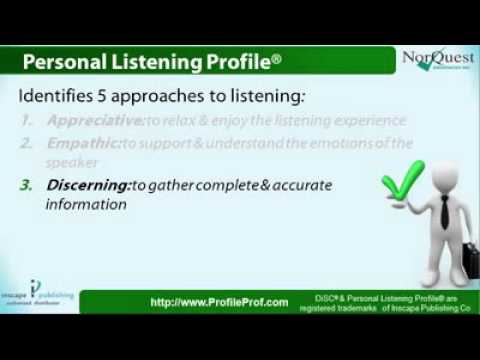
- The third is the discerning approach.
The third is the discerning approach.
- while speaking The third is the Discerning approach: here
while speaking The third is the Discerning approach: here