coefficient
US /ˌkoʊɪˈfɪʃnt/
・UK /ˌkəʊɪˈfɪʃnt/
B2
adj.AdjectiveNumber by which another number is multiplied
The coefficient of 5y is 5 and of 7xy is 7
Video subtitles
The Greatest Innovations In Formula One

- V is the velocity, C is the coefficient of drag, which is a property defined by the shape of the object,
V is the velocity, C is the coefficient of drag, which is a property defined by the shape of the object,
- The coefficient of drag for a circle is just 0.47, while a square is 1.05, so by rounding a shape we can reduce the drag by more than half,
The coefficient of drag for a circle is just 0.47, while a square is 1.05, so by rounding a shape we can reduce the drag by more than half,
Logistic regression
- In the above equations: Refers to the logit function of some given linear combination of the predictors, denotes the natural logarithm, is the probability that the dependent variable equals a case, is the intercept from the linear regression equation, is the regression coefficient multiplied by some value of the predictor,
In the above equations: Refers to the logit function of some given linear combination of the predictors, denotes the natural logarithm, is the probability that the dependent variable equals a case, is the intercept from the linear regression equation, is the regression coefficient multiplied by some value of the predictor,
- Unlike linear regression with normally distributed residuals, it is not possible to find a closed-form expression for the coefficient values that maximises the likelihood function, so an iterative process must be used instead, for example Newton's method.
Unlike linear regression with normally distributed residuals, it is not possible to find a closed-form expression for the coefficient values that maximises the likelihood function, so an iterative process must be used instead, for example Newton's method.
The Forces on an Airplane

- and Cl is something called the coefficient of lift.
and Cl is something called the coefficient of lift.
- The coefficient of lift changes with the angle of attack.
The coefficient of lift changes with the angle of attack.
YouTubers vs Kpop: The WongFu Edition!

- C) No love is deficient with a standard coefficient.
C) No love is deficient with a standard coefficient.
- No love is deficient with a standard coefficient.
No love is deficient with a standard coefficient.
Why is Singapore so rich? | CNBC Explains

- Let's look at the Gini coefficient, which is a scale used to calculate inequality, with 0 being the most equal and 1 being the least.
Let's look at the Gini coefficient, which is a scale used to calculate inequality, with 0 being the most equal and 1 being the least.
- Singapore's Gini coefficient, after accounting for taxes and transfers, was 0.356 in 2017.
Singapore's Gini coefficient, after accounting for taxes and transfers, was 0.356 in 2017.
Why No One Wants to Live in the UK

- In England, there are now 1.4 million fewer households in social housing than in 1980, all while the UK's Gini coefficient, a measure of inequality, has been steadily rising.
In England, there are now 1.4 million fewer households in social housing than in 1980, all while the UK's Gini coefficient, a measure of inequality, has been steadily rising.
- In England, there are now 1.4 million fewer households in social housing than in 1980, all while the UK's Gini coefficient, a measure of inequality, has been steadily rising.
In England, there are now 1.4 million fewer households in social housing than in 1980, all while the UK's Gini coefficient, a measure of inequality, has been steadily rising.
The all-new BMW 7 Series. All you need to know.

- Now depending on the engine temperature, the additional flaps with chrome bars open or close to improve the drag coefficient.
Now depending on the engine temperature, the additional flaps with chrome bars open or close to improve the drag coefficient.
- the additional flaps with chrome bars open or close to improve the drag coefficient.
the additional flaps with chrome bars open or close to improve the drag coefficient.
Why Germany is Rich But Germans are Poor

- According to the latest Eurostat data, after taxes and benefits, Germany's income distribution has a Gini coefficient of 29.4, well below the EU and Eurozone averages, as well as peer economies like France, Italy, and Spain.
According to the latest Eurostat data, after taxes and benefits, Germany's income distribution has a Gini coefficient of 29.4, well below the EU and Eurozone averages, as well as peer economies like France, Italy, and Spain.
- According to a study by the German think tank DIW Berlin, using data from the mid-2010s, something like 40% of Germans have essentially zero net wealth, and Germany's wealth distribution has a Gini coefficient of 0.76, more than basically every other European country.
According to a study by the German think tank DIW Berlin, using data from the mid-2010s, something like 40% of Germans have essentially zero net wealth, and Germany's wealth distribution has a Gini coefficient of 0.76, more than basically every other European country.
Fresnel Diffraction Explained
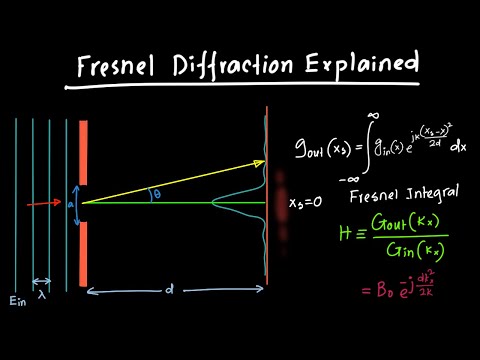
- So it's some coefficient, or some bunch of coefficients, a_0 times g_n as a function of x e to the jk xs, so this is the coordinate on our screen, minus x—this is the coordinate that we're integrating over on our aperture—squared divided by 2d,
So it's some coefficient, or some bunch of coefficients, a_0 times g_n as a function of x e to the jk xs, so this is the coordinate on our screen, minus x—this is the coordinate that we're integrating over on our aperture—squared divided by 2d,
- So it's some coefficient or some bunch of coefficients A naught times G in as a function of X, E to the JK, XS.
So it's some coefficient or some bunch of coefficients A naught times G in as a function of X, E to the JK, XS.
Design Example: UPC's Acoustic Wave Filter
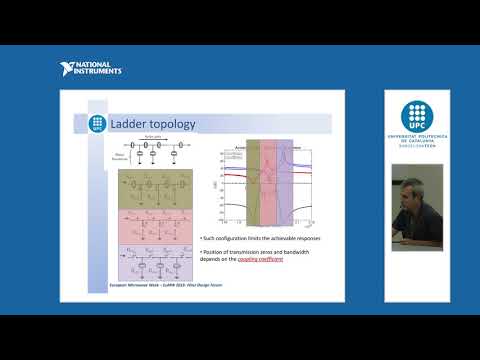
- We will see later in the presentation that the actual response of the filters strongly depends on this electroacoustic coupling coefficient, and at the same time this electroacoustic coupling coefficient depends a lot on the materials.
We will see later in the presentation that the actual response of the filters strongly depends on this electroacoustic coupling coefficient, and at the same time this electroacoustic coupling coefficient depends a lot on the materials.
- So if we want to build any filter response, we either need to find materials where this electroacoustic coupling can be controlled or changed, or on the other hand we need to find topologies where the filter response does not depend on the electroacoustic coupling coefficient, right?
So if we want to build any filter response, we either need to find materials where this electroacoustic coupling can be controlled or changed, or on the other hand we need to find topologies where the filter response does not depend on the electroacoustic coupling coefficient, right?