bone structure
US
・UK
B1
n. (c./u.)Noun (Countable/Uncountable)The arrangement and composition of bones in a body.
The doctor examined the patient's bone structure to identify any abnormalities.
n. (c./u.)Noun (Countable/Uncountable)The shape and arrangement of the bones in the face.
Her high cheekbones gave her face a striking bone structure.
Video subtitles
Jordan Schlansky’s Brutally Honest Review Of Conan’s Physique | Conan O'Brien Radio

- So now in case there was like an injection of human growth hormone to widen the bone structure of your jaw.
So now in case there was like an injection of human growth hormone to widen the bone structure of your jaw.
- Okay, so now, in case there was an injection of human growth hormone to widen the bone structure of your jaw, I don't understand the mechanics of it.
Okay, so now, in case there was an injection of human growth hormone to widen the bone structure of your jaw, I don't understand the mechanics of it.
Annoying Orange - PRANK WAR Challenge GONE WRONG!

- Anyone ever tell you you looked like Tom Brady if he was an orange and also had better bone structure?
Anyone ever tell you you looked like Tom Brady if he was an orange and also had better bone structure?
- Anyone ever tell you you'd look like Tom Brady if he was an orange and also had better bone structure?
Anyone ever tell you you'd look like Tom Brady if he was an orange and also had better bone structure?
Baby Steps: 4D Ultrasound
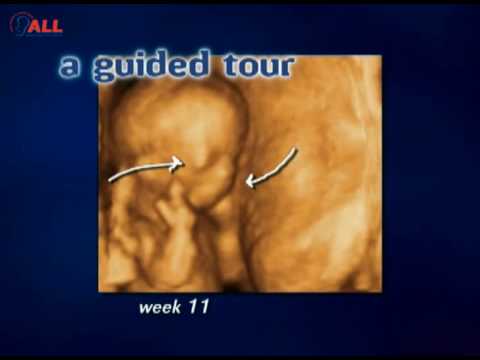
- At 13 weeks sex organs are more apparent, so is bone structure, and
At 13 weeks sex organs are more apparent, so is bone structure, and
- At thirteen weeks sex organs are more apparent. So is bone structure. And vocal chords are
At thirteen weeks sex organs are more apparent. So is bone structure. And vocal chords are
Young Dracula - BBC Series - Season 1 Ep 9 "The Sleepover"

- It's this classic bone structure.
It's this classic bone structure.
- It's this classic bone structure.
It's this classic bone structure.
London Calling Exclusive Trailer (2025)

- Six-foot, oddly perfect, bone structure.
Six-foot, oddly perfect, bone structure.
- Six-foot, oddly perfect bone structure.
Six-foot, oddly perfect bone structure.
Women Transform Into Drag Kings
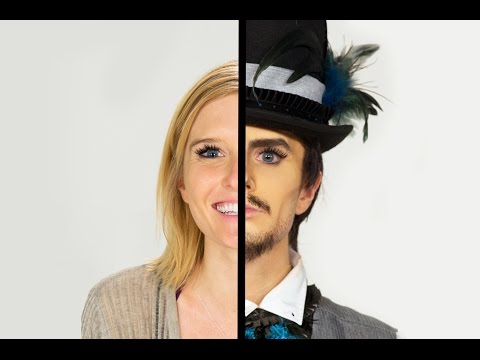
- Wait, it looks like you gave me different bone structure.
Wait, it looks like you gave me different bone structure.
- Wait, it looks like you gave me a different bone structure.
Wait, it looks like you gave me a different bone structure.
The London Story - Natural History Museum

- You can see that it's got, uh, mammalian-type bone structure, something you completely miss when you see the rest of the body.
You can see that it's got, uh, mammalian-type bone structure, something you completely miss when you see the rest of the body.
- you can see that it's got a mammalian-type bone structure,
you can see that it's got a mammalian-type bone structure,
Speaking English - Going to the dentist
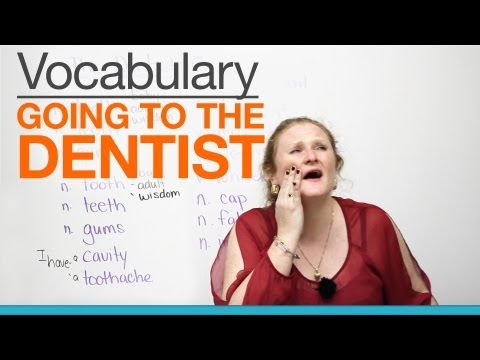
- picture of the bone structure in your mouth. The X-ray lets the doctor know any additional
picture of the bone structure in your mouth. The X-ray lets the doctor know any additional
- An x-ray is a picture of the bone structure in your mouth.
An x-ray is a picture of the bone structure in your mouth.
Understanding Tension vs. Compression in Flexibility Training | Anatomy Lab
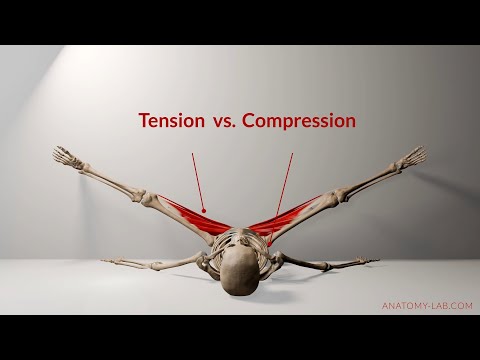
- This is your unique bone structure determining the limit of your backbend Now that we've seen how compression works in the spine, let's move on to a different kind of stretch For example, a wall stretch Lie on your back with your legs up against the wall as if you were making a split As you let your legs open out to the side, you'll feel tension in the muscles of the inside of your legs Particularly the adductors But if you feel a hard stop on the outside of your hips where the femur meets the pelvis, that's compression Also pay attention whether you feel any differences between the right and left side It's common for people to have subtle differences in muscle tension or bone shape If you only feel the stretch in your adductors and not compression, that's again perfectly fine It just means you haven't hit your bone limit yet and you have potential for stretching Try this exercise and notice what you feel, especially when comparing the left and right side Lastly, let's try hip flexion with a bent knee Try pulling your knee towards your chest with your leg bent In this position, you'll probably feel more tension in the back of your hip or glutes But as you keep pulling your knee closer, you will eventually reach a point where your movement stops due to compression This is where the head of the femur meets the pelvis Just like with the wall stretch, compare the right and left sides There may be differences in how each side feels One side might reach compression before the other Take some time to play around with the position of your femur and notice where the restriction is coming from If you don't encounter compression, that means you haven't reached your bone limit yet and you have more room to stretch If you do feel compression, don't be discouraged It's your body's way of showing you your limits and understanding this will help you to move more safely and effectively in your practice Remember, whether it's tension or compression, learning to feel the difference will help you to stop fighting against your body and start working with it Before we wrap up for today, I want to give credit where credit is due This knowledge about tension and compression wasn't discovered by me It was pioneered by Paul Grilly, who's a yin yoga teacher and a master of his art If you are interested in learning more, I highly recommend checking out his website He has a lot of images of human bones that will show you exactly what we are talking about today And it will give you an even clearer understanding of these concepts I want to thank you for your time today and I hope you enjoyed this video and you will benefit from it If you have any questions, feel free to leave them in the comments You can support the channel by subscribing or sharing or liking And of course, if you want to, follow me on Instagram or check out my store Until next time, here in the Anatomy Lab Anatomy of the Body
This is your unique bone structure determining the limit of your backbend Now that we've seen how compression works in the spine, let's move on to a different kind of stretch For example, a wall stretch Lie on your back with your legs up against the wall as if you were making a split As you let your legs open out to the side, you'll feel tension in the muscles of the inside of your legs Particularly the adductors But if you feel a hard stop on the outside of your hips where the femur meets the pelvis, that's compression Also pay attention whether you feel any differences between the right and left side It's common for people to have subtle differences in muscle tension or bone shape If you only feel the stretch in your adductors and not compression, that's again perfectly fine It just means you haven't hit your bone limit yet and you have potential for stretching Try this exercise and notice what you feel, especially when comparing the left and right side Lastly, let's try hip flexion with a bent knee Try pulling your knee towards your chest with your leg bent In this position, you'll probably feel more tension in the back of your hip or glutes But as you keep pulling your knee closer, you will eventually reach a point where your movement stops due to compression This is where the head of the femur meets the pelvis Just like with the wall stretch, compare the right and left sides There may be differences in how each side feels One side might reach compression before the other Take some time to play around with the position of your femur and notice where the restriction is coming from If you don't encounter compression, that means you haven't reached your bone limit yet and you have more room to stretch If you do feel compression, don't be discouraged It's your body's way of showing you your limits and understanding this will help you to move more safely and effectively in your practice Remember, whether it's tension or compression, learning to feel the difference will help you to stop fighting against your body and start working with it Before we wrap up for today, I want to give credit where credit is due This knowledge about tension and compression wasn't discovered by me It was pioneered by Paul Grilly, who's a yin yoga teacher and a master of his art If you are interested in learning more, I highly recommend checking out his website He has a lot of images of human bones that will show you exactly what we are talking about today And it will give you an even clearer understanding of these concepts I want to thank you for your time today and I hope you enjoyed this video and you will benefit from it If you have any questions, feel free to leave them in the comments You can support the channel by subscribing or sharing or liking And of course, if you want to, follow me on Instagram or check out my store Until next time, here in the Anatomy Lab Anatomy of the Body
- This is your unique bone structure determining the limit of your back bend.
This is your unique bone structure determining the limit of your back bend.
BBC News

- Your nose and your bone structure.
Your nose and your bone structure.
- Yeah and the nose and the bone structure.
Yeah and the nose and the bone structure.