approximate
US /əˈprɑksəmɪt/
・UK /ə'prɒksɪmət/
B2
adj.AdjectiveAbout; not exact but close
What is the approximate price of oil now?
v.t./i.Verb (Transitive/Intransitive)To be similar to, but not exactly the same
Before you work on my car, can you tell me the approximate cost of an oil change?
Video subtitles
Every Time Mr. Krabs Had NO Shell! ?? | SpongeBob SquarePants

- Of course, you'll need some time to approximate me personality.
Of course, you'll need some time to approximate me personality.
- You'll need some time to approximate me personality.
You'll need some time to approximate me personality.
Advanced Prepositions of Time: “throughout”, “ahead of”, “at around”, “out of”…

- Here's a sentence. I will be at your house around four o'clock. I will be at your house about four o'clock. Sometimes people say at before that. I will be at your house about, at about four o'clock, or at around, and both mean approximate. Funny enough, they mean approximate, which means not exact. Here's my problem with this. Well, it's not a problem. Sometimes when you say something like I'll be at your house around three o'clock, and you can say I can be, I'll be around, I will be at your house at around three o'clock, one is almost a little less approximate than the other. They're saying close, close, close, close, close. And if you were to ask me, well, which one is it? I'm like, I don't know. It depends on my mood if I want to be exact or not, because at is exact. I'll be at your house. That's an exact location, yeah? Around is approximate, but if I say to you, and I've talked to a couple of people about this, it's quite funny, and I've said, hey, if I say I'll be at your house at around three o'clock, or I'll be at your house around three o'clock, which is more, each person says something different. Well, that one's more exact. And the other one says, no, no, no, the other one's more exact. So, either one is okay. Both means approximate, not exact.
Here's a sentence. I will be at your house around four o'clock. I will be at your house about four o'clock. Sometimes people say at before that. I will be at your house about, at about four o'clock, or at around, and both mean approximate. Funny enough, they mean approximate, which means not exact. Here's my problem with this. Well, it's not a problem. Sometimes when you say something like I'll be at your house around three o'clock, and you can say I can be, I'll be around, I will be at your house at around three o'clock, one is almost a little less approximate than the other. They're saying close, close, close, close, close. And if you were to ask me, well, which one is it? I'm like, I don't know. It depends on my mood if I want to be exact or not, because at is exact. I'll be at your house. That's an exact location, yeah? Around is approximate, but if I say to you, and I've talked to a couple of people about this, it's quite funny, and I've said, hey, if I say I'll be at your house at around three o'clock, or I'll be at your house around three o'clock, which is more, each person says something different. Well, that one's more exact. And the other one says, no, no, no, the other one's more exact. So, either one is okay. Both means approximate, not exact.
- Otherwise, these two, around or at around, and about or at about, same thing, approximate, meaning it means nothing. That's my joke. Anyway, so we've gone there. Let's move on to during.
Otherwise, these two, around or at around, and about or at about, same thing, approximate, meaning it means nothing. That's my joke. Anyway, so we've gone there. Let's move on to during.
A1 vs C1 – What Actually Changes? Real Examples
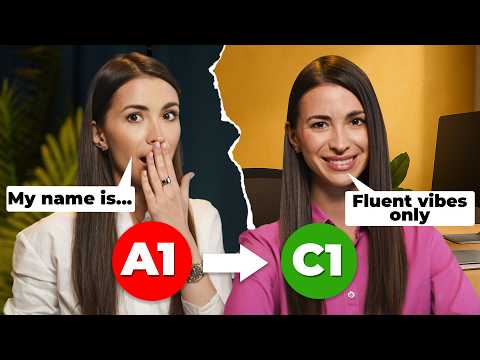
- Find out your approximate English level in just 5 minutes.
Find out your approximate English level in just 5 minutes.
- Find out your approximate English level in just five minutes.
Find out your approximate English level in just five minutes.
Scale AI CEO Alexandr Wang on U.S.-China AI race: We need to unleash U.S. energy to enable AI boom

- They're going to find some open source version to try to get close to what they could approximate these other guys doing because of just the different price points of these things.
They're going to find some open source version to try to get close to what they could approximate these other guys doing because of just the different price points of these things.
- They're going to find some open-source version to try to get close to what they could approximate these other guys doing because of just the different price points of these things.
They're going to find some open-source version to try to get close to what they could approximate these other guys doing because of just the different price points of these things.
紅岩愛脊椅 : 為什麼我們不需要腰部支撐 (腰靠/背靠)
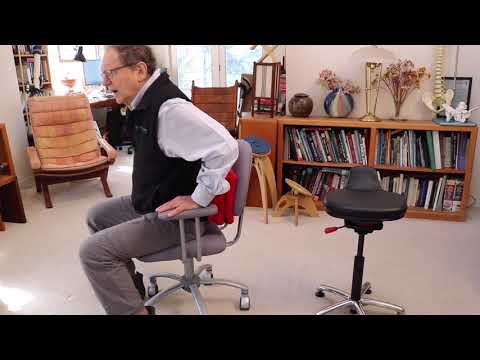
- Something that pushes the small of the back forward in a very unnatural posture, trying to approximate what normal human standing posture looks like.
Something that pushes the small of the back forward in a very unnatural posture, trying to approximate what normal human standing posture looks like.
- In order to reestablish that curve, office chairs have built-in lumbar support—something that pushes the small of the back forward in a very unnatural posture, trying to approximate what normal human standing posture looks like.
In order to reestablish that curve, office chairs have built-in lumbar support—something that pushes the small of the back forward in a very unnatural posture, trying to approximate what normal human standing posture looks like.
'Jeffrey Epstein Was Israeli Spy': Tucker Carlson Stuns US Amid 'No Client List' Row| Trump| Bondi

- Can they have a rucks roughly approximate life that I had or how about just a middle-class life?
Can they have a rucks roughly approximate life that I had or how about just a middle-class life?
- Can my children, without the benefit of the great luck I have had, can they have a roughly approximate life that I had?
Can my children, without the benefit of the great luck I have had, can they have a roughly approximate life that I had?
How to Use Taxis in Japan

- In addition to specifying pick-up and drop-off locations when using a taxi app, users will also get an approximate fare based on the input locations, the estimated taxi arrival time, as well as be notified when the taxi arrives.
In addition to specifying pick-up and drop-off locations when using a taxi app, users will also get an approximate fare based on the input locations, the estimated taxi arrival time, as well as be notified when the taxi arrives.
- In addition to specifying pickup and drop-off locations when using a taxi app, users will also get an approximate fare based on the input locations, the estimated taxi arrival time, as well as be notified when the taxi arrives.
In addition to specifying pickup and drop-off locations when using a taxi app, users will also get an approximate fare based on the input locations, the estimated taxi arrival time, as well as be notified when the taxi arrives.
Let's Read Nietzsche's Beyond Good and Evil CC ASMR First Article

- According to this same approximate scheme, our older "astomism" was looking for the "force" that has an effect,
According to this same approximate scheme, our older "astomism" was looking for the "force" that has an effect,
- Hence, according to this same approximate scheme, our older astemism was looking for the force that has an effect.
Hence, according to this same approximate scheme, our older astemism was looking for the force that has an effect.
Logistic regression
- The log of the likelihood ratio will produce a negative value, so the product is multiplied by -2 times its natural logarithm to produce a value with an approximate chi-squared distribution.
The log of the likelihood ratio will produce a negative value, so the product is multiplied by -2 times its natural logarithm to produce a value with an approximate chi-squared distribution.
- by negative two times its natural logarithm to produce a value with an approximate chi-squared
by negative two times its natural logarithm to produce a value with an approximate chi-squared
What Top 1% of Test-Takers Know That You Don't (4 Key Tactics)

- If the mass of the object is increased by 15%, while the applied force remains constant, what is the approximate percentage change in the object's acceleration?
If the mass of the object is increased by 15%, while the applied force remains constant, what is the approximate percentage change in the object's acceleration?
- If the mass of the object is increased by 15% while the applied force remains constant, what is the approximate percentage change in the object's acceleration?
If the mass of the object is increased by 15% while the applied force remains constant, what is the approximate percentage change in the object's acceleration?