Vocabulary
- look at: To use your eyes to focus on something
- in fact: Used to emphasize the truth of a statement, especially one that contrasts with or contradicts something else.
- in terms of
- of course: Sure ; Certainly
- due to: Because of; owing to
- way to go: An expression of encouragement or approval.
- instead of: When one thing is replaced by another
- see in: To accompany someone to the entrance of a building or room.
- at least: As a minimum
- know about: To have information or understanding of a subject or situation.
- just kind of: Used to express a feeling or state in a vague or hesitant way.
- to do with: To be about something; concern
- in the world: Used to emphasize a question expressing surprise, confusion, or disbelief.
- for instance: As an example.
- on medication: Taking medicine regularly for a health condition.
- the bottom line: The most important thing; the essential point.
- on average: Typically; usually; based on an average calculation.
- set up
- in secret: Done or kept in a way that is not known or seen by others.
- found out: To learn or discover something, often after some effort.
- sugar pill: A pill that contains no medicine and is given for psychological relief rather than for physiological effect.
- add on: To attach or include something extra.
- work at: To have a job at a particular place or organization.
- on the market: Available for sale.
- back into: To drive a vehicle backwards into a space or area.
- to date: Up to the present time; until now.
- got to: To arrive at some place
- take with: To bring something or someone along when you go somewhere.
- down the road: At a future time; in the future.
- off of: From a position on something; down from.
- as soon as: In a short time after (something happens)
- go away: To go on vacation
- back to normal: Returned to the usual or expected state or condition.
- come back: To reply to someone, often forcefully
- by and large: Generally; on the whole; mostly.
- stay in: To remain inside one's home.
- look into: To investigate or try to discover the reasons for
- point out: To make others aware of an idea
- have to: Must do
- play in: To participate or compete in a game or competition.
- thumbs up: A gesture of approval or agreement, indicated by holding a fist with the thumb extended upwards.
- check out
- cognitive: The process of knowing and remembering
- depression: Medical condition of a lack of vitality
- recommend: To advise or suggest that someone do something
- panic: Overwhelming feeling of fear and anxiety
- evidence: Factual proof that helps to establish the truth
- trauma: A very severe or upsetting experience
- experience: Thing a person has done or that happened to them
- average: Total of numbers divided by the number of items
- improve: To make, or become, something better
- boost: To increase something; to make something better
- therapy: Treatment to help cure an illness
- completely: In every way or as much as possible
- effective: Working efficiently to produce a desired result
- disease: Illness that affects a person, animal, or plant
- kinda: Short way of saying 'kind of'
- convey: To carry or transport something
- commercial: Radio or television advertisement
- abuse: To mistreat or be cruel towards someone
- afford: To make available, to provide
- brain: To strike someone forcefully on the head
- research: To study in order to discover new ideas and facts
- syndrome: A group of signs and symptoms of a disease
- effect: An advantage, benefit
- scientific: Concerning academic study of the physical world
- drop: Distance between a higher and a lower level
- due: When something is required or expected
- exercise: To work out to become stronger and healthier
- serotonin: A neurotransmitter in the brain that helps regulate mood, sleep, appetite, and emotional well-being; often referred to as the "feel-good" hormone.
- professional: Of jobs such as doctor, lawyer, accountant, etc.
- nutrition: Scientific study of the effects of foods on health
- insurance: Protection against loss/injury/death you pay for
- diet: To eat special or less food, as to lose weight
- prove: To demonstrate truth by providing evidence
- culture: Beliefs and customs of a particular group
- wanna: Shortened form of 'want to'. Used only in speaking
- normal: Standard or regular way of doing something
- chemical: Basic substance produced by mixing elements
- placebo: Harmless pill for comparison in trial of new drug
- channel: Long hole dug in the ground, e.g. to move water
- withdrawal: Action of pulling back or move away or backward
- fact: Something that is known or proved to be true
- learn: To get knowledge or skills by study or experience
- score: A sharp mark or cut in the surface of something
- kind: In a caring and helpful manner
- basic: At the most important or easiest (beginner) level
- medication: Substance to relieve pain or cure sickness
- scientifically: In an manner that follows the rules of science
- psychiatrist: Doctor who treats psychological disorders
- percentage: Part of a whole divided into hundredths
- awhile: For a while; for a short time
- anti: A prefix meaning 'against' or 'opposed'
- marketing: To publicize products to get you to buy; advertise
- depress: To make someone feel sad or miserable
- antidepressant: Medicine used to treat depression
- responder: Someone who responds to an emergency call
- uptake: Process of being taken in by a living organism
Get the full experience in the app
Learn anywhere with detailed sentence and usage analysis
01:03
She took a brave step forward, leaving behind her comfort zone to chase her dreams.
Vocabulary
- brave
adj. Having courage
- comfort zone
phr. A familiar situation where one feels safe
Explanation
a brave step is a noun phrase, where brave is an adjective modifying the noun step, meaning "a courageous step".
forward is an adverb modifying step, meaning "ahead".
The whole phrase serves as the object, answering the "what" of took (verb) — she took a brave step forward.
Get the full experience in the app
Look up words anytime with pronunciation, part of speech, and usage
brave
US/brev/
UK/breɪv/
adj.Brave
v.t.To bravely face
A2 Elementary
Get the full experience in the app
Practice speaking anytime and get instant pronunciation feedback
Try this speaking exercise.
Try practicing with this sentence.
80
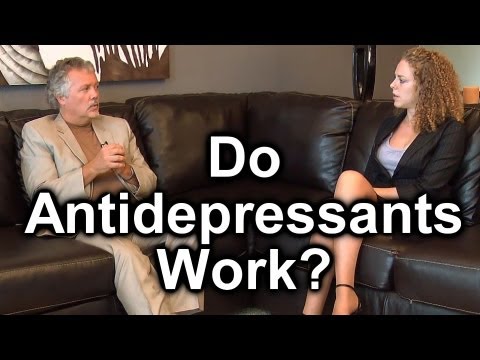
Do Antidepressants Cure Depression? Are Psych Drugs Safe? Dr. Colin Ross & Corrina Psychetruth
0
阿多賓 posted on 2014/01/16Ever wondered if antidepressants really work or if the placebo effect plays a bigger role? This interview dives deep into the effectiveness of SSRIs, potential side effects like sexual issues, and what happens during antidepressant withdrawal, giving you practical insights beyond just the drugs! You'll also pick up advanced vocabulary related to mental health and therapy, making it a fantastic way to boost your English knowledge and understanding.
Learn this video on the APP!
The VoiceTube App has more in-depth practice for videos!