Vocabulary
- of itself: Happening automatically without external cause or help.
- take for example: To use as an instance or illustration.
- for example: As an illustration or instance.
- instead of: When one thing is replaced by another
- come together: To assemble or unite; to start working together.
- to a large extent: Mostly or for the most part; primarily.
- used to: Did regularly before, but don't do now
- on earth: Used to emphasize a question expressing surprise or anger.
- such as: For example; like
- in mind: Being aware of or considering something.
- have to: Must do
- talking about: To discuss a particular topic.
- point out: To make others aware of an idea
- rather than: More exactly; more correctly
- in part: To some extent; partially.
- in general: Typically; usually; on the whole.
- have a heart: Show mercy or compassion to someone.
- being with: Accompanying someone; being in someone's presence.
- of course: Sure ; Certainly
- for the rest: Concerning the remaining people or things.
- in the face of: When confronted with something difficult or challenging.
- no matter: Regardless of; it does not matter.
- come back: To reply to someone, often forcefully
- episode: One separate event in a series of events
- awesome: Great; wonderful; stupendous
- content: Being happy or satisfied
- embrace: Act of holding someone closely
- integrity: Quality of being honest, fair and honorable
- character: Person in a story, movie or play
- conflict: Argument or struggle between two or more parties
- general: Widespread, normal or usual
- community: Group of people who share a common idea or area
- dumb: Senseless; stupid
- relationship: Connection between two or more people or things
- resentment: Feeling of anger because of unfair treatment
- flaw: Quality that makes something imperfect
- shift: To change in position or direction
- dignity: Person of high rank deserving respect
- irony: Quality of being funny because it is the opposite
- strive: To work hard/make effort to achieve something
- mean: Average of a set of numbers
- mutual: Shared between two or more people
- response: Something said/written as an answer to something
- superficial: On the surface only; not deep
- pathetic: Causing feelings of sadness, pity and sympathy
- value: Importance you attach to something
- foster: To raise a child who is not yours, for payment
- film: Thin layer that covers something
- grand: A counter for 1000 of something
- emphasis: Special attention, importance, or force
- optimism: Condition of having a positive outlook or belief
- naive: Unsophisticated; innocent and unknowing
- cynical: Always believing that bad things are the reasons
- connection: Something that joins things together; being joined
- solution: Mix of a liquid and a solid or a gas
- rely: Depend on with full trust or confidence
- criticize: To assess the work of others
- stance: A position or opinion stated in public
- rotten: Gone bad; broken into pieces through dying
- development: Act or process of growing bigger or more advanced
- comedy: Amusing play, film, usually with a happy ending
- reassure: To make feel less worried about something
- communal: Shared or used in common by members of a group
- sincere: Meaning what you say truthfully; honest
- pop: To cause something to open or burst suddenly
- sentiment: Feeling or attitude you have about something
- ironic: Funny because it is the opposite of the truth
- sentimental: Displaying emotions too easily or strongly
- arrest: To attract someone's attention and hold interest
- philosophical: Reacting calmly/reasonably if things are difficult
- narcissism: Being in love with yourself, your own appearance
- support: To give assistance or advice to someone
- government: Group of people and system that rule a nation
- hyper: Very excited or active
- redeem: To exchange (coupon/voucher) for merchandise, etc.
- sitcom: Humorous drama based on day-to-day life
- find: To become aware of something that is happening
- great: Very good; better than before
- make: To arrange or prepare something e.g. dinner
- tyrant: Cruel unfair ruler who demands complete obedience
- affirmation: Statement that something is true
- ultra: Prefix that denotes a lot of something; extreme
- part: Division of a book
- bummer: Irritating or disappointing experience
- think: To have an idea about something without certainty
- human: A person; a man, woman or child
- knowledge: Information, understanding, or skill
- problem: Something difficult to deal with or causes trouble
- post: To send a letter or package using stamps
- uplift: To make someone feel happier or more hopeful
- crabby: Annoyed and irritable
Get the full experience in the app
Learn anywhere with detailed sentence and usage analysis
01:03
She took a brave step forward, leaving behind her comfort zone to chase her dreams.
Vocabulary
- brave
adj. Having courage
- comfort zone
phr. A familiar situation where one feels safe
Explanation
a brave step is a noun phrase, where brave is an adjective modifying the noun step, meaning "a courageous step".
forward is an adverb modifying step, meaning "ahead".
The whole phrase serves as the object, answering the "what" of took (verb) — she took a brave step forward.
Get the full experience in the app
Look up words anytime with pronunciation, part of speech, and usage
brave
US/brev/
UK/breɪv/
adj.Brave
v.t.To bravely face
A2 Elementary
Get the full experience in the app
Practice speaking anytime and get instant pronunciation feedback
Try this speaking exercise.
Try practicing with this sentence.
80
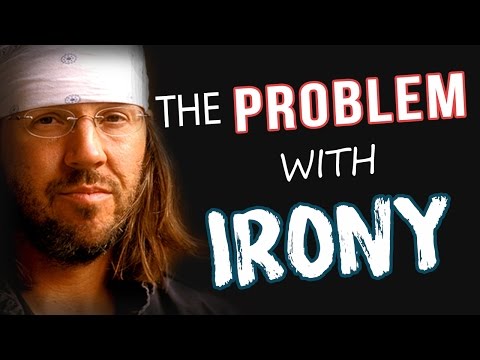
David Foster Wallace - The Problem with Irony
0
Elisa posted on 2019/07/28Ever wonder why so many TV shows feel cynical? Dive into David Foster Wallace's brilliant critique of irony in comedy and discover how shows like 'The Office' shifted towards sincerity. You'll pick up some seriously advanced vocabulary while exploring fascinating ideas about media and culture!
Learn this video on the APP!
The VoiceTube App has more in-depth practice for videos!