
anti
US /ˈæntaɪ, -ti/
UK /'æntɪ/
- Adjective
- A prefix meaning 'against' or 'opposed'
B2Moreaverage
US /ˈævərɪdʒ, ˈævrɪdʒ/
UK /'ævərɪdʒ/
- Noun (Countable/Uncountable)
- Total of numbers divided by the number of items
- Transitive Verb
- To add numbers then divide by the number of items
A2TOEICMorebrand
US /brænd/
UK /brænd/
- Noun
- A mark burned on an animal to show who owns it
- Product made or designed by a named company
- Transitive Verb
- To burn a mark on an animal to show who owns it
- To describe someone as a liar, coward, etc.
A2TOEICMorecrew
US /kru/
UK /kru:/
- Countable Noun
- Organized group of workers (e.g. on a ship)
- Skilled group of people working together on a task
- Intransitive Verb
- To work as part of a crew.
A2TOEICMoredatum
US /ˈdetəm, ˈdætəm, ˈdɑtəm/
UK /ˈdeɪtəm/
- Noun
- Item of factual information
B1Morediscourse
US /ˈdɪskɔrs/
UK /'dɪskɔ:s/
- Uncountable Noun
- The study of how we write and speak
- Long talk or essay about a subject
- Intransitive Verb
- To make a long speech
B1TOEICMoreever since
US /ˈɛvɚ sɪns/
UK /ˈevə sins/
- Adverb
- Continuously from a past time until now.
- Conjunction
- From the time that; because.
B2Morefabric
US /ˈfæbrɪk/
UK /ˈfæbrɪk/
- Noun (Countable/Uncountable)
- Cloth or material
- Basic structure
B1TOEICMorefavor
US /ˈfevɚ/
UK /'feɪvə/
- Noun
- Support or approval from people
- Small gift given out at a party
- Transitive Verb
- To prefer or promote over another
A2Morefeature
US /ˈfitʃɚ/
UK /'fi:tʃə(r)/
- Noun (Countable/Uncountable)
- Special report in a magazine or paper
- Distinctive or important point of something
- Transitive Verb
- To highlight or give special importance to
- To give prominence to; to present or promote as a special or important item.
A2TOEICMorefor example
US
UK
- Phrase
- As an illustration or instance.
for now
US /fɔr naʊ/
UK /fɔ: nau/
- Phrase
- Temporarily; for the present time.
- In the short term; for the immediate future.
A1Morefunction
US /ˈfʌŋkʃən/
UK /'fʌŋkʃn/
- Noun
- Social event, or party such as a wedding
- Mathematical operation used in calculations
- Intransitive Verb
- To serve a certain purpose or role
- To be operating, working or achieving its purpose
A2TOEICMorehave to
US /hæv tu/
UK /ˈhæv tə/
- Auxiliary Verb
- Must do
A1Morehem
US /hɛm/
UK /hem/
- Noun
- Edge of a cloth folded and stitched down
- Transitive Verb
- To sew the edge of a cloth and stitch it down
- To hold or contain without allowing to escape
B2TOEICMoreimpractical
US /ɪmˈpræktɪkəl/
UK /ɪmˈpræktɪkl/
- Adjective
- Not useful or realistically possible
C1Morein depth
US /ɪn dɛpθ/
UK /in depθ/
- Adverb
- Thoroughly and carefully; in detail.
in fact
US /ɪn fækt/
UK /in fækt/
- Adverb
- Used to emphasize the truth of a statement, especially one that contrasts with or contradicts something else.
- Used to introduce a more detailed or surprising piece of information.
- Phrase
- Used to emphasize the truth of a statement, especially one that is surprising or contrary to what might be expected.
C1Morein favor of
US /ɪn ˈfevɚ ʌv/
UK /in ˈfeivə ɔv/
- Phrase
- Expressing support or approval for someone or something.
- To the advantage of; benefiting.
- Preposition
- Supporting or approving of something.
- To the advantage of; to the benefit of.
A1Morein places
US
UK
- Phrase
- In some locations but not others
A1Moreinconvenient
US /ˌɪnkənˈvinjənt/
UK /ˌɪnkənˈvi:niənt/
- Adjective
- Causing difficulty, discomfort, or problems
B1Moreincorporate
US /ɪnˈkɔrpəˌret/
UK /ɪn'kɔ:pəreɪt/
- Transitive Verb
- To form into a company or business corporation
- To include or involve as part of something else
A2Moreindependent
US /ˌɪndɪˈpɛndənt/
UK /ˌɪndɪˈpendənt/
- Adjective
- Making your own decisions; acting by yourself
- Not connected with or influenced by something else.
- Noun
- A person not connected to a political party
- Someone who is independent, especially in politics or business.
A2TOEICMoreintegral
US /ˈɪntɪɡrəl, ɪnˈtɛɡrəl/
UK /ˈɪntɪgrəl/
- Adjective
- Being an essential part of something; necessary
- Being an essential part of something.
- Noun
- A function whose derivative is a given function.
B1Morelack
US /læk/
UK /læk/
- Verb (Transitive/Intransitive)
- To not have, or not have enough, of something
- Uncountable Noun
- The state of not having or not having enough of
A2TOEICMoremainstream
US /ˈmenˌstrim/
UK /ˈmeɪnstri:m/
- Noun
- Prevailing current of thought
- Adjective
- considered normal, and having or using ideas, beliefs, etc. that are accepted by most people
- Considered normal because it reflects what is done or accepted by most people
C2Moremajority
US /məˈdʒɔrɪti, -ˈdʒɑr-/
UK /mə'dʒɒrətɪ/
- Noun (Countable/Uncountable)
- Amount that is more than half of a group
- The age at which a person is legally considered an adult.
B1TOEICMorenorm
US /nɔ:rm/
UK /nɔ:m/
- Noun (Countable/Uncountable)
- Standard or regular way of doing something
- An established standard of performance or behavior
- Transitive Verb
- To make something average (statistics)
B1Moreon average
US /ɑn ˈævərɪdʒ/
UK /ɔn ˈævəridʒ/
- Phrase
- Typically; usually; based on an average calculation.
B1Moreover time
US /ˈovɚ taɪm/
UK /ˈəuvə taim/
- Phrase
- Gradually; as time passes.
- During a long period.
- Adverb
- Gradually; as time passes.
B1Morepractical
US /ˈpræktɪkəl/
UK /ˈpræktɪkl/
- Adjective
- Relating to what is sensible, real or useful
- Relating to experience, action, or practice; not theoretical or ideal.
- Noun
- A practical exam or lesson.
- A person concerned chiefly with the practice of something; a person with practical skills.
A2TOEICMoreprimarily
US /praɪˈmɛrəli, -ˈmɛr-/
UK /praɪˈmerəli/
- Adverb
- In the most basic or important way
A2TOEICMorepull on
US /pʊl ɑn/
UK /pul ɔn/
- Phrasal Verb
- To put on a piece of clothing quickly and easily.
- To encourage someone to try harder or to continue doing something.
A1Morerally
US /ˈræli/
UK /'rælɪ/
- Noun (Countable/Uncountable)
- Public meeting to support or oppose something
- A race for motor vehicles over public roads
- Verb (Transitive/Intransitive)
- To meet publicly to support or oppose something
- To race cars in the countryside
B1Moreruin
US /ˈruɪn/
UK /'ru:ɪn/
- Transitive Verb
- To damage or completely destroy something
- To cause someone to lose their money or status
- Noun (Countable/Uncountable)
- Remains of a building that has been destroyed
- The state of being destroyed or severely damaged.
B1Moresac
US /sæk/
UK /sæk/
- Noun
- Bag-like part of an animal or plant
B2Moresilhouette
US /ˌsɪluˈɛt/
UK /ˌsɪlʊ'et/
- Noun
- Image/drawing showing only the outline, as of head
B2Moreskinny
US /ˈskɪni/
UK /'skɪnɪ/
- Adjective
- Too thin; very lean
B2Moreslim
US /slɪm/
UK /slɪm/
- Adjective
- Being thin in an appealing way
- Being narrow in width
- Intransitive Verb
- To eat less in order to become thinner
B1Moresplit
US /splɪt/
UK /splɪt/
- Adjective
- No longer married or in a relationship
- (Injured) by cutting it open, as in someone's lip
- Verb (Transitive/Intransitive)
- To become divided or broken along a straight line
- To cause a cut in (lip, etc.)
A2Moresponsor
US /ˈspɑ:nsə(r)/
UK /ˈspɒnsə(r)/
- Noun
- Person that supports the passage of a new law
- Person giving money for someone's education
- Transitive Verb
- To support the passage of a new law
- To help someone succeed by giving them money
B1TOEICMorestretch
US /strɛtʃ/
UK /stretʃ/
- Verb (Transitive/Intransitive)
- To make your arm, leg muscles long to ease them
- To make something bigger by pulling on it
- Noun
- Making arm, leg muscles longer to ease them
- A consecutive row of things
A2TOEICMorestretch out
US /strɛtʃ aʊt/
UK /stretʃ aut/
- Phrasal Verb
- To extend your body, especially by lying down and reaching with your arms and legs.
- To extend over a large area.
B2Morestruggle
US /ˈstrʌɡəl/
UK /'strʌɡl/
- Verb (Transitive/Intransitive)
- To try very hard to do something difficult
- To fight or struggle violently
- Noun (Countable/Uncountable)
- Strong efforts made to do something difficult
- A difficult or challenging situation or task
A2Moresuck
US /sʌk/
UK /sʌk/
- Intransitive Verb
- To be very bad, undesirable or unpleasant
- Transitive Verb
- To pull or remove something with great power
- To attract someone; make someone interested
B1Moretend
US /tɛnd/
UK /tend/
- Intransitive Verb
- To move or act in a certain manner
- Transitive Verb
- To take care of
A2Morethanks to
US /θæŋks tu/
UK /θæŋks tu:/
- Preposition
- Because of; as a result of.
A1Moretie in
US /taɪ ɪn/
UK /tai in/
- Phrasal Verb
- To make a connection to bring two things together
A2Moretoo heavy
US
UK
- Adjective
- Having excessive weight; difficult to lift or move.
- Excessively burdensome or difficult to manage.
used to
US /juzd tu/
UK /ˈju:st tə/
- Adjective
- Did regularly before, but don't do now
- Auxiliary Verb
- Have done before, but do not do now
A1Morevictim
US /ˈvɪktɪm/
UK /ˈvɪktɪm/
- Noun
- Person/thing affected by an unpleasant event
- Person feeling helpless in times of bad luck
B1TOEICMorewaist
US /west/
UK /weɪst/
- Noun (Countable/Uncountable)
- Narrower part of your body between hips and chest
- The top part of trousers or a skirt
B1Moreworkforce
US /ˈwə:kˌfɔrs/
UK /ˈwɜ:kˌfɔ:s/
- Noun (Countable/Uncountable)
- The total number of working people
B1Moreworkout
US /ˈwə:kˌaʊt/
UK /ˈwɜ:kaʊt/
- Noun
- Energetic exercise
B2More
Vocabulary
- tie in: To make a connection to bring two things together
- for example: As an illustration or instance.
- over time: Gradually; as time passes.
- in favor of: Expressing support or approval for someone or something.
- in depth: Thoroughly and carefully; in detail.
- on average: Typically; usually; based on an average calculation.
- in fact: Used to emphasize the truth of a statement, especially one that contrasts with or contradicts something else.
- used to: Did regularly before, but don't do now
- pull on: To put on a piece of clothing quickly and easily.
- too heavy: Having excessive weight; difficult to lift or move.
- in places: In some locations but not others
- stretch out: To extend your body, especially by lying down and reaching with your arms and legs.
- ever since: Continuously from a past time until now.
- for now: Temporarily; for the present time.
- have to: Must do
- thanks to: Because of; as a result of.
- struggle: To try very hard to do something difficult
- majority: Amount that is more than half of a group
- stretch: To make your arm, leg muscles long to ease them
- average: Total of numbers divided by the number of items
- practical: Relating to what is sensible, real or useful
- tend: To move or act in a certain manner
- force: Group of persons trained for military action; army
- ruin: To damage or completely destroy something
- split: No longer married or in a relationship
- express: To send something by fast mail
- measure: Plan to achieve a desired result
- incorporate: To form into a company or business corporation
- increase: To make or become larger in size or amount
- feature: Special report in a magazine or paper
- brand: A mark burned on an animal to show who owns it
- industry: Hard work; being busy working
- lack: To not have, or not have enough, of something
- victim: Person/thing affected by an unpleasant event
- function: Social event, or party such as a wedding
- mean: Average of a set of numbers
- suck: To be very bad, undesirable or unpleasant
- fabric: Cloth or material
- norm: Standard or regular way of doing something
- compare: To consider how similar and different things are
- independent: Making your own decisions; acting by yourself
- integral: Being an essential part of something; necessary
- primarily: In the most basic or important way
- introduce: To open an essay to set the scene
- crew: Organized group of workers (e.g. on a ship)
- favor: Support or approval from people
- fall: Season after summer and before winter; Autumn
- century: Period of 100 years
- mainstream: Prevailing current of thought
- workout: Energetic exercise
- kind: In a caring and helpful manner
- rally: Public meeting to support or oppose something
- waist: Narrower part of your body between hips and chest
- sponsor: Person that supports the passage of a new law
- pull: Act of breathing in smoke, as from a pipe
- perfect: So good it cannot be improved
- change: To exchange one set of clothes for another
- front: Behavior not showing a person's true feelings
- workforce: The total number of working people
- skinny: Too thin; very lean
- discourse: The study of how we write and speak
- anti: A prefix meaning 'against' or 'opposed'
- slim: Being thin in an appealing way
- datum: Item of factual information
- silhouette: Image/drawing showing only the outline, as of head
- impractical: Not useful or realistically possible
- inconvenient: Causing difficulty, discomfort, or problems
- sac: Bag-like part of an animal or plant
- hem: Edge of a cloth folded and stitched down
Get the full experience in the app
Learn anywhere with detailed sentence and usage analysis
01:03
She took a brave step forward, leaving behind her comfort zone to chase her dreams.
Vocabulary
- brave
adj. Having courage
- comfort zone
phr. A familiar situation where one feels safe
Explanation
a brave step is a noun phrase, where brave is an adjective modifying the noun step, meaning "a courageous step".
forward is an adverb modifying step, meaning "ahead".
The whole phrase serves as the object, answering the "what" of took (verb) — she took a brave step forward.
Get the full experience in the app
Look up words anytime with pronunciation, part of speech, and usage
brave
US/brev/
UK/breɪv/
adj.Brave
v.t.To bravely face
A2 Elementary
Get the full experience in the app
Practice speaking anytime and get instant pronunciation feedback
Try this speaking exercise.
Try practicing with this sentence.
80
0
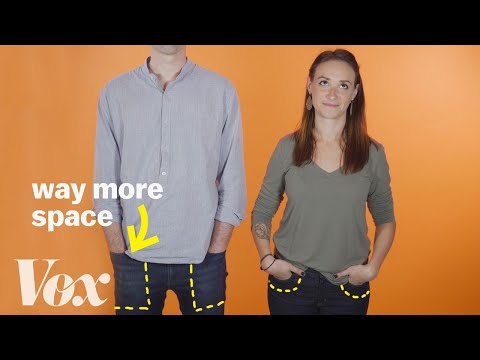
Priscilla posted on 2023/10/02Ever wondered why women's pockets are so tiny and useless? This video dives into the fascinating fashion history behind pocket inequality and why it's been a thing for so long! You'll pick up some great vocabulary related to fashion and cultural trends while learning about this everyday annoyance.
Learn this video on the APP!
The VoiceTube App has more in-depth practice for videos!