Vocabulary
- account of: A spoken or written description of an event.
- have to: Must do
- give up: To lose hope or admit defeat
- at least: As a minimum
- look at: To use your eyes to focus on something
- go ahead: To start an activity; start doing, working etc.
- after all: In spite of what was expected; used to introduce a statement that supports a previous statement or explains why it was made
- enter into: To begin or become involved in something, such as an agreement or activity.
- talking about: To discuss a particular topic.
- picking out: To choose or select one item from many
- turn to: To go to someone for help, advice, or information.
- on the scene: Present at a location, especially where something has happened.
- answer to: To be responsible to someone and have to explain your actions to them.
- based on: To use something as the foundation or starting point for something else.
- go out: To leave a building (e.g. a house)
- intellectual property: Creations of the mind, such as inventions; literary and artistic works; designs; and symbols, names and images used in commerce.
- going on: To continue doing something
- for example: As an illustration or instance.
- in the first place: To begin with; as the first point or consideration.
- dispose of: To get rid of something, especially by throwing it away.
- on the face of it: Based on first impressions; seemingly.
- think about: To consider something carefully.
- come from: To have as your native country or city
- answer for: Be responsible for and explain one's actions.
- reflect on: To think deeply or carefully about something.
- for myself: Done for one's own benefit or use.
- work in: To make an opening for something in your schedule
- in fact: Used to emphasize the truth of a statement, especially one that contrasts with or contradicts something else.
- by god: An expression of surprise, shock, or emphasis.
- bring out: To formally introduce a girl/ woman to society
- western countries: Countries generally located in Europe and North America, characterized by democratic governments and capitalist economies.
- in the world: Used to emphasize a question expressing surprise, confusion, or disbelief.
- up for grabs: Available to anyone who wants them.
- think of: To look on as (being something specific); consider
- at the same time: Simultaneously; at the identical moment.
- same time: Occurring simultaneously or at the same point in time.
- in terms of
- on behalf of: As the representative of someone
- for life: For the duration of one's life; permanently.
- come up: To come closer to someone; approach
- disagree with: To have a different opinion from someone else.
- against the law: Not allowed according to the law; illegal.
- come after: To follow someone in order to threaten them
- go after: To chase or pursue something
- abide by: To follow a rule; adhere to
- in advance: Ahead of time; before something happens
- the whole story: The complete and unabridged account of something.
- even once: At least one time; even a single time.
- in charge: To be responsible for
- on the part of: By or done by (someone); concerning someone.
- taken over: To gain control of (a company) from someone else
- at pleasure: At one's own choice or convenience; freely and without restriction.
- on to: Toward something; forward
- look ahead to: To think about and feel excited about a future event.
- the plot thickens: The story or situation is becoming more complicated or mysterious.
- be with: To accompany someone; to be in someone's presence.
- pay out: To finish paying a debt
- get at: To criticize someone, often personally
- under no obligation: Not required or forced to do something.
- in return: As a reciprocal action or gesture; in exchange or repayment.
- back into: To drive a vehicle backwards into a space or area.
- give away
- point at: To aim (gun, etc.) at someone or something
- out of it: Unconscious or not completely alert; dazed or confused.
- out there: In or to a place that is far away
- on the other hand : Considering a different aspect of the matter; alternatively.
- for the sake of: For the purpose of; in the interest of.
- for that matter: Used to emphasize that something is true or likely to happen, or to introduce a related point.
- to the point: Expressing something directly and without unnecessary detail.
- to do with: To be about something; concern
- rein in: To control or limit something.
- majority: Amount that is more than half of a group
- arbitrary: (Of decisions) unsupported; without any evidence
- acquire: To get or earn something by thinking or working
- native: Someone from or born in a specific country
- sense: Certain mental feeling or emotion
- common: Area in a city or town that is open to everyone
- necessarily: In a way that is needed/required/is unavoidable
- community: Group of people who share a common idea or area
- claim: To say that something is true, often without proof.
- legitimate: Being born to legally married parents
- obligation: Duty to be done because of a law, rule or promise
- force: Group of persons trained for military action; army
- property: Particular quality that someone or something has
- fundamental: Forming a necessary part, base, or core
- conventional: Following the common attitudes and practices
- definition: Explanation of word's meaning, as in dictionaries
- moral: In a way considered proper and good by most people
- society: A group who meet to share values or interests
- consent: To agree or give approval to do something
- state: Region within a country, with its own government
- define: To explain the meaning of words
- private: Being away from others and quiet
- account: An advantage
- ally: Someone who supports, helps, or defends you
- respect: To follow the established rules
- create: To make, cause, or bring into existence
- labor: To struggle to do something because it's difficult
- minority: Group that is smaller and different from the rest
- reason: To think and make conclusions in a logical manner
- argument: Discussion in which you disagree with someone
- distinction: Special quality that makes something different
- trade: A specific industry, e.g. shoe making
- aggression: Use of energy and determination to achieve a goal
- defense: Argument in support of something
- leave: To go away from; depart
- patent: Legal protection for inventions or ideas
- system: Set of organized, planned ideas that work together
- act: To behave in a certain way
- support: To give assistance or advice to someone
- defend: To protect and explain your position in court
- benign: (Of cancer) not harmful or too serious
- government: Group of people and system that rule a nation
- kind: In a caring and helpful manner
- violate: To abuse, damage or disrespect
- liberty: Doing as one wants without asking
- pharmaceutical: Concerning the science of drugs and medicines
- disappointment: Feeling or state of not being satisfied
- constraint: Thing preventing you moving or acting; restriction
- violation: Abuse, damage or total disregard
- legislature: Official group with the authority to make laws
- constrain: To make someone do something by strong persuasion
- conscription: Compulsory military service
- enclosure: Area surrounded by a fence
- elect: To select someone for a position by voting
- appropriation: Setting aside of money for a specific purpose
- libertarian: Person who believes in low government interference
Get the full experience in the app
Learn anywhere with detailed sentence and usage analysis
01:03
She took a brave step forward, leaving behind her comfort zone to chase her dreams.
Vocabulary
- brave
adj. Having courage
- comfort zone
phr. A familiar situation where one feels safe
Explanation
a brave step is a noun phrase, where brave is an adjective modifying the noun step, meaning "a courageous step".
forward is an adverb modifying step, meaning "ahead".
The whole phrase serves as the object, answering the "what" of took (verb) — she took a brave step forward.
Get the full experience in the app
Look up words anytime with pronunciation, part of speech, and usage
brave
US/brev/
UK/breɪv/
adj.Brave
v.t.To bravely face
A2 Elementary
Get the full experience in the app
Practice speaking anytime and get instant pronunciation feedback
Try this speaking exercise.
Try practicing with this sentence.
80
0
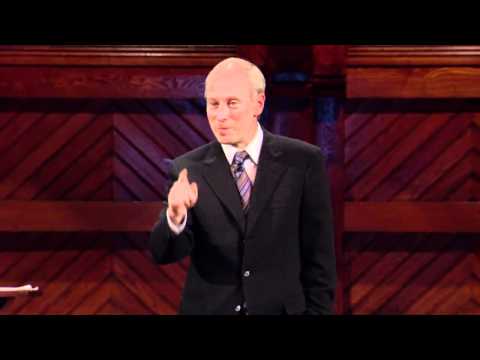
lam_0617 posted on 2013/10/01Ever wondered about the origins of private property and natural rights? This video dives deep into John Locke's fascinating ideas, perfect for boosting your advanced vocabulary and understanding complex sentence structures. You'll get a fantastic dose of philosophy and cultural depth, all while sharpening your English!
Learn this video on the APP!
The VoiceTube App has more in-depth practice for videos!