
activate
US /ˈæktəˌvet/
UK /ˈæktɪveɪt/
- Transitive Verb
- To cause to happen; cause a chemical reaction
- To make something start working
B1Moreblur
US /blɚ/
UK /blɜ:(r)/
- Transitive Verb
- To make something unclear or out of focus
- To dull the distinction between things
B2Moreblurry
US /ˈblə:ɪ/
UK /ˈblɜ:ri/
- Adjective
- Being indistinguishable or unclear in shape
B2Morebook on
US
UK
- Noun
- A book about a particular subject.
- Verb (Transitive/Intransitive)
- To place a bet on something.
A1Morebump
US /bʌmp/
UK /bʌmp/
- Verb (Transitive/Intransitive)
- To bounce along over a rough surface
- To knock against with force or violence
- Noun
- Act or sound of one solid object hitting another
- Raised area on any smooth surface
B1Moreburst
US /bɚst/
UK /bɜ:st/
- Verb (Transitive/Intransitive)
- To move (arrive, exit, etc.) suddenly or hurriedly
- To break apart/open in a sudden and violent way
- Noun
- Brief time period when something happens and ends
- A sudden outbreak or display of something.
A2Morecompensate
US /ˈkɑ:mpenseɪt/
UK /ˈkɒmpenseɪt/
- Transitive Verb
- To give (money) to as a form of correcting a loss
- To reduce or counteract (something unwelcome or unpleasant); offset.
A2Morecomplicate
US /ˈkɑ:mplɪkeɪt/
UK /ˈkɒmplɪkeɪt/
- Transitive Verb
- To make more difficult to do, understand or use
B1Moreconcrete
US /kɑnˈkrit, kɑŋ-, ˈkɑnˌkrit, ˈkɑŋ-/
UK /'kɒŋkri:t/
- Uncountable Noun
- Hard building material made of cement, sand, water
- Transitive Verb
- To cover or make with a hard grey building material
- To lay or cover with concrete.
B1Morecue
US /kju/
UK /kju:/
- Noun
- Word or action in a play to tell an actor to speak
- Transitive Verb
- To give a signal telling someone when to act/speak
B2Moredo in
US
UK
- Phrasal Verb
- To make completely tired out and exhausted
- To destroy or cause damage to someone
A1Moreencounter
US /ɛnˈkaʊntɚ/
UK /ɪn'kaʊntə(r)/
- Verb (Transitive/Intransitive)
- To come up against a problem or trouble; meet
- To meet someone or something unexpectedly
- Noun
- A chance meeting; unexpected or unplanned meeting
B1TOEICMoreend up with
US
UK
- Phrasal Verb
- To have something as a result.
A1Moreenterprise
US /ˈentərpraɪz/
UK /ˈentəpraɪz/
- Noun (Countable/Uncountable)
- A business or organization
- Task often considered difficult or challenging
A2TOEICMoreevolve
US /ɪˈvɑlv/
UK /ɪ'vɒlv/
- Verb (Transitive/Intransitive)
- To develop certain features
- To develop or change slowly over time
B1Morefancy
US /ˈfænsi/
UK /'fænsɪ/
- Verb (Transitive/Intransitive)
- To want to have or do something; feel like
- To imagine or suppose that something will happen
- Adjective
- Unusual and attractive in design
A2TOEICMoregenerate
US /ˈdʒɛnəˌret/
UK /ˈdʒenəreɪt/
- Transitive Verb
- To create or be produced or bring into existence
- To create electricity, heat, energy and power
A2TOEICMoregeometry
US /dʒiˈɑ:mətri/
UK /dʒiˈɒmətri/
- Uncountable Noun
- Mathematical study of shapes, surfaces, and space
- Mathematical shape of something
B2Morehave to
US /hæv tu/
UK /ˈhæv tə/
- Auxiliary Verb
- Must do
A1Morehypothesis
US /haɪˈpɑθɪsɪs/
UK /haɪˈpɒθəsɪs/
- Noun
- A theory trying to explain something
- A supposition or proposed explanation made on the basis of limited evidence as a starting point for further investigation.
B1Moreillusion
US /ɪˈluʒən/
UK /ɪ'lu:ʒn/
- Noun (Countable/Uncountable)
- Idea, image or impression that is not correct
- Something that deceives by producing a false or misleading impression of reality.
B2Morein a row
US /ɪn e ro/
UK /in ə rəu/
- Phrase
- One after another without a break.
- Arranged in a straight line.
- Idiom
- To have an argument.
A1Morein fact
US /ɪn fækt/
UK /in fækt/
- Adverb
- Used to emphasize the truth of a statement, especially one that contrasts with or contradicts something else.
- Used to introduce a more detailed or surprising piece of information.
- Phrase
- Used to emphasize the truth of a statement, especially one that is surprising or contrary to what might be expected.
C1Morein particular
US /ɪn pɚˈtɪkjəlɚ/
UK /in pəˈtikjulə/
- Phrase
- Specifically; especially.
- Detailed or precise.
A1Morein real life
US /ɪn ˈriəl laɪf/
UK /in riəl laif/
- Phrase
- In the physical world; not online or in a fictional setting.
- Actually; genuinely; not made up or fictional.
A2Moreincredibly
US /ɪnˈkrɛdəblɪ/
UK /ɪnˈkredəbli/
- Adverb
- To a great degree; very; amazingly
- Extremely; so much so it is hard to believe
A2Moreinstead of
US /ɪnˈstɛd ʌv/
UK /inˈsted ɔv/
- Preposition
- When one thing is replaced by another
- Adverb
- As a substitute or alternative.
A1Moreknow about
US /noʊ əˈbaʊt/
UK /nəʊ əˈbaut/
- Phrasal Verb
- To have information or understanding of a subject or situation.
lead to
US /lid tu/
UK /li:d tu:/
- Phrasal Verb
- To result in some action
- Verb (Transitive/Intransitive)
- To have something as a consequence or result.
A1Moreleave on
US /liv ɑn/
UK /li:v ɔn/
- Phrasal Verb
- To keep something (especially clothing) on your body.
- To keep an appliance or light operating.
A1Morelook at
US /lʊk æt/
UK /luk æt/
- Phrasal Verb
- To use your eyes to focus on something
- To focus your eyes on something carefully
A1Moreloom
US /lum/
UK /lu:m/
- Intransitive Verb
- To appear in a large, unclear, or threatening form
- (Of unpleasant thing) to be close to happening
- Countable Noun
- Device with a frame used to make cloth from thread
B2TOEICMorenext moment
US
UK
- Phrase
- Immediately after; very soon.
A1Moreoccur
US /əˈkɚ/
UK /əˈkɜ:(r)/
- Intransitive Verb
- To come to pass or to happen
- To be found to exist; to be present.
A2TOEICMoreodd
US /ɑd/
UK /ɒd/
- Adjective
- Being unmatched with someone or something
- Being a number not able to be divided by two
A2Moreof course
US /ʌv kɔː(r)s/
UK /ɔv kɔː(r)s/
- Adverb
- Sure ; Certainly
- Phrase
- For sure; certainly
A2Moreon the book
US /ɑn ðə bʊk/
UK /ɒn ðə bʊk/
- other
- Recorded in an official list or register.
B2Moreoptical
US /ˈɑptɪkəl/
UK /ˈɒptɪkl/
- Adjective
- Concerning vision or helping people see
B1Moreparallel
US /ˈpærəˌlɛl/
UK /'pærəlel/
- Verb (Transitive/Intransitive)
- To be equal to, or like, something else
- To compare
- Noun (Countable/Uncountable)
- A line on a map a set distance from the equator
- A similarity; a comparison.
B1Moreperceive
US /pɚˈsiv/
UK /pə'si:v/
- Transitive Verb
- To notice or become aware of something
- To think of someone or something in a certain way
B1TOEICMoreperception
US /pɚˈsɛpʃən/
UK /pəˈsepʃn/
- Noun (Countable/Uncountable)
- Way in which one sees or understands something
- The ability to see, hear, or become aware of something through the senses.
B1Moreperceptions of
US
UK
- Phrase
- Ideas, beliefs, or images you have as a result of how you see or understand something.
C2Moreradial
US /ˈrediəl/
UK /ˈreɪdiəl/
- Adjective
- Having straight lines coming out from the center
C1Morerailroad
US /ˈreɪlroʊd/
UK /ˈreɪlrəʊd/
- Noun
- System of tracks on which trains travel
C2TOEICMoreremarkable
US /rɪˈmɑrkəbəl/
UK /rɪˈmɑ:kəbl/
- Adjective
- Interesting and unexpected, worthy of notice
- Worthy of attention; striking.
A2TOEICMorerender
US /ˈrɛndɚ/
UK /ˈrendə(r)/
- Transitive Verb
- To cause to be in a certain state or condition
- To digitally make an image ready for use
- Noun (Countable/Uncountable)
- A first coat of plaster applied to a surface.
B1TOEICMoreresearch
US /rɪˈsɚtʃ, ˈriˌsɚtʃ/
UK /rɪ'sɜ:tʃ/
- Verb (Transitive/Intransitive)
- To study in order to discover new ideas and facts
- To study the market relating to marketing products and services.
- Noun (Countable/Uncountable)
- Study done to discover new ideas and facts
- A particular area or topic of study.
A2TOEICMorerespond
US /rɪˈspɑnd/
UK /rɪ'spɒnd/
- Verb (Transitive/Intransitive)
- To answer something or someone
- To have a good reaction to e.g. medical treatment
A2TOEICMoreretina
US /ˈretənə/
UK /ˈretɪnə/
- Noun
- Part of the eye that senses light
B2Moreshift
US /ʃɪft/
UK /ʃɪft/
- Verb (Transitive/Intransitive)
- To change in position or direction
- To move something from one place to another
- Noun (Countable/Uncountable)
- A change in a persons plans, opinions or beliefs
- Period of work starting at a certain time
A2Moresnap
US /snæp/
UK /snæp/
- Verb (Transitive/Intransitive)
- To close your mouth quickly like biting something
- To break something dry and thin, e.g. a branch
- Countable Noun
- An informal word for a photograph
B1Morestand in for
US
UK
- Verb (Transitive/Intransitive)
- To take the role of another person
- Phrasal Verb
- To take the place of
A1Morestatic
US /ˈstætɪk/
UK /ˈstætɪk/
- Adjective
- Concerning electricity that collects on a surface
- Being unchangeable or unmovable
- Uncountable Noun
- Unwanted noise that disturbs a radio or TV signal
B2Morestimulus
US /ˈstɪmjələs/
UK /ˈstɪmjələs/
- Noun
- Something that causes a change
B2Morestraight
US /stret/
UK /streɪt/
- Adjective
- Not having curves, bends, or angles
- Not gay; heterosexual
- Adverb
- in a line; immediately; honestly and directly
- In a straight line; directly.
A2TOEICMoreuniverse
US /ˈjunəˌvɚs/
UK /ˈju:nɪvɜ:s/
- Noun (Countable/Uncountable)
- All of space that contains planets and stars
- Things surrounding a person, affecting their life
B2Moreversion
US /ˈvɚʒən, -ʃən/
UK /ˈvə:ʃən/
- Noun
- Different way that someone interprets something
- New or different form of something
A2TOEICMorevertical
US /ˈvɜ:rtɪkl/
UK /ˈvɜ:tɪkl/
- Adjective
- (Of a line, etc.) going up and down; not horizontal
- Extending or operating upward from a base.
- Noun
- A vertical line or plane.
- An upright structural member.
B1Morevisual
US /ˈvɪʒuəl/
UK /'vɪʒʊəl/
- Adjective
- Of or relating to vision
- Noun
- Pictures/images used to help audience understand
- A picture, map, piece of film, or other visual representation.
A2Morewalk through
US /wɔk θru/
UK /wɔ:k θru:/
- Phrasal Verb
- To show someone carefully how to do something
A1Morewarp
US /wɔ:rp/
UK /wɔ:p/
- Noun
- Twist or bend in something normally straight
- Transitive Verb
- To influence someone to become bad/do evil thing
B2Moreweird
US /wɪrd/
UK /wɪəd/
- Adjective
- Odd or unusual; surprising; strange
- Eerily strange or disturbing.
B1More
Vocabulary
- next moment: Immediately after; very soon.
- in fact: Used to emphasize the truth of a statement, especially one that contrasts with or contradicts something else.
- in real life: In the physical world; not online or in a fictional setting.
- have to: Must do
- look at: To use your eyes to focus on something
- of course: Sure ; Certainly
- on the book: Recorded in an official list or register.
- book on: A book about a particular subject.
- stand in for: To take the role of another person
- walk through: To show someone carefully how to do something
- in particular: Specifically; especially.
- in a row: One after another without a break.
- know about: To have information or understanding of a subject or situation.
- end up with: To have something as a result.
- instead of: When one thing is replaced by another
- lead to: To result in some action
- perceptions of: Ideas, beliefs, or images you have as a result of how you see or understand something.
- leave on: To keep something (especially clothing) on your body.
- do in: To make completely tired out and exhausted
- weird: Odd or unusual; surprising; strange
- perceive: To notice or become aware of something
- perception: Way in which one sees or understands something
- incredibly: To a great degree; very; amazingly
- present: Being in attendance; being there; having turned up
- illusion: Idea, image or impression that is not correct
- evidence: Factual proof that helps to establish the truth
- straight: Not having curves, bends, or angles
- encounter: To come up against a problem or trouble; meet
- immediately: Without any delay; straight away
- evolve: To develop certain features
- fancy: To want to have or do something; feel like
- version: Different way that someone interprets something
- shift: To change in position or direction
- imagine: To think creatively about; form mental picture of
- odd: Being unmatched with someone or something
- field: Area of study, such as physics or biology
- hypothesis: A theory trying to explain something
- universe: All of space that contains planets and stars
- occur: To come to pass or to happen
- concrete: Hard building material made of cement, sand, water
- brain: To strike someone forcefully on the head
- research: To study in order to discover new ideas and facts
- parallel: To be equal to, or like, something else
- remarkable: Interesting and unexpected, worthy of notice
- snap: To close your mouth quickly like biting something
- raise: To increase a bet above another when playing cards
- compensate: To give (money) to as a form of correcting a loss
- generate: To create or be produced or bring into existence
- render: To cause to be in a certain state or condition
- cue: Word or action in a play to tell an actor to speak
- explain: To make clear or easy to understand by describing
- burst: To move (arrive, exit, etc.) suddenly or hurriedly
- create: To make, cause, or bring into existence
- visual: Of or relating to vision
- respond: To answer something or someone
- guess: To give an answer without knowing if it is correct
- complicate: To make more difficult to do, understand or use
- bump: To bounce along over a rough surface
- suggest: To mention something that could be done; propose
- enterprise: A business or organization
- moment: Very short or brief period of time
- leave: To go away from; depart
- vertical: (Of a line, etc.) going up and down; not horizontal
- activate: To cause to happen; cause a chemical reaction
- fact: Something that is known or proved to be true
- blurry: Being indistinguishable or unclear in shape
- stimulus: Something that causes a change
- retina: Part of the eye that senses light
- fail: To be unsuccessful in passing a class or exam
- optical: Concerning vision or helping people see
- static: Concerning electricity that collects on a surface
- blur: To make something unclear or out of focus
- loom: To appear in a large, unclear, or threatening form
- geometry: Mathematical study of shapes, surfaces, and space
- warp: Twist or bend in something normally straight
- railroad: System of tracks on which trains travel
- radial: Having straight lines coming out from the center
Get the full experience in the app
Learn anywhere with detailed sentence and usage analysis
01:03
She took a brave step forward, leaving behind her comfort zone to chase her dreams.
Vocabulary
- brave
adj. Having courage
- comfort zone
phr. A familiar situation where one feels safe
Explanation
a brave step is a noun phrase, where brave is an adjective modifying the noun step, meaning "a courageous step".
forward is an adverb modifying step, meaning "ahead".
The whole phrase serves as the object, answering the "what" of took (verb) — she took a brave step forward.
Get the full experience in the app
Look up words anytime with pronunciation, part of speech, and usage
brave
US/brev/
UK/breɪv/
adj.Brave
v.t.To bravely face
A2 Elementary
Get the full experience in the app
Practice speaking anytime and get instant pronunciation feedback
Try this speaking exercise.
Try practicing with this sentence.
80
0
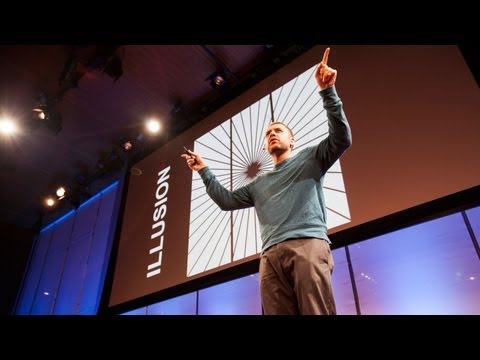
emkulu posted on 2013/09/28Ever wondered why your eyes can be tricked by simple images? This fascinating TED-Ed talk dives into the science behind optical illusions, explaining concepts like optic flow and perceptual delay. You'll boost your vocabulary with terms related to visual perception and learn something amazing about how your brain works!
Learn this video on the APP!
The VoiceTube App has more in-depth practice for videos!