Vocabulary
- interact with
- used to: Did regularly before, but don't do now
- as well as: Also; in addition to
- work out
- for example: As an illustration or instance.
- look at: To use your eyes to focus on something
- on earth: Used to emphasize a question expressing surprise or anger.
- check out
- work on: To devote effort to improve or develop something
- make up: To invent or create a story
- work together: To collaborate or cooperate with others to achieve a common goal.
- from scratch: From the very beginning; from nothing.
- draw upon: To use something that you have gradually gained or saved
- as with: In the same way that something happens or is true of something else.
- common ancestor: An ancestor that two or more species have in common and from which they both evolved.
- live on: To continue to exist or be remembered.
- fall under: To be included in or classified as part of a specific category or jurisdiction.
- off balance: In a state of being unsteady or unstable; lacking equilibrium.
- out there: In or to a place that is far away
- look back: To think about past events
- put together: To build or assemble something small, e.g. a toy
- subscribe: To regularly pay to receive a service
- entire: Complete or full; with no part left out; whole
- immune: Having a special protection from, e.g. the law
- tackle: To start working on a difficult problem
- structure: The way in which the parts of a system or object are arranged or organized, or a system arranged in this way
- develop: To explain something in steps and in detail
- interact: To talk or do things with each other
- disease: Illness that affects a person, animal, or plant
- interpret: To express so that others understand it
- amount: Quantity of something
- environment: Natural world in which plants and animals live
- inflammation: Painful swelling in the body due to illness
- research: To study in order to discover new ideas and facts
- function: Social event, or party such as a wedding
- universe: All of space that contains planets and stars
- genetic: Of, relating to, or controlled by genes
- brain: To strike someone forcefully on the head
- ancestor: A person from your family that lived in the past
- population: Number of people who live in a country, area etc.
- huge: Very very large
- create: To make, cause, or bring into existence
- subject: The person, thing, or idea that is being discussed, described, or studied.
- outbreak: Sudden occurrence of illness, discontent etc.
- relate: To demonstrate a logical relationship between
- anatomy: Scientific study of the structure of (human) body
- investigate: To try to find out facts; to carry out research
- target: A goal or amount you are trying to achieve
- lifespan: Length of time something is expected to last
- organism: Living thing, often one that is small
- mitigate: To make less severe or serious
- complicate: To make more difficult to do, understand or use
- chemical: Basic substance produced by mixing elements
- biological: Being related to life and living things
- science: Study of the physical world, based on facts
- genetically: Caused or controlled, or by genes
- single: One run in cricket or a hit baseball
- arise: To stand up
- diagnosis: Judgments by a doctor about a person's illness
- fungus: Plant, e.g. mushroom/mold, growing in damp places
- system: Set of organized, planned ideas that work together
- information: Collection of facts and details about something
- articulation: Shaping the sounds of speech to communicate
- probe: To carefully examine an issue by asking questions
- microscopic: Too small to be seen with the eyes
- basic: At the most important or easiest (beginner) level
- quantum: The smallest unit or amount of energy
- optical: Concerning vision or helping people see
- transmit: To broadcast by using signals to a radio/TV
- pharmacy: Shop where medicines are prepared and sold
- neuroscience: Scientific study of the nervous system
- cellular: Concerning a cell of a living thing
- pharmaceutical: Concerning the science of drugs and medicines
- include: To make someone, something part of a group
- make: To arrange or prepare something e.g. dinner
- multitude: Large number of people or things; crowd
- wide: Having a great distance from one side to the other
- cooperate: To work together with, to assist someone
- physiology: Ways in which the parts of a living thing operate
- swoop: To sweep through the air; to dive suddenly
- life: All the living things e.g. animals, plants, humans
- amino: Of some substances that form proteins
- pathology: Study of diseases and their effect on the body
Get the full experience in the app
Learn anywhere with detailed sentence and usage analysis
01:03
She took a brave step forward, leaving behind her comfort zone to chase her dreams.
Vocabulary
- brave
adj. Having courage
- comfort zone
phr. A familiar situation where one feels safe
Explanation
a brave step is a noun phrase, where brave is an adjective modifying the noun step, meaning "a courageous step".
forward is an adverb modifying step, meaning "ahead".
The whole phrase serves as the object, answering the "what" of took (verb) — she took a brave step forward.
Get the full experience in the app
Look up words anytime with pronunciation, part of speech, and usage
brave
US/brev/
UK/breɪv/
adj.Brave
v.t.To bravely face
A2 Elementary
Get the full experience in the app
Practice speaking anytime and get instant pronunciation feedback
Try this speaking exercise.
Try practicing with this sentence.
80
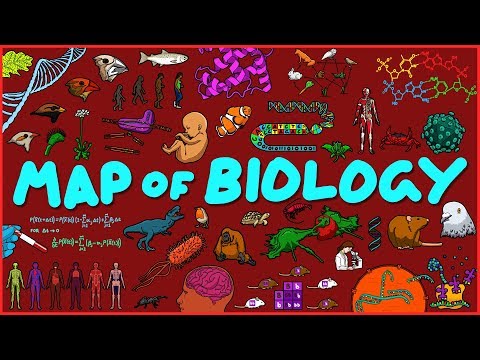
Map of Biology
0
陳裕隆 posted on 2018/07/22Ever wondered how life's building blocks fit together? Dive into the "Map of Biology" to explore everything from cells to genetics, picking up tons of advanced vocabulary along the way! This video is packed with fascinating insights and complex sentence structures, making it a fantastic way to boost your scientific English.
Learn this video on the APP!
The VoiceTube App has more in-depth practice for videos!