Vocabulary
- have to: Must do
- for instance: As an example.
- in fact: Used to emphasize the truth of a statement, especially one that contrasts with or contradicts something else.
- instead of: When one thing is replaced by another
- in school: Attending an educational institution.
- in mind: Being aware of or considering something.
- easy enough: Sufficiently easy; not too difficult.
- play in: To participate or compete in a game or competition.
- lost innocence: The state of having lost the quality of being innocent; a loss of purity or naiveté.
- in the least: Not at all; to the smallest degree.
- grow up: To develop from a child into an adult
- at least: As a minimum
- to let: Indicates that a property is available for rent.
- cap on: An upper limit or restriction on something, such as spending or quantity.
- go on: To continue doing something
- rain out: To cancel an outdoor event because of rain.
- of course: Sure ; Certainly
- on the phone: Talking on the telephone.
- of yours: Belonging to you; your possession or property.
- track down: To find out where someone is; hunt; chase
- call up: To require someone to join the army
- feel right: To seem correct or appropriate; to give a sense of being morally or ethically sound.
- other than: Except for; apart from.
- relevant: Having an effect on an issue; related or current
- extremely: In a way that is much more than usual or expected
- character: Person in a story, movie or play
- instance: An example of something; case
- confidence: Feeling that you can do well at something
- scene: Incident where someone behaves angrily, badly
- combat: To fight someone or something physically
- imagine: To think creatively about; form mental picture of
- cruel: Hurtful; acting to hurt others intentionally
- concentration: Amount or number of something in a thing or place
- innocent: Free from guilt or responsibility for a crime
- involve: To have or be included as a part of something
- intensely: In a manner that is very strong or extreme
- fall: Season after summer and before winter; Autumn
- literature: Writing valued as art, e.g. fiction, drama, poetry
- text: To send a message by phone or other device
- errand: Short trip to buy, collect something, etc.
- author: Person who writes books, plays, poems etc.
- fountain: Structure out of which a jet of water comes
- adult: Person or animal that is fully grown
- crash: To damage an object by causing it to hit something
- prefer: To like something better than something else
- language: Words or signs used to communicate messages
- empathetic: Exhibiting deep emotional understanding
- person: Man, woman or child
- terrific: Spoken excellent; wonderful
- natural: Being as one would expect; being usual or normal
- refuse: To not accept, allow, or give something
- fence: Wood, metal structure enclosing an area, land
- include: To make someone, something part of a group
- bubble: A small ball of air inside of a liquid
- know: To be familiar with a person or place, thing
- tremendously: Very well or very impressively
- innocence: Lack of guilt or responsibility for a crime
- figurative: Using a metaphor; not literally
- think: To have an idea about something without certainty
- liberate: To free someone or something that was captured
- ride: Machine at an amusement park for riding on for fun
- world: All the humans, events, activities on the earth
- feel: To be aware of or experience an emotion, sensation
- phony: Not genuine; fake
- famous: Excellent
- bulge: To curve outward from the surface, as when full
- cap: Covering for the end or top of something
- carousel: Moving belt carrying bags to be claimed at airport
- history: Established pattern or record
- glove: Piece of clothing to protect or keep hands warm
- museum: Building to display art/science/history objects
- rye: Type of grain used to make flour for certain bread
- semblance: Outward appearance
- slaughterhouse: Building where animals are killed for their meat
- resonant: Strong and deep in tone
- creeper: Any plant which crawls or climbs up a tree
- kris: Malayan dagger with a wavy blade
Get the full experience in the app
Learn anywhere with detailed sentence and usage analysis
01:03
She took a brave step forward, leaving behind her comfort zone to chase her dreams.
Vocabulary
- brave
adj. Having courage
- comfort zone
phr. A familiar situation where one feels safe
Explanation
a brave step is a noun phrase, where brave is an adjective modifying the noun step, meaning "a courageous step".
forward is an adverb modifying step, meaning "ahead".
The whole phrase serves as the object, answering the "what" of took (verb) — she took a brave step forward.
Get the full experience in the app
Look up words anytime with pronunciation, part of speech, and usage
brave
US/brev/
UK/breɪv/
adj.Brave
v.t.To bravely face
A2 Elementary
Get the full experience in the app
Practice speaking anytime and get instant pronunciation feedback
Try this speaking exercise.
Try practicing with this sentence.
80
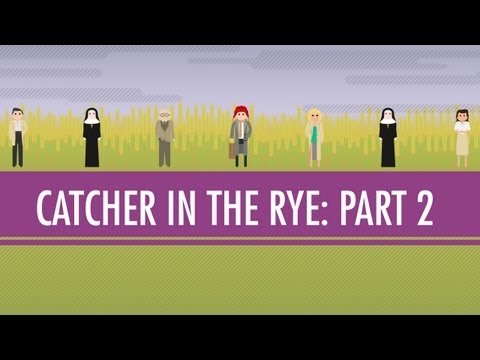
Holden, JD, and the Red Cap- The Catcher in the Rye Part 2: Crash Course English Literature #7
0
黃齡萱 posted on 2017/07/06Ever wondered what Holden Caulfield's red hunting cap *really* means? Dive into "The Catcher in the Rye" with Crash Course English Literature and explore themes of empathy and coming of age, picking up advanced vocabulary and cultural insights along the way!
Learn this video on the APP!
The VoiceTube App has more in-depth practice for videos!