Vocabulary
- murder rate: The number of murders committed per a specific population size, usually per 100,000 people, in a given area and time period.
- on earth: Used to emphasize a question expressing surprise or anger.
- on the surface: Appearing to be true or real until examined more closely.
- in terms of
- by itself: Alone; without help or assistance.
- too much work: An excessive amount of tasks or responsibilities.
- at sea
- for short: As a shortened form of a name or phrase.
- down with: Suffering from an illness.
- in under: Located inside and beneath something.
- way to go: An expression of encouragement or approval.
- contrary to: In opposition to; against.
- see in: To accompany someone to the entrance of a building or room.
- sink in: (Of an idea) to slowly be understood or felt
- in the past: During a former period of time; previously.
- think of: To look on as (being something specific); consider
- of course: Sure ; Certainly
- spot on: Exactly right; perfectly accurate.
- have to: Must do
- have on: To be wearing something.
- tv show: A television program.
- to the point: Expressing something directly and without unnecessary detail.
- point at: To aim (gun, etc.) at someone or something
- incredibly: To a great degree; very; amazingly
- immediately: Without any delay; straight away
- extreme: Very great in degree
- ruin: To damage or completely destroy something
- unconscious: Not aware of what is going on around you
- lethal: Causing or able to cause death
- pressure: Anxiety caused by difficult problems
- ignore: To not listen to, look at, or pay attention to
- endure: To last for a long time; continue to exist
- cause: Belief, goal or organization that people support
- maintain: To keep saying something a certain way
- plague: To cause to have continual problems with something
- population: Number of people who live in a country, area etc.
- surface: To give (road) a top layer
- compare: To consider how similar and different things are
- attribute: (Of books, art, music) to say it was composed by
- strip: To remove your clothes (often sexily for someone)
- sink: To push something down into the ground
- rate: To assess something or consider its qualities
- intake: Amount of something that a person's body consumes
- flourish: To show and direct attention by waving something
- oxygen: A gas in the air that we need to breathe
- corruption: State of being damaged or spoiled
- organism: Living thing, often one that is small
- deem: To judge something to be a certain thing, way
- emit: To release or send out (a gas, etc.)
- spill: Accident when someone falls
- zone: Area of space designated for a particular use
- place: To put someone in a particular type of situation
- summit: Official meeting(s) of the leaders of countries
- malaria: Disease caused by being bitten by a mosquito
- temperature: When you your body heat is above normal
- conclude: To finish or cause to finish; end
- melt: To disappear or to go away
- index: Number showing how prices, wages changed over time
- alive: Living; not dead
- miniature: Small model of something larger
- murder: Something that is difficult or painful to do
- guy: Man; boy; any person
- heat: State of anger, excitement, or arguing
- lava: Very hot liquid rock flowing from a volcano
- mount: To attach something to something else
- human: A person; a man, woman or child
- blood: Red liquid in the bodies of people and animals
- influenza: Full name for the 'flu'
- trench: Long narrow hole dug in the ground
- dangerous: Involving the chance of hurt or damage; risky
- earth: Wire connecting an electrical device to the ground
- submerge: To sink or put below the surface
- serial: Story that is told is several parts on TV or radio
- show: To be easily seen or displayed
- quickly: Without taking a lot of time; fast
- dead: Not alive
- radioactive: Emitting harmful energy from nuclear activity
- warmth: Quality of kindness, friendliness, or sincerity
- die: Cube with dots numbering 1-6 on it used in games
- number: Symbols such as 1, 2, 56, 793
- write: To compose letters and words on paper or a screen
- arsenic: Strong poison used as insecticide, etc.
- cove: Small, sheltered inlet or bay
- quicksand: Pit of loose wet sand which sucks objects into it
- totality: State of being total and complete
Get the full experience in the app
Learn anywhere with detailed sentence and usage analysis
01:03
She took a brave step forward, leaving behind her comfort zone to chase her dreams.
Vocabulary
- brave
adj. Having courage
- comfort zone
phr. A familiar situation where one feels safe
Explanation
a brave step is a noun phrase, where brave is an adjective modifying the noun step, meaning "a courageous step".
forward is an adverb modifying step, meaning "ahead".
The whole phrase serves as the object, answering the "what" of took (verb) — she took a brave step forward.
Get the full experience in the app
Look up words anytime with pronunciation, part of speech, and usage
brave
US/brev/
UK/breɪv/
adj.Brave
v.t.To bravely face
A2 Elementary
Get the full experience in the app
Practice speaking anytime and get instant pronunciation feedback
Try this speaking exercise.
Try practicing with this sentence.
80
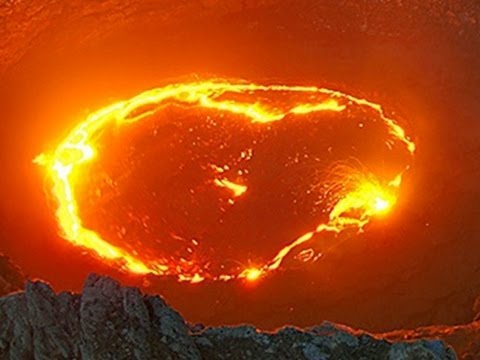
What's The Most Dangerous Place on Earth?
0
VoiceTube posted on 2013/06/27Ever wondered what the most dangerous places on Earth are? This video dives into extreme environments, from the chilling effects of Chernobyl to the deadly impact of malaria, and you'll pick up some seriously advanced vocabulary along the way! It's a fascinating look at the places that challenge humanity and the planet, perfect for curious minds and science enthusiasts.
Learn this video on the APP!
The VoiceTube App has more in-depth practice for videos!