
access
US /ˈæksɛs/
UK /'ækses/
- Noun (Countable/Uncountable)
- Way to enter a place, e.g. a station or stadium
- The opportunity or right to use something or to see someone.
- Transitive Verb
- To be able to use or have permission to use
A2TOEICMoreaccuracy
US /ˈækjərəsi/
UK /ˈækjərəsi/
- Uncountable Noun
- Being exactly right; correctness
- The degree to which something is close to the true value.
A2TOEICMorealgebra
US /ˈældʒəbrə/
UK /ˈældʒɪbrə/
- Uncountable Noun
- Math using letters or symbols in place of numbers
C1Morealias
US /ˈeliəs, ˈeljəs/
UK /ˈeɪliəs/
- Noun
- False or secret second name
C1Morealso known as
US
UK
- Phrase
- Also called; alternatively named.
- Identified by another term; synonymous with.
A1Moreanaconda
US /ˌænə'kɑ:ndə/
UK /ˌænə'kɒndə/
- Noun
- Large snake of tropical South America
C2Moreanswer to
US
UK
- Phrasal Verb
- To be responsible to someone and have to explain your actions to them.
- To correspond to or match a description or requirement.
A1Moreas long as
US /æz lɔŋ æz/
UK /æz lɔŋ æz/
- Conjunction
- For the period that; provided that.
- For the length of time that
- Preposition
- On the condition that; providing that.
- Having the same length as.
A1Moreas well as
US /æz wɛl æz/
UK /æz wel æz/
- Adverb
- Also; in addition to
- Preposition
- In addition to; and also.
A1Moreat a time
US /æt e taɪm/
UK /æt ə taim/
- Phrase
- Separately; one by one
- Simultaneously; together
A1Moreat least
US /æt list/
UK /æt li:st/
- Adverb
- As a minimum
- Not less than
- Phrase
- No less than; at the minimum
- Used to indicate that something is positive in a bad situation.
C2Moreat once
US /æt wʌns/
UK /æt wʌns/
- Adverb
- Immediately; without delay
- At the same time; simultaneously
A2Moreat some point
US /æt sʌm pɔɪnt/
UK /æt sʌm pɔint/
- Phrase
- At an unspecified time, usually in the future.
A1Moreat the moment
US
UK
- Adverb
- At this time; now
A1Moreat the same time
US
UK
- Phrase
- Simultaneously; at the identical moment.
- Nevertheless; however; used to introduce a contrasting or qualifying statement.
A1Moreback down
US /bæk daʊn/
UK /bæk daun/
- Phrasal Verb
- To admit you were wrong; stop claiming
A1Moreback into
US /bæk ˈɪntu/
UK /bæk ˈɪntuː/
- Phrasal Verb
- To drive a vehicle backwards into a space or area.
- To accidentally collide with something while moving backwards.
A1Morebased on
US
UK
- Phrasal Verb
- To use something as the foundation or starting point for something else.
- Preposition
- Using something as the main idea or foundation.
- Relying on something as evidence or justification.
A1Morebasically
US /ˈbesɪkəli,-kli/
UK /ˈbeɪsɪkli/
- Adverb
- Used before you explain something simply, clearly
- In essence; when you consider the most important aspects of something.
A2Morebatch
US /bætʃ/
UK /bætʃ/
- Countable Noun
- Amount of something that is produced at one time
- A group of things made or done together
- Transitive Verb
- To combine or arrange together into a group
B2Morebehind the scenes
US
UK
- Phrase
- Secretly or without being known to the public.
- In a position to influence events without any public knowledge.
A1Moreby any means
US
UK
- Phrase
- In any way possible, regardless of the method
- Whatever is necessary to achieve something.
A1Moreby default
US /baɪ dɪˈfɔlt/
UK /bai diˈfɔ:lt/
- Adverb
- Automatically, unless the user specifies otherwise.
- Because of a lack of any other action or choice.
classification
US /ˌklæsəfɪˈkeʃən/
UK /ˌklæsɪfɪˈkeɪʃn/
- Uncountable Noun
- Putting similar items into groups or sets
B1Moreclose out
US /kloz aʊt/
UK /kləuz aut/
- Phrasal Verb
- To sell off or eliminate remaining items or inventory, often at discounted prices.
- To terminate or offset an existing financial position or trade.
A1Morecode
US /kod/
UK /kəʊd/
- Transitive Verb
- To express information in a series of numbers
- To write a secret message using secret symbols
- Noun
- A password made of a set of letters or numbers
- Set of rules for behavior
A2Morecome along
US /kʌm əˈlɔŋ/
UK /kʌm əˈlɔŋ/
- Phrasal Verb
- To go with someone who takes the lead
- To make progress toward a goal
A1Morecome back
US /kʌm bæk/
UK /kʌm bæk/
- Phrasal Verb
- To reply to someone, often forcefully
- To be remembered
A1Morecome from
US /kʌm frʌm/
UK /kʌm frɔm/
- Phrasal Verb
- To have as your native country or city
A1Morecome up with
US /kʌm ʌp wɪð/
UK /kʌm ʌp wið/
- Phrasal Verb
- To think of an idea or solution; produce
A1Morecommand
US /kəˈmænd/
UK /kə'mɑ:nd/
- Transitive Verb
- To be able to see far from a certain location
- To give an order; have control over others
- Noun (Countable/Uncountable)
- Electronic order to a computer to do something
- An order to control things or others
A2Morecompetition
US /ˌkɑmpɪˈtɪʃən/
UK /ˌkɒmpəˈtɪʃn/
- Noun (Countable/Uncountable)
- Fighting against others to win something
- A situation in which people or organizations compete with each other for something that not everyone can have.
A2Moreconfiguration
US /kənˌfɪɡjəˈreʃən/
UK /kənˌfɪgəˈreɪʃn/
- Noun
- A shape or outline; a method of arrangement
B2Morecorn
US /kɔrn/
UK /kɔ:n/
- Noun
- Small, painful hard spot on the foot
- Plant with many yellow seeds used as food
B1Morecrop
US /krɑp/
UK /krɒp/
- Noun (Countable/Uncountable)
- Plants grown on a farm for food, e.g. corn or rice
- Section of short, thick hair
- Transitive Verb
- To cut something to a shorter length or size
- To cut (something, especially hair) short.
B1Morecrop yield
US
UK
- Noun (Countable/Uncountable)
- The amount of a crop produced per unit area of land.
datum
US /ˈdetəm, ˈdætəm, ˈdɑtəm/
UK /ˈdeɪtəm/
- Noun
- Item of factual information
B1Moredeal with
US /dil wɪð/
UK /di:l wið/
- Verb (Transitive/Intransitive)
- To buy or sell goods or services.
- Phrasal Verb
- To take action to solve a problem or manage a situation.
- To be about; concern.
A1Moredepending on
US
UK
- Phrasal Verb
- To rely on for support (financial or emotional)
- Influenced or determined by.
- Preposition
- Subject to; contingent on
- Relying on someone or something for support or assistance.
A2Moredirectory
US /dɪˈrɛktəri, daɪ-/
UK /dəˈrektəri/
- Noun
- Alphabetical list of names and addresses
B1TOEICMoredo in
US
UK
- Phrasal Verb
- To make completely tired out and exhausted
- To destroy or cause damage to someone
A1Moreenter into
US /ˈɛntɚ ˈɪntu/
UK /ˈentə ˈɪntuː/
- Phrasal Verb
- To begin or become involved in something, such as an agreement or activity.
A1Morefamiliar
US /fəˈmɪljɚ/
UK /fəˈmɪliə(r)/
- Adjective
- Well-known or easily recognized
- Having a good knowledge of something.
- Noun
- A close friend or associate.
- (In folklore) a spirit, often in animal form, believed to attend and serve a witch.
A2TOEICMorefigure out
US /ˈfɪɡjɚ aʊt/
UK /ˈfiɡə aut/
- Phrasal Verb
- To understand the behavior of someone
- To think through logically to find a solution
- Verb (Transitive/Intransitive)
- To understand or find an answer to something.
- To find a solution to a problem or understand something.
A1Morefit in
US /fɪt ɪn/
UK /fit in/
- Phrasal Verb
- To mix with others so you get on well with them
A2Morefor all that
US
UK
- Phrase
- Despite that; even though.
A1Morefor days
US /fɔr dez/
UK /fɔ: deɪz/
- Phrase
- For a long period of time; lasting several days.
for example
US
UK
- Phrase
- As an illustration or instance.
for free
US /fɔr fri/
UK /fɔ: fri:/
- Phrase
- Without charge; at no cost.
- Adjective
- Available without payment.
A2Morefor myself
US /fɚ maɪˈsɛlf/
UK /fə maɪˈself/
- other
- Done for one's own benefit or use.
A1Morefor now
US /fɔr naʊ/
UK /fɔ: nau/
- Phrase
- Temporarily; for the present time.
- In the short term; for the immediate future.
A1Morefrom time to time
US
UK
- Phrase
- Occasionally; sometimes but not regularly.
- At intervals; now and then.
A1Morefunction
US /ˈfʌŋkʃən/
UK /'fʌŋkʃn/
- Noun
- Social event, or party such as a wedding
- Mathematical operation used in calculations
- Intransitive Verb
- To serve a certain purpose or role
- To be operating, working or achieving its purpose
A2TOEICMoregenerally
US /ˈdʒɛnərəli/
UK /ˈdʒenrəli/
- Adverb
- Usually; as a rule; by, to or for most people
A2Moreget a sense
US
UK
- Verb (Transitive/Intransitive)
- To understand or perceive something intuitively.
A1Moreget at
US /ɡɛt æt/
UK /ɡet æt/
- Phrasal Verb
- To criticize someone, often personally
- To imply something; hint at
A1Moreget out of
US /ɡɛt aʊt ʌv/
UK /ɡet aut ɔv/
- Phrasal Verb
- To leave or escape responsibilities, troubles
- To leave a small, enclosed vehicle
A1Moreget through
US /ɡɛt θru/
UK /ɡet θru:/
- Phrasal Verb
- To arrive at the end of or finish something
- To succeed in contacting someone by phone
A1Morego ahead
US /ɡo əˈhɛd/
UK /ɡəu əˈhed/
- Phrasal Verb
- To start an activity; start doing, working etc.
- To give permission to do something
- Intransitive Verb
- To start or proceed with something
- To proceed despite potential obstacles or doubts.
A1Morego back to
US /ɡo bæk tu/
UK /ɡəu bæk tu:/
- Phrasal Verb
- To return to a starting point
A1Morego in for
US
UK
- Phrasal Verb
- To enter a competition
- To make a habit of; like doing
A1Morego into detail
US
UK
- Verb (Transitive/Intransitive)
- To explain or describe something fully and completely.
A1Moregoing on
US /ˈɡoɪŋ ɑn/
UK /ˈgəʊɪŋ ɔn/
- Phrasal Verb
- To continue doing something
- To happen (usually negative)
A1Moregot to
US /ɡɑt tu/
UK /gɔt tu:/
- Verb (Transitive/Intransitive)
- To arrive at some place
- To have the opportunity or permission to do something
- Phrasal Verb
- To appeal to the emotions of; move
- To finally begin to start something after a delay
A1Moregrab
US /ɡræb/
UK /ɡræb/
- Transitive Verb
- To take and hold something quickly
A2Morehand up
US
UK
- Phrasal Verb
- To raise one's hand in order to get attention, especially in a classroom.
have to
US /hæv tu/
UK /ˈhæv tə/
- Auxiliary Verb
- Must do
A1Moreimage
US /ˈɪmɪdʒ/
UK /'ɪmɪdʒ/
- Noun (Countable/Uncountable)
- Picture, sculpture or painting of something
- General idea or opinion of something
- Transitive Verb
- To obtain pictures by scanning them with a machine
- To create a visual representation of something.
A2TOEICMorein detail
US /ɪn dɪˈtel/
UK /in ˈdi:teil/
- Phrase
- Thoroughly and completely; giving full particulars.
A2Morein fact
US /ɪn fækt/
UK /in fækt/
- Adverb
- Used to emphasize the truth of a statement, especially one that contrasts with or contradicts something else.
- Used to introduce a more detailed or surprising piece of information.
- Phrase
- Used to emphasize the truth of a statement, especially one that is surprising or contrary to what might be expected.
C1Morein general
US /ɪn ˈdʒɛnərəl/
UK /in ˈdʒenərəl/
- Phrase
- Typically; usually; on the whole.
- Not specific or detailed; broadly.
- Adjective
- Not detailed or specific; overall.
C2Morein order to
US /ɪn ˈɔrdɚ tu/
UK /in ˈɔ:də tu:/
- Preposition
- For the purpose of; with the aim of.
- Phrase
- In a specific sequence or arrangement.
- With the aim of; for the purpose of.
C1Morein other words
US
UK
- Phrase
- Stating something in a different way, often to make it clearer or more understandable.
in particular
US /ɪn pɚˈtɪkjəlɚ/
UK /in pəˈtikjulə/
- Phrase
- Specifically; especially.
- Detailed or precise.
A1Morein person
US /ɪn ˈpɜːrsn/
UK /in ˈpɜːsn/
- Adverb
- Physically present; not by proxy or remotely.
- Face-to-face; not through electronic communication.
A1Morein practice
US /ɪn ˈpræktɪs/
UK /in ˈpræktis/
- Phrase
- In reality or actual use; as opposed to in theory.
A1Morein terms of
US
UK
- Phrase
- With regard to; concerning a particular aspect.
A1Morein the air
US
UK
- Phrase
- Present or circulating in the atmosphere.
- Felt or sensed by many people; circulating as a rumor or feeling.
- Adjective
- Being broadcast on radio or television.
A1Morein the club
US /ɪn ðə ˈklʌb/
UK /in ðə ˈklʌb/
- other
- Being a member of a group or organization.
A2Morein the world
US /ɪn ði wɜrld/
UK /in ðə wɜː(r)ld/
- Phrase
- Used to emphasize a question expressing surprise, confusion, disbelief
- Used to indicate the extent or degree of something, often in a superlative sense
A1Morein theory
US /ɪn ˈθiəri/
UK /in ˈθiəri/
- Adverb
- According to the stated ideas or principles
- Phrase
- According to the theoretical possibilities rather than actual practice.
B2Morein time
US /ɪn taɪm/
UK /in taim/
- Adverb
- Eventually; after a period of time.
- Not late; with enough time to spare.
- Phrase
- Eventually; before it is too late.
- According to the scheduled time; punctual.
A1Morein touch
US /ɪn tʌtʃ/
UK /in tʌtʃ/
- Adjective
- Having contact or communication with someone.
- Aware of or informed about something.
B1Moreinstance
US /ˈɪnstəns/
UK /'ɪnstəns/
- Noun (Countable/Uncountable)
- An example of something; case
- An occurrence of something.
- Transitive Verb
- To give as an example of something else
A2TOEICMoreinto detail
US /ˈɪntu ˈditel/
UK /ˈɪntəʊ ˈdi:teɪl/
- other
- To explain or discuss something thoroughly with many specifics.
B1Morejust kind of
US
UK
- Phrase
- Used to express a feeling or state in a vague or hesitant way.
- Used to indicate something is approximately or generally similar to something else.
A2Moreknow about
US /noʊ əˈbaʊt/
UK /nəʊ əˈbaut/
- Phrasal Verb
- To have information or understanding of a subject or situation.
lesion
US /ˈliʒən/
UK /ˈli:ʒn/
- Noun
- Damaged area on a part of the body
B2Morelinear
US /ˈlɪniər/
UK /ˈlɪniə(r)/
- Adjective
- Made of lines
- Series of progressing from one stage to another
B1Morelog into
US /lɑɡ ˈɪntu/
UK /lɒɡ ˈɪntə/
- other
- To enter credentials to access a computer system or website.
A2Morelook around
US /lʊk əˈraʊnd/
UK /luk əˈraund/
- Phrasal Verb
- To explore a place; search for something.
A1Morelook at
US /lʊk æt/
UK /luk æt/
- Phrasal Verb
- To use your eyes to focus on something
- To focus your eyes on something carefully
A1Moremark
US /mɑrk/
UK /mɑ:k/
- Proper Noun
- Person's name
- Transitive Verb
- To put a dirty spot or line on something
- To give a grade for homework
A2TOEICMoremove along
US /muv əˈlɔŋ/
UK /mu:v əˈlɔŋ/
- Phrasal Verb
- To make progress; advance.
- To tell someone to leave or keep moving.
B1Moremove around
US /muv əˈraʊnd/
UK /mu:v əˈraund/
- Phrasal Verb
- To change position or location; to go from place to place.
- Intransitive Verb
- To spread or circulate (e.g., information, rumors).
much about
US /mʌtʃ əˈbaʊt/
UK /mʌtʃ əˈbaut/
- Phrase
- A lot of information or knowledge concerning something.
- To a great extent or degree regarding something; caring.
A1Morenetwork
US /ˈnetwɜ:rk/
UK /ˈnetwɜ:k/
- Noun (Countable/Uncountable)
- Group of computers connected to each other
- System of connections
- Verb (Transitive/Intransitive)
- To join a group of computers together
- To exchange information with colleagues, contacts
A2Moreneural
US /ˈnʊrəl, ˈnjʊr-/
UK /ˈnjuərəl/
- Adjective
- About the nerves or nervous system
B2Morenext to
US /nɛkst tu/
UK /nekst tu:/
- Preposition
- Being located along side another
- In comparison with
- Adverb
- Almost; nearly
A1Moreoff the shelf
US /ɔf ði ʃɛlf/
UK /ɔf ðə ʃelf/
- Adjective
- Readily available; not custom-made.
- Adverb
- Selling very quickly and in large quantities.
A2Moreon a regular basis
US //ɑn ə ˈrɛgjələr ˈbeɪsəs//
UK
- Phrase
- Happening frequently or at regular intervals.
B1Moreon the internet
US
UK
- Phrase
- Located or available on the internet.
- Using the internet as a medium or platform.
A1Moreon the other hand
US
UK
- Phrase
- Considering a different aspect of the matter; alternatively.
A1Moreon the whole
US /ɑn ði hol/
UK /ɔn ðə həul/
- Phrase
- Considering everything; generally.
- In summary; taking everything into consideration.
A1Moreon top of that
US
UK
- Phrase
- In addition to something already mentioned; furthermore.
A1Moreother than
US
UK
- Preposition
- Except for; apart from.
- Conjunction
- Different from.
A1Moreout of time
US /aʊt ʌv taɪm/
UK /aut ɔv taim/
- Adjective
- Having no more time available to do something.
A1Moreover time
US /ˈovɚ taɪm/
UK /ˈəuvə taim/
- Phrase
- Gradually; as time passes.
- During a long period.
- Adverb
- Gradually; as time passes.
B1Morepoint in time
US
UK
- Noun
- A specific moment or instance when something occurs or exists.
- A significant juncture or stage in history or a sequence of events.
A1Morepoint out
US /pɔɪnt aʊt/
UK /pɔint aut/
- Phrasal Verb
- To make others aware of an idea
- To draw attention to something or someone
A1Morepre
US
UK
- Prefix
- A prefix meaning 'before'
B2Moreput together
US /pʊt təˈɡɛðɚ/
UK /put təˈɡeðə/
- Phrasal Verb
- To build or assemble something small, e.g. a toy
- To organize or arrange something.
A1Morepython
US /ˈpaɪˌθɑn, -θən/
UK /'paɪθən/
- Noun
- A large snake that crushes its victims
B2Morerather than
US
UK
- Adverb
- More exactly; more correctly
- Preferably; instead
- Preposition
- Instead of
A1Moreread through
US /rid θru/
UK /ri:d θru:/
- Phrasal Verb
- To read something from beginning to end, often to find mistakes or check details.
- To read something quickly without paying attention to details.
- Noun
- A rehearsal where actors read through the script without acting it out fully.
A1Moreregardless of
US /rɪˈɡɑrdlɪs ʌv/
UK /riˈɡɑ:dlis ɔv/
- Phrase
- Preposition
- Without being affected or influenced by something; despite.
A2Morerun on
US /rʌn ɑn/
UK /rʌn ɔn/
- Phrasal Verb
- To continue longer than expected, e.g. a meeting
- To talk without stopping, often on the same topic
- Intransitive Verb
- To continue without a break or clear separation, especially in writing.
A1Moresame time
US
UK
- Phrase
- Occurring simultaneously or at the same point in time.
- At the identical time as before; recurring at a fixed hour.
- Noun
- An equal duration or period.
A1Morescript
US /skrɪpt/
UK /skrɪpt/
- Noun (Countable/Uncountable)
- Written text of a book, play, film, or speech
- Set of letters or characters of a written language
- Transitive Verb
- To write a text for a movie, play or speech
B1Moresee in
US /si ɪn/
UK /si: in/
- Phrasal Verb
- To accompany someone to the entrance of a building or room.
A1Moreset up
US /sɛt ʌp/
UK /set ʌp/
- Phrasal Verb
- To make arrangements for something; establish
- Verb (Transitive/Intransitive)
- To arrange or prepare something for use.
- To start a business, organization, etc.
A1Moresh
US /ʃ/
UK /ʃ/
- Interjection
- Sound people make to make someone be quiet
C2Moreshout out
US /ʃaʊt aʊt/
UK /ʃaut aut/
- Noun
- A public expression of greeting or praise.
- Verb (Transitive/Intransitive)
- To publicly mention or acknowledge someone or something.
- To publicly acknowledge or thank someone.
A2Moresingle file
US /ˈsɪŋɡəl faɪl/
UK /ˈsiŋɡl fail/
- Adverb
- One behind the other, in a line.
- Noun
- A line of people or things one behind the other.
A2Moresource
US /sɔrs, sors/
UK /sɔ:s/
- Noun (Countable/Uncountable)
- Piece of information; a person giving information
- Place from which something necessary comes
- Adjective
- Produces or provides what is wanted or needed
A2TOEICMorestart out
US /stɑrt aʊt/
UK /stɑ:t aut/
- Phrasal Verb
- To begin your life or career in a particular way.
- To begin a journey.
A1Morestay in
US /ste ɪn/
UK /stei in/
- Phrasal Verb
- To remain inside one's home.
- Intransitive Verb
- To remain as an inpatient in a hospital.
stick around
US /stɪk əˈraʊnd/
UK /stik əˈraund/
- Phrasal Verb
- To remain in place; not leave or go
A2Morestick with
US /stɪk wɪð/
UK /stik wið/
- Phrasal Verb
- To continue to support or stay loyal to someone or something.
- To continue doing or using something; to persevere.
A1Morestuff
US /stʌf/
UK /stʌf/
- Uncountable Noun
- Generic description for things, materials, objects
- Transitive Verb
- To push material inside something, with force
B1Moresuch as
US /sʌtʃ æz/
UK /sʌtʃ æz/
- Preposition
- For example; like
A1Moretalk about it
US /tɔk əˈbaʊt ɪt/
UK /tɔ:k əˈbaut it/
- Verb (Transitive/Intransitive)
- To discuss a particular subject.
A1Moretalking about
US
UK
- Phrasal Verb
- To discuss a particular topic.
- To be constantly mentioning or bringing up a subject.
A1Morethings change
US
UK
- Phrase
- Circumstances or situations do not remain constant; they evolve or transform over time.
- An acknowledgement of the need to adapt to new realities or developments.
A1Morethink about
US /θɪŋk əˈbaʊt/
UK /θiŋk əˈbaut/
- Phrasal Verb
- To consider something carefully.
- To remember or call to mind.
A1Morethink of
US /θɪŋk ʌv/
UK /θiŋk ɔv/
- Phrasal Verb
- To look on as (being something specific); consider
- To consider or remember something.
- Verb (Transitive/Intransitive)
- To imagine or call something to mind
A1Moreto date
US /tu det/
UK /tu: deit/
- Phrase
- Up to the present time; until now.
- Verb (Transitive/Intransitive)
- To go out on romantic dates with someone.
C2Moreto do with
US
UK
- Phrasal Verb
- To be about something; concern
A1Moreto let
US /tu lɛt/
UK /tu let/
- Preposition
- Indicates that a property is available for rent.
A2Moreto the point
US /tu ði pɔɪnt/
UK /tu: ðə pɔint/
- Adjective
- Expressing something directly and without unnecessary detail.
- Phrase
- Relevant and pertinent to the matter at hand.
A2Moreturn into
US /tɚn ˈɪntu/
UK /tə:n ˈɪntuː/
- Phrasal Verb
- To change to become something else
- To change your direction to go into a place
A1Moreturned out
US
UK
- Phrasal Verb
- To arrive for a public event or entertainment
- To happen to be in the end
- Transitive Verb
- To extinguish or switch off lights.
A1Moreused to
US /juzd tu/
UK /ˈju:st tə/
- Adjective
- Did regularly before, but don't do now
- Auxiliary Verb
- Have done before, but do not do now
A1Morewait for
US /wet fɔr/
UK /weit fɔ:/
- Phrasal Verb
- To wait until someone comes, or something happens
A1Morewith it
US /wɪð ɪt/
UK /wið it/
- Adjective
- Intelligent, alert, and up-to-date.
- Understanding and knowledgeable about current trends or information.
A1Morework on
US /wɚk ɑn/
UK /wə:k ɔn/
- Phrasal Verb
- To devote effort to improve or develop something
- To try to persuade or influence someone.
A1Morezip
US /zɪp/
UK /zɪp/
- Transitive Verb
- To compress digital documents into one file
- To close using a zipper
- Noun (Countable/Uncountable)
- Energy; vigor; determination
- Way to say 'nothing' or 'zero'
B1More
Vocabulary
- look at: To use your eyes to focus on something
- have to: Must do
- set up
- for example: As an illustration or instance.
- at a time: Separately; one by one
- go ahead: To start an activity; start doing, working etc.
- rather than: More exactly; more correctly
- going on: To continue doing something
- in fact: Used to emphasize the truth of a statement, especially one that contrasts with or contradicts something else.
- come back: To reply to someone, often forcefully
- for now: Temporarily; for the present time.
- in particular: Specifically; especially.
- at the moment: At this time; now
- behind the scenes: Secretly or without being known to the public.
- go back to: To return to a starting point
- with it: Intelligent, alert, and up-to-date.
- get through: To arrive at the end of or finish something
- to the point: Expressing something directly and without unnecessary detail.
- work on: To devote effort to improve or develop something
- as well as: Also; in addition to
- back into: To drive a vehicle backwards into a space or area.
- in detail: Thoroughly and completely; giving full particulars.
- know about: To have information or understanding of a subject or situation.
- at once: Immediately; without delay
- in the world: Used to emphasize a question expressing surprise, confusion, disbelief
- to do with: To be about something; concern
- as long as: For the period that; provided that.
- in practice: In reality or actual use; as opposed to in theory.
- figure out: To understand the behavior of someone
- in other words: Stating something in a different way, often to make it clearer or more understandable.
- in general: Typically; usually; on the whole.
- put together: To build or assemble something small, e.g. a toy
- at least: As a minimum
- used to: Did regularly before, but don't do now
- come along: To go with someone who takes the lead
- in order to: For the purpose of; with the aim of.
- at the same time: Simultaneously; at the identical moment.
- same time: Occurring simultaneously or at the same point in time.
- see in: To accompany someone to the entrance of a building or room.
- other than: Except for; apart from.
- talking about: To discuss a particular topic.
- start out: To begin your life or career in a particular way.
- point out: To make others aware of an idea
- in the air: Present or circulating in the atmosphere.
- get at: To criticize someone, often personally
- on the whole: Considering everything; generally.
- such as: For example; like
- deal with
- stick around: To remain in place; not leave or go
- by any means: In any way possible, regardless of the method
- in theory: According to the stated ideas or principles
- think of: To look on as (being something specific); consider
- over time: Gradually; as time passes.
- get a sense: To understand or perceive something intuitively.
- look around: To explore a place; search for something.
- off the shelf: Readily available; not custom-made.
- shout out: A public expression of greeting or praise.
- just kind of: Used to express a feeling or state in a vague or hesitant way.
- point in time: A specific moment or instance when something occurs or exists.
- in time: Eventually; after a period of time.
- log into: To enter credentials to access a computer system or website.
- by default: Automatically, unless the user specifies otherwise.
- hand up: To raise one's hand in order to get attention, especially in a classroom.
- turn into: To change to become something else
- enter into: To begin or become involved in something, such as an agreement or activity.
- get out of: To leave or escape responsibilities, troubles
- move around: To change position or location; to go from place to place.
- for free: Without charge; at no cost.
- turned out: To arrive for a public event or entertainment
- crop yield: The amount of a crop produced per unit area of land.
- on a regular basis: Happening frequently or at regular intervals.
- next to: Being located along side another
- go into detail: To explain or describe something fully and completely.
- into detail: To explain or discuss something thoroughly with many specifics.
- do in: To make completely tired out and exhausted
- close out: To sell off or eliminate remaining items or inventory, often at discounted prices.
- for all that: Despite that; even though.
- come up with: To think of an idea or solution; produce
- got to: To arrive at some place
- in person: Physically present; not by proxy or remotely.
- move along: To make progress; advance.
- single file: One behind the other, in a line.
- based on: To use something as the foundation or starting point for something else.
- talk about it: To discuss a particular subject.
- in terms of
- answer to: To be responsible to someone and have to explain your actions to them.
- things change: Circumstances or situations do not remain constant; they evolve or transform over time.
- to let: Indicates that a property is available for rent.
- read through: To read something from beginning to end, often to find mistakes or check details.
- come from: To have as your native country or city
- for myself: Done for one's own benefit or use.
- wait for: To wait until someone comes, or something happens
- from time to time: Occasionally; sometimes but not regularly.
- on the internet: Located or available on the internet.
- stick with: To continue to support or stay loyal to someone or something.
- for days: For a long period of time; lasting several days.
- depending on: To rely on for support (financial or emotional)
- at some point: At an unspecified time, usually in the future.
- think about: To consider something carefully.
- also known as: Also called; alternatively named.
- regardless of
- on top of that: In addition to something already mentioned; furthermore.
- go in for: To enter a competition
- in the club: Being a member of a group or organization.
- run on: To continue longer than expected, e.g. a meeting
- much about: A lot of information or knowledge concerning something.
- on the other hand : Considering a different aspect of the matter; alternatively.
- to date: Up to the present time; until now.
- fit in: To mix with others so you get on well with them
- back down: To admit you were wrong; stop claiming
- out of time: Having no more time available to do something.
- stay in: To remain inside one's home.
- in touch: Having contact or communication with someone.
- stuff: Generic description for things, materials, objects
- grab: To take and hold something quickly
- access: Way to enter a place, e.g. a station or stadium
- basically: Used before you explain something simply, clearly
- instance: An example of something; case
- familiar: Well-known or easily recognized
- script: Written text of a book, play, film, or speech
- function: Social event, or party such as a wedding
- state: Region within a country, with its own government
- competition: Fighting against others to win something
- bit: Device put in a horse's mouth to control it
- generally: Usually; as a rule; by, to or for most people
- address: Exact street location of a place
- neural: About the nerves or nervous system
- create: To make, cause, or bring into existence
- reason: To think and make conclusions in a logical manner
- pretty: Being attractive to the eye in a simple way
- source: Piece of information; a person giving information
- crop: Plants grown on a farm for food, e.g. corn or rice
- accuracy: Being exactly right; correctness
- command: To be able to see far from a certain location
- kind: In a caring and helpful manner
- learn: To get knowledge or skills by study or experience
- information: Collection of facts and details about something
- algebra: Math using letters or symbols in place of numbers
- point: An item to be discussed
- batch: Amount of something that is produced at one time
- deep: Complex and important
- set: Prepared for something; ready
- find: To become aware of something that is happening
- minute: Notes taken at a meeting to record what was said
- code: To express information in a series of numbers
- image: Picture, sculpture or painting of something
- zip: To compress digital documents into one file
- configuration: A shape or outline; a method of arrangement
- network: Group of computers connected to each other
- mark: Person's name
- corn: Small, painful hard spot on the foot
- linear: Made of lines
- classification: Putting similar items into groups or sets
- lesion: Damaged area on a part of the body
- datum: Item of factual information
- python: A large snake that crushes its victims
- pre: A prefix meaning 'before'
- directory: Alphabetical list of names and addresses
- alias: False or secret second name
- anaconda: Large snake of tropical South America
- sh: Sound people make to make someone be quiet
Get the full experience in the app
Learn anywhere with detailed sentence and usage analysis
01:03
She took a brave step forward, leaving behind her comfort zone to chase her dreams.
Vocabulary
- brave
adj. Having courage
- comfort zone
phr. A familiar situation where one feels safe
Explanation
a brave step is a noun phrase, where brave is an adjective modifying the noun step, meaning "a courageous step".
forward is an adverb modifying step, meaning "ahead".
The whole phrase serves as the object, answering the "what" of took (verb) — she took a brave step forward.
Get the full experience in the app
Look up words anytime with pronunciation, part of speech, and usage
brave
US/brev/
UK/breɪv/
adj.Brave
v.t.To bravely face
A2 Elementary
Get the full experience in the app
Practice speaking anytime and get instant pronunciation feedback
Try this speaking exercise.
Try practicing with this sentence.
80
0
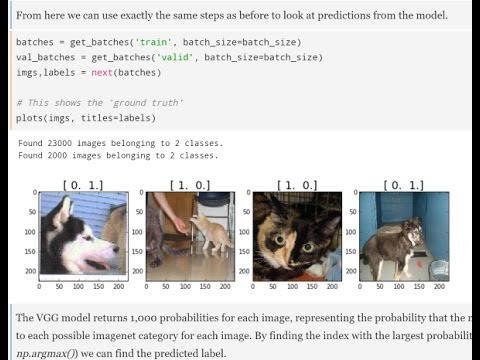
Zache posted on 2017/03/01Ever wondered how computers 'see'? This video dives into practical Deep Learning and Computer Vision, showing you how to build powerful AI models with just 7 lines of code! You'll pick up advanced vocabulary related to AI, Keras, and GPU acceleration, making it perfect for coders looking to boost their skills.
Learn this video on the APP!
The VoiceTube App has more in-depth practice for videos!