
afford
US /əˈfɔrd, əˈford/
UK /ə'fɔ:d/
- Transitive Verb
- To make available, to provide
- To have enough money to pay for something
A2TOEICMoreall the things
US
UK
- Pronoun
- Everything; all items or aspects
- Determiner
- Every item or object being considered or discussed.
A1Moreapproach
US /əˈprəʊtʃ/
UK /ə'prəʊtʃ/
- Verb (Transitive/Intransitive)
- To get close to reaching something or somewhere
- To request someone to do something specific
- Noun (Countable/Uncountable)
- Means of reaching a place, often a road or path
- Request of someone with a specific goal in mind
A2TOEICMoreas a whole
US /æz e hol/
UK /æz ə həul/
- Phrase
- Considering everything together; in general.
- Complete; not divided or incomplete.
- Adjective
- Complete; not divided or fragmented.
A1Moreassigning
US
UK
- Transitive Verb
- To give someone a particular job to do
- To give someone credit or blame for something
B2Moreat least
US /æt list/
UK /æt li:st/
- Adverb
- As a minimum
- Not less than
- Phrase
- No less than; at the minimum
- Used to indicate that something is positive in a bad situation.
C2Morebased on
US
UK
- Phrasal Verb
- To use something as the foundation or starting point for something else.
- Preposition
- Using something as the main idea or foundation.
- Relying on something as evidence or justification.
A1Morebubble
US /ˈbʌbəl/
UK /ˈbʌbl/
- Countable Noun
- A small ball of air inside of a liquid
- Intransitive Verb
- (Of a liquid) to produce bubbles, as when boiling
- To show intense emotion, e.g. excitement, anger
B1TOEICMoreby contrast
US /baɪ ˈkɑntræst/
UK /bai ˈkɔntræst/
- Phrase
- Used to introduce an idea or situation that is very different from one you have just mentioned.
B2Morechamberlain
US /ˈtʃeɪmbərlɪn/
UK /ˈtʃeɪmbəlɪn/
- Countable Noun
- Officer who manages the household of a king/queen
C2Morecheck out
US /tʃɛk aʊt/
UK /tʃek aut/
- Phrase
- Phrasal Verb
- To find out information about something
- To take books out of a library
A1Morecome from
US /kʌm frʌm/
UK /kʌm frɔm/
- Phrasal Verb
- To have as your native country or city
A1Morecompel
US /kəmˈpɛl/
UK /kəm'pel/
- Transitive Verb
- To force someone to do something
B1TOEICMoreconcept
US /ˈkɑnˌsɛpt/
UK /'kɒnsept/
- Noun (Countable/Uncountable)
- Abstract idea of something or how it works
- A plan or intention; a conception.
A2TOEICMorecriminal
US /ˈkrɪmənəl/
UK /ˈkrɪmɪnl/
- Adjective
- Involving illegal activity; relating to crime
- Not justifiable; shameful
- Noun
- Person who commits a crime
A2Moredeal with
US /dil wɪð/
UK /di:l wið/
- Verb (Transitive/Intransitive)
- To buy or sell goods or services.
- Phrasal Verb
- To take action to solve a problem or manage a situation.
- To be about; concern.
A1Moredecide
US /dɪˈsaɪd/
UK /dɪ'saɪd/
- Verb (Transitive/Intransitive)
- To make a choice or choose after thinking about it
- To make a legal judgment in court
A2TOEICMoredeserve
US /dɪˈzɚv/
UK /dɪ'zɜ:v/
- Transitive Verb
- To be worthy of, e.g. getting praise or attention
A2TOEICMoredisagree
US /ˌdɪsəˈɡri/
UK /ˌdɪsə'ɡri:/
- Intransitive Verb
- To have a different opinion; to fail to agree
B2TOEICMoredisagreement
US /ˌdɪsəˈɡrimənt/
UK /ˌdɪsəˈgri:mənt/
- Uncountable Noun
- Act or state of not agreeing
B2Moredistribute
US /dɪˈstrɪbjut/
UK /dɪˈstrɪbju:t/
- Transitive Verb
- To hand out or give to people
- To send products to stores to sell
A2Moredistribution
US /ˌdɪstrəˈbjuʃən/
UK /ˌdɪstrɪˈbju:ʃn/
- Noun (Countable/Uncountable)
- Dividing or spreading out to others
- Act of sending products to stores to sell
- Adjective
- Sending products to stores to sell
B1Moreentitle
US /ɛnˈtaɪtl/
UK /ɪnˈtaɪtl/
- Transitive Verb
- To make you eligible to hold a title
- To give a right (of getting benefits) to someone
B1TOEICMoreeven out
US /ˈivən aʊt/
UK /ˈi:vən aut/
- Phrasal Verb
- To become level or uniform.
- To distribute something equally or uniformly.
A1Morefairness
US /ˈfernəs/
UK /ˈfeənəs/
- Uncountable Noun
- Situation when everyone is treated equally
B1Morefavor
US /ˈfevɚ/
UK /'feɪvə/
- Noun
- Support or approval from people
- Small gift given out at a party
- Transitive Verb
- To prefer or promote over another
A2Morefight on
US
UK
- Phrasal Verb
- To continue fighting despite difficulties or setbacks.
A1Morefor example
US
UK
- Phrase
- As an illustration or instance.
for someone
US /fɚ ˈsʌmwʌn/
UK /fə ˈsʌmwʌn/
- other
- On behalf of or intended for a particular person.
A1Morefulfill
US /fʊlˈfɪl/
UK /fʊl'fɪl/
- Transitive Verb
- To finish or provide something successfully
- To make real, to bring into effect
B2TOEICMoreget along
US /ɡɛt əˈlɔŋ/
UK /ɡet əˈlɔŋ/
- Phrasal Verb
- To have a friendly relationship with someone; like
- To manage with what you have, e.g. money
A1Morehave to
US /hæv tu/
UK /ˈhæv tə/
- Auxiliary Verb
- Must do
A1Morehealthcare
US /'helθker/
UK /'helθkeə/
- Uncountable Noun
- Nursing care to prevent illness or recover from it
B1Morein need
US /ɪn nid/
UK /in ni:d/
- Phrase
- Not having the necessary things, such as food
A1Morein order to
US /ɪn ˈɔrdɚ tu/
UK /in ˈɔ:də tu:/
- Preposition
- For the purpose of; with the aim of.
- Phrase
- In a specific sequence or arrangement.
- With the aim of; for the purpose of.
C1Morein terms of
US
UK
- Phrase
- With regard to; concerning a particular aspect.
A1Morein the end
US /ɪn ði ɛnd/
UK /in ðə end/
- Phrase
- Finally; after a period of time or series of events.
- Ultimately; as the final result or consequence.
A1Moreincarceration
US /ɪnˌkɑ:sə'reɪʃn/
UK /ɪnˌkɑ:sə'reɪʃn/
- Uncountable Noun
- Act of putting in prison
C2Moreincredibly important
US
UK
- Adjective
- Extremely significant or crucial.
A1Moreincur
US /ɪnˈkɚ/
UK /ɪn'kɜ:(r)/
- Transitive Verb
- To bring something (bad) on yourself
B1TOEICMoreinequality
US /ˌɪnɪˈkwɑ:ləti/
UK /ˌɪnɪˈkwɒləti/
- Uncountable Noun
- Situation where things are not equal, fair
B1Moreinterest of
US
UK
- Phrase
- For the benefit or advantage of someone or something.
- A feeling of wanting to know or learn about something or someone.
- Noun
- A legal share or right in something.
A1Morejustice
US /ˈdʒʌstɪs/
UK /'dʒʌstɪs/
- Uncountable Noun
- Quality of being fair, equal, or just
- Countable Noun
- Person in a court who judges criminal cases
A2Morelead to
US /lid tu/
UK /li:d tu:/
- Phrasal Verb
- To result in some action
- Verb (Transitive/Intransitive)
- To have something as a consequence or result.
A1Morelibertarian
US /ˌlɪbɚˈtɛriən/
UK /ˌlɪbəˈteəriən/
- Noun
- Person who believes in low government interference
C1Morelook at
US /lʊk æt/
UK /luk æt/
- Phrasal Verb
- To use your eyes to focus on something
- To focus your eyes on something carefully
A1Morelottery
US /ˈlɑtəri/
UK /'lɒtərɪ/
- Countable Noun
- Betting game of buying tickets to win money
- Condition in which outcome is determined by luck
B2Moremerit
US /ˈmɛrɪt/
UK /ˈmerɪt/
- Transitive Verb
- To earn something, such as praise or a reward
- To earn something, such as praise or a reward
- Noun (Countable/Uncountable)
- State of being high quality or valuable
- A good quality or feature that deserves praise
B1TOEICMoremete out
US
UK
- Phrasal Verb
- To administer or dispense (something, such as justice or punishment).
A1Moremoral
US /ˈmɔrəl, ˈmɑr-/
UK /ˈmɒrəl/
- Adjective
- In a way considered proper and good by most people
- Uncountable Noun
- In a way considered proper and good by most people
A2TOEICMorenegative
US /ˈnɛɡətɪv/
UK /'neɡətɪv/
- Noun
- The opposite to a positive electrical charge
- In grammar, containing words such as 'no' or 'not'
- Adjective
- Being harmful, unwanted or unhelpful
- In mathematics, being less than zero
A2Moreno matter
US
UK
- Conjunction
- Regardless of; it does not matter.
- Adverb
- Regardless of; it is not important
A1Moreobligation
US /ˌɑblɪˈɡeʃən/
UK /ˌɒblɪ'ɡeɪʃn/
- Noun
- Duty to be done because of a law, rule or promise
- Fact of being forced morally to do something
B2TOEICMoreof course
US /ʌv kɔː(r)s/
UK /ɔv kɔː(r)s/
- Adverb
- Sure ; Certainly
- Phrase
- For sure; certainly
A2Moreone of those things
US /wʌn əv ðoʊz θɪŋz/
UK /wʌn əv ðəuz θɪŋz/
- other
- An unfortunate but unavoidable event.
B2Moreother than
US
UK
- Preposition
- Except for; apart from.
- Conjunction
- Different from.
A1Moreover to
US
UK
- Preposition
- Used to hand over to someone else to speak
- The responsibility is now yours
philosopher
US /fɪˈlɑsəfɚ/
UK /fəˈlɒsəfə(r)/
- Noun (Countable/Uncountable)
- Person studying the meaning of truth and life
- A person who is calm and wise; someone who lives by philosophical principles.
C1Morephilosophy
US /fɪˈlɑsəfi/
UK /fə'lɒsəfɪ/
- Uncountable Noun
- Study of ideas about the basic nature of life
- Attitude to life that a person has
C1Moreplay in
US
UK
- Phrasal Verb
- To participate or compete in a game or competition.
- To have a role in a theatrical production.
A1Morepolar
US /ˈpolɚ/
UK /ˈpəʊlə(r)/
- Adjective
- Concerning the areas near the North or South poles
B1Morepolitical
US /pəˈlɪtɪkəl/
UK /pəˈlɪtɪkl/
- Adjective
- Being active or interested in government matters
- Diplomatic
A2Morepositive
US /ˈpɑzɪtɪv/
UK /ˈpɒzətɪv/
- Adjective
- Showing agreement or support for something
- Being sure about something; knowing the truth
- Noun
- A photograph in which light areas are light and dark areas are dark
A2Moreproportion
US /prəˈpɔrʃən, -ˈpor-/
UK /prəˈpɔ:ʃn/
- Noun (Countable/Uncountable)
- A part of a whole thing
- State of balance between two or more things
- Transitive Verb
- To balance the size of something with another
- To adjust or adapt so that they have the correct relationship with each other.
A2Morerather than
US
UK
- Adverb
- More exactly; more correctly
- Preferably; instead
- Preposition
- Instead of
A1Morerehabilitation
US /ˌrihəˌbɪləˈteʃən/
UK /ˌri:əˌbɪlɪ'teɪʃn/
- Uncountable Noun
- Helping criminals, etc. to return to normal life
- The act of restoring something to its original state.
B2Morerestoration
US /ˌrɛstəˈreʃən/
UK /ˌrestəˈreɪʃn/
- Noun
- Renewing/repairing building to its original state
B1Morerestorative
US /rɪˈstɔrətɪv, -ˈstor-/
UK /rɪˈstɔ:rətɪv/
- Adjective
- Giving back health, vigor or balance to
B1Moresanitation
US /ˌsænɪˈteʃən/
UK /ˌsænɪˈteɪʃn/
- Uncountable Noun
- Water systems that protect people's health
C1Moreshow up
US /ʃo ʌp/
UK /ʃəu ʌp/
- Phrasal Verb
- To arrive or be seen at a place, e.g. a party
- To be noticeably better than (someone else)
A1Moresociety
US /səˈsaɪɪti/
UK /sə'saɪətɪ/
- Noun (Countable/Uncountable)
- A group who meet to share values or interests
- Group of people living together
A2TOEICMorestart out
US /stɑrt aʊt/
UK /stɑ:t aut/
- Phrasal Verb
- To begin your life or career in a particular way.
- To begin a journey.
A1Morestuff
US /stʌf/
UK /stʌf/
- Uncountable Noun
- Generic description for things, materials, objects
- Transitive Verb
- To push material inside something, with force
B1Moresuffer
US / ˈsʌfɚ/
UK /'sʌfə(r)/
- Verb (Transitive/Intransitive)
- To experience pain, illness, or injury
- To allow or permit something, especially something unpleasant.
A2Moretalking about
US
UK
- Phrasal Verb
- To discuss a particular topic.
- To be constantly mentioning or bringing up a subject.
A1Moretat
US /tæt/
UK /tæt/
- Uncountable Noun
- Lacework made by knotting or looping
- Transitive Verb
- To tattoo someone.
- To make (a piece of) tatting.
B2Morethink of
US /θɪŋk ʌv/
UK /θiŋk ɔv/
- Phrasal Verb
- To look on as (being something specific); consider
- To consider or remember something.
- Verb (Transitive/Intransitive)
- To imagine or call something to mind
A1Moretit for tat
US
UK
- Noun
- An equivalent given in return; retaliation.
- Adjective
- Characterized by retaliation or reciprocal actions.
uneven
US /ʌnˈivən/
UK /ʌnˈi:vn/
- Adjective
- Being good in some parts and poor in others
- Having more on one side; unfairly distributed
B2Moreupon reflection
US /əˈpɑn rɪˈflɛkʃən/
UK /əˈpɒn riˈflekʃən/
- other
- After careful consideration or thought.
B2Moreutilitarian
US /juˌtɪlɪˈtɛriən/
UK /ˌju:tɪlɪˈteəriən/
- Adjective
- Intended to be useful; plain; practical
- Noun
- One thinking that worth comes from usefulness
B2Morewith it
US /wɪð ɪt/
UK /wið it/
- Adjective
- Intelligent, alert, and up-to-date.
- Understanding and knowledgeable about current trends or information.
A1More
Vocabulary
- based on: To use something as the foundation or starting point for something else.
- rather than: More exactly; more correctly
- talking about: To discuss a particular topic.
- in need: Not having the necessary things, such as food
- have to: Must do
- for example: As an illustration or instance.
- of course: Sure ; Certainly
- one of those things: An unfortunate but unavoidable event.
- fight on: To continue fighting despite difficulties or setbacks.
- at least: As a minimum
- for someone: On behalf of or intended for a particular person.
- deal with
- in the end: Finally; after a period of time or series of events.
- no matter: Regardless of; it does not matter.
- look at: To use your eyes to focus on something
- all the things: Everything; all items or aspects
- think of: To look on as (being something specific); consider
- play in: To participate or compete in a game or competition.
- show up: To arrive or be seen at a place, e.g. a party
- even out: To become level or uniform.
- start out: To begin your life or career in a particular way.
- incredibly important: Extremely significant or crucial.
- by contrast: Used to introduce an idea or situation that is very different from one you have just mentioned.
- come from: To have as your native country or city
- in order to: For the purpose of; with the aim of.
- mete out: To administer or dispense (something, such as justice or punishment).
- tit for tat: An equivalent given in return; retaliation.
- interest of: For the benefit or advantage of someone or something.
- in terms of
- other than: Except for; apart from.
- get along: To have a friendly relationship with someone; like
- with it: Intelligent, alert, and up-to-date.
- as a whole: Considering everything together; in general.
- lead to: To result in some action
- upon reflection: After careful consideration or thought.
- over to: Used to hand over to someone else to speak
- check out
- stuff: Generic description for things, materials, objects
- approach: To get close to reaching something or somewhere
- concept: Abstract idea of something or how it works
- deserve: To be worthy of, e.g. getting praise or attention
- positive: Showing agreement or support for something
- negative: The opposite to a positive electrical charge
- obligation: Duty to be done because of a law, rule or promise
- consider: To think carefully about something
- philosophy: Study of ideas about the basic nature of life
- field: Area of study, such as physics or biology
- society: A group who meet to share values or interests
- moral: In a way considered proper and good by most people
- political: Being active or interested in government matters
- afford: To make available, to provide
- suffer: To experience pain, illness, or injury
- simply: In an easy or clear manner
- reason: To think and make conclusions in a logical manner
- fulfill: To finish or provide something successfully
- favor: Support or approval from people
- proportion: A part of a whole thing
- social: Involving activity with people, e.g. in free time
- shape: The outer form of something, what it looks like
- fair: Neither very good nor very bad; average
- sanitation: Water systems that protect people's health
- totally: In a complete way; completely; absolutely
- inequality: Situation where things are not equal, fair
- philosopher: Person studying the meaning of truth and life
- merit: To earn something, such as praise or a reward
- distribute: To hand out or give to people
- century: Period of 100 years
- pain: Strong feeling of hurt or discomfort
- justice: Quality of being fair, equal, or just
- crash: To damage an object by causing it to hit something
- decide: To make a choice or choose after thinking about it
- order: Religious or social group, as of nuns
- control: A device designed to operate a machine
- distribution: Dividing or spreading out to others
- compel: To force someone to do something
- criminal: Involving illegal activity; relating to crime
- rehabilitation: Helping criminals, etc. to return to normal life
- incarceration: Act of putting in prison
- bubble: A small ball of air inside of a liquid
- polar: Concerning the areas near the North or South poles
- incur: To bring something (bad) on yourself
- entitle: To make you eligible to hold a title
- disagree: To have a different opinion; to fail to agree
- lottery: Betting game of buying tickets to win money
- utilitarian: Intended to be useful; plain; practical
- restorative: Giving back health, vigor or balance to
- uneven: Being good in some parts and poor in others
- restoration: Renewing/repairing building to its original state
- healthcare: Nursing care to prevent illness or recover from it
- disagreement: Act or state of not agreeing
- fairness: Situation when everyone is treated equally
- assigning: To give someone a particular job to do
- libertarian: Person who believes in low government interference
- tat: Lacework made by knotting or looping
- chamberlain: Officer who manages the household of a king/queen
Get the full experience in the app
Learn anywhere with detailed sentence and usage analysis
01:03
She took a brave step forward, leaving behind her comfort zone to chase her dreams.
Vocabulary
- brave
adj. Having courage
- comfort zone
phr. A familiar situation where one feels safe
Explanation
a brave step is a noun phrase, where brave is an adjective modifying the noun step, meaning "a courageous step".
forward is an adverb modifying step, meaning "ahead".
The whole phrase serves as the object, answering the "what" of took (verb) — she took a brave step forward.
Get the full experience in the app
Look up words anytime with pronunciation, part of speech, and usage
brave
US/brev/
UK/breɪv/
adj.Brave
v.t.To bravely face
A2 Elementary
Get the full experience in the app
Practice speaking anytime and get instant pronunciation feedback
Try this speaking exercise.
Try practicing with this sentence.
80
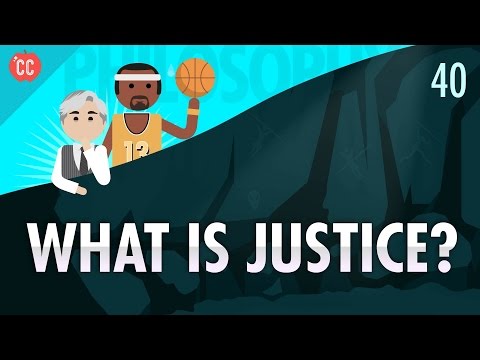
What Is Justice?: Crash Course Philosophy #40
0
Fong Chen posted on 2017/02/19Ever wondered what 'justice' really means? This Crash Course Philosophy episode dives deep into distributive justice and punishment theories, featuring thinkers like John Rawls and Robert Nozick! You'll pick up some advanced vocabulary and complex sentence structures while exploring fascinating philosophical ideas.
Learn this video on the APP!
The VoiceTube App has more in-depth practice for videos!