Vocabulary
- instead of: When one thing is replaced by another
- in hand: In one's possession or control.
- in fact: Used to emphasize the truth of a statement, especially one that contrasts with or contradicts something else.
- in terms of
- for instance: As an example.
- out there: In or to a place that is far away
- in mind: Being aware of or considering something.
- disagree with: To have a different opinion from someone else.
- in reality: Actually; in fact; truly.
- think of: To look on as (being something specific); consider
- think through: To consider carefully so all points are covered
- best of both worlds: A situation combining two desirable but usually separate features.
- in the middle of: In the central part or point of something.
- perspective: Artistic method of creating a sense of distance
- anxiety: A feeling of worry, nervousness, or unease about something that might happen, especially when the outcome is uncertain.
- stick: To push a sharp or pointed object into something
- introvert: Person who does not like social contact
- trait: A particular characteristic that can produce a particular type of behavior
- depression: Medical condition of a lack of vitality
- susceptible: Likely to fall prey to, be drawn to or influenced
- average: Total of numbers divided by the number of items
- realize: To become aware of or understand mentally
- bias: Preference to believe things even if incorrect
- cortex: The outer part of an organ/structure, e.g. brain
- revenue: Money that is made by or paid to a business
- advantage: Thing making the chance of success higher
- interact: To talk or do things with each other
- reinforce: To send more troops/resources to support an army
- develop: To explain something in steps and in detail
- track: To use marks to follow a wild animal
- dopamine: Drug used to treat shock and hypotension
- reward: To give something because of someone's good work
- explore: To examine something in detail to learn about it
- psychologist: An expert who studies the mind and behavior
- task: Big or small piece of work someone has to do
- productive: Producing things in large quantities; fertile
- significantly: In a way that is important or noticeable
- tendency: Likelihood to behave in a particular way
- mimic: Someone who tries to act like another person
- brain: To strike someone forcefully on the head
- interaction: Process of people or things affecting each other
- neutral: Something with pH value of 7
- prefrontal: Anterior to a frontal structure
- involve: To have or be included as a part of something
- arousal: Being woken up from sleep; sexual excitement
- evolutionary: Concerning gradual change over time
- require: To demand that someone does something
- personality: Way someone is or reacts to life or other people
- extrovert: Person who enjoys being with other people
- simply: In an easy or clear manner
- value: Importance you attach to something
- compare: To consider how similar and different things are
- impulsive: Acting without really thinking about it; rash
- complete: To finish or reach the end of doing something
- social: Involving activity with people, e.g. in free time
- suggest: To mention something that could be done; propose
- roam: To move about freely without a set destination
- mind: To be bothered or upset by something
- instinctively: Through intuition, not thought
- satisfaction: Happy feeling because of something that you did
- scarce: Not many; Not plentiful or abundant
- prefer: To like something better than something else
- order: Religious or social group, as of nuns
- amygdala: Almond-shaped structure in the brain's anterior
- rejection: Decision that something is not good enough
- activate: To cause to happen; cause a chemical reaction
- partially: In part; in some degree; not wholly
- incline: To bend the head or body forward
- rash: Without much thought; done or acting too quickly
- polar: Concerning the areas near the North or South poles
- diagram: A drawing intended to explain how something works
- brainstorm: To discuss concepts, ideas or solutions
- genetics: Studies of how things develop between generations
- disagree: To have a different opinion; to fail to agree
- baseline: Imaginary standard by which things are compared
- relied: Depended on someone or something for support, trust, or help.
Get the full experience in the app
Learn anywhere with detailed sentence and usage analysis
01:03
She took a brave step forward, leaving behind her comfort zone to chase her dreams.
Vocabulary
- brave
adj. Having courage
- comfort zone
phr. A familiar situation where one feels safe
Explanation
a brave step is a noun phrase, where brave is an adjective modifying the noun step, meaning "a courageous step".
forward is an adverb modifying step, meaning "ahead".
The whole phrase serves as the object, answering the "what" of took (verb) — she took a brave step forward.
Get the full experience in the app
Look up words anytime with pronunciation, part of speech, and usage
brave
US/brev/
UK/breɪv/
adj.Brave
v.t.To bravely face
A2 Elementary
Get the full experience in the app
Practice speaking anytime and get instant pronunciation feedback
Try this speaking exercise.
Try practicing with this sentence.
80
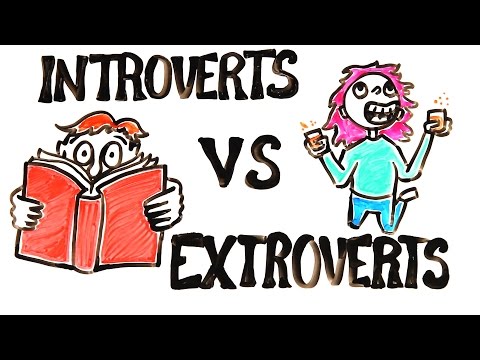
Introverts vs Extroverts
0
20000011 posted on 2016/11/12Ever wondered if you're more of a 'stay-in' or 'go-out' person? This video dives deep into the science behind introverts and extroverts, exploring everything from brain activity to dopamine rewards! You'll pick up some fantastic advanced vocabulary and complex sentence structures while learning fascinating facts about personality psychology.
Learn this video on the APP!
The VoiceTube App has more in-depth practice for videos!